Winter Fodder in Khyber Pakhtunkhwa 2026: Oats, Berseem and Lucerne Sowing Dates and Seed Rates
Sow fodder oats in KP until 30 November 2026 at 35 kg an acre, lucerne in October and November, berseem by mid-October. See seed, fertiliser and yield per acre.
In Khyber Pakhtunkhwa, sow oats for fodder from 15 October to 30 November, lucerne in October and November, and finish berseem by mid-October. The KP Agriculture Department's fodder chart sets 35 kg of oat seed an acre on irrigated land, 4 to 6 kg of lucerne seed and 6 to 8 kg of berseem seed.
Winter is the hungry season for cattle and buffaloes in KP. Summer fodder like maize and sorghum is finished, and a dairy animal still needs green feed every day. These three crops fill that gap from December to spring. We read the department's fodder chart, "Khyber Pakhtunkhwa mein Chara Jaat ki Kasht", on its crop calendar page on 20 October 2026 and give the main figures here. The chart is in Urdu and the translation is ours.
Oats are the safest winter fodder to sow now
On 20 October, oats have the widest window left. The chart gives 15 October to 30 November for oat sowing, so a KP farmer still has six weeks. Berseem's window ran from mid-September to mid-October, so it is closing. Lucerne runs through October and November.
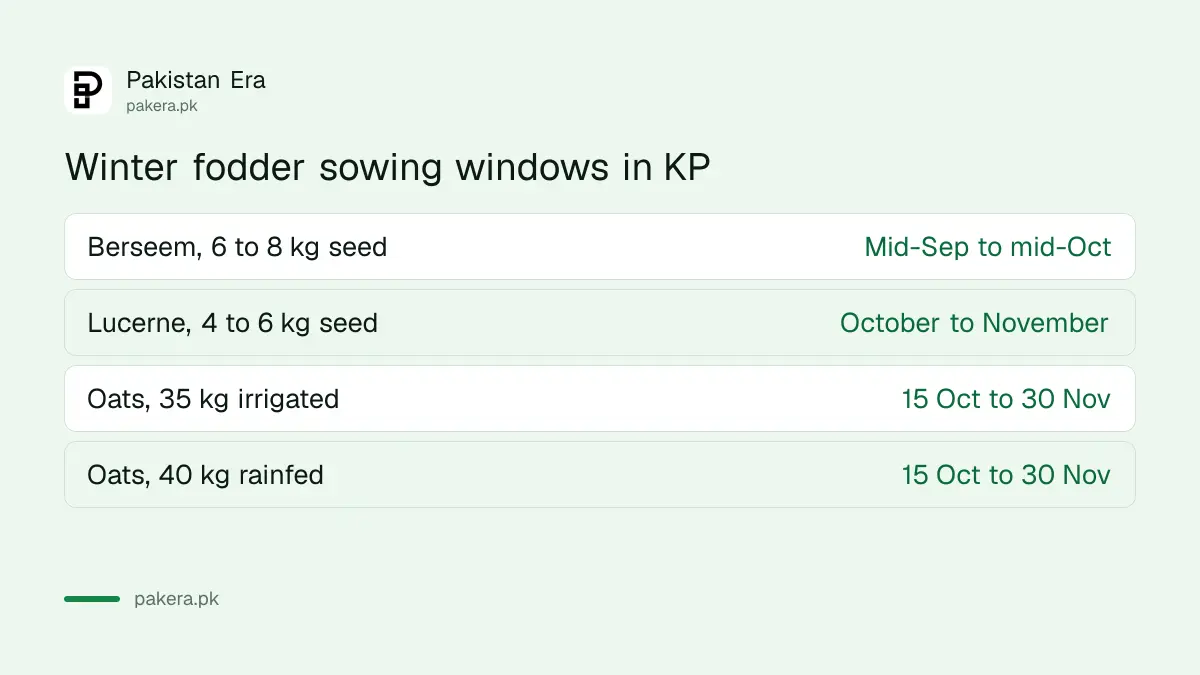
| Crop | Sowing window | Seed per acre | Varieties on the chart |
|---|---|---|---|
| Berseem | Mid-September to mid-October | 6 to 8 kg | Peshawari, late Anmol, Super Berseem, late Faisalabad |
| Lucerne | October to November | 4 to 6 kg | Sargodha Lucerne |
| Oats | 15 October to 30 November | 35 kg irrigated, 40 kg rainfed | PD-2, LD-65, S-2000, NARC Oat |
If you missed berseem, do not force it into November just because you have the seed. Oats will give you more green fodder from a late sowing. That is our view, based on the dates in the chart.
Berseem gives the most fodder, up to 50 tonnes an acre
The chart puts berseem's yield at 35 to 40 tonnes of green fodder an acre, and says up to 50 tonnes is possible. It needs heavy loam soil, three to four ploughings plus the sohaga, and 10 to 15 irrigations through the season.
Sow berseem by broadcasting the seed, or with a drill in rows one foot apart. The first two waters go seven days apart. After that, water as needed. On drilled berseem, the first water goes three weeks after sowing.
For fertiliser, the chart gives five to six trolleys of well-rotted farmyard manure. Or use two bags of DAP, or four bags of SSP, with one bag of urea, and add urea after every cut. The chart prints that second option as "SOP". Four bags of potash would be unusual for berseem, so we read it as SSP, single superphosphate. Check with your agriculture extension office before you buy.
Cut berseem one and a half to two inches above the ground. The chart sets a gap of one to one and a half months between cuts. It names armyworm, root rot, stem rot and anthracnose as the main problems to watch.
Oats need one bag of DAP and one of urea
The chart's oat dose is one bag of DAP and one bag of urea an acre. Oats get three to four waters, the first three weeks after sowing. The first cut comes 70 to 80 days after sowing, when half the plants have headed. The second cut comes 100 to 110 days after sowing.
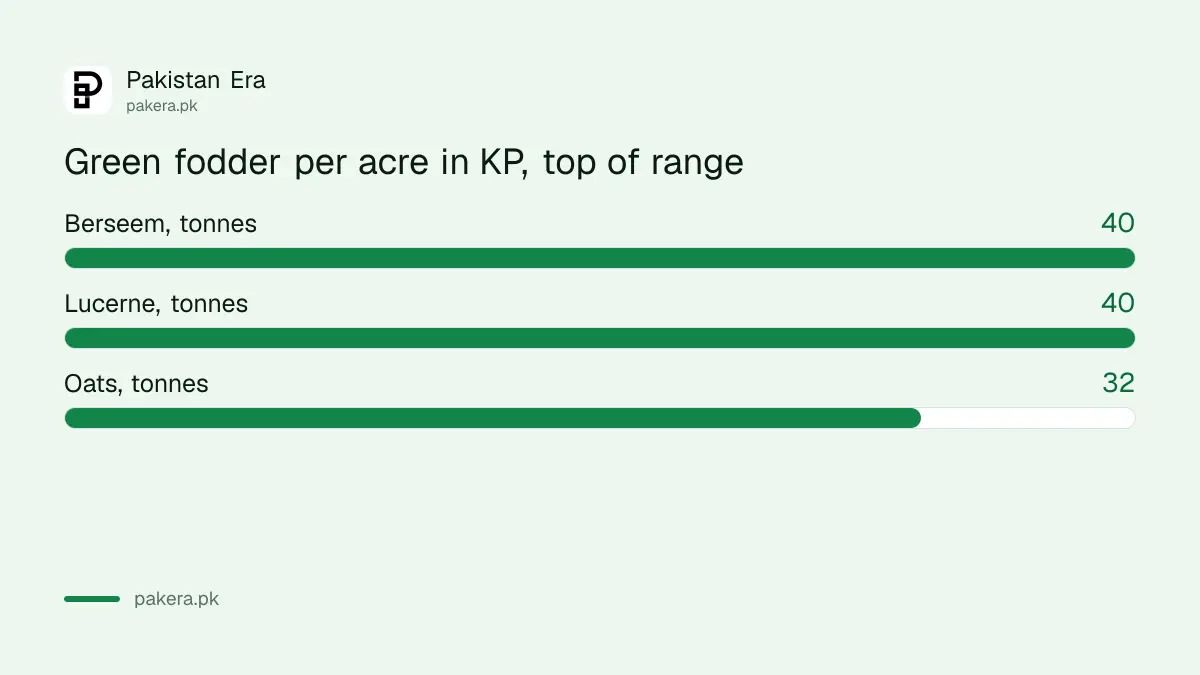
The chart puts the oat yield at 700 to 800 maunds of green fodder an acre, or 25 maunds of seed for a seed crop. A maund is 40 kg, so 700 to 800 maunds is 28 to 32 tonnes. That conversion is ours. On rainfed land, plough deep before the monsoon, then plough and run the sohaga after the rain. Oats can be broadcast or drilled in rows one foot apart.
For a seed crop, stop watering once the oats flower. The chart names armyworm and stem smut as the pests and diseases to watch.
Lucerne lasts for years, so plan the field
Lucerne is the long game. The chart puts the first cut three months after sowing and later cuts a month apart, for a yield of 30 to 40 tonnes an acre. Its dose is 1.5 bags of DAP and half a bag of urea, or two bags of nitrophos, with urea or SSP after cuts as the chart prints it.
Lucerne needs fertile loam, one ploughing with a soil-turning plough, four with the desi plough, and a cultivator. Water three weeks after sowing, then as needed. In summer, water every 15 to 20 days. For a seed crop, stop watering after February and cut in June.
Because lucerne stays in the ground, pick a field you will not need for wheat next year. A field with good drainage near the cattle shed saves hours of carrying fodder every day.
Fertiliser for an acre of fodder costs Rs 21,900 to Rs 39,000
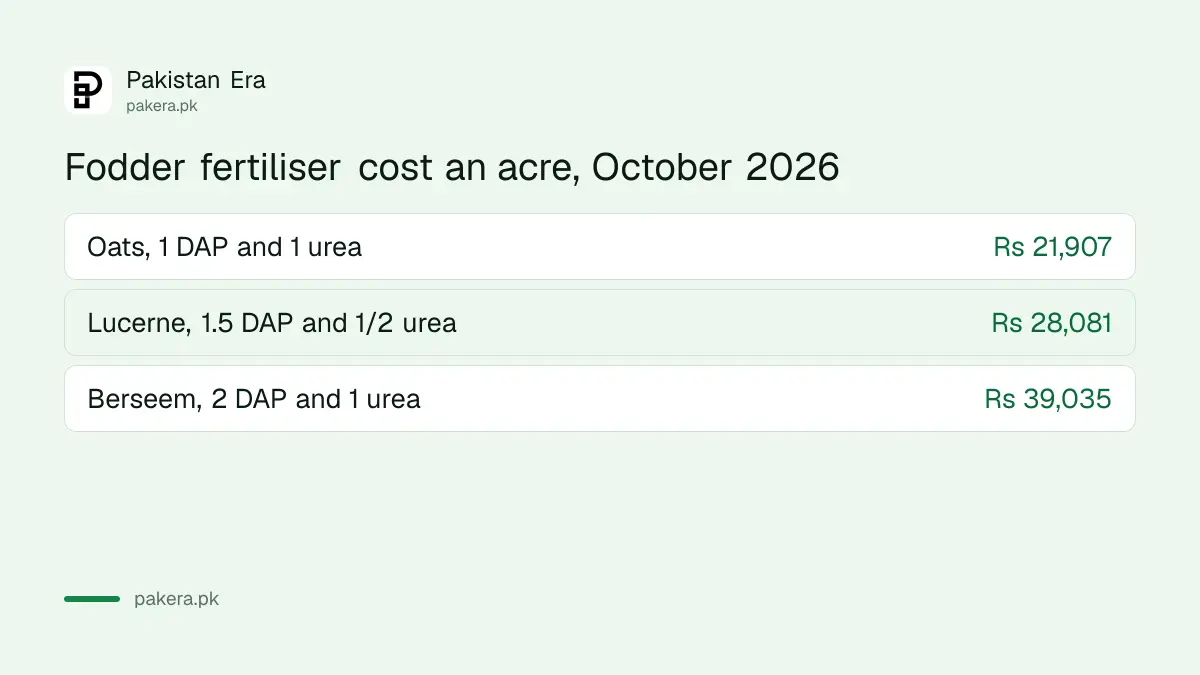
At the national average prices for the week to 8 October 2026, the oat dose costs about Rs 21,907 an acre, the lucerne dose about Rs 28,081 and berseem's DAP option about Rs 39,035. We used DAP at Rs 17,127.78 and urea at Rs 4,779.51 a bag, the urea and DAP prices for that week.
- Check the date: oats until 30 November, lucerne until November, berseem only if you are still inside mid-October.
- Buy seed: 35 kg of oats, 4 to 6 kg of lucerne or 6 to 8 kg of berseem an acre.
- Prepare the land with the ploughings the chart sets for your crop.
- Apply the fertiliser at sowing, and urea after cuts where the chart says so.
- Give the first water on time and cut at the stage the chart gives.
Fodder is only half of animal health. KP runs mobile veterinary clinics for livestock, and farmers who want to grow a dairy herd can look at the ZTBL dairy loan. For the main wheat crop on the same farm, the KP dates and doses are in our page on wheat sowing in KP.
Common questions
When should oats be sown for fodder in KP?
From 15 October to 30 November, according to the KP Agriculture Department fodder chart.
What is the berseem seed rate per acre?
6 to 8 kg an acre, sown by broadcasting or with a drill in rows one foot apart.
How much green fodder does berseem give?
35 to 40 tonnes an acre, and up to 50 tonnes, according to the chart.
Which oat varieties does KP recommend for fodder?
PD-2, LD-65, S-2000 and NARC Oat.
Is it too late to sow berseem on 20 October?
The chart's window runs from mid-September to mid-October, so 20 October is just past it. Oats are the safer choice now.
How we verified this
What we checked, where we read it, and what we could not confirm.
We read the fodder chart on the KP Agriculture Department's crop calendar page on 20 October 2026. The chart is a printed Urdu image posted in July 2026, with no year on it, so we cannot say when its figures were last revised. Translation, the maund conversion and the cost per acre are ours. Prices are Pakistan Bureau of Statistics national averages for the week to 8 October 2026. We could not price fodder seed in KP markets.
About the author

Senior Writer, Public Services and Technology
Shahid joined us in 2024 as an author. He is a senior contributor to Pakistan's leading technology websites. He writes detailed articles, mostly covering his expertise in the latest tech, mobiles, apps, gadgets, and step-by-step guides. His ideology is to help people understand the latest trends and explain complex methods through very easy-to-understand guides.