Burnt or Blank Electricity Meter in Pakistan: 2 Months of Average Bills Only, and Who Pays for the New Meter
Burnt or blank electricity meter in Pakistan: NEPRA allows average bills for 2 months only, replacement within 2 billing cycles, and who pays for the new meter.
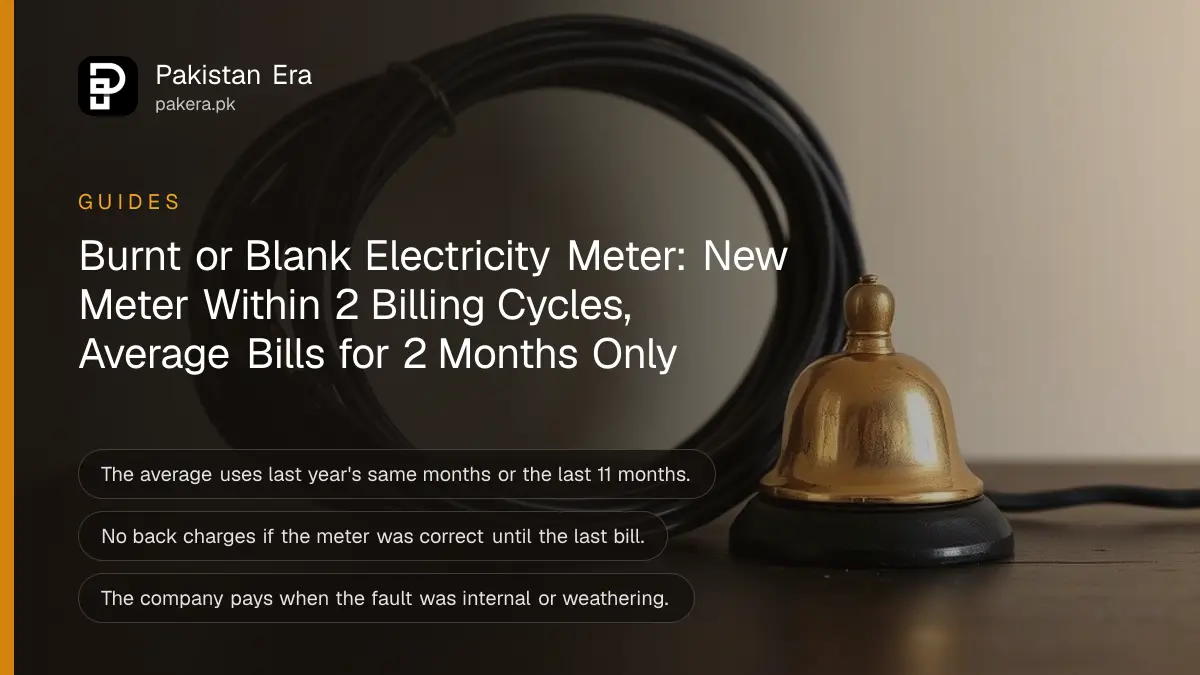
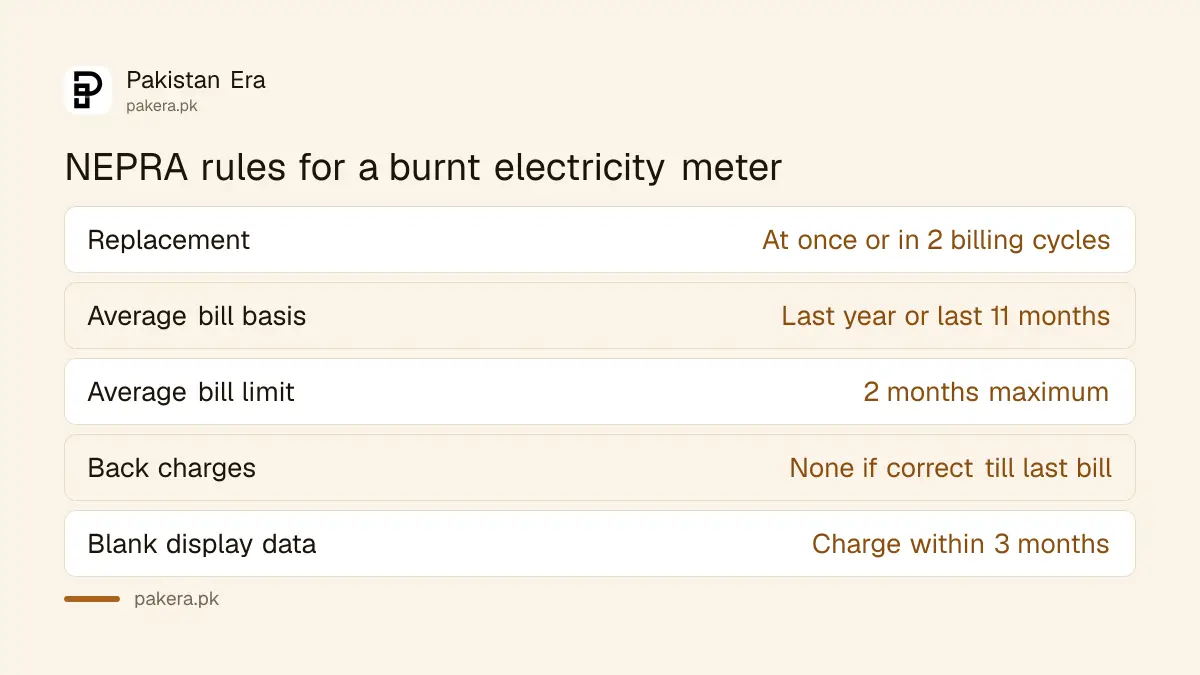
If your electricity meter burns out or its display goes blank, NEPRA's rules say the company must replace it at once, or within two billing cycles if no meter is in stock, and it can bill you on an average for a maximum of two months. The average is the higher of the same months last year or the last eleven months. If the meter was correct until the last bill, no back charges are allowed. And if the fault was not yours, the company pays for the new meter.
These rules come from NEPRA's Consumer Service Manual, which every ex-WAPDA company follows: LESCO, IESCO, MEPCO, FESCO, GEPCO, PESCO, HESCO, SEPCO, QESCO and TESCO. Knowing them helps you spot a bill that goes too far, such as average billing for four months or a charge for the meter after a power surge.
Report a burnt or blank meter in writing first
Tell your sub-division office in writing as soon as the meter burns, stops or shows a blank or washed-out display. Keep a stamped copy, the date and photos of the meter. A burnt or dead meter is also on NEPRA's list of signs that can lead to a theft investigation, so reporting it early protects you.
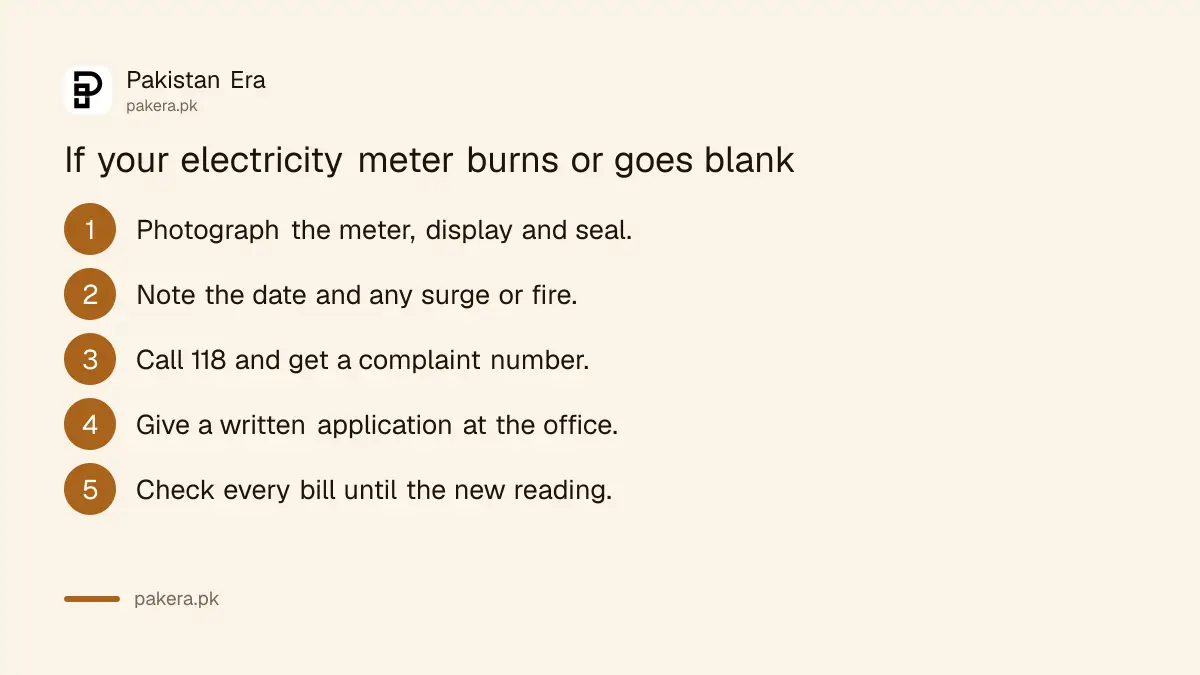
- Take clear photos of the meter, its display and the seal.
- Note the date and time it stopped or burned, and any power surge or fire.
- Call 118 or your company's helpline and get a complaint number.
- Give a written application at your sub-division office and keep the stamped copy.
- Check each bill until the new meter is fitted and the first full reading is billed.
NEPRA's manual lists "meter dead stop, burnt, display wash" among the indications that lead to further investigation for illegal use of electricity. An investigation is not a finding of theft, but a written report from you, made before anyone else notices, makes the honest explanation easier to show. Complaints can be tracked with the electricity complaint status check.
The company must replace the meter within two billing cycles
When a meter that was correct until the last billing cycle becomes defective or burnt, the company must replace it immediately, or within two billing cycles if meters are not available. The same deadline applies when the display is washed out and the reading cannot be seen.
A billing cycle is about a month, so the outer limit is about two months. If the company says it has no meters, note the date. After two cycles it has run out of time under the manual.
Average billing is allowed for two months only
While the meter is out, the company may bill on an average basis: 100 percent of the units used in the same months of the previous year, or the average of the last eleven months, whichever is higher. This average can run for a maximum of two months.
| Situation | What NEPRA allows |
|---|---|
| Meter burnt or defective, correct until last bill | Replace at once or within 2 billing cycles |
| Bill while meter is out | Average: same months last year or last 11 months, whichever is higher |
| How long average billing can run | Maximum 2 months |
| Back charges for earlier months | None, if the meter was correct until the last bill |
| Solar net meter defective | Exported units credited on the same average, for 2 months |
Winter is where this rule matters. If your meter burns in December, the average is taken from last December's units or your last eleven months, whichever is higher. A house that used much more power last winter can get a high average bill. Compare it with your own past bills before you pay. Solar users have a parallel rule for exported units, explained in the defective solar net meter rules.
A blank display has its own data rule
When the display is washed out, the company must retrieve the meter's stored data and bill the actual units after giving you notice. Average bills already charged are then adjusted. If the data is not retrieved within three months of replacement, your account cannot be debited for those units.
There is one extension. If the company cannot read the data in-house and sends the meter to the manufacturer, it has six months from replacement. After six months with no data, no adjustment can be made to your account at all. So a bill for "retrieved units" a year after the meter was changed is outside the rule.
- Within 3 months: the company may charge retrieved units after notice.
- Within 6 months: only if the meter went to the manufacturer for data retrieval.
- After 6 months: no adjustment is allowed.
Who pays for the new meter depends on whose fault it was
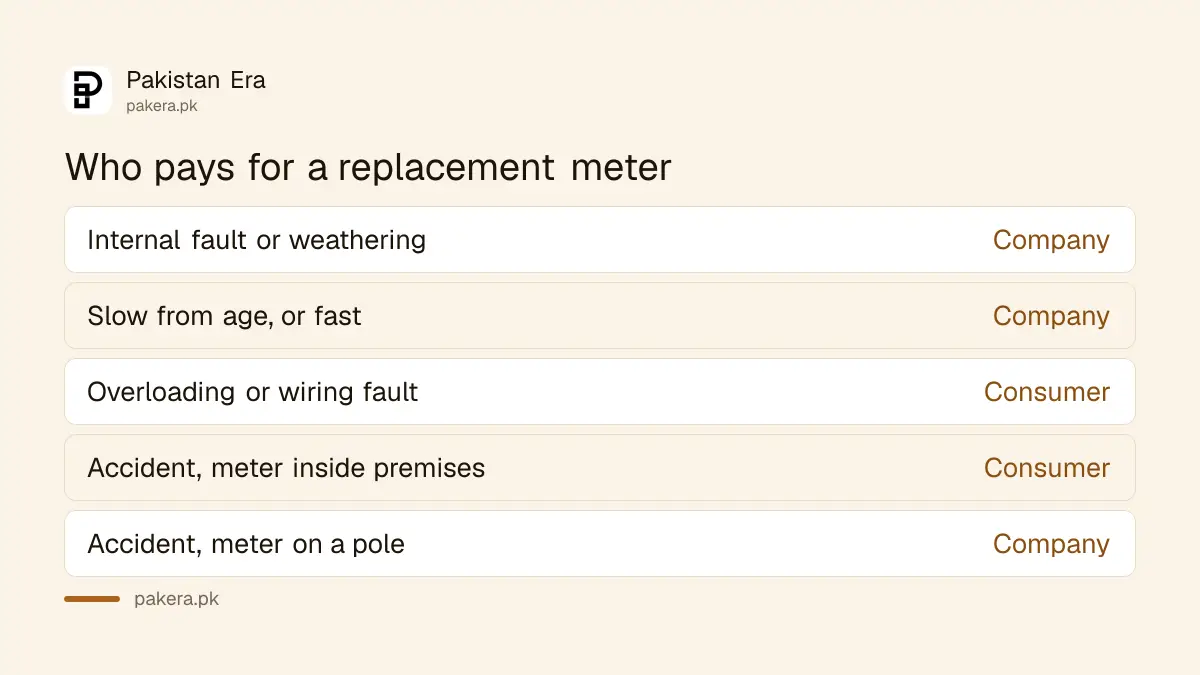
NEPRA's cost table says the company pays for a meter that is defective, damaged, burnt or display-washed because of an internal fault or weathering, not your fault. You pay if the damage came from your own overloading or a defect in your internal wiring.
| Cause | Who pays for the replacement |
|---|---|
| Internal fault, weathering, not the consumer's fault | Company |
| Slowness from age, not theft, or fastness for any reason | Company |
| Burnt or damaged by consumer's overloading or wiring defect | Consumer |
| Missing or damaged in an accident, meter inside the premises | Consumer |
| Missing or damaged in an accident, meter on a pole or structure | Company |
Where you must pay, the company may add the meter cost to your electricity bills so replacement is not delayed. Overloading is the usual dispute. If your home runs above its sanctioned load, the company can argue the meter burned because of it. Wiring that overheats is a second risk, and a house that had a fire should get a wiring test report before the new meter goes in.
Challenge a wrong bill with the company, then NEPRA
If you get average billing for more than two months, back charges on a meter that was correct, or a meter charge for a fault that was not yours, complain to the company in writing and quote the clause. If it is not fixed, take it to NEPRA. Keep paying current bills while the complaint runs.
The company's own time limits for handling a billing complaint are set out in the electricity bill complaint deadlines. If you suspect the replacement meter itself is wrong, you can ask for a check for a fee, as explained in how to request a faulty electricity meter replacement.
Common questions
How long can the company send average bills after my meter burns?
A maximum of two months, under NEPRA's Consumer Service Manual.
How is the average bill worked out?
It is 100 percent of the units in the same months last year or the average of the last eleven months, whichever is higher.
Do I pay for a burnt meter?
Not if the fault was internal or due to weathering. You pay only if your overloading or internal wiring caused it, or if a meter inside your premises was damaged in an accident.
Can the company charge me for old units after the meter is replaced?
No, if the meter was correct until the last bill. For a washed-out display, retrieved units can be charged only within three months, or six months if the meter went to the manufacturer.
How soon must the company fit a new meter?
Immediately, or within two billing cycles if meters are not available.
How we verified this
What we checked and where we read it.
We checked these rules on 15 November 2026 in the NEPRA Consumer Service Manual, November 2025 edition, as published on LESCO's website: clause 4.3.1 on defective and burnt meters, 4.3.2 on display wash and data retrieval, 4.2.2 on meter theft and accidents, 4.4 on the cost of replacement, and 9.2.1 on indications that lead to theft investigation. The cost table prints across two columns in the PDF, and the page was read as plain text to keep each cause matched to who pays. NEPRA's own site is nepra.org.pk.
About the author

Tax, Bills and Technology Writer
Ali Akhtar is a young and curious voice here at Pakistan Era. He is currently pursuing his A-Levels and has a growing interest in Pakistan’s changing industrial landscape and educational trends. Ali likes to write in a way that helps him explain and explore the world around him. His writing reflects the perspective of the new generation navigating the evolving trends of Pakistan where technology, youth innovation, and shifting opportunities are reshaping the country’s future.