Check Itching in Pregnancy on Azathioprine or Mercaptopurine in Pakistan: DRAP Alert 62
DRAP Alert 62 warns azathioprine, mercaptopurine and tioguanine can rarely cause cholestasis of pregnancy. See the signs, what to do and how to report it.
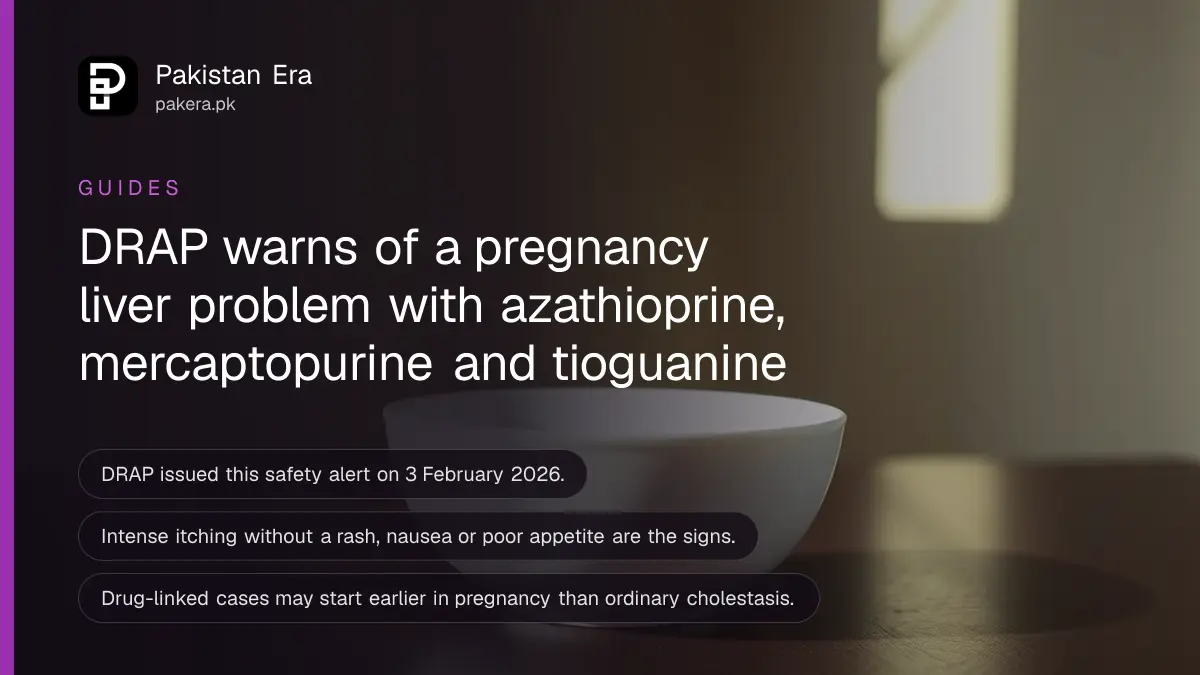
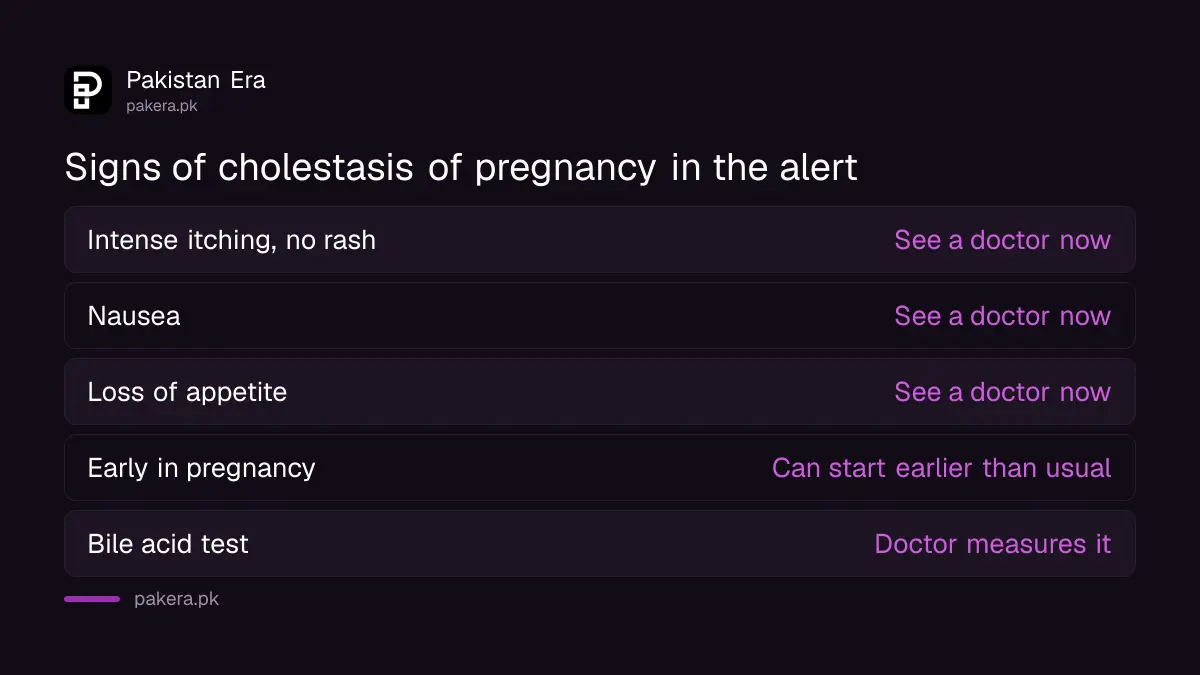
DRAP Safety Alert No. 62 of 3 February 2026 warns that azathioprine, mercaptopurine and tioguanine can rarely cause intrahepatic cholestasis of pregnancy, a liver problem. If you are pregnant, take one of them and get intense itching without a rash, nausea or loss of appetite, see your doctor immediately. Do not stop the medicine on your own.
These three medicines are called thiopurines. Doctors use them for leukaemia, for bowel diseases such as Crohn's disease and ulcerative colitis, for lupus, and to protect a transplanted organ. A woman who becomes pregnant while taking one should not stop it alone, because the illness itself can harm the pregnancy.
The summary below keeps to what the alert itself says. It is not medical advice.
DRAP warns of a pregnancy liver problem with thiopurines
The alert says intrahepatic cholestasis of pregnancy, or ICP, has been reported in some pregnant patients on azathioprine and mercaptopurine. ICP is a liver disorder in pregnancy with intense itching and high bile acid levels. DRAP says the risk is believed to apply to the whole thiopurine class.
The alert says reported cases were often serious, and some ended in the death of the baby. It also says reports of the worst cases may be over-represented, because serious events are reported more often.
ICP linked to thiopurines can start earlier in pregnancy
According to the alert, this drug-linked form tends to start earlier in pregnancy than ICP from other causes. In some cases the bile acid level did not fall with ursodeoxycholic acid, the usual treatment. Liver tests improved in some women after the thiopurine was stopped or the dose reduced.
| Point | What the alert says |
|---|---|
| Medicines named | Azathioprine, mercaptopurine, tioguanine |
| Main symptom | Intense itching without a rash |
| Other signs | Nausea, loss of appetite |
| When it may start | Earlier than usual ICP |
| Ordinary ICP rate | About 1 in 150 pregnancies |
| Bile acid level linked to preterm birth risk | 40 micromol per litre |
| Non-fasting bile acid level linked to stillbirth risk | 100 micromol per litre |
The alert says drug-induced ICP is thought to be much rarer than ICP from other causes, which happens in about 1 in 150 pregnancies. Most reported cases were in women treated for bowel disease or after a transplant.
The bile acid test is the number that matters
ICP is confirmed with a blood test for serum bile acids. The alert gives doctors two levels to watch. At 40 micromol per litre, the pregnancy is at particular risk of a spontaneous preterm birth. At 100 micromol per litre on a non-fasting test, it is at risk of stillbirth. Ask for the result in numbers, not just "normal" or "high", and keep a copy.
The alert also quotes the Saudi regulator's advice, which adds dark urine and pale stools to the signs. If you notice either while pregnant and taking a thiopurine, mention it at once.
What a pregnant patient on thiopurines should do
The alert says patients should know the signs and seek advice from a health professional immediately if they appear. Doctors are told to measure bile acids and to weigh the benefit of the medicine against its risk case by case.
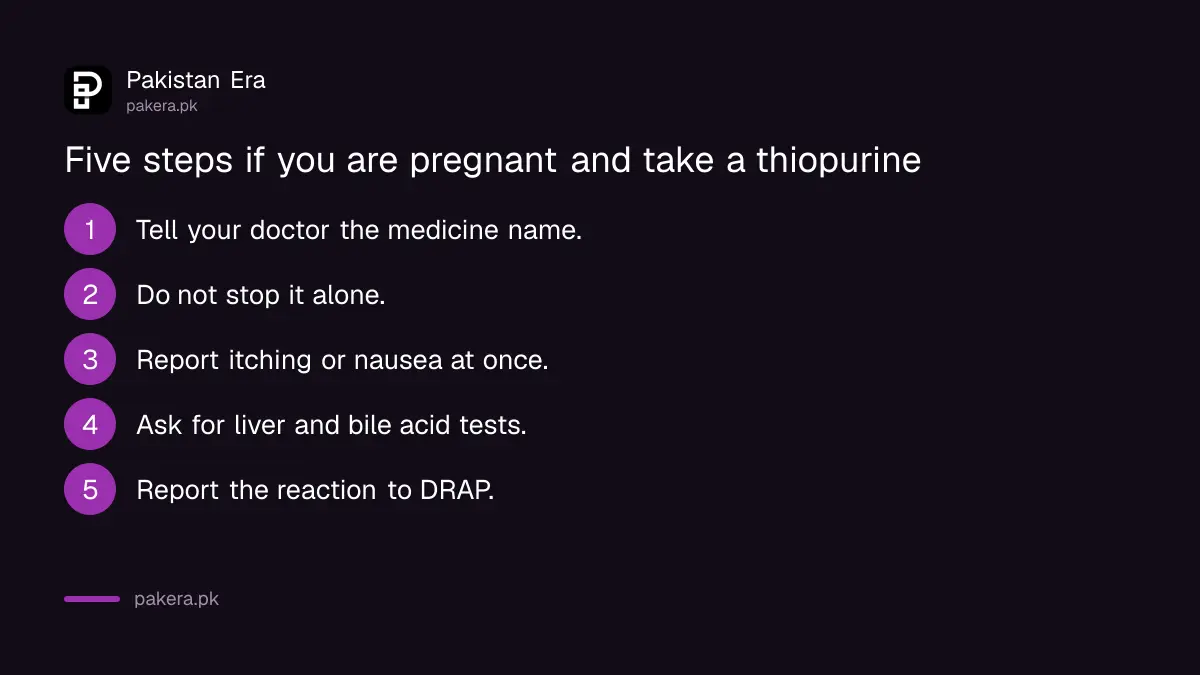
- Tell your doctor you are pregnant or planning a pregnancy, and name the thiopurine.
- Keep taking it unless your doctor tells you to change the dose.
- Report intense itching, nausea or loss of appetite straight away.
- Ask for a liver test and a bile acid test if itching begins.
- Report the reaction to DRAP.
Severe itching is common in pregnancy and usually has a harmless cause. Still, the alert asks for a check when it is intense and has no rash.
What DRAP has ordered in Pakistan
DRAP's Pharmacovigilance Risk Assessment Expert Committee met on 31 December 2025 and decided, under Rule 10 of the Pharmacovigilance Rules 2022, that registration holders must add ICP to the adverse reactions and warnings sections of thiopurine labels, with the frequency "not known". The alert is a labelling order and not a recall.
No brand or batch is named. To confirm a brand is registered, use the DRAP registration check. A pharmacist can also tell you the generic name printed on the pack.
Questions to take to your next antenatal visit
Pregnancy and bowel disease, lupus or a transplant often mean two or three doctors. The alert asks them to work together. You can help by carrying the same short list to every visit.
- Which thiopurine do I take, and at what dose?
- Should my liver tests and bile acids be checked now, and how often?
- What level of itching should make me call you the same day?
- Who decides if the dose changes, my obstetrician or my specialist?
Write the answers down. If you move between a government hospital and a private clinic, take the notes with you. Both doctors then work from the same facts. The alert says each case needs its own assessment, so there is no single rule that fits every woman.
Report the reaction to the safety centre
Patients and doctors can report through the Med Vigilance e-reporting system or the VigiMobile app. The National Pharmacovigilance Centre is on 051 9255981 and npc@dra.gov.pk. The page on reporting a medicine side effect to DRAP lists what to prepare.
Women on hormonal treatment have a separate DRAP warning: our guide on the medroxyprogesterone injection and meningioma warning explains it. Mercaptopurine is also a leukaemia medicine, so families buying cancer treatment should match their packs against the batches in our guide to checking a cancer medicine against DRAP's fake medicine alerts. Other recent warnings concern isotretinoin and back pain and co-trimoxazole and shock.

Common questions
Should I stop azathioprine if I am pregnant?
Do not stop alone. The alert asks doctors to weigh benefit and risk case by case. Your doctor decides.
Which medicines are thiopurines?
Azathioprine, mercaptopurine (6-MP) and tioguanine, also called thioguanine.
Is itching in pregnancy always ICP?
No. Many causes are harmless. The alert points to intense itching without a rash, with nausea or poor appetite, as a reason to be checked.
Is any thiopurine recalled?
No. The alert is a warning and a label update.
How common is it?
DRAP lists the frequency as "not known". It says thiopurine-linked ICP is rarer than ordinary ICP, which affects about 1 in 150 pregnancies.
How we verified this
What we checked and where we read it.
Last checked 8 November 2026. We read DRAP Safety Alert No. 62 of 3 February 2026 and its full PDF, which carries the National Pharmacovigilance Centre contacts. DRAP does not publish Pakistani case numbers for this risk. This is a summary of the alert and not medical advice.
Free on WhatsApp
Get last dates and rule changes on WhatsApp
We post new last dates, fee changes and fixes for common problems, a few short posts a day.
Follow Pakera on WhatsAppOther followers cannot see your number.
Pakera Solves It
Which online process wasted your time this week?
A portal that will not load, a form nobody explains, a complaint that went nowhere. Tell us. Every week we pick one, solve it step by step and publish the answer.
About the author

Public Services and Education Journalist
Fajr Riaz is a journalist and content writer at Pakistan Era, based in Lahore. She covers the questions people meet in everyday life in Pakistan: how a public service works, what a change in the rules means, and where to find a reliable answer.