Check the Medroxyprogesterone Injection Meningioma Warning in Pakistan: DRAP Alert 59
DRAP Alert 59 says high-dose medroxyprogesterone acetate can raise meningioma risk after years of use. See the symptoms, who should avoid it and what to do.
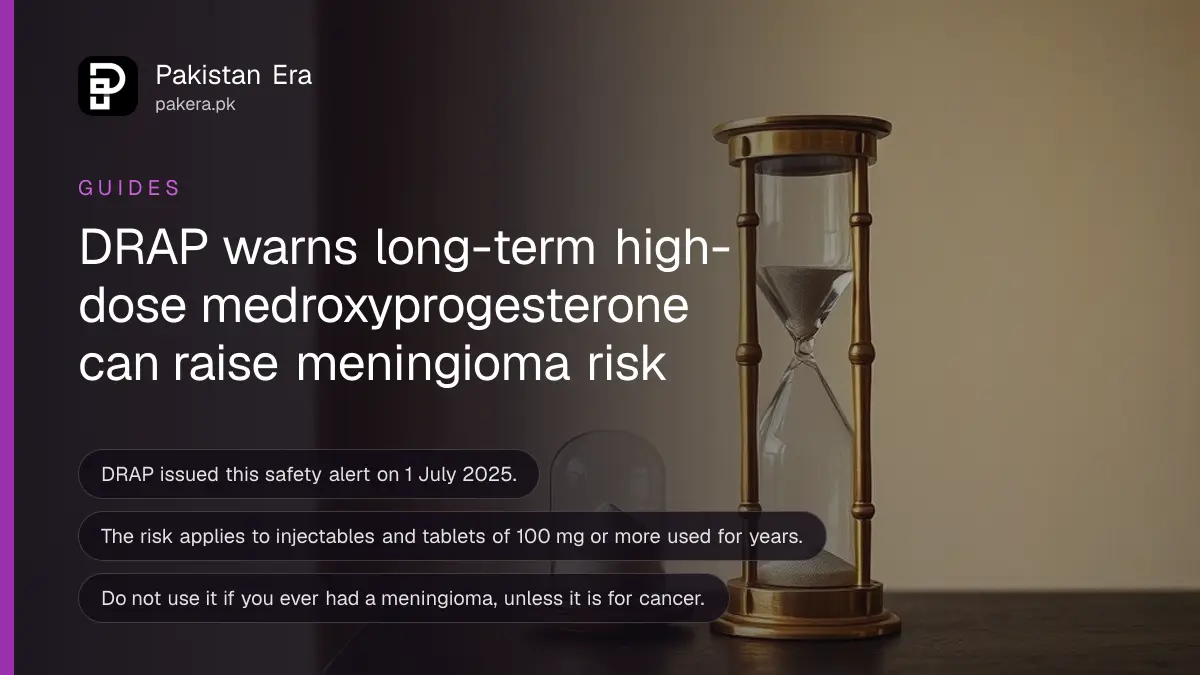
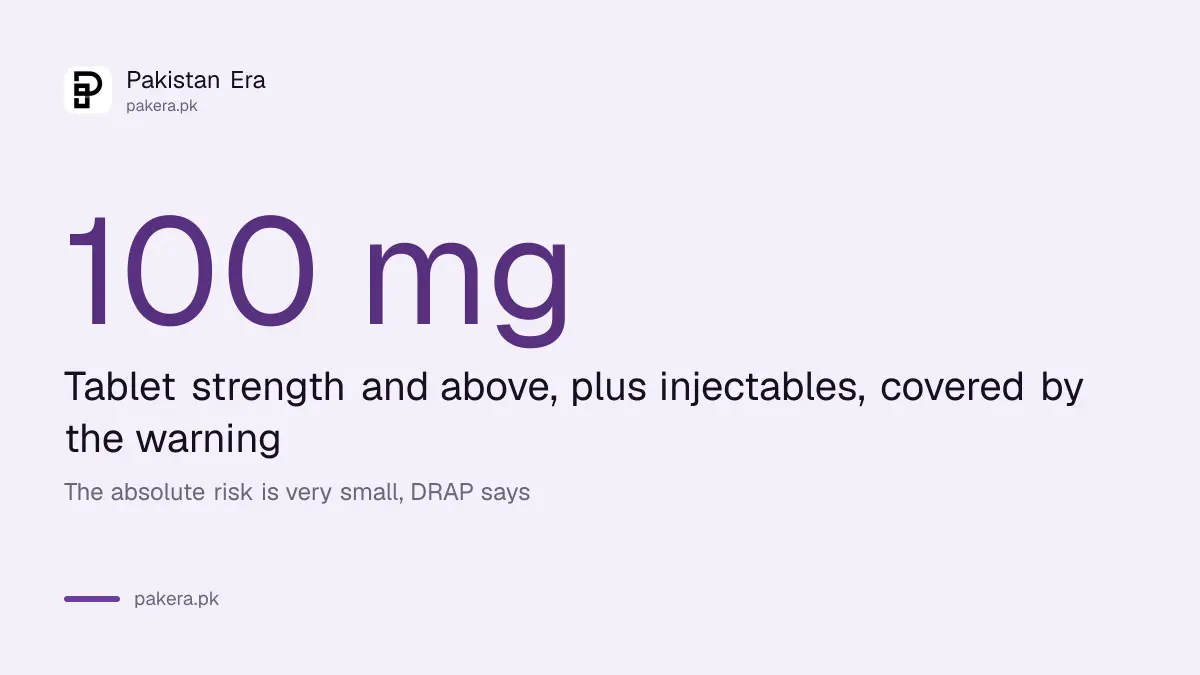
Short answer: DRAP Safety Alert No. 59 of 1 July 2025 says high-dose medroxyprogesterone acetate, including injections and tablets of 100 mg or more, can raise the risk of meningioma, usually a benign brain tumour, after several years of use. Do not use it if you ever had a meningioma, unless it is for cancer.
Medroxyprogesterone acetate is used in gynaecology, including contraception and endometriosis, and in some cancers. Many women know it as a contraceptive injection. DRAP says the absolute risk is very small, but it wants patients to know the signs.
We read the alert on DRAP's safety page on 13 October 2026. This article keeps to what the alert says.
DRAP warns that long-term high-dose use can raise meningioma risk
The alert says studies show an increased risk of meningioma in people taking high doses for several years. High dose means injectables and tablets of 100 mg or more. Meningiomas are tumours of the tissue layer around the brain and spinal cord. They are usually benign and slow growing, but can cause serious problems depending on size and place.
The alert says the relative risk is significantly higher with high doses, while the absolute risk is very small. It follows reviews by European and Canadian regulators.
Know the symptoms that need a doctor
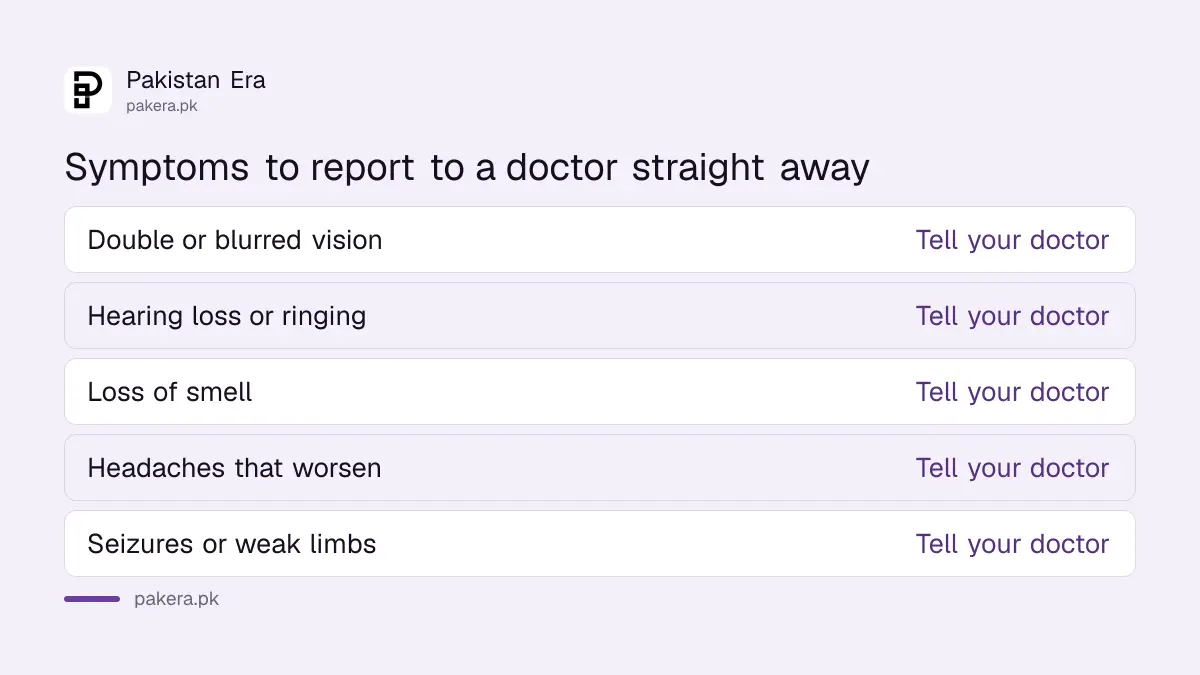
DRAP lists the symptoms patients should tell a doctor about straight away. They are changes in vision such as double or blurred sight, hearing loss or ringing in the ears, loss of smell, headaches that worsen with time, memory loss, seizures, and weakness in the arms or legs.
| Symptom | Action in the alert |
|---|---|
| Double or blurred vision | Tell your doctor straight away |
| Hearing loss or ringing in the ears | Tell your doctor straight away |
| Loss of smell | Tell your doctor straight away |
| Headaches that worsen with time | Tell your doctor straight away |
| Memory loss, seizures, weak arms or legs | Tell your doctor straight away |
These signs have many other causes. The alert asks for a medical review, not a self-diagnosis.
Who should not use it
For patients, the alert says not to use medroxyprogesterone acetate if you have meningioma or have ever been diagnosed with one, unless you use it for cancer. If you are diagnosed while using it, your doctor will reconsider the treatment.
For doctors, the alert says that if a patient treated for a non-cancer reason is diagnosed, the medicine must be stopped as a precaution. For cancer patients, the doctor weighs benefit and risk case by case. In some cases the meningioma shrank after the depot injection was stopped.
Steps to take if you use it now
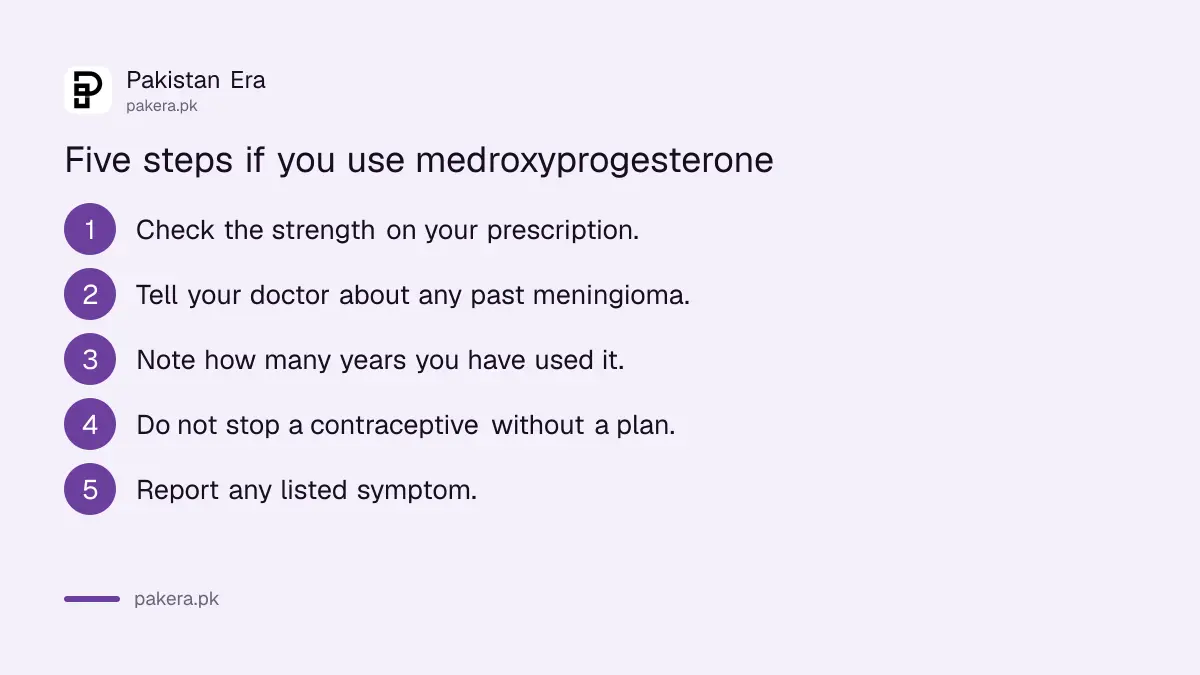
- Check the strength and form on your prescription. The alert concerns high doses of 100 mg or more and injectables.
- Tell your doctor if you ever had a brain tumour or meningioma.
- Note how many years you have used it.
- Do not stop a contraceptive injection suddenly without a plan, because you may become pregnant.
- Report any listed symptom and ask your doctor about a review.
Ask the doctor about other options if you are worried. The alert does not recommend any one replacement.
What DRAP has ordered in Pakistan
The expert committee met on 2 January 2025 and decided that registration holders must add the meningioma risk to the warnings and precautions section of every medicine containing medroxyprogesterone acetate. This is a label change, not a recall, and no brand or batch is named.
To confirm that a brand is registered, use the DRAP registration check. If a pack looks wrong, report counterfeit medicine.
Questions to take to your next clinic visit
Many women use this medicine for years because it is simple and private. That is exactly the group the alert is about. The warning is about long use at high doses, so the length of your use matters to the doctor.
- Which exact medicine and strength am I using, and for what reason?
- How long have I used it, and is a review due?
- Is there a lower dose or another method that suits me?
- Which symptoms should make me call you the same day?
Write down the date of every injection if you can. Keep the clinic card safe. A clear record lets the doctor judge how many years of use you have had. The alert gives no fixed number of years, and we did not find one, so the doctor must decide.
Report a reaction to DRAP
Patients and doctors can report through the Med Vigilance e-reporting system or the VigiMobile app. The National Pharmacovigilance Centre is on 051 9255981 and npc@dra.gov.pk. The page on reporting a medicine side effect explains the form.
Common questions
Is the contraceptive injection banned in Pakistan?
No. The alert is a warning and a label update.
Does the risk apply to low doses?
The alert describes an increased risk with high doses used for several years, meaning injectables and tablets of 100 mg or more.
Is a meningioma cancer?
The alert says it is usually benign, which means not cancer, but it can still cause serious problems depending on size and place.
Can a meningioma shrink?
The alert says shrinkage was seen in some cases after the depot injection was stopped.
Who decides whether I should stop?
Your doctor does. The alert asks for a case-by-case decision.
How we verified this
What we checked, where we read it, and what we could not confirm.
We read DRAP Safety Alert No. 59 dated 1 July 2025 on 13 October 2026. This is a summary of the alert and not medical advice.
About the author

Public Services and Education Journalist
Fajr Riaz is a journalist and content writer at Pakistan Era, based in Lahore. She covers the questions people meet in everyday life in Pakistan: how a public service works, what a change in the rules means, and where to find a reliable answer.