How to Check How Many Days You Have Left in Schengen After EES, for Pakistani Visa Holders
Use the EU's Entry/Exit System tool to see your days left in Schengen. Steps for a Pakistani passport (code PAK), what EES stores and what it does not count.
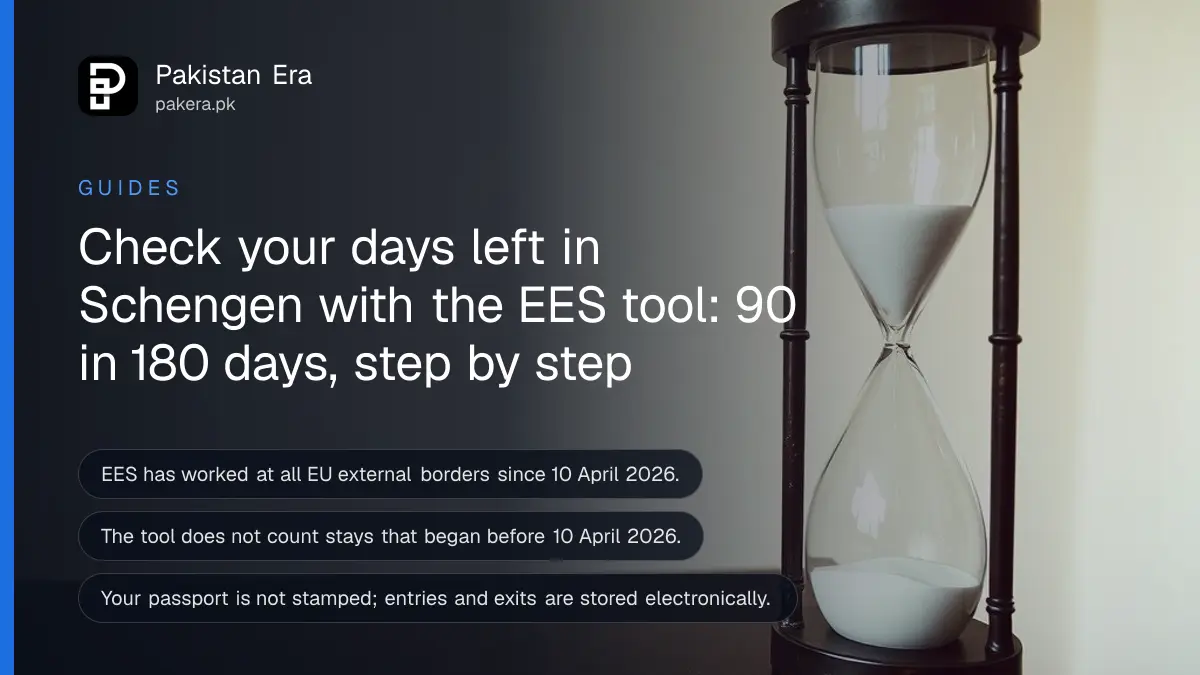
Short answer: Open the European Union's "Check how long you can stay" tool on the official Travel to Europe website. Enter the Schengen country, your passport type, passport number and the three-letter code PAK, plus your arrival or departure date. It tells you "OK" or "not OK" and the days you have left. It counts only stays that began on or after 10 April 2026.
A Pakistani traveller with a Schengen visa now meets a new system at the border. The Entry/Exit System, called EES, records each entry and exit. It replaces the passport stamp. If you keep losing track of your 90 days, the tool below is the fastest way to know where you stand.
We read the EU's official EES pages on 13 October 2026. The steps follow what those pages say. We did not test the tool with a real passport number.
EES has been fully working at EU borders since 10 April 2026
The EU rolled EES out in stages and finished on 9 April 2026. From 10 April 2026 it works at all external border crossing points of the 29 European countries that use it. A border officer registers you on your first trip, and your passport is not stamped.
EES applies to non-EU citizens who come for a short stay and either hold a short-stay visa or do not need a visa for up to 90 days in any 180 days. A Pakistani with a Schengen visa is covered. The 90 days in 180 are counted as one period across all the countries that use EES.
The system also records an overstay and any refusal of entry. That is why a clear count matters.
The first trip takes a few extra minutes for a photo
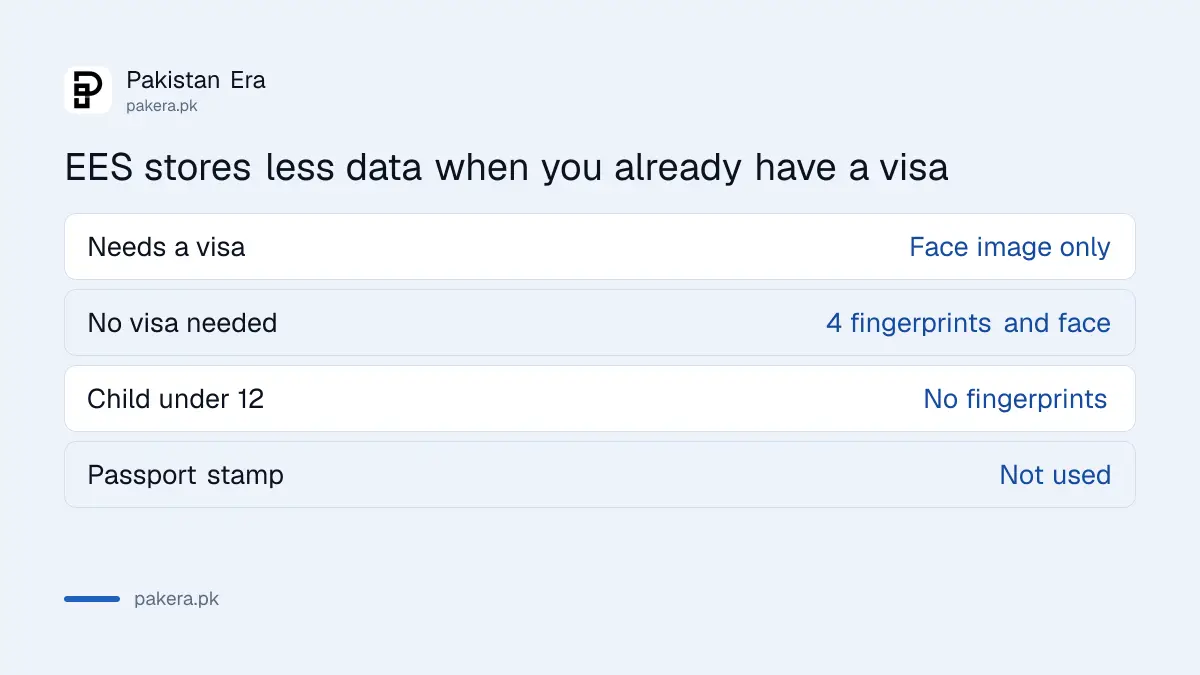
At your first crossing since EES began, the officer takes your personal data. If you need a visa, the system stores only your facial image, because your fingerprints were taken when you applied. If you do not need a visa, it stores four fingerprints and your face.
You can save time by registering some data in advance at a self-service kiosk, if that border has one, or through a mobile app, if the country offers it. You will still meet an officer after that.
| Your situation | What EES stores |
|---|---|
| You need a short-stay visa | Your face image only; fingerprints were taken at the visa stage |
| You do not need a visa | Four fingerprints and your face image |
| Child under 12 | Fingerprints are not scanned |
From your second crossing, the officer only verifies your photo, which is quicker. If you hold a chip passport, you may use the self-service system where it exists.
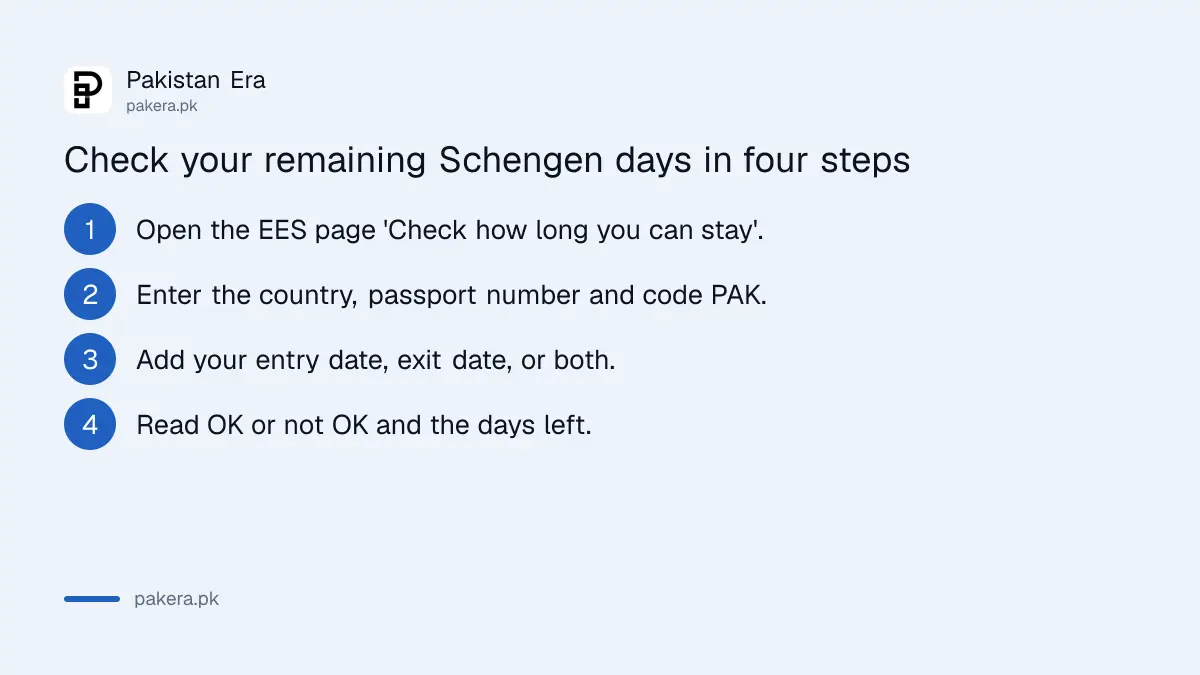
Check your remaining days in four steps
The tool lives on the EU's Travel to Europe website under the EES section. It needs a few details and gives a clear answer. Use it before you book a second trip, and again before you leave if your plans change.
- Open the "Check how long you can stay" page of the EES section on the EU's official Travel to Europe site.
- Enter the European country you are visiting, your travel document type and number, and the issuing country code. For a Pakistani passport the code is PAK.
- Add your intended entry date, your exit date, or both. Give the exit date if you are already there. Give both to see how many days remain after a planned trip.
- Read the result. It says whether entry is allowed, "OK" or "not OK", and how many days you may still stay.
You can also ask the passport officer at the border how many days are left. The same tool is installed on the equipment at some borders.
The tool does not count stays that began before 10 April 2026
This is the limit that catches people. The EU says the remaining stay does not reflect any time in the Schengen area that began before 10 April 2026, even if the visit ended later. So if you entered in March 2026 and left in May, those days are not in the tool.
The EU also warned that, until 6 October 2026 included, an "OK" could be wrong for holders of single or double-entry visas who had used an entry between 12 October 2025 and 9 April 2026. That date has passed, but keep your own record of old trips.
For any question about your remaining authorised stay, the EU tells you to contact the authorities of the country where you last entered or left. If you have not travelled since 10 April 2026, contact the country you plan to visit.
| Item | What the EU page says |
|---|---|
| Rule counted | 90 days in any 180 days, across all EES countries |
| Stays before 10 April 2026 | Not counted by the tool |
| Passport stamp | Not used; data is stored electronically |
| Overstay | Identified and recorded by the system |
Your data stays in EES for three years or more
The EU says records of entries, exits and refusals of entry are kept for 3 years. Individual files with personal data are kept for 3 years and 1 day. If no exit is recorded, the data is kept for 5 years.
The EU lists some groups EES does not apply to, including holders of residence permits and long-stay visas. A short-stay Schengen visa holder is not in that group. If you are going for a long stay on a national visa, the rule is different, and the visa itself will say so. For the visa step, see the full route to a Schengen visa from Pakistan. If your country is Spain, there is a separate route to apply for a Spain visa from Pakistan.
If your own passport is near its end, check the steps to replace a full or damaged Pakistani passport before you travel. A new passport has a new number, so use the number on the passport you carry when you use the tool.
What to do if the tool says "not OK"
"Not OK" means the system sees a problem with entry on those dates, usually that you would go over 90 days in 180. Do not travel on those dates. Change the dates and run the tool again, or shorten the trip.
Do not try to fix a count at the border. The EU says an overstay is recorded. If you think the count is wrong, contact the authorities of the country where you last crossed, using the contact page the EU provides. Keep your tickets and old entry stamps to show past trips.
If you were refused entry, the EU says the system records that too. For a refused visa on another route, the steps to review, appeal or reapply after a UK refusal show how such a process works.
Common questions
Does EES apply to Pakistanis with a Schengen visa?
Yes. It applies to non-EU citizens on a short stay who hold a short-stay visa or do not need one for 90 days.
Will my passport still be stamped?
No. The EU says your passport is not stamped once you are registered. The data is stored in the system.
Do I need a biometric passport?
No. In principle both biometric and non-biometric passports are accepted if valid. A chip passport only lets you use the self-service kiosks.
What code do I enter for a Pakistani passport?
Enter PAK, the three-letter code of the issuing country, with your document type and passport number.
Does the tool count a trip I took in early 2026?
Not if the stay began before 10 April 2026. Count those days yourself, and ask the border authorities if unsure.
Can I pre-register to save time?
Sometimes. A kiosk or a country mobile app may let you register data in advance. You still meet an officer.
How we verified this
What we checked, where we read it, and what we could not confirm.
Last checked on 13 October 2026, Pakistan time. We read the EU's Entry/Exit System pages on the Travel to Europe site, including its FAQ, the "How does the EES work" page, the "To whom does the EES not apply" page and the "Check how long you can stay" page. We did not use the tool with a real passport. Rules for each country's border may differ in small ways, so confirm with the border authority if your case is unusual.
About the author

Global Affairs & Political Economy Writer
Muhammad Hatim is a book lover who started writing because he enjoys it. At Pakistan Era he writes about international relations, geopolitics and the global economy, with a particular interest in South Asia and the forces behind current events.