Check the ICC 15 Degree Rule for Illegal Bowling Actions: What Pakistan Bowlers Face
See how the ICC tests an illegal bowling action: the 15 degree limit, the 48 hour panel, the 14 day report and how a bowler can challenge it. Read the steps.
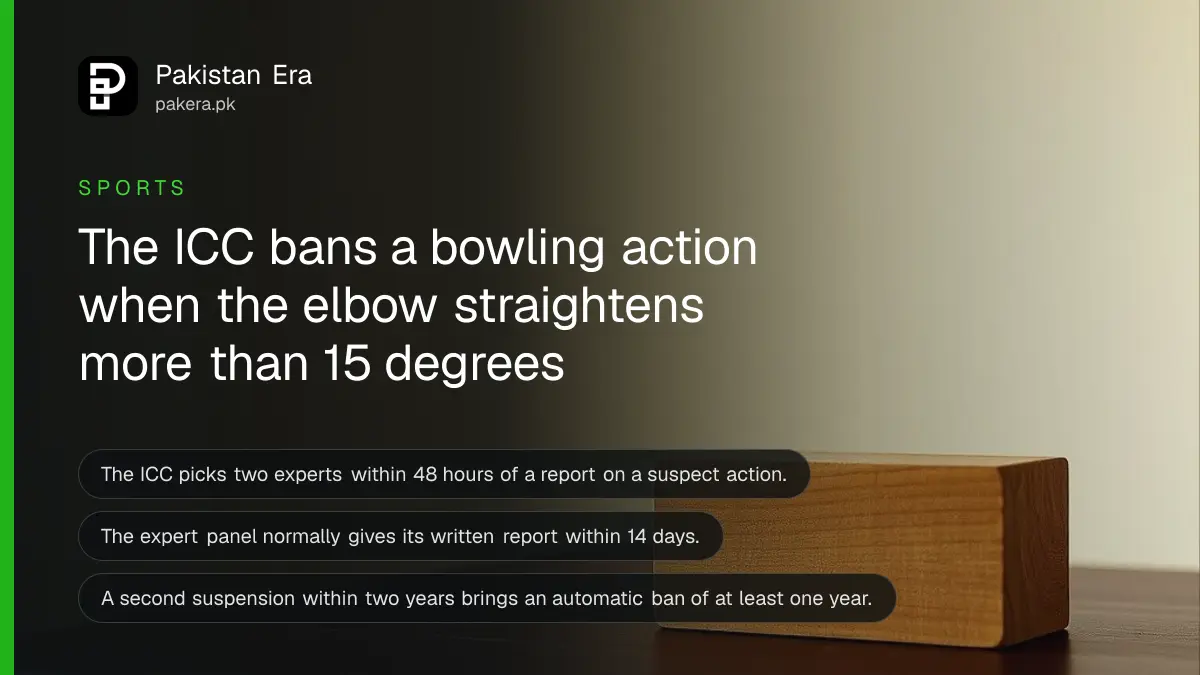
Short answer: The ICC bans a bowling action when the elbow straightens by more than 15 degrees between the arm reaching the horizontal and the ball leaving the hand. A reported bowler goes to two experts, can be suspended at once, and can only return after a passed test.
Every few months a bowler somewhere is reported for a suspect action, and the news travels faster than the facts. People ask how the test works, how long a ban lasts and whether a bowler can keep playing at home. The answers are in the ICC's published rules, and they are more detailed than most posts suggest.
We read the ICC's page on illegal bowling actions and the ICC regulations for the review of bowlers on 14 October 2026. The regulation PDF we opened is an undated consolidated text, and the ICC's own addendum says some steps changed for a period in 2020 and 2021. We state the main rules and mark what to confirm.
The rule is 15 degrees of elbow straightening
The ICC defines an illegal action as one where elbow extension exceeds 15 degrees. It measures from the point where the bowling arm reaches the horizontal to the point the ball is released. Hyperextension, where the elbow bends backwards, is not counted.
The regulation explains why 15 was chosen. Studies found that almost every bowler straightens the elbow a little. Straightening only became visible to the naked eye, and began to look like a throw, once it passed 15 degrees. So the line separates normal bowling from throwing.
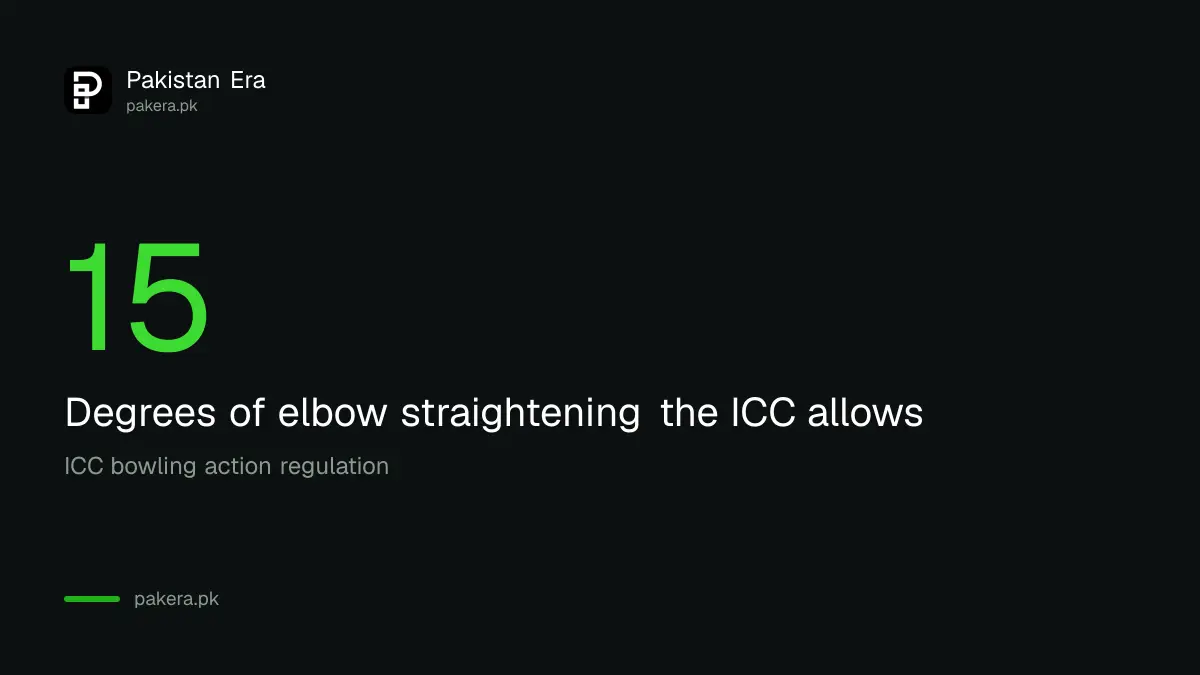
The ICC page adds that match officials judge by eye first. They do not measure in the middle of a match. If they believe an action may be illegal, they submit a report and the formal process starts.
A report starts a fixed process
After a report, the ICC appoints a panel of two human movement specialists within 48 hours. The panel reviews video, usually within 7 days, and gives a written report within 14 days. Until then the bowler may keep bowling, but an umpire can still call a throw.
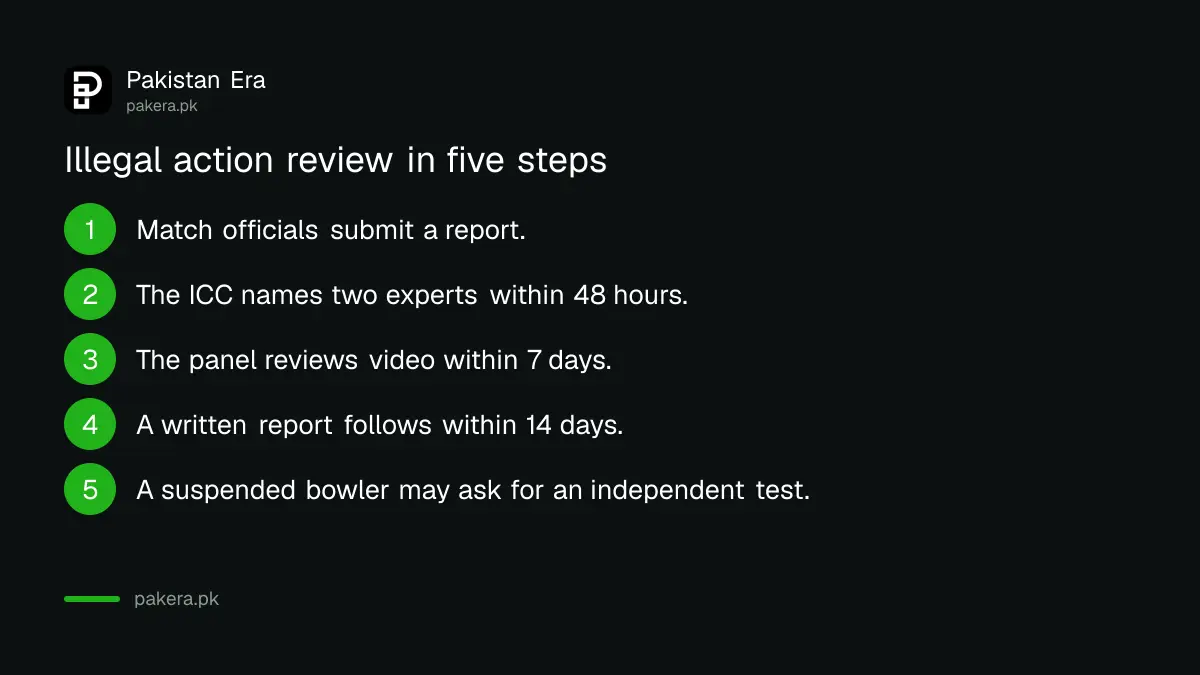
| Stage | What the ICC regulation says |
|---|---|
| Report | Match officials submit a report on a suspect action |
| Panel named | Two specialists, within 48 hours of the report reaching the ICC |
| Review | Video review, unless exceptional, within 7 days of notice |
| Written report | Within 14 days, unless exceptional |
| If illegal | Bowler is suspended from bowling in international cricket at once |
The panel must reach a unanimous view on video. Wherever possible the specialists come from countries other than the bowler's own. That detail is meant to keep the review neutral.
A bowler can challenge a failed review
A bowler or board that disputes the panel can ask for an independent test within 7 days. The test is done by an appointed specialist at an ICC accredited testing centre, at the player's or board's cost. If the test passes the action, the suspension is lifted at once.
If the test confirms the action is illegal, the suspension stays. The ICC page says the player is then suspended until the action is changed and a further test is passed. A second suspension within two years of the first brings an automatic ban of at least one year.
These steps matter for the series ahead. Pakistan plays two home Tests against Sri Lanka in November, and the match referee and umpires are named in advance. You can see who is on duty in the list of tri-series match officials.
A ban applies to domestic cricket too
The regulation says a suspension from international bowling must be respected by every national board in its own domestic cricket, so the PCB would have to enforce it. When a suspension is lifted, the bowler can bowl in domestic cricket again without any further step.
A board can also run its own tests at home. The regulation covers the case where a national federation suspends a bowler after an analysis at an accredited centre. That is useful for young bowlers, because coaches can fix an action early at an accredited facility before a report ever happens.
If you coach in a school or academy, the safest habit is simple. Film your bowler from the side and the back, ask a qualified coach to look at the elbow, and fix problems before the bowler reaches trials. The PCB age-group trials are where many actions get noticed first.
What to remember when a name is in the news
A report is not a ban. The bowler can keep playing during the review, and only a panel finding or a failed independent test brings a suspension. Treat early headlines as unconfirmed until the ICC or the PCB publishes the outcome.
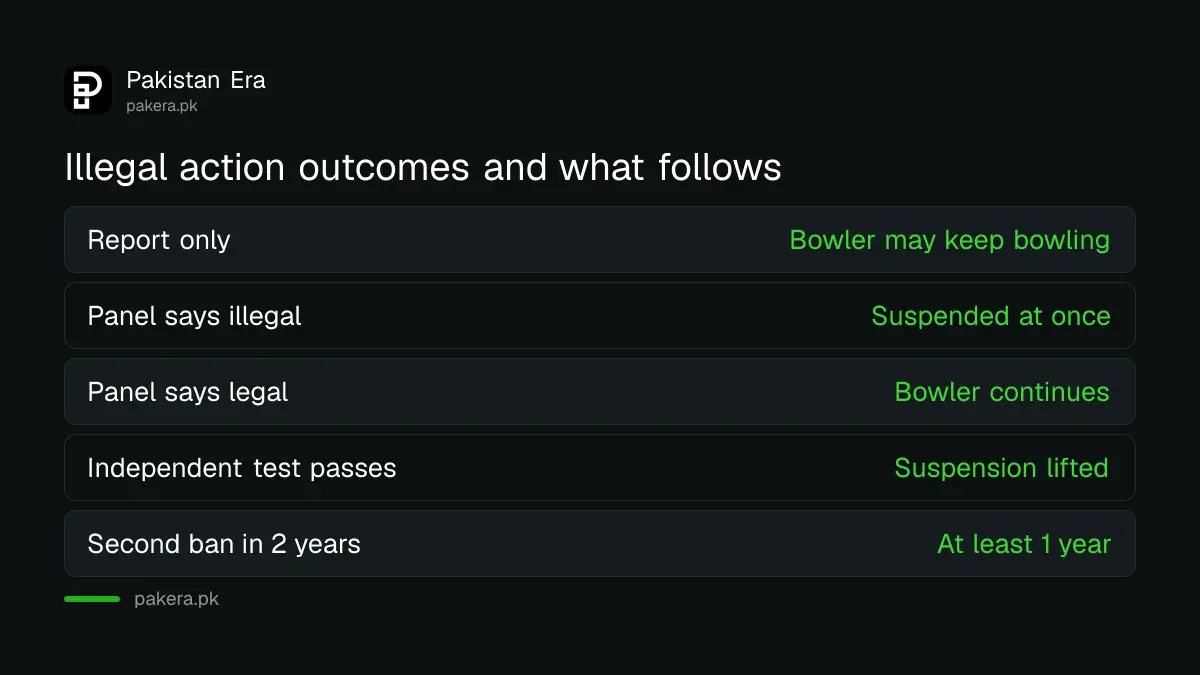
- Check whether the news says "reported" or "suspended". They are different stages.
- Look for the ICC or PCB statement, not a social media clip.
- Note the date of the report, because the panel has 14 days.
- Remember the bowler can ask for an independent test within 7 days.
- Expect a returning bowler to need a passed test before bowling again.
Our rule on the site is the same: we state a ban only when the governing body has said so.
Common questions
What is the legal limit for elbow straightening?
The ICC limit is 15 degrees of elbow extension, measured from the horizontal arm position to the release of the ball. Anything above that is an illegal action under its regulations.
Who reports a suspect action?
Match officials report it. The ICC page says umpires and referees use their eyes and experience first and then submit a report that triggers the testing process.
Can a reported bowler keep playing?
Yes, until a panel reports. The regulation says the bowler may continue during the review, though umpires can still call a throw on the field under the Laws.
How long is the ban?
It lasts until the action is corrected and a further test is passed. A second suspension within two years brings a minimum one year ban.
Does the ban apply in Pakistani domestic cricket?
Yes. The regulation says national boards must enforce an ICC suspension in their own domestic cricket automatically.
How we verified this
What we checked, where we read it, and what we could not confirm.
Last checked on 14 October 2026, Pakistan time. We read the ICC page on illegal bowling actions and the regulation and addendum PDFs it links. The addendum covers 2020 and 2021 changes, so confirm the current edition on the ICC site before relying on a time limit. We did not check any single bowler's status.
About the author

Tax, Bills and Technology Writer
Ali Akhtar is a young and curious voice here at Pakistan Era. He is currently pursuing his A-Levels and has a growing interest in Pakistan’s changing industrial landscape and educational trends. Ali likes to write in a way that helps him explain and explore the world around him. His writing reflects the perspective of the new generation navigating the evolving trends of Pakistan where technology, youth innovation, and shifting opportunities are reshaping the country’s future.