How to Check a Real Pashmina Shawl in Pakistan: 6 Tests Before and After You Buy, Including the Burn Test
How to check a real pashmina shawl in Pakistan: 6 simple tests, how to read the burn test, why the ring test proves nothing, price warning signs and care tips.
To check a real pashmina shawl in Pakistan, start with the label and the bill, then feel, look and, if you already own it, burn one thread from the fringe. Real pashmina feels soft, slightly fuzzy and warms in your hands within seconds. A pulled thread burns with a smell of burnt hair and leaves a soft ash that crumbles. Acrylic and polyester melt into a hard bead and smell of plastic. The "ring test" proves nothing, because any thin shawl slides through a ring.
Every winter, bazaars from Saddar in Rawalpindi to Liberty in Lahore fill with shawls sold as "pashmina". Some are genuine. Many are acrylic, viscose or a wool blend with a pashmina name stitched on. Those can still be good shawls. The problem is paying a pashmina price for one.
What real pashmina is
Pashmina is the very fine undercoat of a mountain goat, the same kind of fibre the rest of the world calls cashmere. It is combed out by hand in spring, spun and usually woven on a hand loom. That is why pure pashmina is light, very warm and expensive.
Shops in Pakistan use the word in three ways, and it helps to know which one you are hearing:
- Pure pashmina: 100 per cent goat undercoat fibre. Light, warm, soft, and the most expensive.
- Pashmina blend: pashmina mixed with silk or fine wool, often 70 to 30 or 50 to 50. A real product, but it should be sold as a blend and priced below pure.
- "Pashmina" as a style name: acrylic, viscose or polyester shawls sold under the name. These are not pashmina at all, whatever the tag says.
Nothing is wrong with a viscose or acrylic shawl. It is cheap, easy to wash and often pretty. Just pay for what it is.
Six tests to check a pashmina shawl
Do the first five in the shop. They cost nothing and take two minutes. Keep the burn test for home, on a shawl you have already bought, using only a single thread from the fringe.
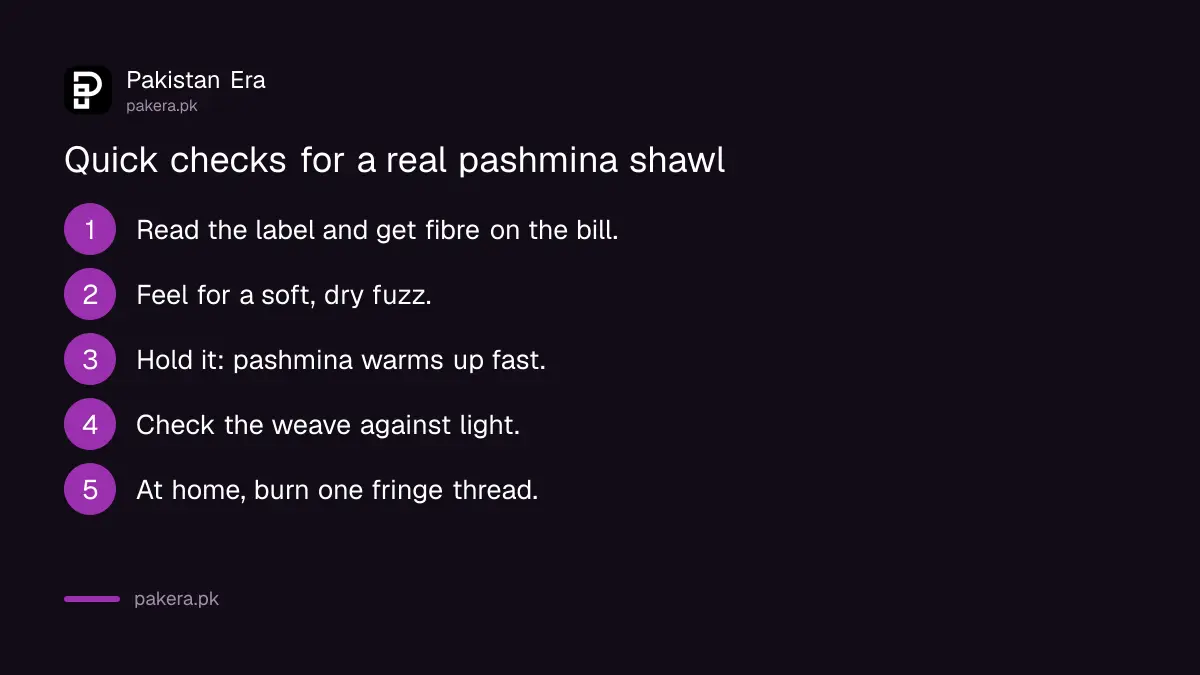
- Read the label and ask for the bill. Look for "100% pashmina" or "100% cashmere". Words like "pashmina feel", "pashmina style" or "soft touch" usually mean synthetic. Ask the seller to write the fibre on the bill. A seller who refuses is telling you something.
- Feel it. Real pashmina is soft with a slight dry fuzz, not slippery or glassy. Rub it gently between thumb and finger. Synthetic fibre feels smooth and cool, almost like plastic.
- Hold it for a minute. Pashmina traps heat and feels warm in your hands quickly. Acrylic stays cool for longer.
- Look at the weave against the light. Hand-loomed shawls show small irregularities in the threads. A perfectly even, machine-like weave with a strong shine suggests synthetic or a machine-made blend.
- Rub it on your sleeve. Synthetic shawls often crackle with static and cling. Pure pashmina rarely does.
- The burn test, at home only. Pull one thread from the fringe. Hold it with tweezers over a steel plate, away from anything that can catch fire, and touch it to a flame.
How to read the burn test
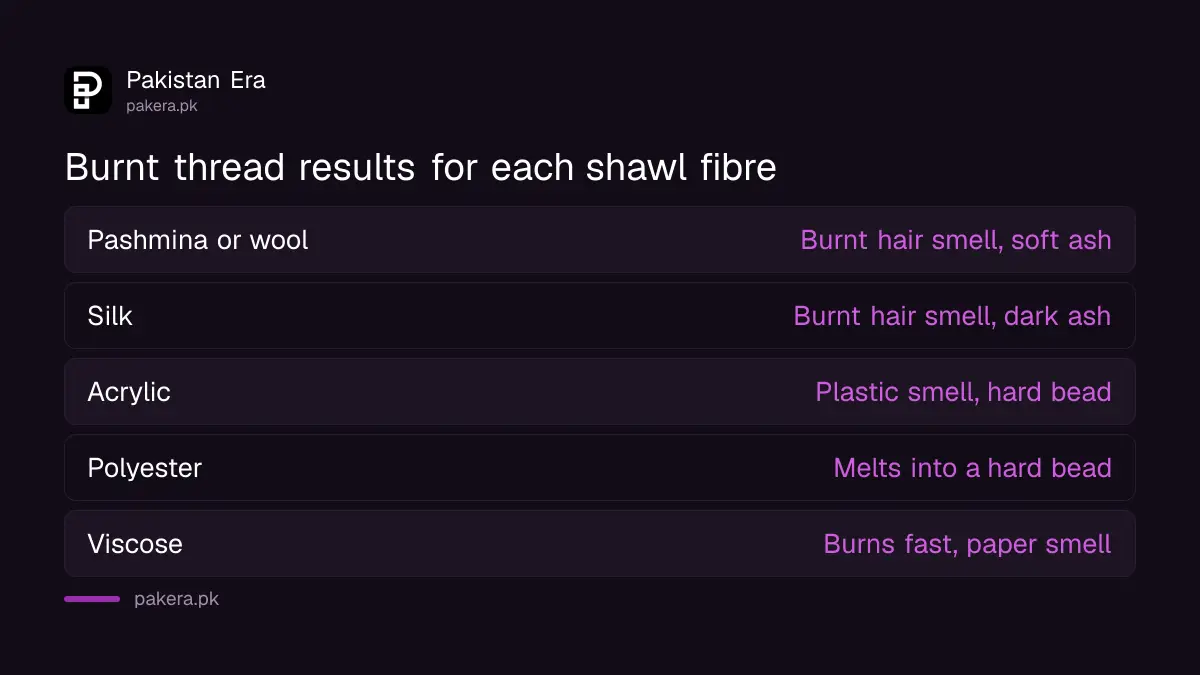
The burn test is the most reliable home check, because each fibre burns differently. Animal hair smells like burnt hair and leaves soft ash. Plastic fibres melt into hard beads. Plant-based fibres, including viscose, burn fast like paper.
| Fibre | How it burns | Smell | What is left |
|---|---|---|---|
| Pashmina or wool | Burns slowly, curls away from the flame, often goes out on its own | Burnt hair | Soft, dark ash that crumbles |
| Silk | Burns slowly, often goes out | Burnt hair | Crushable dark ash |
| Acrylic | Melts and burns, may drip | Chemical or plastic | Hard, dark bead |
| Polyester | Melts, shrinks from the flame | Sweet or plastic | Hard bead |
| Viscose or cotton | Burns fast with a steady flame | Burning paper | Light grey ash |
A blend gives mixed signs. A pashmina and silk blend smells of burnt hair throughout. A wool and acrylic mix smells of hair but leaves a few hard bits. If you find a hard bead from a shawl sold as pure pashmina, keep the bill and go back to the seller.
Be careful. Do this with water nearby, outdoors or by a sink, and never on the shawl itself. Children should not try it. One thread is enough.
Why the ring test does not prove anything
Sellers often pull a shawl through a finger ring to show it is fine. The test only shows the fabric is thin. Many fine viscose and acrylic shawls pass through a ring easily, and some heavy, genuine pashmina shawls do not. Treat it as a show, not a check.
The same goes for a lighter flame held near the whole shawl in the shop. Never let a seller do that, and never do it yourself. It is dangerous, it damages the shawl, and a quick flash proves little.
A certificate printed by the shop is not proof either. What protects you is a bill that names the fibre and a seller who accepts returns. That bill is what lets you complain later.
Price is the first warning sign
A pure, hand-woven pashmina takes weeks of skilled work and a fibre that is scarce. If a "pure pashmina" costs less than a good plain wool shawl in the same market, it is almost certainly not pure. We do not give a price here, because pure pashmina prices vary widely by size, weave and embroidery, and we did not survey sellers for this page.
Compare like with like. A plain, solid-colour shawl should be cheaper than one with heavy hand embroidery (sozni) all over. A machine-embroidered border on a shiny base is a sign of a synthetic shawl. For what plain winter shawls and stoles cost at the big brands this season, see the winter accessories price list.
Ask about returns before you pay. If a branded shop sells you a "pashmina" that fails the burn test, its exchange window is often short, so check it on day one. Our brand exchange policy list gives the days at each brand.
Care for a real pashmina so it lasts
A genuine pashmina can last for decades if you wash it rarely and gently. Air it after wearing, hand wash in cold water with a mild wool wash only when needed, press the water out without wringing, and dry it flat in the shade. Store it folded, clean and away from moths.
- Do not hang a wet pashmina. It stretches out of shape.
- Do not iron it directly. Use a low setting with a thin cotton cloth on top, or hang it in a steamy bathroom.
- Small fuzz balls (pilling) on a new pashmina are normal in the first few wears. Remove them gently by hand.
- For an embroidered or very old shawl, a careful dry cleaner is safer than home washing.
The full home method is in our steps to wash wool and cashmere shawls at home. Once you have the real thing, there are eight good ways to wear a shawl that show it off.
Common questions
How can I tell if a pashmina is real?
Check the label and bill for 100 per cent pashmina or cashmere, feel for a soft dry fuzz, and at home burn one fringe thread. Real pashmina smells of burnt hair and leaves crumbly ash.
Does the ring test prove a pashmina is real?
No. Any thin shawl, including viscose and acrylic, can pass through a ring.
Is pashmina the same as cashmere?
Both come from the fine undercoat of goats. Pashmina is the traditional name in the region, usually for very fine fibre woven by hand.
Is a pashmina silk blend fake?
No. Pashmina and silk blends are a real product. They should be sold as blends, at a lower price than pure pashmina.
Why does my pashmina shawl crackle with static?
Strong static and clinging usually point to a synthetic fibre such as acrylic or polyester.
Can I wash a pashmina shawl at home?
Yes, gently by hand in cold water with a mild wool wash, then dried flat in the shade. Embroidered or antique shawls are safer with a dry cleaner.
How we verified this
What we checked, where we read it, and what we could not confirm.
This guide was written on 5 November 2026. The fibre tests are standard textile identification methods used in homes and by tailors, not a laboratory test, and we did not run them on a particular shawl for this page. We did not survey shawl prices, so no price is given. For a definite answer on an expensive shawl, a textile testing laboratory can identify the fibre.
About the author

Lifestyle & Clothing Writer
Mahnoor Siddiqui is a lifestyle and clothing writer at Pakistan Era, joining the new lifestyle desk in November 2026.