Karahi or Pan of Oil on Fire in Pakistan: What to Do, per NDMA Kitchen Fire Rules
A karahi or pan of oil on fire in Pakistan: turn off the stove, cover with a metal lid or fire blanket, never use water or carry it. NDMA Class K rules, 1122.
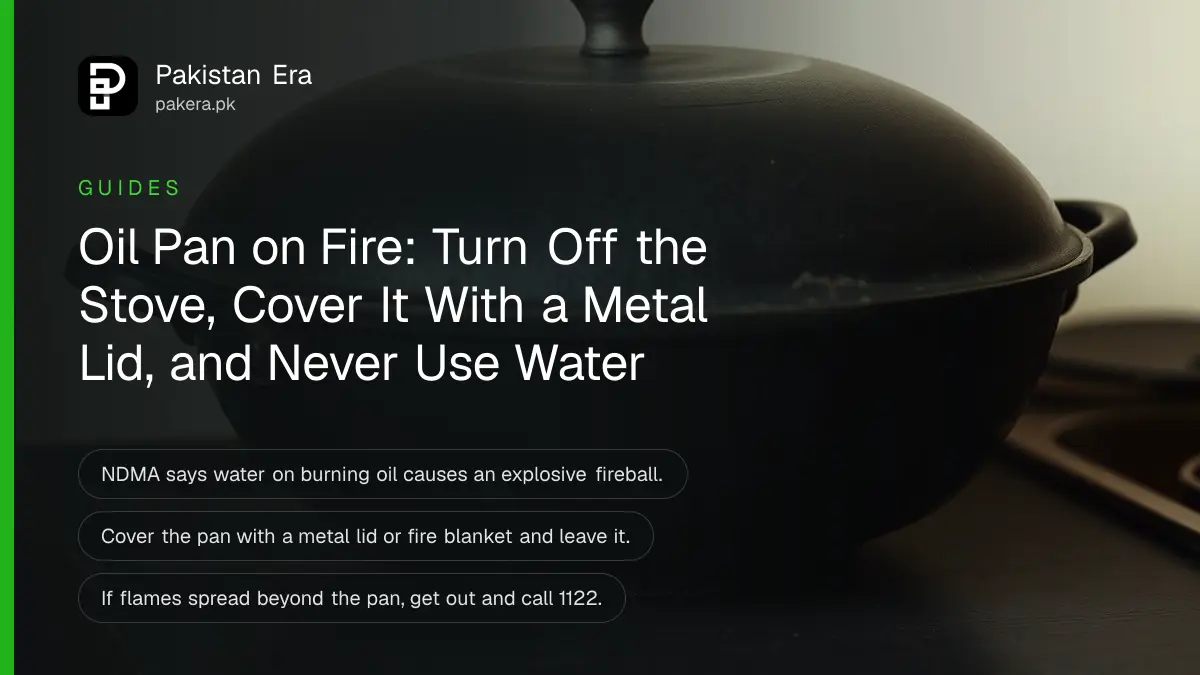
If oil in a karahi or pan catches fire: turn off the stove, slide a metal lid or a fire blanket over the pan, and leave it covered until it is cold. Never throw water on it, and never carry the pan outside. NDMA's fire guidelines warn that water on burning oil causes an explosive fireball. If the flames spread beyond the pan, get everyone out and call 1122.
Cooking oil and ghee fires are Class K in NDMA's Urban Fire Safety Guidelines of 16 March 2026. They behave differently from a paper or wood fire, and most of the instincts people have, like pouring water or running outside with the pan, make them worse. This page sets out the safe order, step by step.
Turn off the heat and cover the pan in the first few seconds
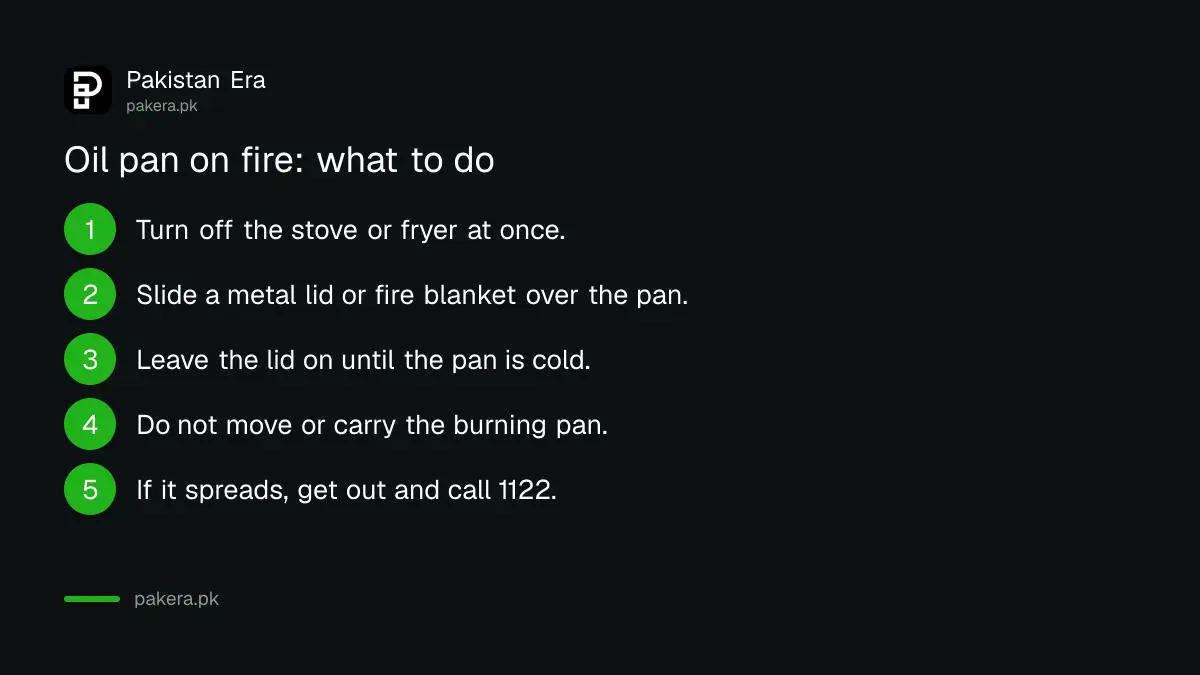
NDMA's first two steps for a cooking oil fire are to stay calm and turn off the stove or fryer at once, then cover the pan with a metal lid or fire blanket. Cutting the heat and the air together starves the flame.
- Turn off the burner or switch off the electric fryer. If the knob is behind the flames, turn off the gas at the cylinder valve or the appliance valve instead.
- Slide a metal lid or flat baking tray over the pan from the front edge, keeping your arm low. Do not drop it from above.
- Leave the lid on. Do not lift it to check. Oil stays hot enough to reignite for a long time.
- Do not move the pan. NDMA's rule is "Don't carry fire".
- Open a window only once the flame is out, to clear the smoke.
A fire blanket is a folded sheet of fire-resistant cloth in a wall pouch. You pull the tapes and lay it over the pan. It is the tool NDMA names alongside the metal lid. A damp kitchen towel is not a substitute, because the water in it can spit burning oil.
Water on burning oil causes an explosive fireball
NDMA's chart puts it in four words: "Water + Oil = Explosion". Water sinks under the hot oil, boils instantly into steam, and throws burning oil into the air. That fireball can reach the ceiling and the person holding the bucket.
The same chart lists other things not to do:
| Do not | Why NDMA says no |
|---|---|
| Throw water on the pan | Causes an explosive fireball |
| Carry the burning pan | You spread the fire and spill burning oil |
| Leave the burner on | The heat keeps feeding the fire |
| Use foam, CO2 or dry powder | Wrong tool, bigger risk on oil fires |
| Try to be a hero | Your life is worth more than the kitchen |
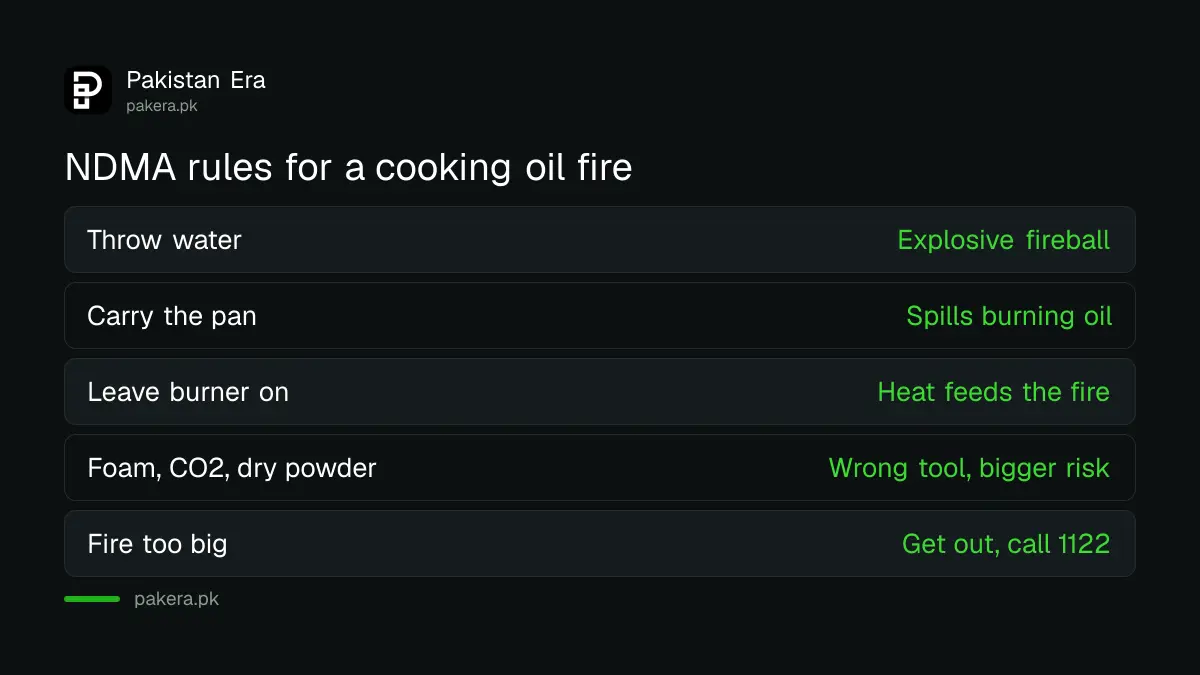
Note the line on extinguishers. NDMA says foam, CO2 and dry powder are the wrong tools for a Class K fire, and names only a Class K wet chemical extinguisher. A CO2 blast can also push burning oil out of the pan. For a home, the lid and fire blanket are the realistic tools. If the fire grows, the escape steps are in NDMA's house fire rules.
Leave and call 1122 when the fire spreads beyond the pan
NDMA's rule is simple: too big, get out. If flames reach the cabinets, the hood or the wall, or the lid does not work, leave the kitchen, close its door, take everyone out and call 1122 or 16.
Closing the kitchen door slows the smoke and fire. NDMA's guidelines say one closed door can save a floor. When you call, say "kitchen fire, cooking oil" and give your full address with a landmark. Do not go back in for phones or documents.
If someone's clothes catch fire, NDMA's rule is stop, drop and roll. For burns from hot oil, cool the skin under running water as set out in burn and scald first aid, and never put ghee or oil on a burn.
Most kitchen oil fires start with a pan left on the flame
A karahi of oil heating for pakoras or samosas is the classic start. Oil gets hotter and hotter until it smokes, then catches fire on its own. Staying at the stove while frying prevents most of these fires.
Simple habits cut the risk:
- Stay in the kitchen while oil is heating. If you must leave, turn the burner off.
- Watch for smoke. Smoking oil is close to catching fire, so turn down the heat.
- Keep a lid that fits each frying pan within reach while you cook.
- Dry wet food before it goes into hot oil, to stop spitting.
- Keep cloths, plastic and curtains away from the stove, as NDMA advises for all heat sources.
- Keep children back from the stove during frying.
Gas stoves add a second risk. If the flame goes out and gas keeps flowing, the kitchen can fill with gas. If you smell gas, NDMA says do not operate electric switches nearby. Turn off the valve, open windows and call your gas company on 1199, as explained in the SNGPL and SSGC complaint helpline.
After the fire, wait for the pan to cool and check the kitchen
Leave the lid on until the pan is cold to the touch. Then check the hood, wall and gas pipe for heat damage. If the fire reached any wiring or the gas line, get it checked before you use the stove again.
- Do not pour the used oil down the drain. Let it cool, then put it in a sealed container for the bin.
- Clean soot with a dry method first; soot smears when wet.
- If smoke stained clothes or curtains, see removing soot and smoke stains.
- If the gas pipe or regulator near the stove was in the flames, ask the gas company to inspect it.
Common questions
Can I put out a cooking oil fire with water?
No. NDMA says water on burning oil causes an explosive fireball. Turn off the heat and cover the pan with a metal lid or fire blanket.
Should I carry the burning pan outside?
No. NDMA's rule is "Don't carry fire". Moving the pan spills burning oil on you and the floor. Leave it on the stove, covered.
Will a fire extinguisher put out a karahi fire?
NDMA lists foam, CO2 and dry powder as the wrong tools for cooking oil. Only a Class K wet chemical extinguisher is named for it. At home, use a lid or fire blanket.
Can I use flour or salt on an oil fire?
NDMA does not list flour or salt. Flour can burn in the air. Use a metal lid or fire blanket, which NDMA does name.
How long should I leave the lid on?
Until the pan is cold to the touch. Lifting it early lets air back in, and hot oil can catch fire again.
What number do I call for a kitchen fire?
Call 1122 for fire and rescue, or 16 for the fire brigade. Say it is a cooking oil fire and give your full address.
How we verified this
What we checked and where we read it.
We checked the NDMA Urban Fire Safety Guidelines, dated 16 March 2026, on the NDMA guidelines page on 25 November 2026. Its Class K chart gives the steps used here: turn off the stove or fryer, cover with a metal lid or fire blanket, do not move the pan, do not throw water, do not use foam, CO2 or dry powder, use a Class K wet chemical extinguisher, leave if the fire spreads and inform the fire brigade. The gas smell rule and "one closed door can save a floor" are from the same guidelines. Emergency numbers match the Rescue 1122 service and the gas companies' 1199 line. Last checked 25 November 2026.
Free on WhatsApp
Get last dates and rule changes on WhatsApp
We post new last dates, fee changes and fixes for common problems, a few short posts a day.
Follow Pakera on WhatsAppOther followers cannot see your number.
Pakera Solves It
Which online process wasted your time this week?
A portal that will not load, a form nobody explains, a complaint that went nowhere. Tell us. Every week we pick one, solve it step by step and publish the answer.
About the author

Lifestyle & Clothing Writer
Mahnoor Siddiqui is a lifestyle and clothing writer at Pakistan Era, joining the new lifestyle desk in November 2026.