Federal Tax Ombudsman Draft Regulations 2026 Explained: What Would Change for Complainants
See what the Federal Tax Ombudsman's draft 2026 regulations propose: digital case files, priority for business complaints and fewer adjournments. It is a draft.
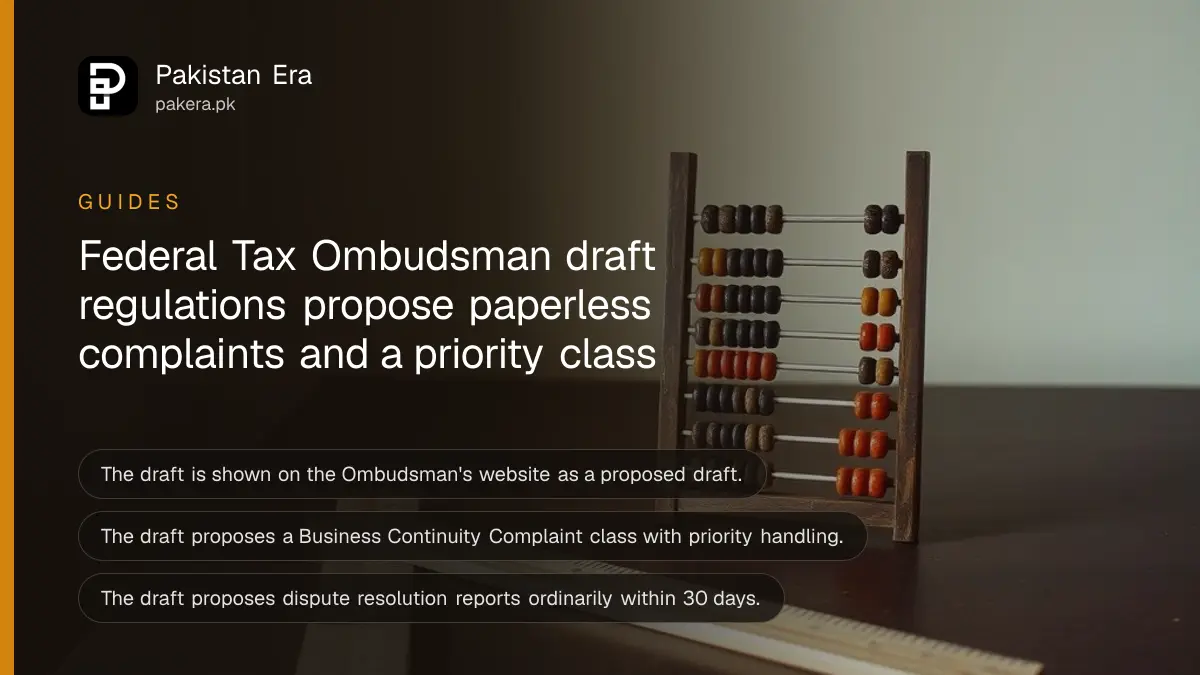
Short answer: The Federal Tax Ombudsman has a proposed draft of new Practice and Procedure Regulations, 2026 on its website. The draft would make complaints paperless, add a Business Continuity Complaint class, allow informal dispute resolution and make adjournments rare. It is a draft, not law, and we found no notification of final regulations.
Anyone who has complained to the Federal Tax Ombudsman about a stuck refund has asked the same question: what happens to my complaint after I file it? The draft regulations answer that step by step. They are worth reading if you deal with FBR, because the draft shows where the office wants to go.
We downloaded the 34-page draft from the Federal Tax Ombudsman's website and read it in full. We also read the notice on the same website that frames it. We did not speak to the office, so what follows is what the paper says, not what the office does today.
The draft is a proposal that the office put out for comment
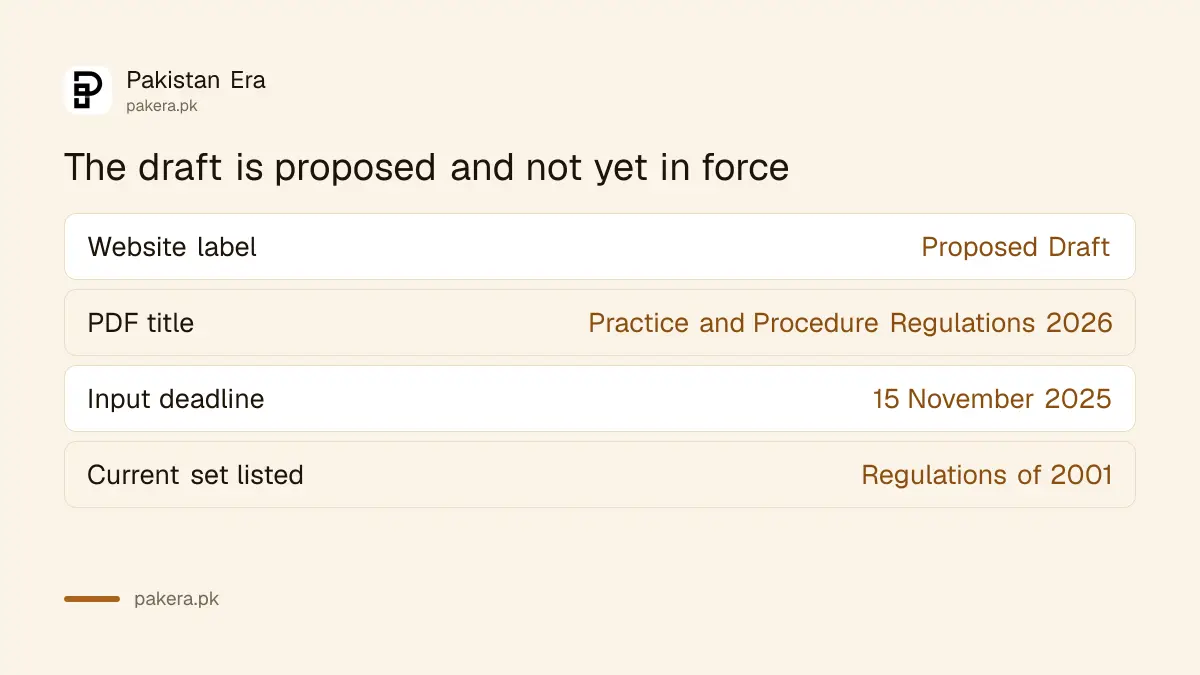
The Federal Tax Ombudsman's website carries a "Proposed Draft" labelled "Federal Tax Ombudsman Investigation and Disposal of Complaints Regulations 2026". The PDF itself is titled "Federal Tax Ombudsman (Practice and Procedure) Regulations, 2026". The two names refer to the same draft.
A notice on the site says the deadline for stakeholder input was extended to 15 November 2025. Suggestions were to go to an email address given there. The page still shows the draft as proposed. The site's list of legal framework documents also still shows the 2001 Regulations as the current set.
So the draft has no legal force that we could see. If final regulations are notified, the office should publish them. Until then, the 2001 Regulations and the Ordinance of 2000 govern your complaint.
| Point | What we found |
|---|---|
| Name on the website | Federal Tax Ombudsman Investigation and Disposal of Complaints Regulations 2026 (Proposed Draft) |
| Title in the PDF | Federal Tax Ombudsman (Practice and Procedure) Regulations, 2026 |
| Input deadline on the site | 15 November 2025, after an extension |
| Status | Shown as a proposed draft; no final notification found |
| Current regulations listed | Investigation and Disposal of Complaints Regulations, 2001 |
The draft would run complaints on a digital case file
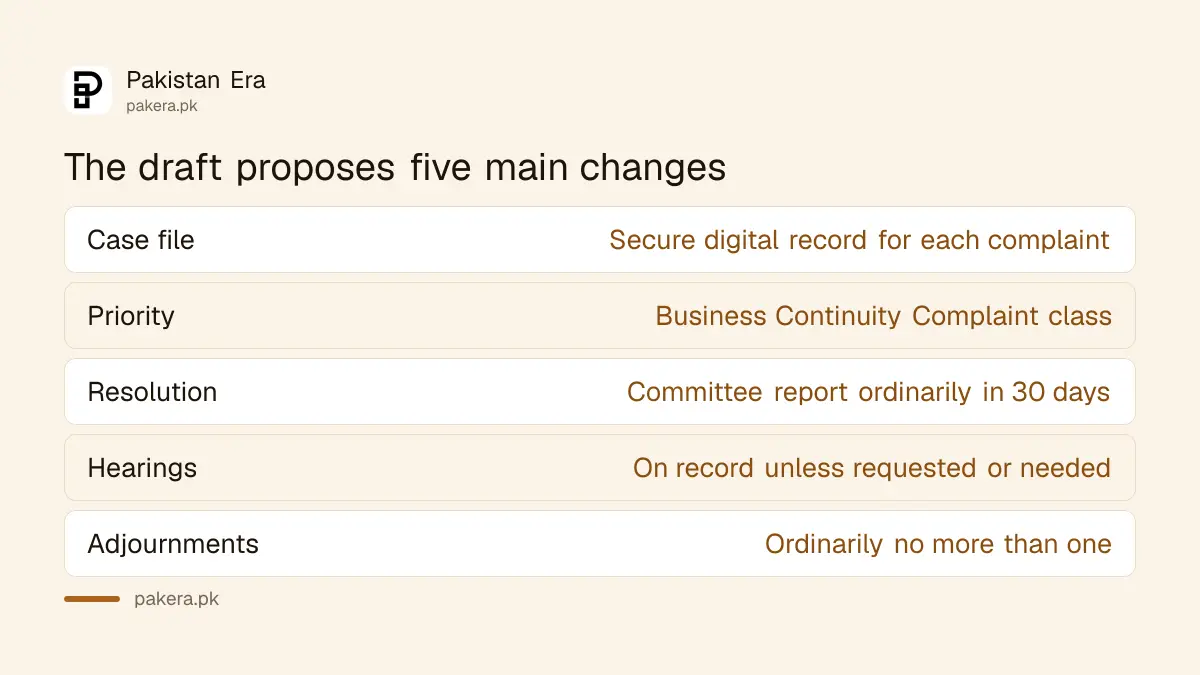
The draft says proceedings should be run through a secure digital case management system, with one electronic case record for each complaint. Complaints may be presented personally, by post, courier or secure digital platforms, and notices could be served electronically.
It also says the date a complaint is received counts as the date it is filed, even if a form defect is fixed later. The Registry must give a unique number, acknowledge receipt and tell the complainant promptly about any defect, with reasonable time to fix it.
For someone with a refund problem, that last point matters. A missing signature would not push the filing date forward under the draft.
Business Continuity Complaints would get priority
The draft lets an Advisor class a matter as a Business Continuity Complaint when an act or decision is likely to cause substantial disruption to lawful business, such as serious financial loss or risk of closure. Such complaints would get priority and shorter timelines.
The draft is careful about one thing. Classing a complaint this way creates no presumption about whether it is right. It only moves it up the queue. The Ombudsman could issue Practice Directions on how to decide which complaints qualify, so the test is not final.
Informal dispute resolution and fewer adjournments
With the consent of both sides, the Ombudsman could refer a suitable complaint to a National or Regional Dispute Resolution Committee. Proceedings would stay until the Committee reports, ordinarily within thirty days, and the Ombudsman could extend that once by up to thirty days.
| Subject | What the draft proposes |
|---|---|
| Hearings | On the record by default; oral hearing only if requested or needed; electronic appearance allowed |
| Adjournments | Not ordinarily granted; usually no more than one per party |
| Dispute resolution | By consent; report ordinarily within 30 days, one extension of up to 30 days |
| Review petitions | Comments by the respondent; one extension of up to seven days |
| Inspection | Reasonable notice, ordinarily not less than 15 days to reply |
If a party does not appear after due notice, the Advisor could decide on the available record. An orders-and-compliance chapter would track whether the FBR office carried out the recommendations, with a notice for explanation where no compliance report arrives.
What this means for your complaint today
Nothing changes yet. File under the current process, which we explain in our page on complaining to the Federal Tax Ombudsman about FBR. If the Ombudsman's decision goes against you, the route to the President is covered in challenging an ombudsman decision by representation.
- Write to the FBR office first and keep a dated copy.
- File Form A with the Federal Tax Ombudsman under the current process.
- Keep your papers in a form that can be scanned or emailed.
- Watch the Ombudsman's website for a final notification before you rely on any draft term.
Check that the refund itself is due before you file. Our page on claiming an income tax refund from FBR covers that step.
Common questions
Are the Federal Tax Ombudsman draft regulations in force?
We found no notification. The website shows the text as a proposed draft and still lists the 2001 Regulations as the current set.
What is a Business Continuity Complaint?
It is a draft class for matters likely to cause substantial disruption to a lawful business. It would get priority handling, with no presumption on the merits.
Would complaints be filed online under the draft?
The draft allows electronic presentation through secure digital platforms the Ombudsman approves, alongside personal filing, post and courier.
Does the draft change the time limits in the Ordinance?
No. It says nothing in its time rules extends a statutory limit that the law does not allow to be extended.
Where can I read the draft?
It is on the Federal Tax Ombudsman's website at fto.gov.pk, under the Proposed Draft notice.
How we verified this
What we checked, where we read it, and what we could not confirm.
Last checked on Sunday 11 October 2026. We read the draft regulations PDF and the framing notice and legal framework list on the Federal Tax Ombudsman's home page. We could not confirm from the website when the draft was first posted, or whether final regulations are pending.
About the author

Public Services and Education Journalist
Fajr Riaz is a journalist and content writer at Pakistan Era, based in Lahore. She covers the questions people meet in everyday life in Pakistan: how a public service works, what a change in the rules means, and where to find a reliable answer.