Introduction
The Government of Pakistan has taken an important step to reduce fraudulent activities related to traditional stamp papers by introducing the e-stamp system. Stamp papers are commonly used to record legal agreements, submit applications, or document any legal matter that may be enforced by a court of law. For many years, physical stamp papers were sold at standardized rates, but unfortunately they were often sold at higher prices by unauthorized sellers.
To solve this problem, the government introduced e-stamp papers, allowing the public to generate and print stamp papers themselves through an official online system. This initiative not only reduces fraud but also makes the process more transparent and convenient for citizens. With the e-stamp system, you can generate a digital stamp paper online and print it on plain white paper while still maintaining full legal validity.
Understanding how to issue an e-stamp paper can save time, reduce costs, and help ensure that your legal documents are secure and verifiable.
What Is an E-Stamp Paper?
An e-stamp paper is a digitally generated stamp paper issued through the official government portal. It serves the same legal purpose as the traditional physical stamp paper but is generated electronically.
The key difference is that instead of buying a pre-printed stamp paper from the market, you create it online. The system automatically calculates government duties and taxes, assigns a unique identification number, and generates a printable stamp document.
Because every e-stamp includes a QR code and unique verification number, it becomes much harder to forge or misuse.
Why the Government Introduced E-Stamp Papers
The introduction of e-stamp papers was mainly aimed at eliminating fraud and overpricing in the stamp paper market.
Previously, many people had to rely on middlemen or unauthorized sellers who would charge higher prices than the official rates. In some cases, fake stamp papers were also circulated, creating serious legal complications.
With the digital system:
- The price of stamp papers is calculated automatically by the system.
- Fraudulent or fake stamp papers are easier to detect.
- Citizens can generate their own stamp papers online.
- The need for traditional yellow stamp papers is gradually being eliminated.
This system increases transparency and ensures that government duties are paid correctly.
How to Issue an E-Stamp Paper Online Step-by-step;
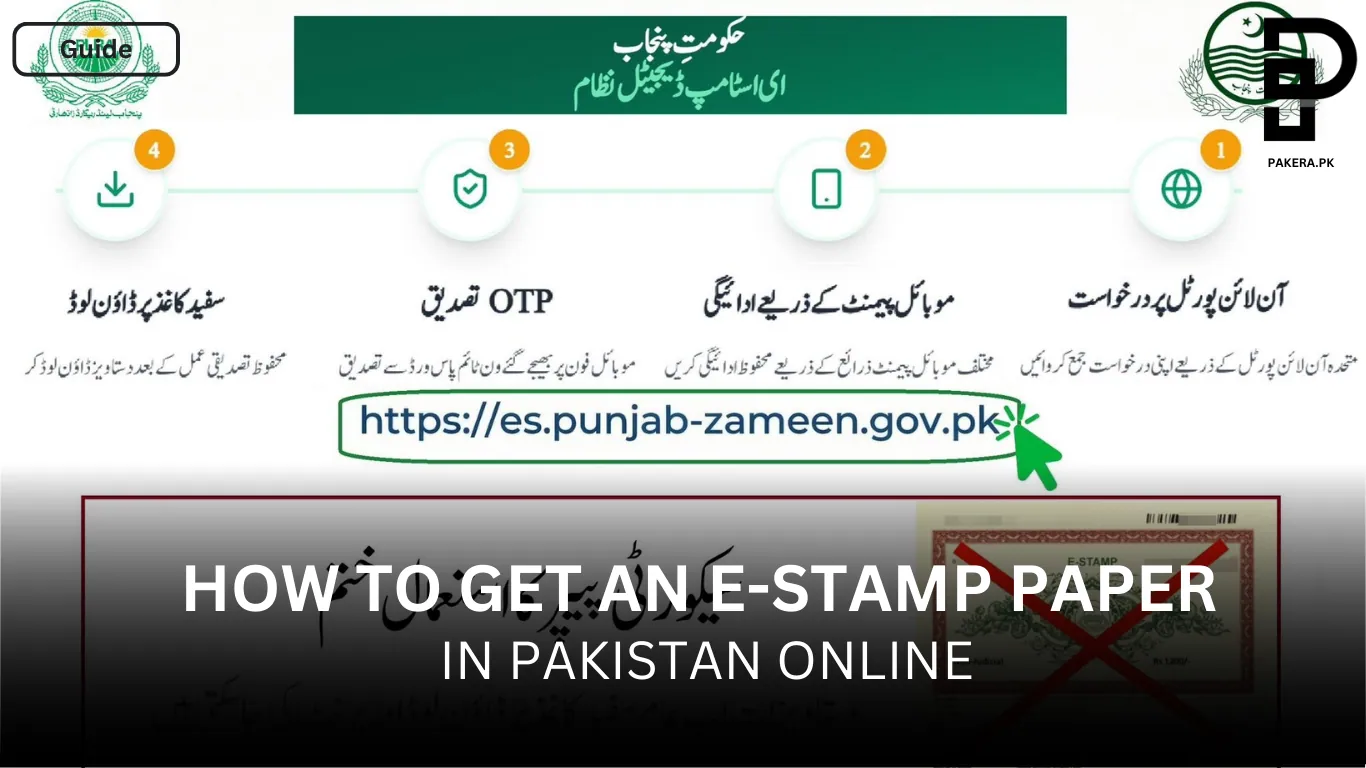
Issuing an e-stamp paper in Pakistan is a straightforward process that can be completed through the official portal provided by the Punjab Land Records Authority.
1.Visit the Official E-Stamp Portal
The first step is to visit the official website of the Punjab Land Records Authority (PLRA) e-stamp system.
On the portal, you can begin the process of generating your digital stamp paper by entering the required details related to your legal transaction.
2.Generate Challan Form 32-A
After entering the portal, you need to generate Challan Form 32-A. This form is used to submit the necessary information required for the e-stamp.
You will be asked to provide details such as:
- District
- Buyer and seller CNIC numbers
- Property or transaction details
- Type of document or agreement
Once the information is entered, the system automatically calculates the applicable charges including stamp duty, CVT (Capital Value Tax), and other relevant taxes.
3.Receive the PSID and Pay the Fee
After completing the form, the system generates a PSID (Payment Slip ID) linked to your e-stamp application.
You must then pay the required fee using the provided PSID through the available payment channels. Once the payment is successfully processed, the system will generate your official e-stamp paper.
4.Print the E-Stamp Paper
After the stamp paper has been issued, you can simply print it on a blank white sheet of paper.
Even though it is printed on plain paper, it is legally valid because it contains a unique identification number and QR code issued by the government system.
How to Verify an E-Stamp Paper
Verification is one of the most important features of the e-stamp system. Every issued stamp paper can be verified to ensure its authenticity.
There are two simple ways to verify an e-stamp:
QR Code Verification
Each e-stamp paper includes a QR code. By scanning this code, the system confirms whether the stamp paper is valid and registered in the government database.
Unique Identification Number
Every e-stamp also contains a unique identification number. This number can be entered on the official verification portal or checked through SMS services to confirm authenticity.
This verification system helps prevent fake or duplicated stamp papers.
Important Note About Stamp Paper Sellers
Even though the e-stamp system allows people to generate stamp papers online, the sale and issuance of stamp papers are still regulated.
Stamp papers should only be issued or sold by licensed and authorized dealers approved by the government. This ensures that the process remains transparent and legally compliant.
With the introduction of the e-stamp system, the reliance on traditional yellow stamp papers is gradually being removed, making the process simpler and more secure.
Frequently Asked questions
You can obtain an e-stamp paper by visiting the official Punjab Land Records Authority e-stamp portal, generating Challan Form 32-A, entering the required details, paying the applicable fee using the PSID, and then printing the issued e-stamp paper.
An e-stamp is generated online through the official government portal. After submitting the required transaction details and paying the applicable duties, the system automatically generates the stamp paper with a unique identification number and QR code.
The e-stamp system works by digitally issuing stamp papers through a centralized government database. It calculates taxes automatically, records the transaction, and generates a verifiable document that can be printed and used for legal agreements.
Instead of purchasing a physical stamp paper from the market, you generate an e-stamp online through the official portal, pay the government fees, and print the document yourself.
Yes. Once the e-stamp paper has been issued online, you can print it on a blank white paper at home or through any printing service.

Ali Akhtar is a young and curious voice here at Pakistan Era. He is currently pursuing his A-Levels and has a growing interest in Pakistan’s changing industrial landscape and educational trends. Ali likes to write in a way that helps him explain and explore the world around him. His writing reflects the perspective of the new generation navigating the evolving trends of Pakistan where technology, youth innovation, and shifting opportunities are reshaping the country’s future.