Test Cricket Rules for Pakistan vs Sri Lanka: 90 Overs a Day, Follow-On at 200 and 3 Reviews
Plain guide to the ICC Test rules used in Pakistan v Sri Lanka: 90 overs a day, new ball at 80, follow-on at 200 runs, 3 failed reviews and over-rate penalties.
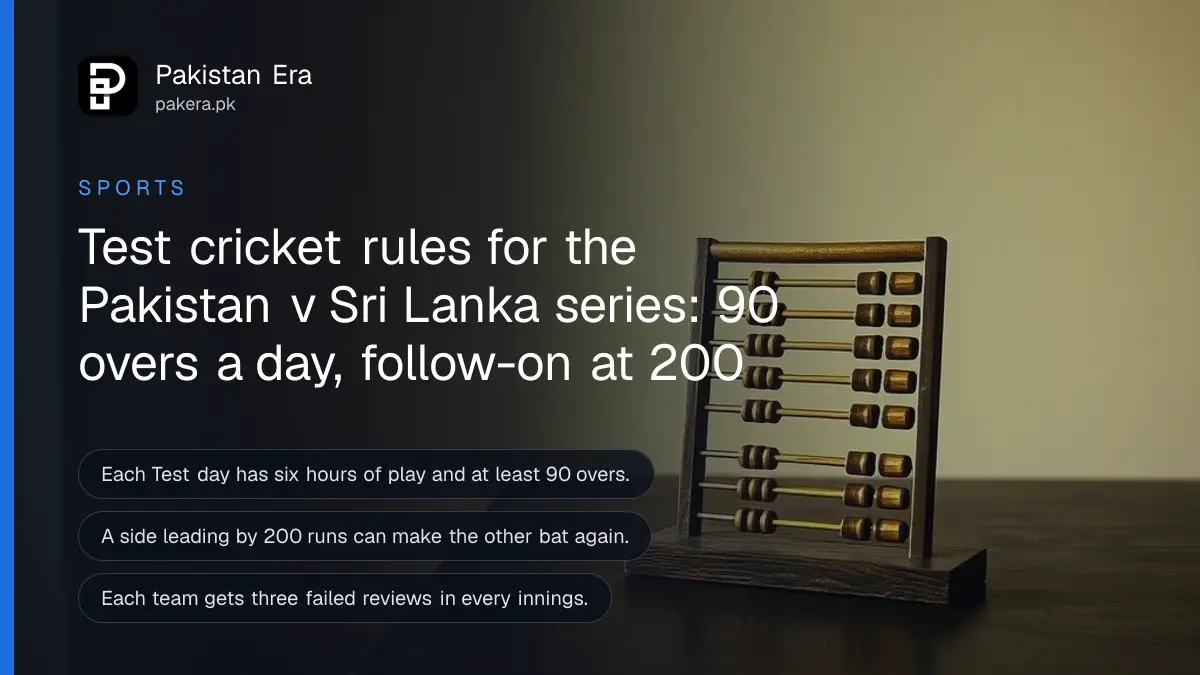
Short answer: In a Test, each day has six hours of play and at least 90 overs. A team 200 runs ahead on the first innings can make the other side bat again. The fielding side can take a new ball after 80 overs, and each side gets three failed reviews in every innings. These are the ICC rules in force from October 2026, so they apply to the Pakistan and Sri Lanka Tests.
Pakistan host Sri Lanka in two Tests, in Rawalpindi from 9 November and in Lahore from 17 November, as set out in our page on the Pakistan vs Sri Lanka Test series dates and venues. We read the ICC's Men's Test Match Playing Conditions, effective from October 2026, to write this guide. It covers the rules that fans ask about most, in plain words.
A Test day has six hours and at least 90 overs
The home board sets the hours of play. The ICC requires six hours of scheduled play a day. On every day except the last, play goes on until at least 90 overs are bowled, or 15 overs an hour, or until the cut-off time, whichever is later.
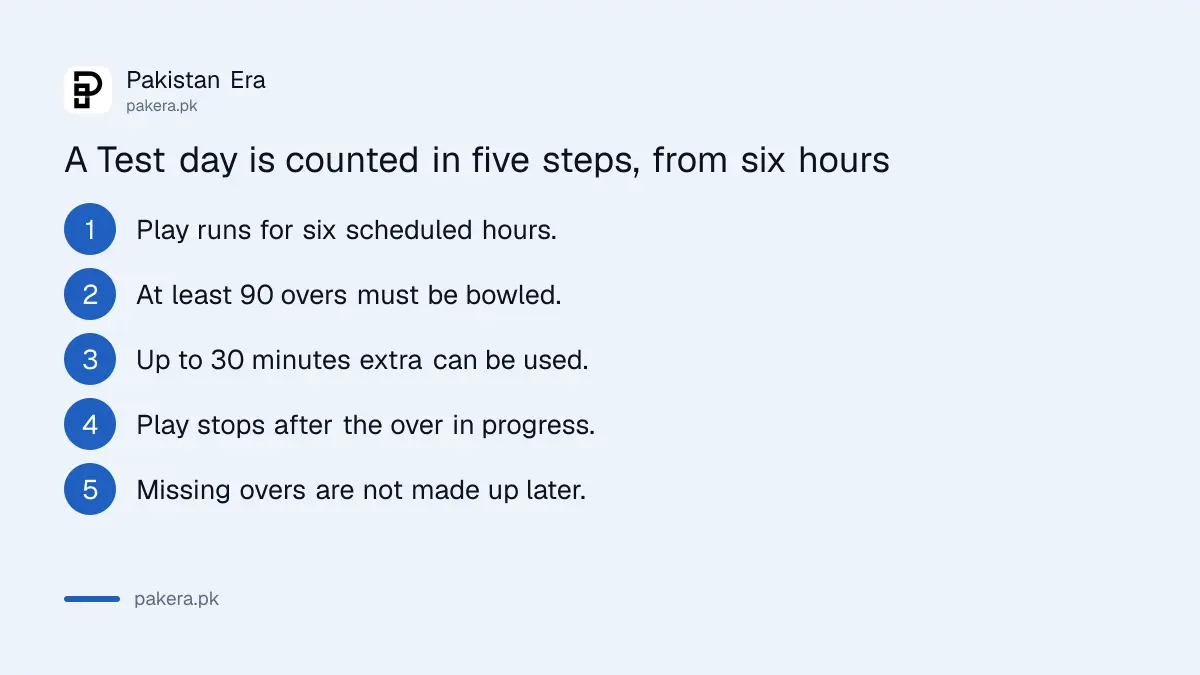
In short, the day is counted in this order:
- Play runs for six scheduled hours.
- At least 90 overs must be bowled.
- Up to 30 minutes extra can be used to finish them.
- If overs are still missing, play stops after the over in progress.
- The missing overs are not made up on a later day.
There is a limit. Play cannot run more than 30 minutes past the scheduled finish to make up overs. If overs are still missing after that, play stops when the over in progress ends. The missing overs are not made up on a later day.
On the last day the minimum is 75 overs, with special rules for the final hour. Lunch is 40 minutes and tea is 20 minutes, unless the home board gets ICC approval to change them.
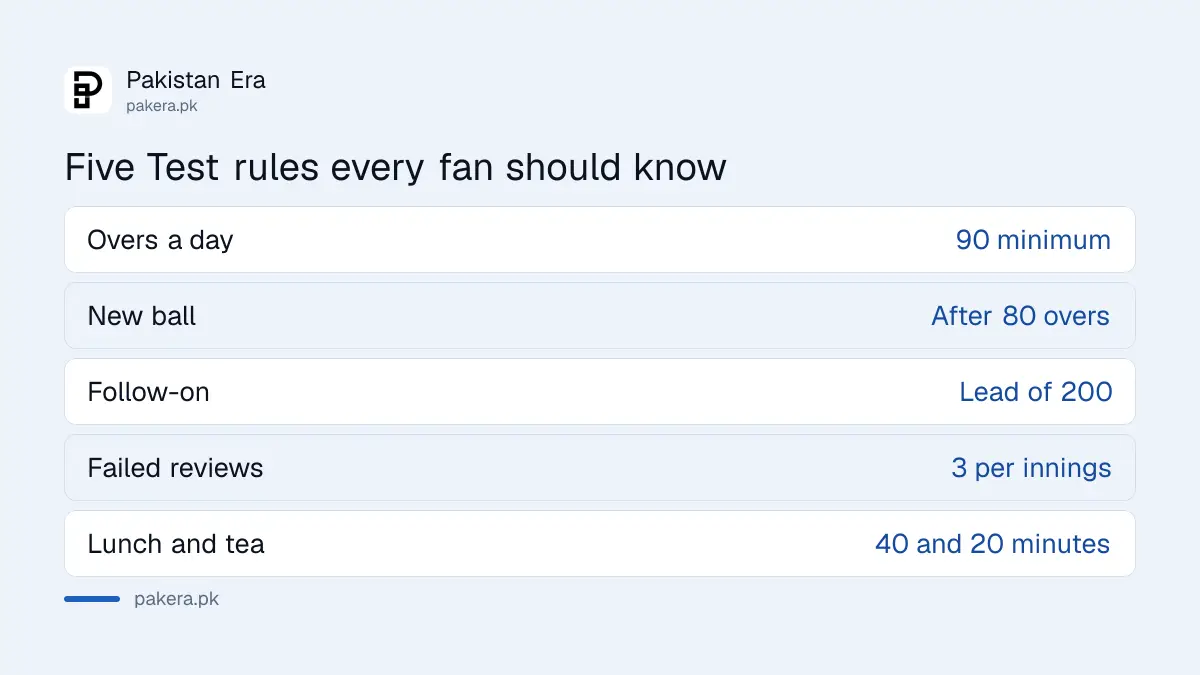
| Rule | What the ICC playing conditions say |
|---|---|
| Scheduled play per day | 6 hours |
| Minimum overs, days 1 to 4 | 90 overs, or 15 overs an hour |
| Extra time allowed | Up to 30 minutes past the scheduled finish |
| Minimum overs, last day | 75 overs |
| Lunch and tea | 40 minutes and 20 minutes |
| New ball | Available after 80 overs with the old ball |
| Follow-on | Lead of 200 runs in a five day Test |
| Failed reviews | 3 per team in each innings |
The new ball can be taken after 80 overs
A new ball is used at the start of each innings. After that, the captain of the fielding side may ask for a new ball once the old one has been used for 80 overs or more. Part overs do not count. The umpires tell the batters and the scorers when the new ball comes into play.
The rule gives the captain a choice and does not force one. A captain who trusts his spinners may keep the old ball. One who wants more pace and swing can ask for the new ball as soon as it is allowed.
Follow-on and the 200 run rule
If the side that bats first leads by at least 200 runs after both first innings, its captain may make the other side bat again at once. This is called the follow-on. The rule is the same for a five day Test. A three or four day match needs a lead of 150.
The captain must tell the opposing captain and the umpires, and once told, the choice cannot be changed. If the first day is washed out, the lead needed falls according to the number of days left. The day on which play first starts counts as a whole day.
Reviews: three failed ones in each innings
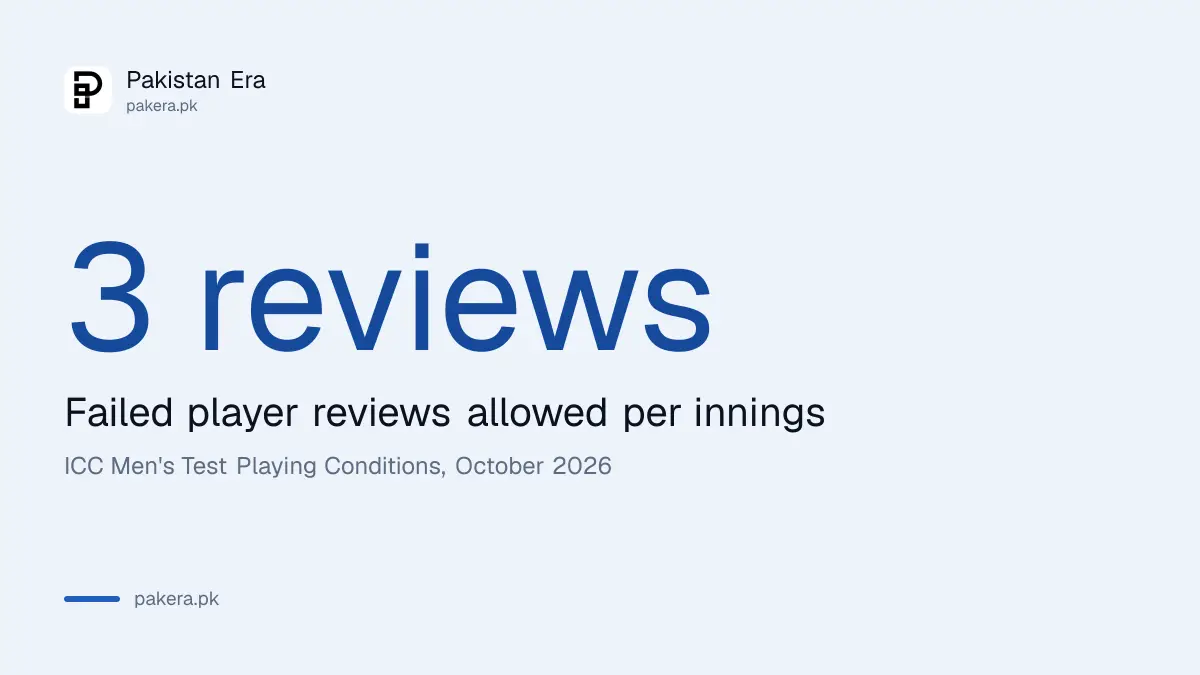
Under the Decision Review System (DRS), each team can make up to three player reviews that turn out unsuccessful in every innings. A review that overturns the umpire's call does not count against the team. Only the batter involved can ask for a review of an out decision.
Umpires can also start a review themselves for some decisions, such as a doubtful catch or run out. These umpire reviews do not use up the team's three. The umpires and referee for the Tests will be named by the ICC.
Slow over rates cost points in the WTC
The minimum over rate in Tests is 15 overs an hour. The umpires work out the actual rate at the end of the match. They give time back for things outside the fielding side's control, such as third umpire referrals, injuries and two minutes for each wicket that falls.
The playing conditions say penalties for slow over rates are set in the ICC Code of Conduct and the World Test Championship regulations. Pakistan has already lost 19 points that way, as shown in our guide to the WTC points table for Pakistan. Both Tests count for the WTC, and to see how the home players rank before the series, read the guide to checking Pakistan players on the ICC Test rankings. The Sri Lanka squad is in our news on the Sri Lanka Test squad.
What a concussion replacement allows
If a player takes a head or neck blow during play and the team doctor diagnoses a concussion, the team can ask the ICC match referee for a like-for-like replacement. The request must reach the referee within 36 hours. The replaced player cannot return to the match.
The replacement is chosen from names listed before the match. The referee can refuse if the swap would give the team too big an advantage. The decision is final, with no appeal.
Common questions
How many overs must be bowled in a Test day?
At least 90 overs on days one to four, or 15 an hour, with 30 minutes of extra time allowed. On the last day the minimum is 75 overs.
When can a captain take the new ball?
After the old ball has been used for 80 overs. Part overs are not counted. The captain of the fielding side makes the request.
What is the follow-on in a Test?
It is the choice to make the other team bat again straight away. In a five day Test the first side must lead by at least 200 runs.
How many reviews does a team get?
Each team may make three failed player reviews in each innings. A review that succeeds is not counted against the team.
Do slow over rates affect the World Test Championship?
Yes. The playing conditions point to the ICC Code of Conduct and WTC rules for penalties, and Pakistan has lost 19 table points for slow rates.
How we verified this
What we checked, where we read it, and what we could not confirm.
Last checked on 13 October 2026, Pakistan time. We read the ICC's playing conditions page and the Men's Test Match Playing Conditions document it links, effective from October 2026. The Pakistan Cricket Board may agree local changes with Sri Lanka, and its website refused automated requests, so we could not check for any. We did not compare this edition with the previous one, so we do not say what changed in October.
About the author

Tax, Bills and Technology Writer
Ali Akhtar is a young and curious voice here at Pakistan Era. He is currently pursuing his A-Levels and has a growing interest in Pakistan’s changing industrial landscape and educational trends. Ali likes to write in a way that helps him explain and explore the world around him. His writing reflects the perspective of the new generation navigating the evolving trends of Pakistan where technology, youth innovation, and shifting opportunities are reshaping the country’s future.