IMF Wants Pakistan to End the 1% Sales Tax on Electric Cars, Reports Say
The IMF has reportedly asked Pakistan to end the 1% sales tax on electric cars. See the rates in law today, the 30 June 2027 end date and what 18% would cost.
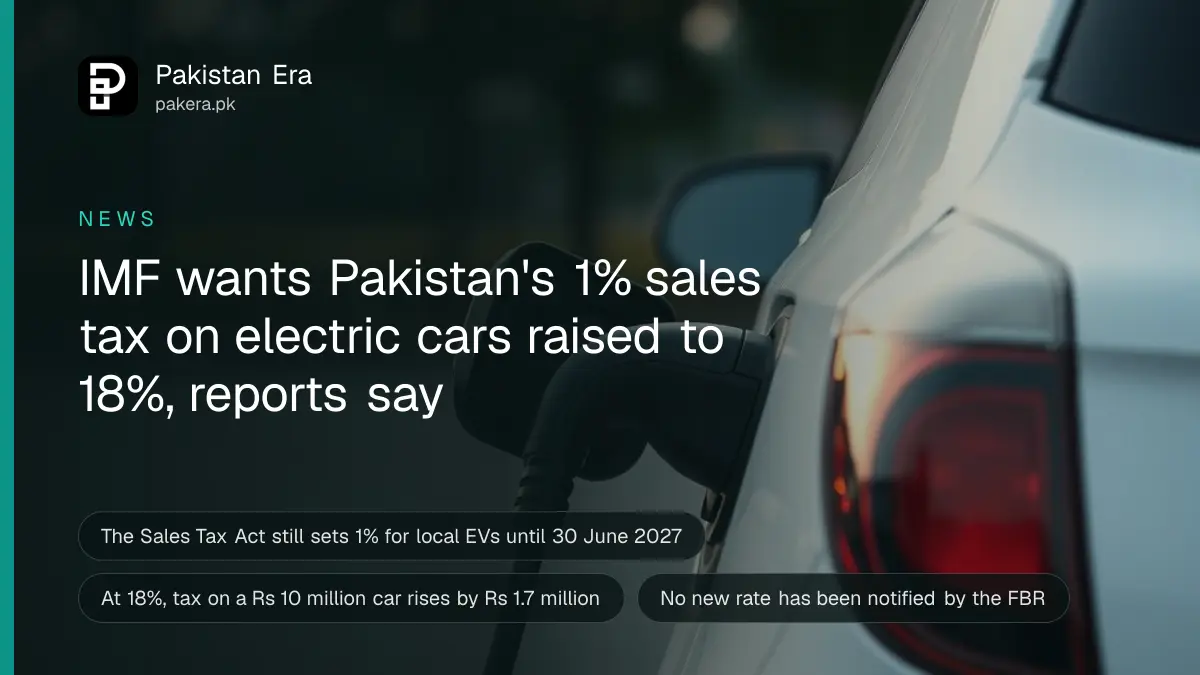
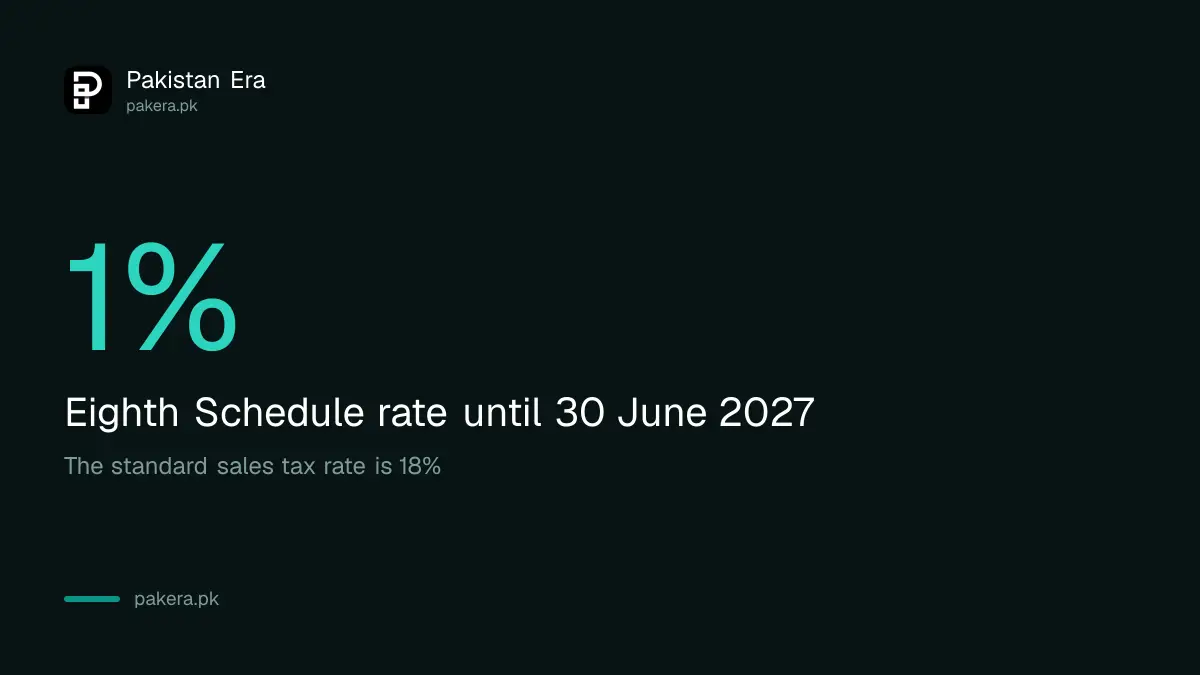
The IMF has asked Pakistan to end the 1 per cent sales tax on locally assembled electric cars, according to reports on 3 and 6 October 2026. The law today still charges 1 per cent, not the standard 18 per cent, and it says so until 30 June 2027.
Nothing has changed yet. No new rate has been notified, and the Federal Board of Revenue (FBR) still lists 1 per cent in the Sales Tax Act. What changed this week is the pressure. The Fund has reportedly called electric vehicles a luxury item and said the tax break should go.
We read the rates in the Sales Tax Act 1990, as amended up to 30 June 2026, on the FBR's own website. The IMF's request itself is reported, not published. The IMF has not released a statement on it, and the government has not confirmed it on record.
The IMF reportedly wants the 1 per cent EV rate replaced with 18 per cent
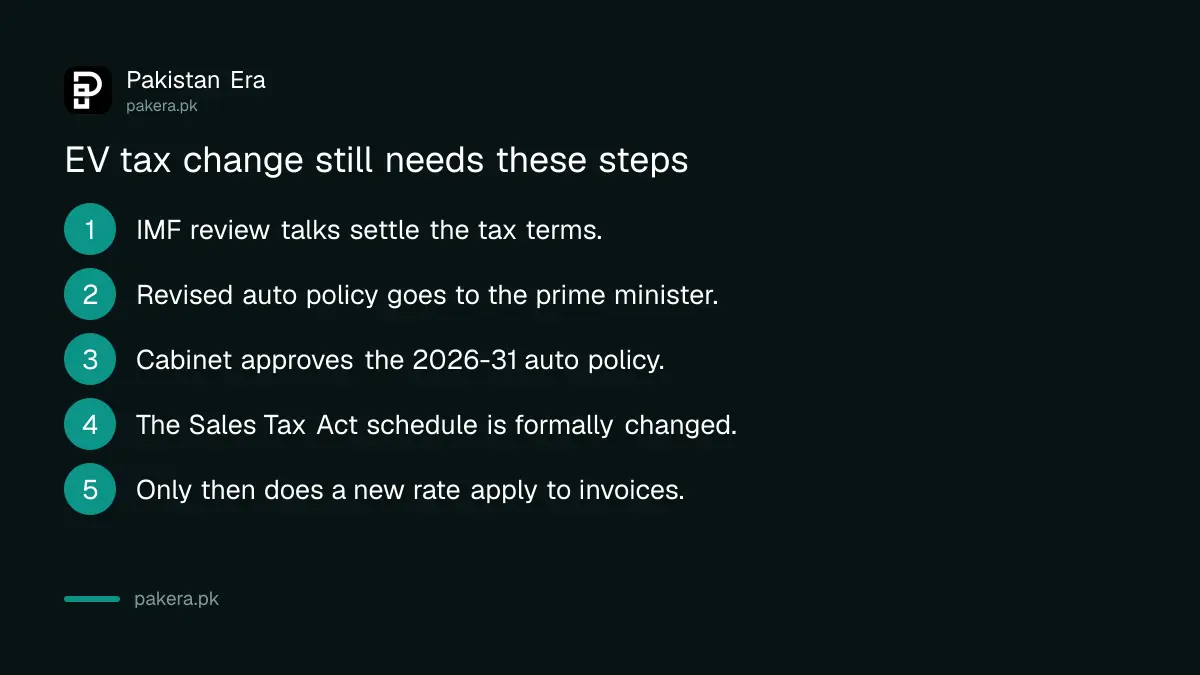
Reports on 3 October said the IMF raised the electric vehicle (EV) tax rate during talks in Islamabad on its loan programme review. On 6 October, reports said a revised draft of the 2026-31 auto policy, reflecting those objections, will soon go to Prime Minister Shehbaz Sharif.
The Fund's reported argument has three parts. Electric cars are bought by better-off people, not low-income families. A lower rate for one kind of car treats other cars unfairly. And if the government wants to help EVs, it should use direct subsidies, which show up in the budget, rather than tax breaks, which do not.
That last point is the familiar IMF line on tax breaks. A reduced rate is money the government chooses not to collect, and it is harder to track than a subsidy. Whether ministers agree is a separate question, and they have not said.
The law still charges 1 per cent until 30 June 2027
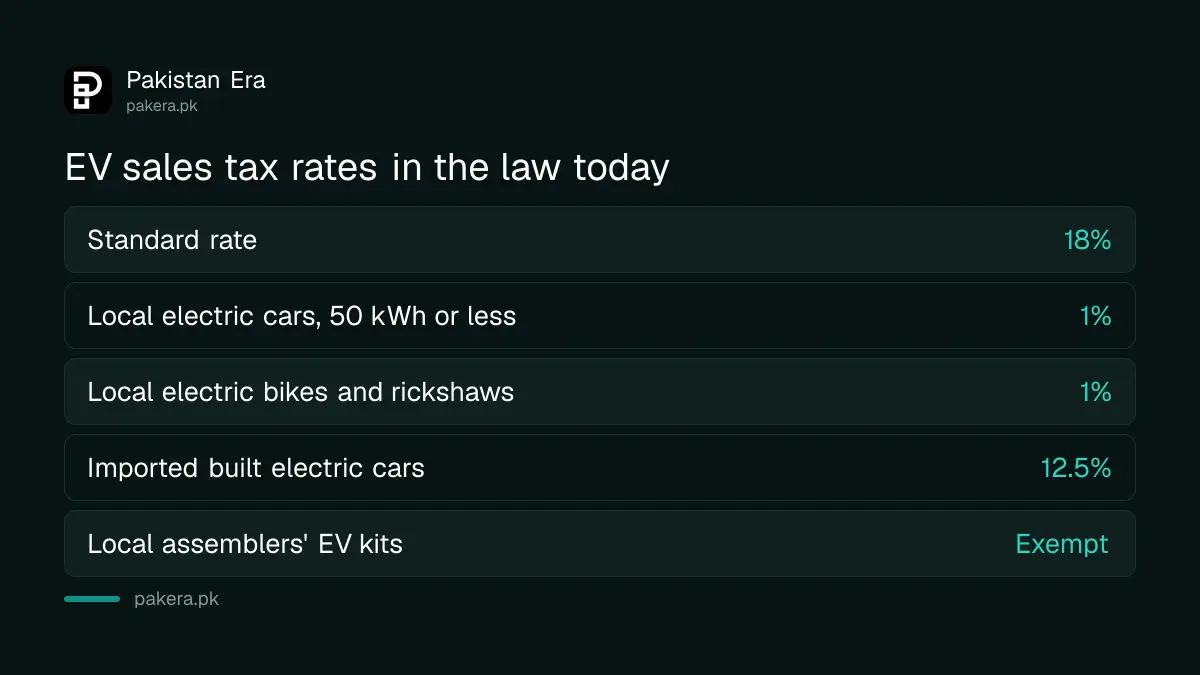
The Eighth Schedule of the Sales Tax Act sets a 1 per cent rate for locally made or assembled electric cars and SUVs with a battery of 50 kWh or less, and vans and pickups up to 150 kWh. The Finance Act 2026 extended that rate to 30 June 2027.
| What is taxed | Sales tax rate | Where in the law |
|---|---|---|
| Standard rate on most goods | 18% | Section 3(1) |
| Locally assembled electric cars and SUVs, 50 kWh or less, and LCVs, 150 kWh or less | 1%, until 30 June 2027 | Eighth Schedule, serial 71 |
| Locally made electric bikes, rickshaws, loaders, buses and trucks | 1%, local supplies | Eighth Schedule, serial 70 |
| Imported fully built electric cars, 50 kWh or less | 12.5% | Eighth Schedule, serial 79 |
| Imported fully built electric buses and trucks | 1% | Eighth Schedule, serial 80 |
| Kits of electric car parts imported by local assemblers | Exempt, until 30 June 2027 | Sixth Schedule, serial 157 |
A kWh, or kilowatt hour, measures battery size. The law also limits how much input tax, the tax a maker already paid on parts, a local EV maker can claim back at the 1 per cent rate.
So the concession does not end because the IMF objected. Ending it before June 2027 would need a formal change to the schedule, and no such change has been made.
An 18 per cent rate would add about Rs 1.7 million to a Rs 10 million car
Sales tax is charged on the sale value. On a car worth Rs 10 million before tax, 1 per cent is Rs 100,000 and 18 per cent is Rs 1.8 million. The gap is Rs 1.7 million, before any other change in duties or margins.
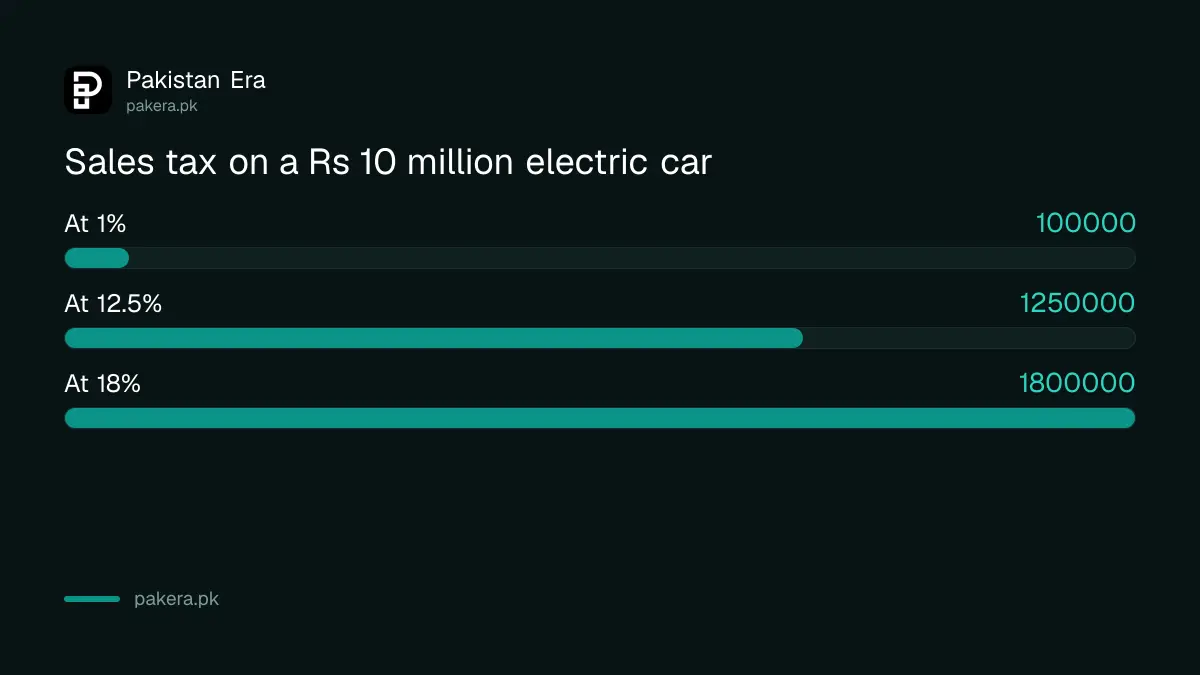
For a cheaper EV the gap shrinks, but it is still big. Here is our own arithmetic for three sale values:
| Value before tax | Tax at 1% | Tax at 18% | Extra tax |
|---|---|---|---|
| Rs 5 million | Rs 50,000 | Rs 900,000 | Rs 850,000 |
| Rs 7.5 million | Rs 75,000 | Rs 1,350,000 | Rs 1,275,000 |
| Rs 10 million | Rs 100,000 | Rs 1,800,000 | Rs 1,700,000 |
These are tax figures, not price forecasts. A maker could absorb part of a rise, and a new policy might add a subsidy. But a jump of this size is hard to hide in a showroom price.
One report also says the rate for EV charging stations could rise from 1 to 18 per cent. We found no separate reduced sales tax line for charging stations in the Act as amended to June 2026, so we cannot confirm that part. Running costs at public EV charging stations are a separate question from the tax on the car.
Buyers should check what is notified, not what is reported
A tax rise only matters on the day it takes legal effect. Until then, the 1 per cent rate applies to any qualifying car invoiced today. Anyone close to buying an EV should keep that in mind before a dealer uses the IMF story to rush a sale.
- Ask the dealer whether the car is locally assembled or imported fully built. The rates differ.
- Check the battery size. The 1 per cent rate covers cars and SUVs at 50 kWh or less.
- Ask for the sales tax shown as a separate line on the invoice.
- Watch for an FBR notification or a Finance Act change. A press report is not a rate change.
- Budget for registration too. Registering an electric car costs differ by province.
The wider Auto Policy 2026-31 was drafted, as reported, with a 1 per cent rate and exemptions from excise duty and withholding tax for EVs. If the IMF's view wins, that part of the draft is the one most likely to change.
The auto policy and the IMF review decide what comes next
Two things will settle this. The IMF's current review of Pakistan's loan programme, and the cabinet's final version of the 2026-31 auto policy. Neither has been published with an EV tax rate yet.
The IMF mission came for the fourth review, which could release more than 1 billion dollars. Tax breaks are a routine topic in these talks. Whether this one goes at once, phases out, or survives to its June 2027 end date is still open.
We will update this page when the government or the IMF puts a rate on record.
Common questions
What is the sales tax on electric cars in Pakistan now?
1 per cent for locally assembled electric cars and SUVs with a battery of 50 kWh or less, under the Eighth Schedule of the Sales Tax Act, until 30 June 2027.
Has the IMF ended the EV tax concession?
No. The IMF has reportedly asked for it to end, but no change has been notified and the law still says 1 per cent.
How much more would an electric car cost at 18 per cent?
On a Rs 10 million car, the sales tax would rise from Rs 100,000 to Rs 1.8 million, an extra Rs 1.7 million.
What is the sales tax on imported electric cars?
12.5 per cent for fully built imported electric cars with a battery of 50 kWh or less.
Does the change affect electric bikes and rickshaws?
Locally made electric bikes and rickshaws are also taxed at 1 per cent. Reports so far focus on cars, and no change to the bike rate has been notified.
How we verified this
What we checked, where we read it, and what we could not confirm.
Last checked at about 1:35pm PKT on 6 October 2026. The sales tax rates are from the Sales Tax Act 1990 as amended up to 30 June 2026, published by the FBR: section 3(1), Eighth Schedule serials 70, 71, 79 and 80, and Sixth Schedule serial 157. The IMF's request and the revised auto policy draft are reported, from 3 and 6 October. The IMF has not published a statement on EV tax, and the government has not confirmed the request on record. The tax amounts for each car value are our own arithmetic.
About the author

Senior Writer, Public Services and Technology
Shahid joined us in 2024 as an author. He is a senior contributor to Pakistan's leading technology websites. He writes detailed articles, mostly covering his expertise in the latest tech, mobiles, apps, gadgets, and step-by-step guides. His ideology is to help people understand the latest trends and explain complex methods through very easy-to-understand guides.