Electrocution Is Killing More Pakistanis This Monsoon Than Drowning. Almost All the Safety Advice Is About Water.
NDMA's breakdown puts electrocution first among monsoon deaths, ahead of flash floods and drowning. What that changes about staying safe.
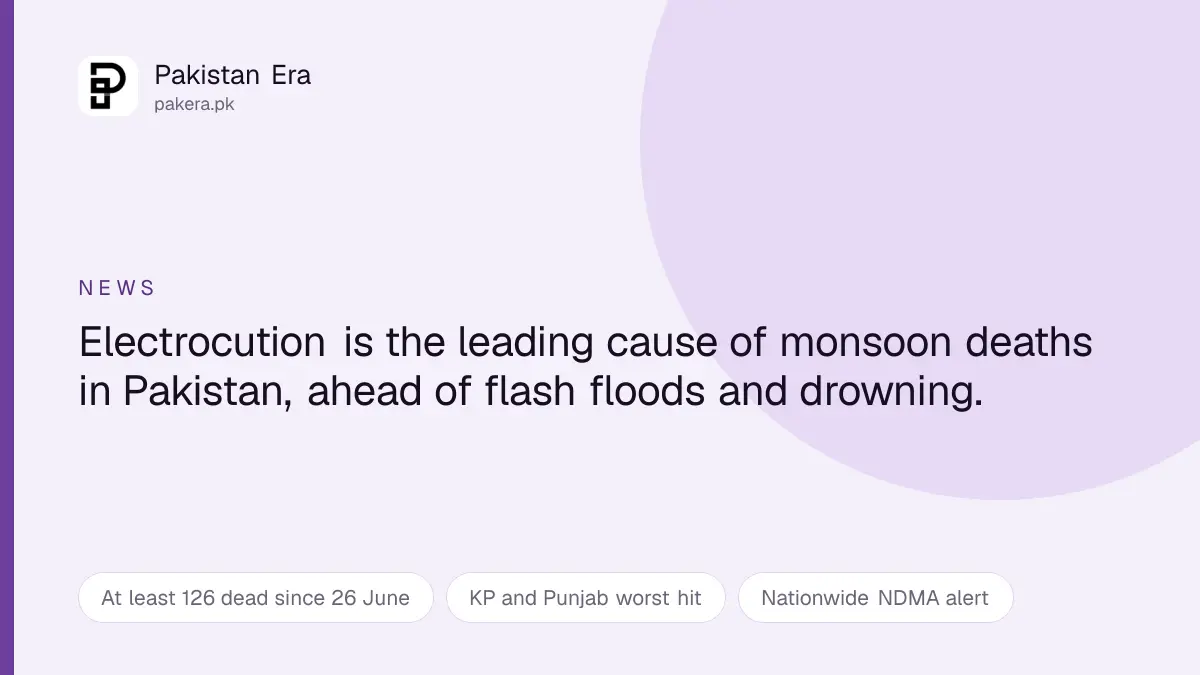
The single largest cause of monsoon deaths in Pakistan this season is not drowning and it is not a collapsing roof. It is electrocution.
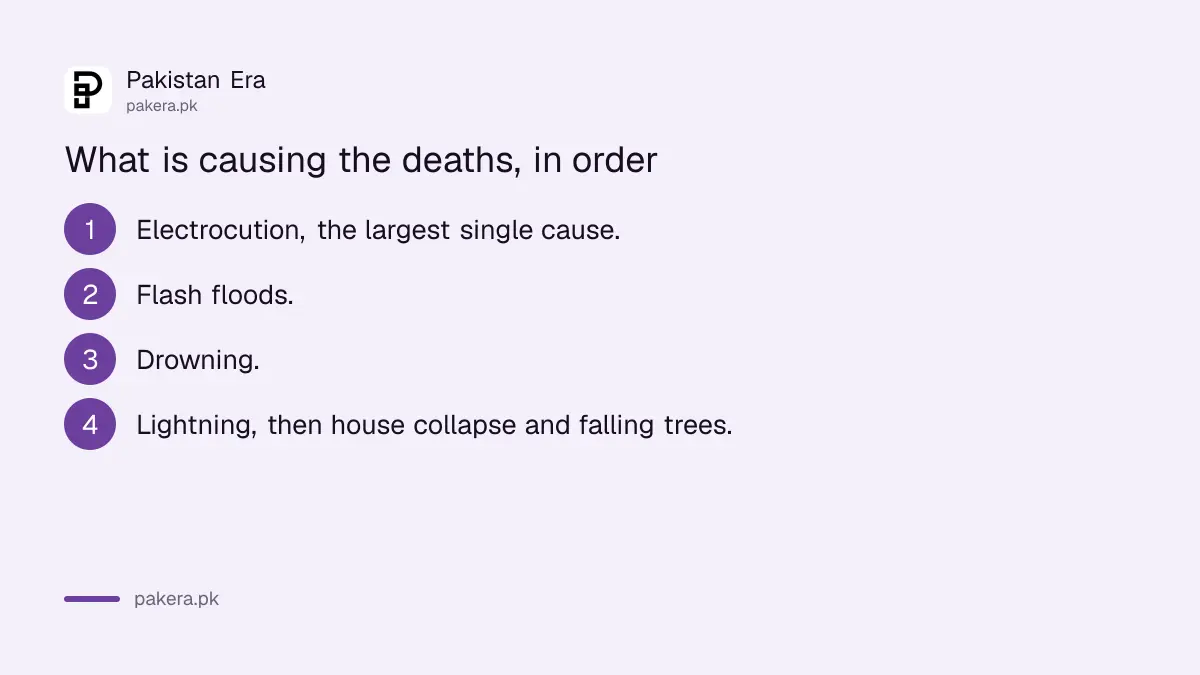
That is the ranking in the National Disaster Management Authority's own breakdown of fatalities, as reported on 3 August 2026: electrocution first, then flash floods, drowning, lightning, and rain related incidents such as house collapse and falling trees.
It is worth stating plainly because it changes what you should be careful about. Most monsoon safety advice is written about water. The thing most likely to kill you is the electricity running through it.
The toll so far
At least 126 people have died since 26 June 2026, with the toll reported at 122 on 1 August and 126 on 3 August. Punjab and Khyber Pakhtunkhwa are the worst affected, with roughly 47 and 55 deaths respectively over the period to 1 August, and 295 people injured in Punjab alone.
One honest note on the numbers. A separate agency report circulated a figure of 196 dead and 404 injured for the same period. We could not reconcile that against the 122 and 126 figures that appear consistently elsewhere, and NDMA's own situation report page did not render its summary figures for us, so we are quoting the corroborated lower figures and telling you the higher one exists. Either way the direction is the same and the season is not over.
Why electricity is the danger in urban flooding
Water on a street is not usually deep enough to drown an adult. It is more than enough to conduct.
Standing water reaches things that are normally out of reach: the base of a street pole, a meter board, a rooftop pump, a shop's exposed junction, a cable that has been spliced and taped rather than replaced. In a flooded lane, all of those become part of the same puddle you are wading through, and a live one gives no warning at all before contact.
This is also why the deaths cluster in ordinary places rather than dramatic ones. Standing in your own street is the exposure.
What to actually do
NDMA's published advice for this spell is direct: avoid unnecessary travel to flood affected areas, do not cross floodwater on foot or in a vehicle, monitor forecasts and road conditions before travelling, and follow instructions from local authorities.
To that, the electrical specifics that the toll makes urgent:
- Do not touch or lean on metal poles, street lights or gate frames in standing water. This is the one that kills most often.
- Do not wade through water near a transformer, pylon base or hanging cable. Go around, even if it means a long detour.
- Switch off the mains before water reaches your meter board or sockets, not after. Once the board is wet, the switch itself is the hazard.
- Keep away from rooftop water pumps and tanks during rain, and never operate a pump while standing in water.
- Do not use a water heater or geyser during flooding if the connection or the room has taken water.
- Report a sparking pole, sagging wire or submerged transformer to your distribution company rather than approaching it. Every DISCO runs a complaint line, and the reference number on your bill identifies your feeder.
If you do not know your DISCO's contact route, it is on the bill, and we set out how to pull your bill up online for each company in the electricity bill guide.
Where the flooding stands
NDMA issued a nationwide alert warning of rising river flows, flash floods and urban flooding.
Drowning sits third in that ranking, but not every drowning is a monsoon death. Seven children and teenagers died in Sindh over one weekend in ponds, irrigation canals and the Indus with no flood involved, which we wrote up separately in why canal drownings are a different problem.
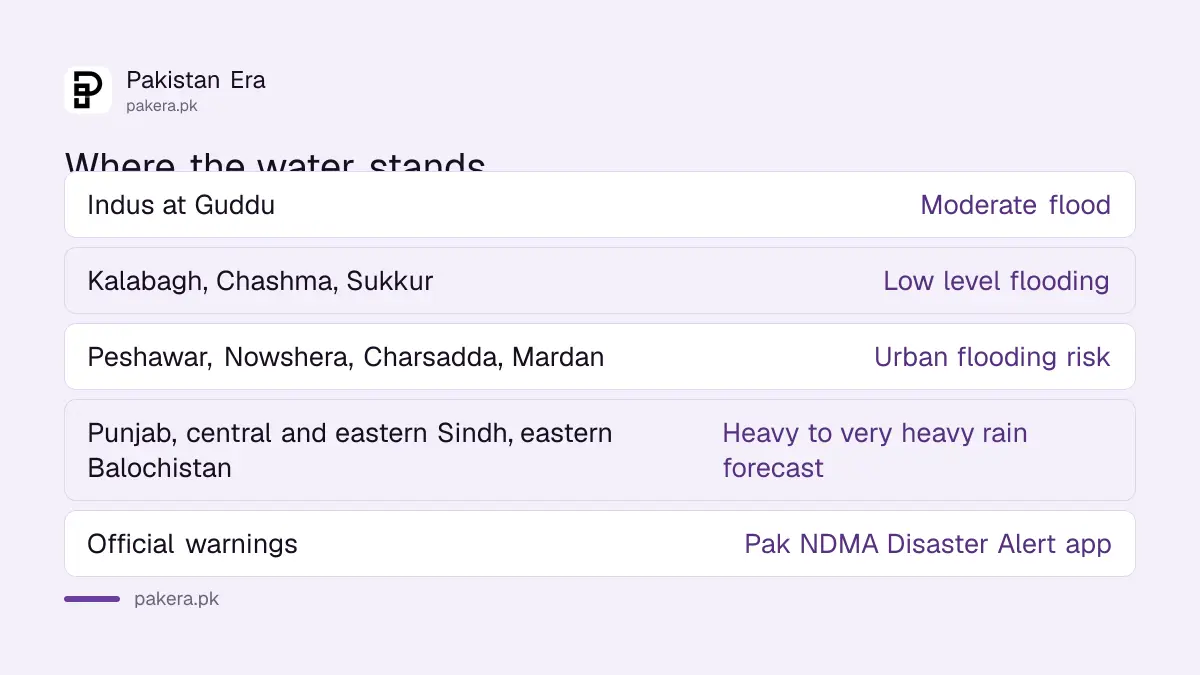
| Location | Status |
|---|---|
| Indus at Guddu | Moderate flood |
| Indus at Kalabagh | Low level flooding |
| Indus at Chashma | Low level flooding |
| Indus at Sukkur | Low level flooding |
| Peshawar, Nowshera, Charsadda, Mardan | Urban flooding risk |
| Punjab, central and eastern Sindh, eastern Balochistan | Heavy to very heavy rain forecast through 4 August |
River designations move, so the current level matters more than any published one, including this.
The official channel is the Pak NDMA Disaster Alert mobile application, which NDMA itself directs the public to for timely warnings, alongside its advisories page at ndma.gov.pk.
What a flood designation means for you
Low, moderate, high and very high are discharge categories at a specific barrage or headworks, not descriptions of your neighbourhood. A moderate flood at Guddu tells you the Indus is carrying a large volume past that point. It does not tell you whether your street floods, and the two get conflated constantly in coverage.
What it does tell you is which direction the risk is moving downstream, and that is the reason to watch the designation at the barrage upstream of you rather than the one nearest a headline.
If you are travelling in the north during this spell, the road and weather cautions are the same ones we set out in the northern areas travel checklist, and they matter more than usual right now.
Questions readers are asking
What is causing the most monsoon deaths in Pakistan?
Electrocution, ahead of flash floods, drowning, lightning and rain related incidents such as house collapse and falling trees, according to the NDMA breakdown reported on 3 August 2026.
How many people have died in the 2026 monsoon in Pakistan?
At least 126 since 26 June 2026, with the figure reported at 122 on 1 August and 126 on 3 August. One separate report put the toll at 196, which we could not reconcile with the corroborated figures.
Which provinces are worst affected?
Khyber Pakhtunkhwa and Punjab, with roughly 55 and 47 deaths respectively in the period to 1 August, and 295 people injured in Punjab.
Is it safe to walk through flooded streets?
NDMA advises against crossing floodwater on foot or in a vehicle. The specific hazard the death toll points to is electrical: poles, meter boards, pumps and cables that standing water has made live.
What does a moderate flood at Guddu mean?
It is a discharge category for the Indus at that barrage, not a description of local street flooding. It indicates the volume passing that point and the direction of risk downstream.
Where do I get official flood warnings?
The Pak NDMA Disaster Alert mobile application, which NDMA directs the public to, and the advisories section of ndma.gov.pk.
About the author

Public Services and Education Journalist
Fajr Riaz is a journalist and content writer at Pakistan Era, based in Lahore. She covers the questions people meet in everyday life in Pakistan: how a public service works, what a change in the rules means, and where to find a reliable answer.