Mpox in Sindh, Week 42 2026: NIH Labs Find 5 Positive of 17 Tests, 37 Since Week 34 (Pakistan)
Sindh labs found mpox in 5 of 17 samples in week 42 of 2026, NIH says, taking positive tests since week 34 to 37. See the weekly figures and signs to watch for.
Sindh's public health labs found mpox in 5 of 17 samples tested in week 42 of 2026, the National Institutes of Health (NIH) said in its weekly bulletin posted on 11 November 2026. That brings the positive tests we have counted in NIH bulletins since week 34 to 37, all of them in Sindh.
Fewer samples were tested than a week earlier, 17 against 38, but a larger share came back positive. No other province reported an mpox test. Mpox spreads through close skin contact and causes a painful rash, so anyone with a new rash and fever should see a doctor early. Below are the figures, week by week, and what to do.
Sindh labs confirmed 5 mpox cases from 17 tests in week 42
Table 5 of the bulletin lists lab-confirmed results for priority diseases. For mpox in week 42, Sindh tested 17 samples and 5 were positive. That is about 29 per cent. In week 41, Sindh tested 38 samples and 8 were positive, about 21 per cent.
A positive lab test is stronger evidence than a suspected case. It means the virus was found in the sample. But the table counts tests, not people, so one patient tested twice could appear twice. The bulletin does not give districts, ages or deaths for mpox.
| Week of 2026 | Samples tested, Sindh | Positive |
|---|---|---|
| Week 36 | 27 | 8 |
| Week 37 | 20 | 4 |
| Week 39 | 4 | 2 |
| Week 40 | 25 | 4 |
| Week 41 | 38 | 8 |
| Week 42 | 17 | 5 |
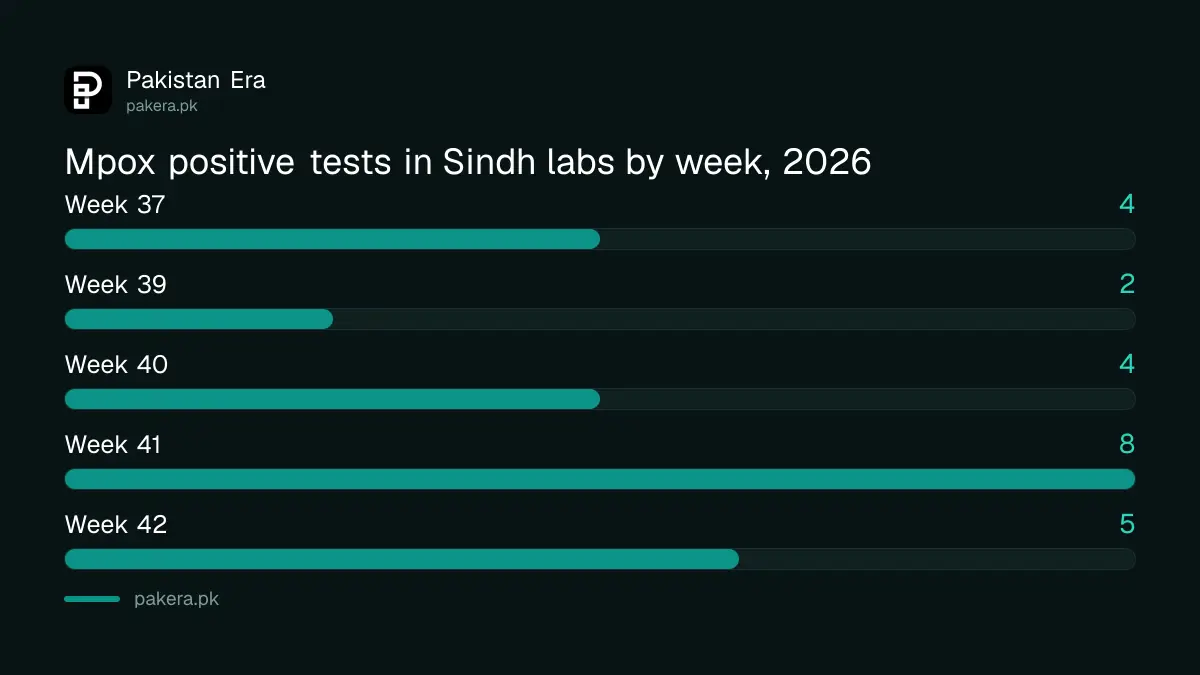
37 positive mpox tests since week 34, all in Sindh
We went back through every NIH bulletin from week 34. Adding the Sindh lab line week by week gives 148 samples tested and 37 positive, one in four. Week 38 had no mpox line at all, and weeks 34 and 35 each had 3 positive results.
All of these results are from Sindh's labs. The Balochistan, Khyber Pakhtunkhwa, Islamabad, Gilgit-Baltistan, Punjab and Azad Kashmir columns show a dash for mpox in every week we read. A dash means no test was reported, not that mpox is absent there.
Our mpox tracker for Pakistan in 2026 keeps the full week by week record.
Week 42 lists no suspected mpox case in Table 1
The bulletin has two places where mpox can appear. Table 1 counts suspected cases reported by clinics. Table 5 counts lab results. In week 41, Table 1 had one suspected mpox case, in Islamabad. In week 42, Table 1 has no mpox line.
So the week 42 lab positives in Sindh are not matched by any suspected case in the clinic count. The two tables come from different streams of reports, which is why they often do not line up. We report both as NIH printed them.
| Bulletin table | Week 41 | Week 42 |
|---|---|---|
| Table 1, suspected cases | 1, in Islamabad | none listed |
| Table 5, Sindh tests | 38 | 17 |
| Table 5, Sindh positive | 8 | 5 |
Signs of mpox and what to do
Mpox usually starts with fever, headache, body ache and swollen glands, then a rash. The rash turns into blisters that crust over. It spreads through close contact with the skin, sores or bedding of someone who has it.
- If you have a new blistering rash with fever, see a doctor and mention mpox.
- Cover the sores and keep away from close contact until a doctor has checked you.
- Do not share towels, bedding or razors at home.
- Wash hands with soap after touching sores or the sick person's clothes.
- Ask the doctor whether a sample should go to a public health lab.
Our guide to mpox symptoms and what to do in Pakistan has more detail. Other week 42 figures are in our reports on flu cases and malaria cases.
How we read the week 42 bulletin, and where it trips readers up
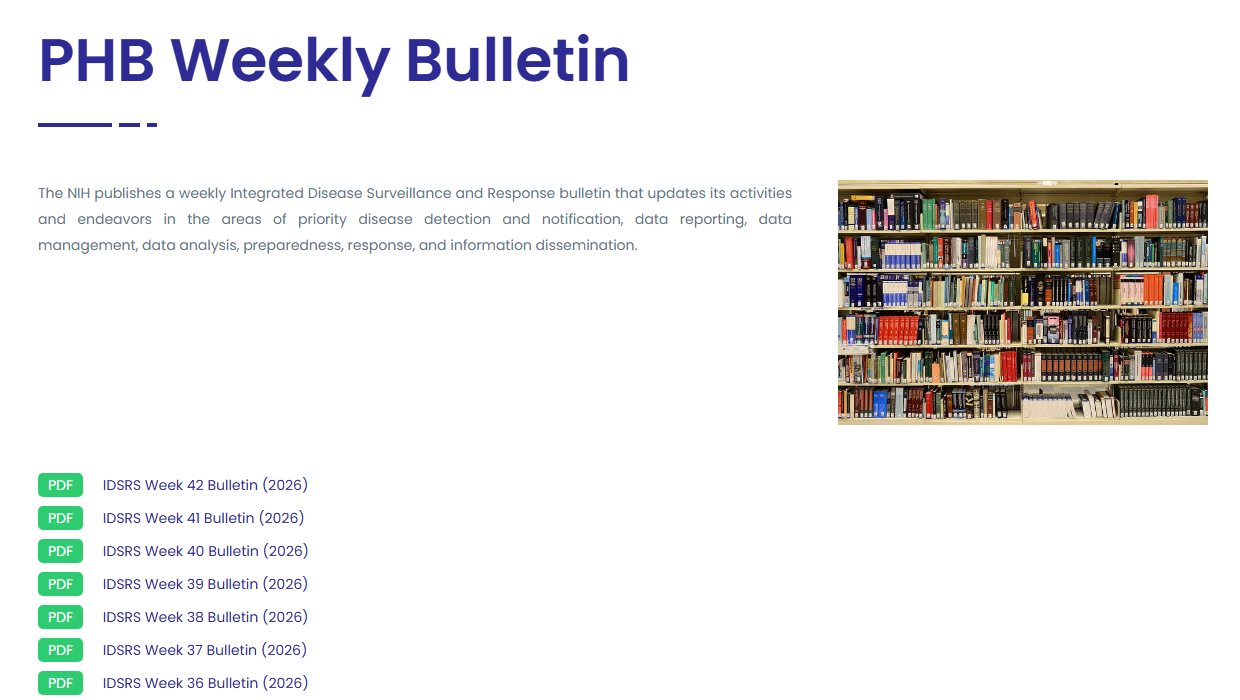
We opened the NIH weekly bulletin page on 12 November 2026. The week 42 file sits at the top of the list as a PDF of about 2.6 MB and 25 pages. The suspected case figures by province are in Table 1 on page 5, and the lab results with the mpox line are in Table 5 on page 16, near the bottom.
Two things slowed us down. Punjab's column reads NR, short for not reported, in every row, so the national total is not truly national. And the bulletin files are not named the same way each week: week 42 is 'Weekly Report-42-2026', but week 41 is 'IDSRS Weekly Report-41-2026-NA'. When we typed the week 41 address in the week 42 style, the site returned a web page instead of the PDF. Use the links on the list rather than guessing the address. Our guide to checking disease cases in your district from the NIH bulletin shows how to find your own district.
Common questions
How many mpox cases did Sindh confirm in week 42 of 2026?
Sindh's labs found mpox in 5 of 17 samples tested, according to the NIH bulletin posted on 11 November 2026.
How many mpox cases has Pakistan had in 2026?
NIH bulletins from week 34 to week 42 show 37 positive tests from 148 samples, all in Sindh. NIH does not publish a single running total.
Has any other province reported mpox?
No lab results for mpox were listed outside Sindh in the weeks we read. Week 41 had one suspected case in Islamabad.
Which Sindh districts have mpox?
The bulletin does not give districts for mpox. It gives only the provincial lab line.
Is mpox spreading faster?
Not clearly. Positive tests went from 8 to 5, but fewer samples were tested, so the weekly share rose from 21 to 29 per cent.
How we verified this
What we checked, where we read it, and what we could not confirm.
We downloaded the NIH IDSR bulletins for weeks 41 and 42 of 2026 from the NIH weekly bulletin page on 12 November 2026 and read Tables 1 and 5. Earlier weeks come from our tracker, which read each bulletin at the source. NIH does not report mpox deaths or districts in the bulletin.
About the author

Public Services and Education Journalist
Fajr Riaz is a journalist and content writer at Pakistan Era, based in Lahore. She covers the questions people meet in everyday life in Pakistan: how a public service works, what a change in the rules means, and where to find a reliable answer.