Dengue Cases in Pakistan, Week 42 2026: 1,762 Suspected, Khyber Pakhtunkhwa Rises to 1,523
Pakistan reported 1,762 suspected dengue cases in week 42 of 2026, NIH says. KP rose to 1,523, with Kohat at 481 and Bannu at 261. See every district and lab.
یہ صفحہ اردو میں پڑھیں
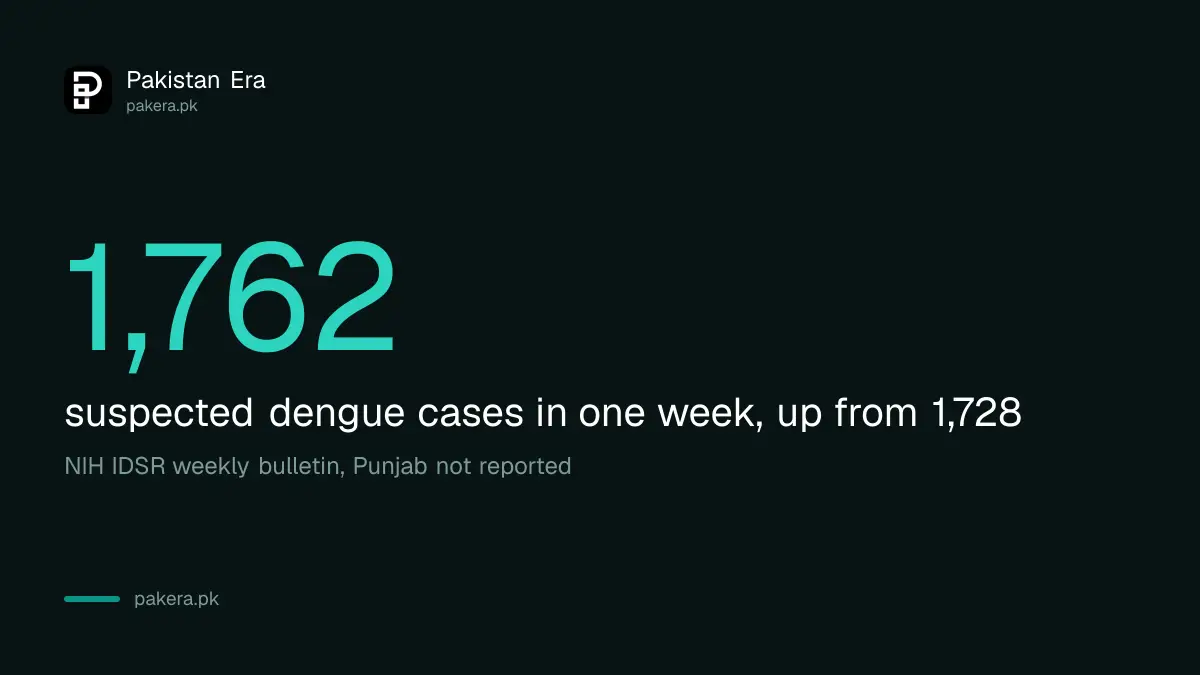
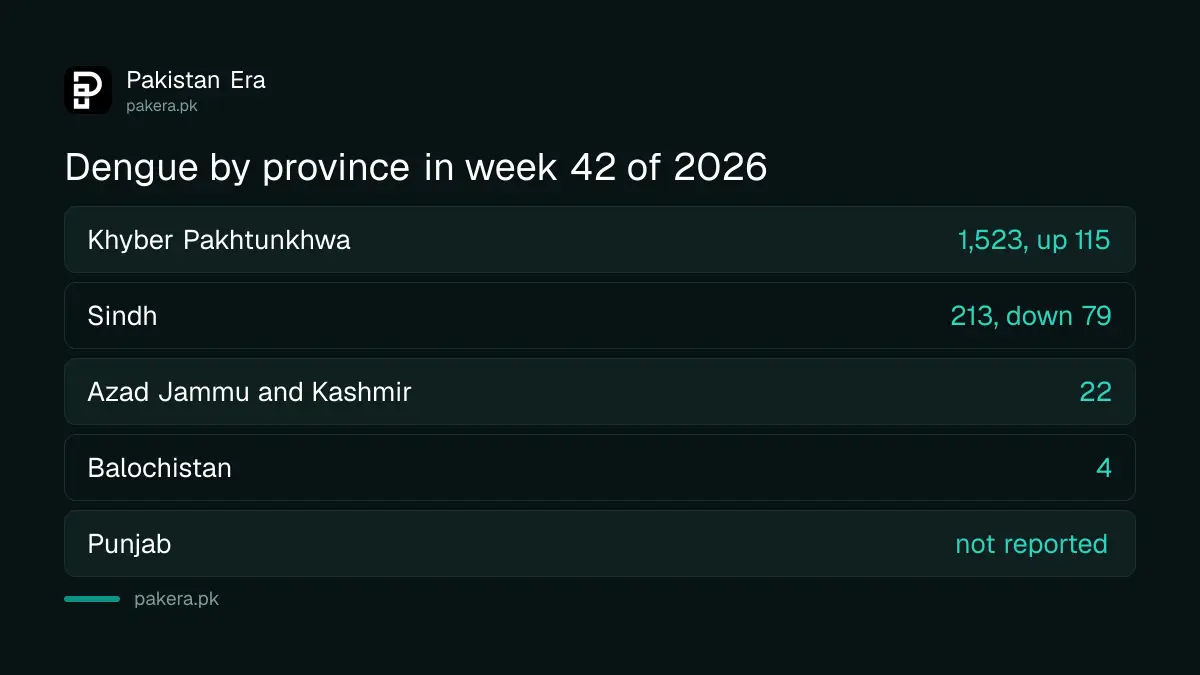
Pakistan reported 1,762 suspected dengue cases in week 42 of 2026, up from 1,728 a week earlier, the National Institutes of Health (NIH) said in its weekly bulletin posted on 11 November 2026. Khyber Pakhtunkhwa sent 1,523 of them, its highest weekly count this season.
The national rise is small, only 34 cases. But it hides two opposite moves. Khyber Pakhtunkhwa went up by 115, while Sindh fell by 79. Kohat and Bannu climbed again, and Charsadda eased slightly but is still the worst district. Punjab again did not report into the national system. Below are the province and district figures, the lab results and what to do if someone at home has a high fever.
Dengue cases rose for the fifth week in a row, to 1,762
The NIH bulletin counts 1,762 suspected dengue cases in week 42, against 1,728 in week 41. That is a rise of about 2 per cent, much slower than the jumps of September and October. Six weeks ago, in week 37, the weekly count was 461.
These are suspected cases. A health worker logs a patient whose symptoms fit dengue, and only some are later confirmed by a lab test. So the number shows where pressure is building, not how many people truly have dengue.
| Province or area | Week 41 | Week 42 | Change |
|---|---|---|---|
| Khyber Pakhtunkhwa | 1,408 | 1,523 | up 115 |
| Sindh | 292 | 213 | down 79 |
| Azad Jammu and Kashmir | 23 | 22 | down 1 |
| Balochistan | 5 | 4 | down 1 |
| Islamabad | 0 | 0 | no change |
| Gilgit-Baltistan | 0 | 0 | no change |
| Punjab | not reported | not reported | |
| Total | 1,728 | 1,762 | up 34 |
For the full week by week series since week 37, our dengue tracker for Pakistan in 2026 keeps every province in one table.
Kohat rose to 481 and Bannu to 261, while Charsadda eased to 529
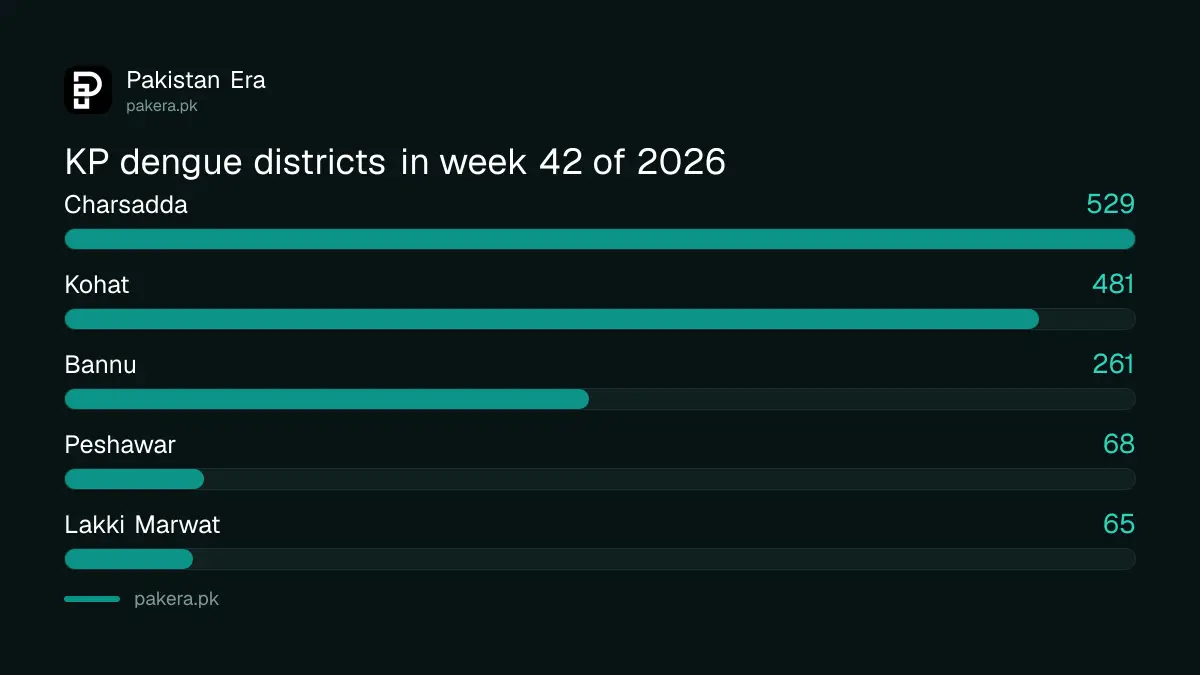
Charsadda reported 529 suspected cases in week 42, down from 582. Kohat rose from 400 to 481, an increase of 81. Bannu went from 192 to 261, up 69. Together these three districts sent 1,271 of Khyber Pakhtunkhwa's 1,523 cases, about 83 per cent.
Peshawar also rose, from 45 to 68. Lakki Marwat held near 65, Khyber reported 31 and Nowshera 25. We added every district in the NIH table for Khyber Pakhtunkhwa, and the total matches 1,523.
| KP district | Week 41 | Week 42 |
|---|---|---|
| Charsadda | 582 | 529 |
| Kohat | 400 | 481 |
| Bannu | 192 | 261 |
| Peshawar | 45 | 68 |
| Lakki Marwat | 71 | 65 |
| Khyber | 23 | 31 |
| Nowshera | 9 | 25 |
| Haripur | 18 | 12 |
If you live in Kohat, Bannu or Charsadda, the risk is still high. Our week 40 dengue report showed Kohat already climbing fast two weeks ago.
Sindh's labs confirmed 202 dengue cases from 2,925 tests
Public health laboratories in Sindh tested 2,925 samples for dengue in week 42 and found 202 positive, about 7 per cent. In week 41 they found 177 positive from 2,384 tests. So Sindh tested more people and confirmed more cases, even though its suspected count fell.
Azad Kashmir confirmed 8 of 97 samples. Balochistan tested 17 and Gilgit-Baltistan 8, with none positive. The lab table again has no dengue figures for Khyber Pakhtunkhwa, Islamabad or Punjab. So we cannot say what share of KP's 1,523 suspected cases are true dengue.
Punjab again sent no figures to the national bulletin
The NIH table marks Punjab "NR", meaning not reported, for every disease in week 42. Punjab runs its own dengue surveillance, so its cases are missing from the 1,762 national figure rather than absent from the province.
Reporting from the other areas was also patchy. NIH says 89 per cent of expected reports arrived from its 158 districts this week. Islamabad sent only 47 per cent, the lowest of any area, so its zero should be read with care.
What to do if someone at home has a high fever
Dengue usually starts with a sudden high fever, severe headache, pain behind the eyes and body aches. Most people recover at home, but a small number get worse around the time the fever drops. That is the stage when warning signs matter most.
- See a doctor if a high fever lasts more than a day, especially in Kohat, Bannu or Charsadda this week.
- Ask about a dengue test. The NS1, IgM and CBC tests each suit a different day of illness.
- Do not take aspirin or ibuprofen for the fever. NIH warns they raise the risk of bleeding, so ask a doctor or pharmacist what to use.
- Give plenty of fluids, and watch for stomach pain, repeated vomiting, bleeding gums or unusual sleepiness.
- Go to hospital at once if any warning sign appears. The list of dengue warning signs tells you which ones cannot wait.
Cooler nights usually slow the dengue mosquito, but it still bites in the early morning and evening. Empty standing water in pots, coolers and tyres once a week, and keep using nets and repellent until the cold settles in.
Common questions
How many dengue cases did Pakistan report in week 42 of 2026?
1,762 suspected cases, up from 1,728 in week 41, according to the NIH weekly bulletin posted on 11 November 2026.
Which district has the most dengue cases this week?
Charsadda in Khyber Pakhtunkhwa, with 529. Kohat was second with 481 and Bannu third with 261.
Are dengue cases falling in Sindh?
The suspected count fell from 292 to 213. But Sindh's labs confirmed 202 cases from 2,925 tests, more than the 177 confirmed a week earlier.
Why is Punjab not in the national dengue count?
Punjab did not report into the NIH system in week 42. It is marked "not reported", so its cases are not included in the 1,762.
Are these confirmed dengue cases?
No. They are suspected cases. Only lab results confirm dengue, and the NIH lab table this week covers Sindh, Balochistan, Gilgit-Baltistan and Azad Kashmir only.
How we verified this
What we checked, where we read it, and what we could not confirm.
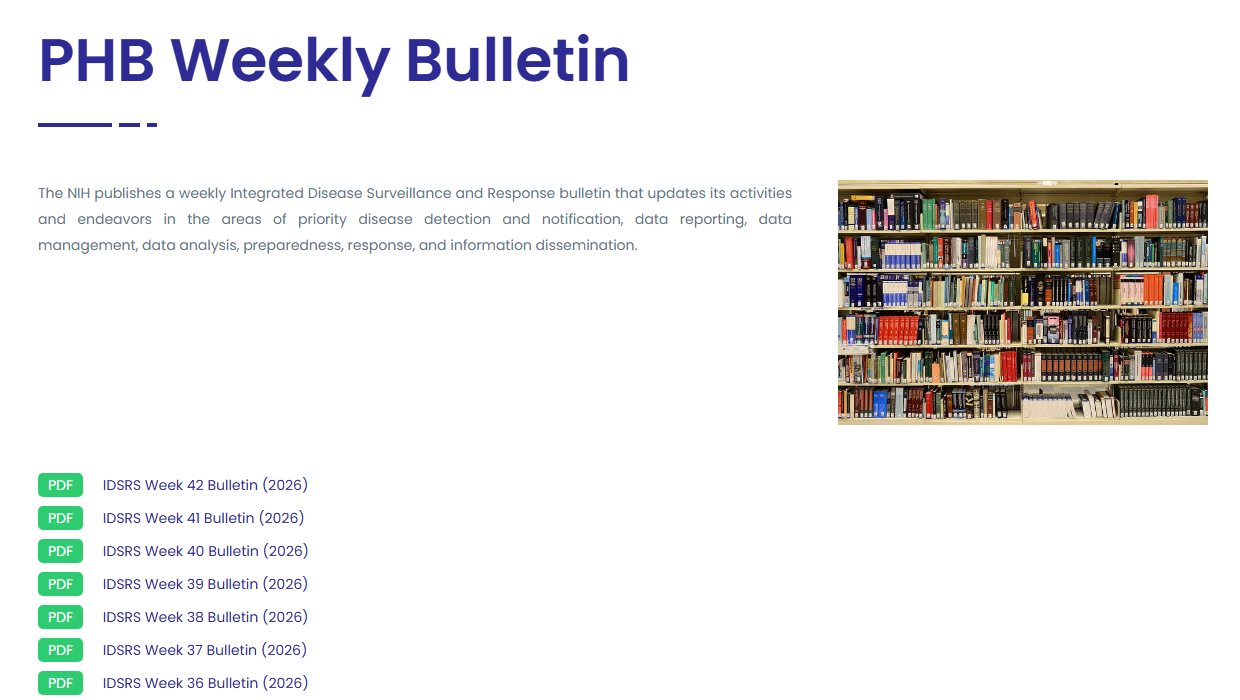
We read the NIH Integrated Disease Surveillance and Response weekly bulletin for week 42 of 2026, listed on the NIH weekly bulletin page, on 12 November 2026. The file was posted on the evening of 11 November. We used Table 1 for provinces, Table 4 for Khyber Pakhtunkhwa districts and Table 5 for lab results, and compared them with the week 41 bulletin. The bulletin does not give the calendar dates of week 42 or a reason for the Kohat and Bannu rise.
About the author

Public Services and Education Journalist
Fajr Riaz is a journalist and content writer at Pakistan Era, based in Lahore. She covers the questions people meet in everyday life in Pakistan: how a public service works, what a change in the rules means, and where to find a reliable answer.