Pavan Rathnayake Scores 130 as Sri Lanka Chase 430 Against England in Rawalpindi
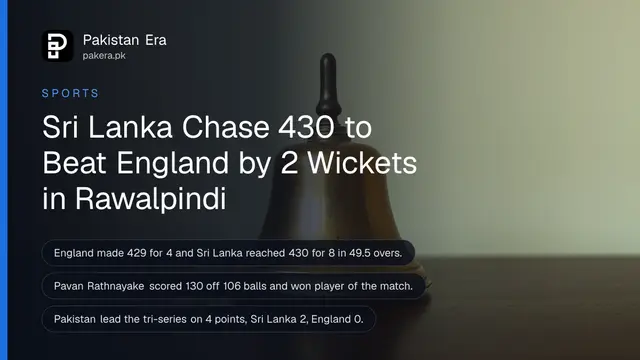
Pavan Rathnayake scored 130 off 106 balls and won player of the match as Sri Lanka chased 430 at Rawalpindi on 22 October 2026. See the 166 run stand.
Short answer: Pavan Rathnayake scored 130 off 106 balls and was named player of the match as Sri Lanka chased down England's 429 at Rawalpindi on 22 October 2026. He added 166 for the third wicket with Avishka Fernando, who made 97, after Sri Lanka were 24 for 2.
Sri Lanka won by 2 wickets with one ball left, on 430 for 8. The full result is in our report on the 430 chase. This page follows the innings that made it possible. We read the International Cricket Council (ICC) match story and a full match report on 22 October. The Pakistan Cricket Board (PCB) scorecard did not load, so the figures are reported.
Rathnayake made 130 off 106 balls and won player of the match
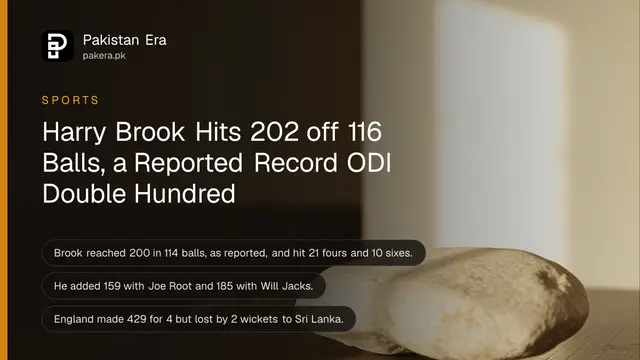
Rathnayake scored 130 off 106 balls, a strike rate of 122.6. The match report names him player of the match. His innings came after England had put 429 on the board, with Harry Brook on 202. A hundred in that chase was the least Sri Lanka needed.
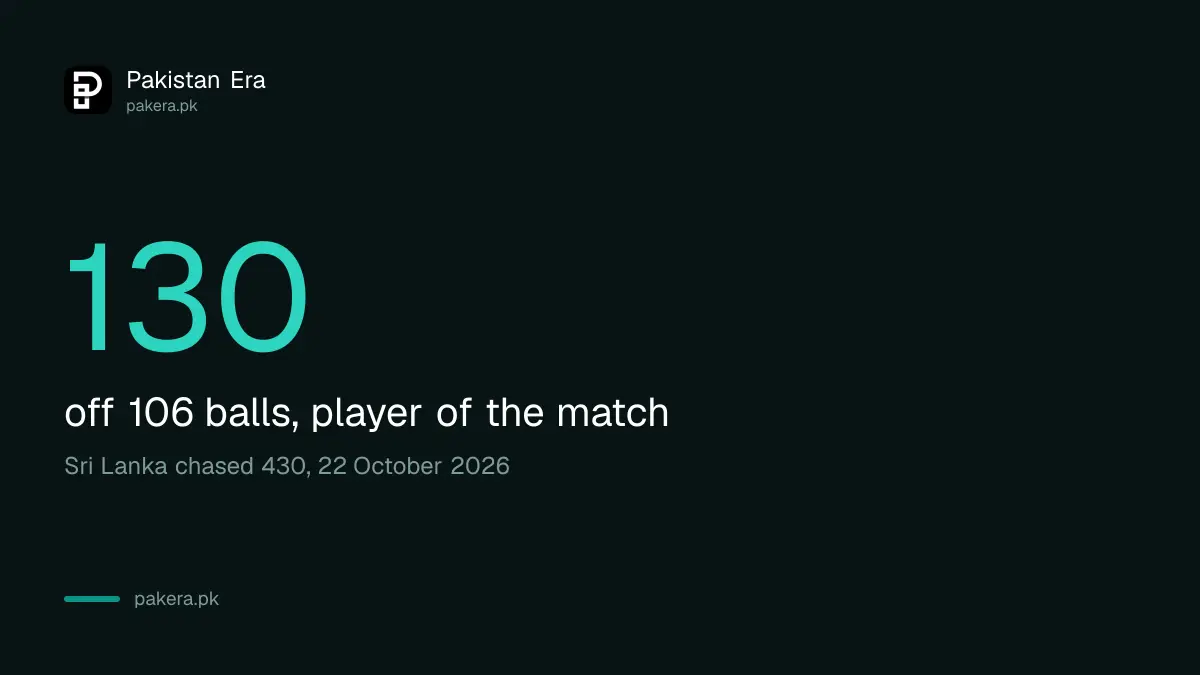
| Batter | Runs | Balls | Strike rate |
|---|---|---|---|
| Pavan Rathnayake | 130 | 106 | 122.6 |
| Avishka Fernando | 97 | 83 | 116.9 |
| Dasun Shanaka | 97 | 50 | 194.0 |
| Janith Liyanage | 61 not out | 27 | 225.9 |
Strike rates in the table are our arithmetic from the reported runs and balls. They are runs divided by balls, times 100, rounded to one place.
Sri Lanka were 24 for 2 before the recovery began
Sri Lanka lost two wickets for 24 runs early on. Kusal Mendis was run out without facing a ball. At that point the target was 430, so the required rate was above eight and a half an over from ball one.
Rathnayake did not try to win the match in the first ten overs. He and Avishka Fernando built the base, and the rate stayed within reach.
Rathnayake and Avishka Fernando added 166 for the third wicket
The third wicket added 166 between Rathnayake and Avishka Fernando. Fernando made 97 off 83 balls and missed his hundred by three runs. The stand took Sri Lanka from 24 for 2 to 190 for 3 by simple addition.
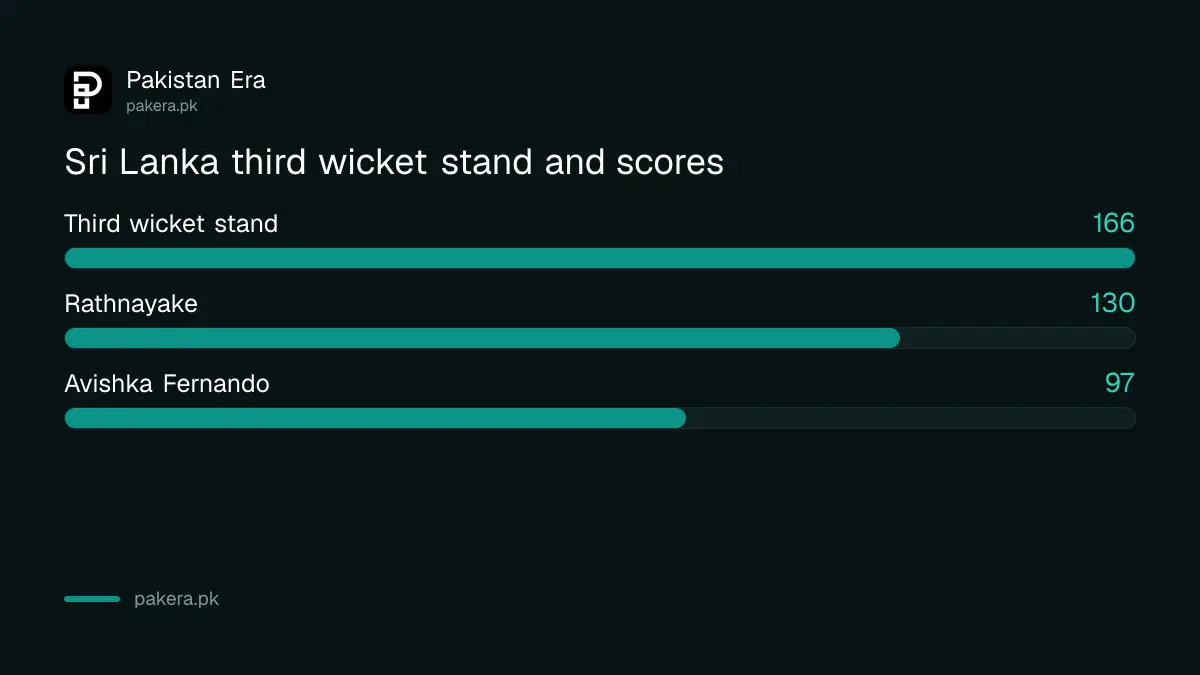
The 190 is our own sum of 24 and 166. It assumes no other wicket fell in the stand, and the reports we read do not give a ball-by-ball score. Treat it as a guide.
Shanaka and Liyanage finished what Rathnayake started
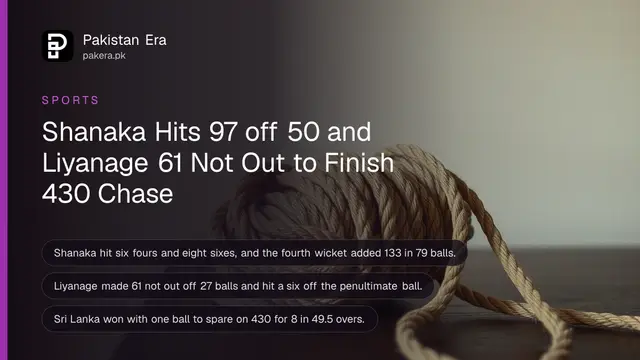
Dasun Shanaka scored 97 off 50 balls with eight sixes, and the fourth wicket added 133 in 79 balls. Janith Liyanage then made 61 not out off 27 balls and hit a six off the penultimate ball to finish. See the Shanaka and Liyanage page.
What kind of innings it was
It was a patient hundred. He scored at 122.6 per 100 balls, below the pace of Shanaka and Liyanage, but he stayed in for 106 balls and let others attack. In a long chase, that role is as useful as the big hitting that follows.
What the hundred means for the table
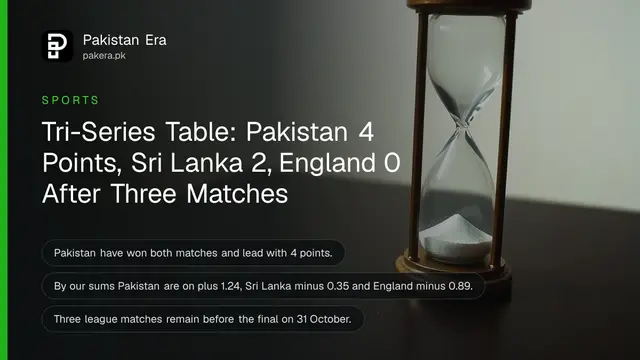
The win gave Sri Lanka their first 2 points in the series, after losing to Pakistan by 37 runs in the tri-series opener. They now meet Pakistan in Lahore on 27 October. Our points table after 22 October gives the numbers.
- Rathnayake scored 130 and took the player of the match award.
- Sri Lanka moved to 2 points.
- They play Pakistan on 27 October and England on 29 October.
- The final is on 31 October in Lahore.
How a 430 chase is built
A target of 430 in 50 overs needs 8.6 runs an over. That is our sum: 430 divided by 50. Few teams get there by hitting from the first ball. The usual plan is to keep wickets in hand early and let the middle and lower order use the last ten overs.
Sri Lanka lost two early wickets, which made that plan harder. Rathnayake and Avishka Fernando then batted through a long stretch together. Fernando's 97 came off 83 balls and Rathnayake's 130 off 106. Those are strike rates of 116.9 and 122.6, quick but not wild.
The hard part of a chase is that one mistake can end it. When Rathnayake and Fernando stayed together for 166 runs, England did not get a wicket for a long spell. That gave Shanaka and Liyanage the platform to hit freely. They scored 158 from 77 balls between them, by our sum.
For readers who want to follow along in future matches, the useful number is the required rate. It is the runs still needed divided by the overs left. Our page on how to read an ODI scorecard, linked in the questions below, explains strike rate and economy with the match of 20 October.
Common questions
How many runs did Pavan Rathnayake score?
130 off 106 balls, as reported.
Was he player of the match?
Yes, a match report names him.
Who added 166 with him?
Avishka Fernando, who made 97 off 83 balls.
Did Rathnayake score the winning runs?
No. Janith Liyanage finished the chase with a six off the penultimate ball, on 61 not out.
How did Sri Lanka start the chase?
They were 24 for 2, with Kusal Mendis run out without facing a ball.
What is a strike rate?
Runs per 100 balls. Our page on reading an ODI scorecard shows how to work it out.
How we verified this
What we checked, where we read it, and what we could not confirm.
On 22 October 2026 we read the ICC match story and a full published match report. The PCB scorecard on pcb.com.pk was not available to us, so balls faced and partnerships are reported, not checked against the official card. Strike rates are our arithmetic.
About the author

Tax, Bills and Technology Writer
Ali Akhtar is a young and curious voice here at Pakistan Era. He is currently pursuing his A-Levels and has a growing interest in Pakistan’s changing industrial landscape and educational trends. Ali likes to write in a way that helps him explain and explore the world around him. His writing reflects the perspective of the new generation navigating the evolving trends of Pakistan where technology, youth innovation, and shifting opportunities are reshaping the country’s future.