337 PPC Hurt Sections in Pakistan: 337-A, 337-F and 337-L Punishment, Arsh and Bail (Full List)
Every 337 PPC hurt section in one place: 337-A head wounds, 337-F body wounds, 337-L other hurt, with jail term, arsh or daman and bail status for each grade.
Section 337 of the Pakistan Penal Code covers hurt, and the letter after it (337-A, 337-F, 337-L) names the injury: head and face wounds are 337-A, body wounds are 337-F, and anything else is 337-L. The jail term runs from one year for a bleeding cut to 14 years for a skull wound that reaches the brain, and only the mildest kinds are bailable. Every type, its punishment, its compensation and its bail status is below.
We read Chapter XVI of the Pakistan Penal Code (PPC) and the Second Schedule of the Code of Criminal Procedure (CrPC) on Pakistan Code on 1 November 2026. Fights over land, parking or a family dispute usually end in an FIR under one of these sections, so the numbers matter to both sides.
Head and face injuries fall under 337-A, in six grades
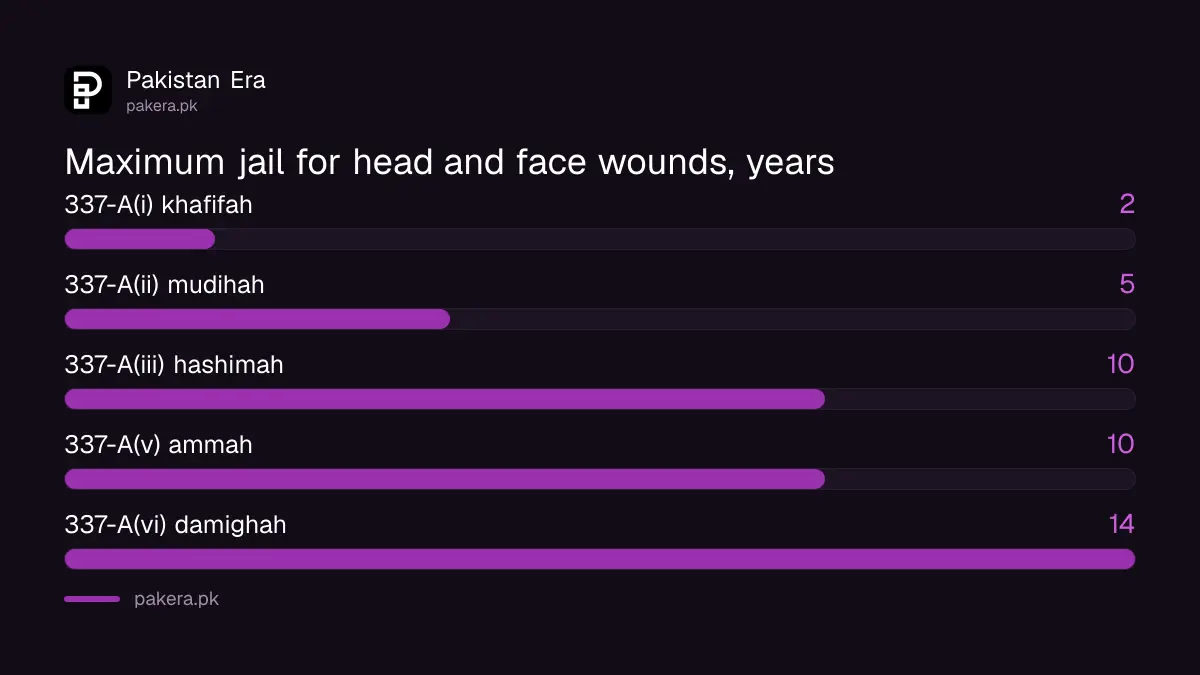
Section 337 calls a head or face injury "shajjah" and grades it by how deep it goes. A cut that does not show bone is the lightest. A skull fracture that tears the brain membrane is the heaviest. Section 337-A then sets punishment for each grade.
| Section | Injury (head or face) | Compensation | Maximum jail | Bail |
|---|---|---|---|---|
| 337-A(i) | Shajjah-i-khafifah: wound, bone not exposed | Daman | 2 years | Bailable |
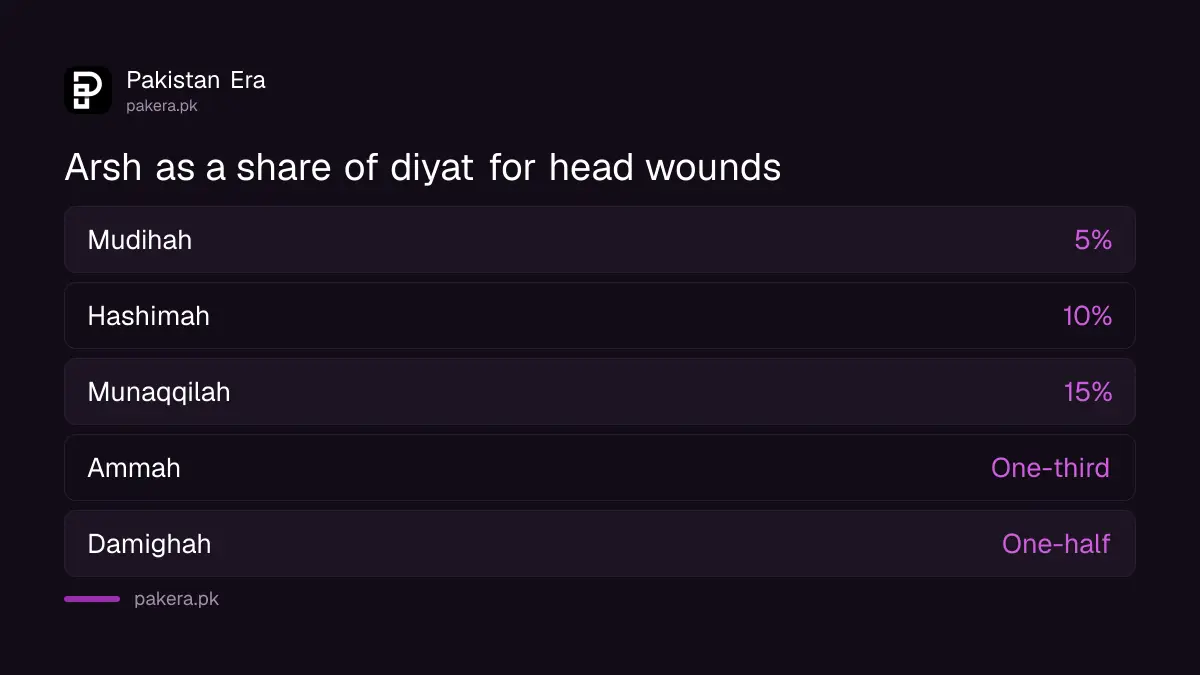
| 337-A(ii) | Shajjah-i-mudihah: bone exposed, not broken | Qisas, or arsh of 5% of diyat | 5 years | Non-bailable |
| 337-A(iii) | Shajjah-i-hashimah: bone broken, not displaced | Arsh of 10% of diyat | 10 years | Non-bailable |
| 337-A(iv) | Shajjah-i-munaqqilah: bone broken and displaced | Arsh of 15% of diyat | 10 years | Non-bailable |
| 337-A(v) | Shajjah-i-ammah: skull fracture touching the brain membrane | Arsh of one-third of diyat | 10 years | Non-bailable |
| 337-A(vi) | Shajjah-i-damighah: skull fracture rupturing the membrane | Arsh of half of diyat | 14 years | Non-bailable |
The CrPC schedule marks all six as compoundable, so the injured person can settle. Only the first grade is bailable as of right.
Body wounds fall under 337-D and 337-F
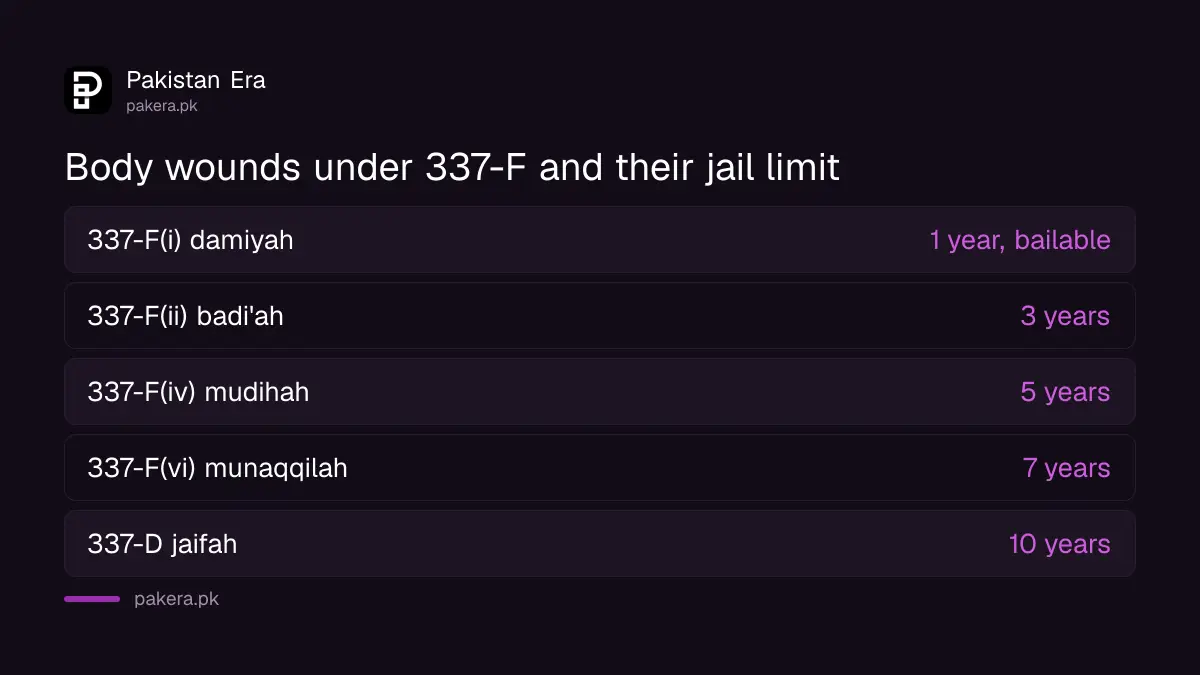
An injury anywhere else that leaves a mark is "jurh". If it reaches the cavity of the chest or stomach, it is jaifah under 337-D, with arsh of one-third of diyat and up to ten years. Every other body wound is ghayr-jaifah under 337-F, in six grades.
| Section | Injury (body) | Compensation | Maximum jail | Bail |
|---|---|---|---|---|
| 337-F(i) | Damiyah: skin broken, bleeding | Daman | 1 year | Bailable |
| 337-F(ii) | Badi'ah: flesh cut, bone not exposed | Daman | 3 years | Non-bailable |
| 337-F(iii) | Mutalahimah: flesh torn | Daman | 3 years | Non-bailable |
| 337-F(iv) | Mudihah: bone exposed | Daman | 5 years | Non-bailable |
| 337-F(v) | Hashimah: bone broken, not displaced | Daman | 5 years | Non-bailable |
| 337-F(vi) | Munaqqilah: bone broken and displaced | Daman | 7 years | Non-bailable |
| 337-D | Jaifah: wound into the chest or abdomen | Arsh of one-third of diyat | 10 years | Non-bailable |
Section 337-L covers every other hurt
Section 337-L is the catch-all. If the hurt endangers life, or keeps the victim in severe pain or away from normal work for 20 days or more, it carries daman and up to seven years and is non-bailable. Any lesser hurt carries up to two years and is bailable.
Bruises, swelling and blows that leave no open wound are often charged under 337-L(2). That is why a scuffle FIR frequently lists "337-A(i), 337-F(i), 337-L(2)": all three are bailable, and all three can be settled.
Arsh, daman and diyat are payments to the victim
Arsh is compensation fixed by the PPC as a share of diyat. Daman is compensation the court sets for injuries with no fixed arsh. Diyat is the full blood money, which section 323 sets at no less than the value of 30,630 grams of silver.
The Federal Government notifies the value of silver each year, normally from 1 July, and that value is used for the whole financial year. We did not find the 2026-27 notification on the Finance Division's notification page on 1 November 2026, so we cannot give a rupee figure for diyat or arsh here. Ask the court or your lawyer for the value in force.
Arsh and daman are paid to the injured person, or to their heirs if they die, by section 337-Z. They are on top of any jail term, not instead of it, though the jail term is "may" and not "shall".
The medical report decides which section applies
The grade of injury comes from the medico-legal examination by an authorised medical officer, a doctor or board named by the provincial government. Police write the section from that report. If the report is wrong, the section is wrong, and the bail position changes with it.
- Get the injured person examined at a government hospital the same day.
- Ask for the medico-legal report to describe each wound separately.
- Check that the FIR sections match the wounds in the report.
- If they do not match, raise it with the investigating officer in writing.
- For a disputed report, ask the court for a medical board.
Hurt caused while driving is charged under 337-G, which carries arsh or daman and up to five years and is bailable. A death on the road is a different section, explained in the 320 PPC accident death case.
Most hurt cases end in compromise
Every grade in the tables above is compoundable under the CrPC schedule. The injured person can forgive the accused and the case closes, usually after a statement in court. A compromise for money is lawful here, because arsh and daman are the victim's right.
The rules for recording a compromise are in settling a criminal case by compromise. For the wider list of FIR sections, including theft, cheating and threats, see the PPC sections list.
Common questions
Is 337-A(i) bailable?
Yes. A head or face wound that does not expose bone is bailable, carries up to two years plus daman, and can be settled by compromise.
What is the punishment for 337-F(i)?
Daman, plus up to one year in jail. It covers a wound where the skin breaks and bleeds. It is bailable and compoundable.
Is 337-A(ii) bailable?
No. Shajjah-i-mudihah, where bone is exposed, is non-bailable. It carries qisas, or arsh of five per cent of diyat, plus up to five years. Courts can still grant bail because it is below ten years.
What does 337-L(2) mean?
It is hurt that is not covered by any other section and does not endanger life or cause 20 days of pain. It carries up to two years or daman and is bailable.
Can a 337 case be withdrawn?
The injured person can compound it in court. Police cannot simply withdraw it once the FIR is registered, but a recorded compromise ends the case.
How we verified this
What we checked, where we read it, and what we could not confirm.
We read sections 299, 323, 337 to 337-Z of the Pakistan Penal Code and the hurt rows of the CrPC Second Schedule on pakistancode.gov.pk on 1 November 2026. We could not find the Federal Government's silver value notification for 2026-27, so no rupee value of diyat is given. Provincial amendments to the CrPC schedule were not checked. This page is a reference, not advice on a particular case.
About the author

Global Affairs & Political Economy Writer
Muhammad Hatim is a book lover who started writing because he enjoys it. At Pakistan Era he writes about international relations, geopolitics and the global economy, with a particular interest in South Asia and the forces behind current events.