320 PPC Accident Death Case in Pakistan: Up to 10 Years Plus Diyat, Bail and Compromise
320 PPC covers a death caused by rash or negligent driving in Pakistan: diyat plus up to 10 years, bailable and compoundable. How diyat is paid and settled.
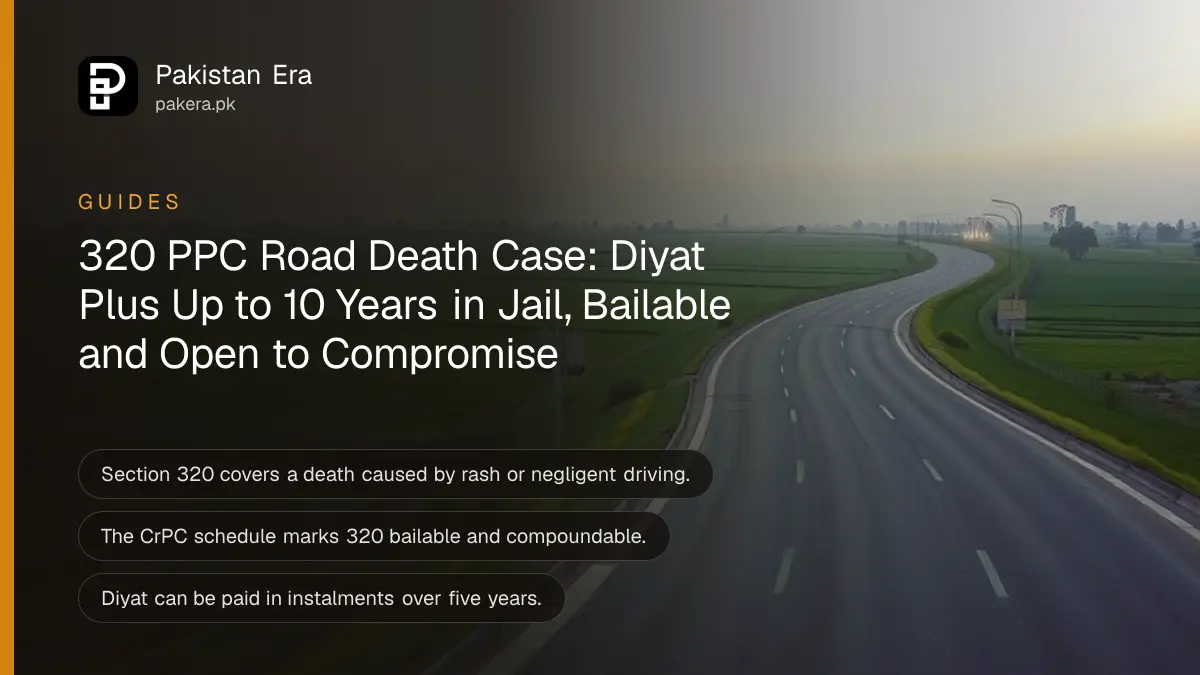
When a road accident kills someone in Pakistan, the driver is usually charged under section 320 of the Pakistan Penal Code: qatl-i-khata by rash or negligent driving, which carries diyat plus up to 10 years in jail. The offence is bailable and compoundable, so the driver has a right to bail and the victim's heirs can settle. The details for both families, including how diyat is paid and what happens if it is not, are below.
We read sections 318 to 331 and 337-G of the Pakistan Penal Code (PPC), and the matching rows of the Code of Criminal Procedure (CrPC) Second Schedule, on Pakistan Code on 1 November 2026.
Section 320 means diyat plus up to 10 years for a driving death
Section 320 says whoever commits qatl-i-khata by rash or negligent driving shall pay diyat and be punished with up to ten years in jail, depending on the facts. The jail term was fourteen years until a 2005 amendment cut it to ten.
Qatl-i-khata is a death caused without any intention to kill or harm, by a mistake of act or fact (section 318). Section 320 is the version for drivers. It is the most common section on a fatal accident FIR, often written together with section 279 (rash driving on a public way).
Four PPC sections cover deaths and injuries on the road
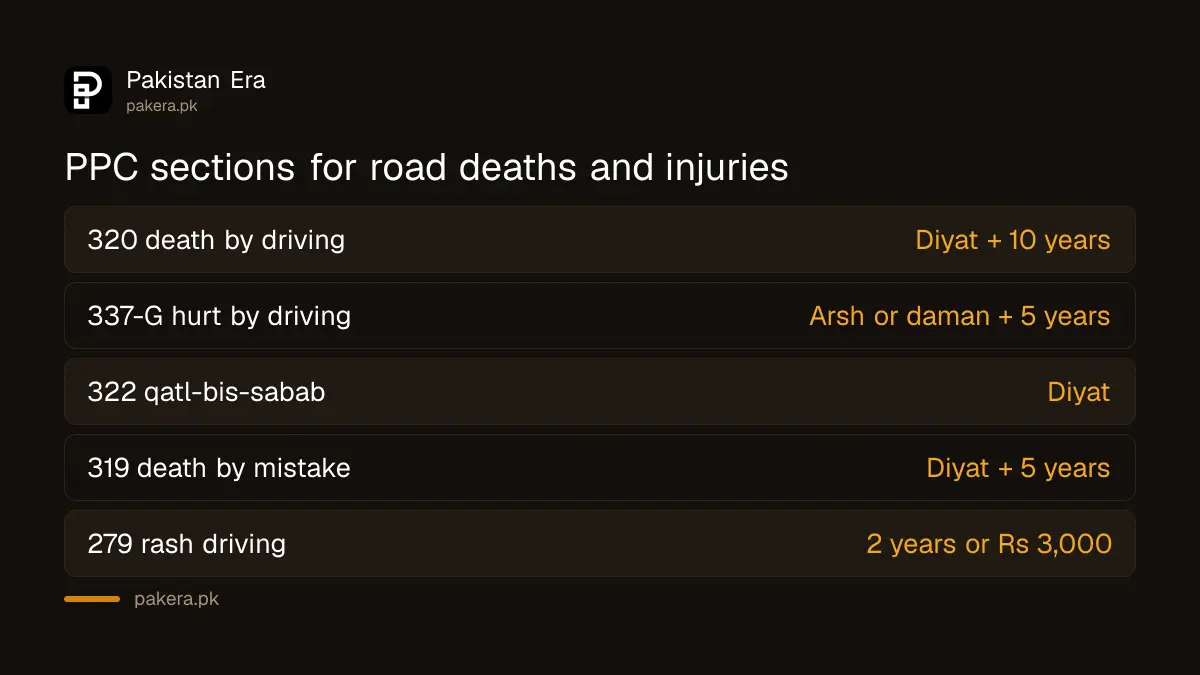
The section depends on what happened and who was hurt. A death by bad driving is 320. Injury by bad driving is 337-G. Rash driving that hurts nobody is 279. A death from an unlawful act without driving can be 322.
| Section | What it covers | Punishment | Bail | Compromise |
|---|---|---|---|---|
| 320 | Death by rash or negligent driving | Diyat plus up to 10 years | Bailable | Compoundable |
| 319 | Death by mistake, not driving | Diyat, plus up to 5 years for a rash act | Bailable | Not checked |
| 322 | Qatl-bis-sabab: death caused by an unlawful act | Diyat | Non-bailable | Compoundable |
| 337-G | Hurt by rash or negligent driving | Arsh or daman plus up to 5 years | Bailable | Compoundable |
| 279 | Rash driving on a public way | Up to 2 years or Rs 3,000 fine | Not checked | Not checked |
We could not read the CrPC schedule rows for section 279, and the compromise column for 319, cleanly in the published text, so we have not stated them.
Bail under 320 is a right, not a favour
The CrPC Second Schedule marks section 320 as bailable. Police may arrest without a warrant, but the driver must be released on bail on offering a surety. Bail does not end the case. The trial and the diyat claim continue.
In practice the police station or the magistrate fixes the bond. A relative or friend usually stands surety. What standing surety involves is set out in standing surety for a bail bond. If police add a heavier section, such as 322 or a murder charge, the bail position changes and a lawyer is needed straight away.
Diyat goes to the heirs and can be paid over five years
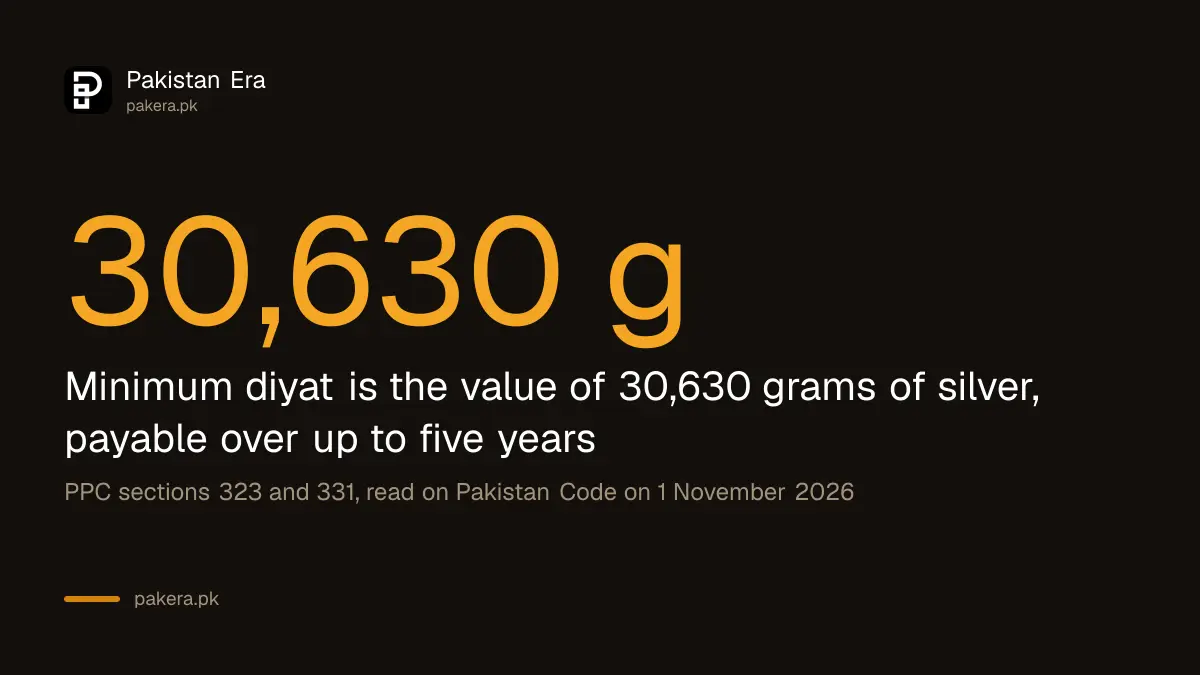
Diyat is blood money paid to the heirs of the person who died, shared by their inheritance shares (section 330). Section 323 sets it at no less than the value of 30,630 grams of silver. The court can order it as a lump sum or in instalments over five years.
The Federal Government notifies the value of silver each year, normally from 1 July, for that financial year. We checked the Finance Division's notifications page on 1 November 2026 and did not find the 2026-27 figure, so we cannot give a rupee amount. The court applies the value in force.
If a convict does not pay within the time allowed, section 331 lets the court keep them in jail as if on simple imprisonment until it is paid. They can be released on bail by giving security or a surety equal to the diyat. If they die before paying, it is recovered from their estate.
Where one heir gives up their share, diyat is not recovered for that share. That is how families settle part of a claim while other heirs keep theirs.
What each family should do after a fatal accident
For the victim's family, the FIR, the post-mortem or medical report and the list of legal heirs are the papers that matter. For the driver's family, bail and the vehicle papers come first. Both sides should keep every receipt.
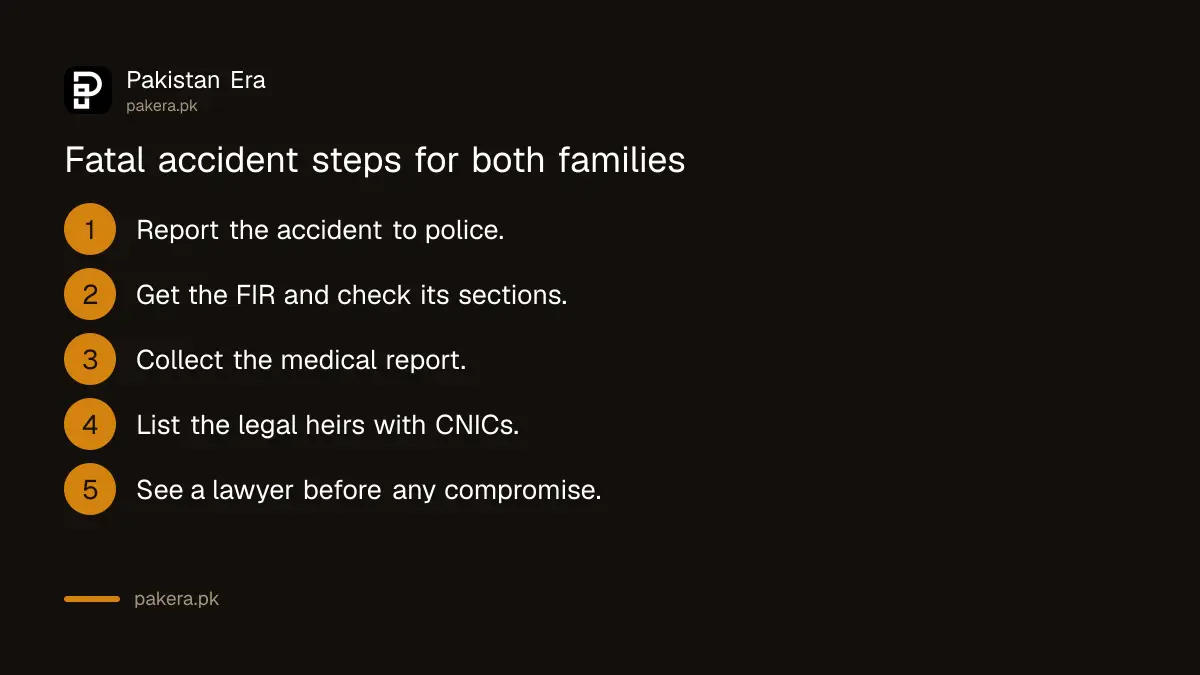
- Report the accident to the nearest police station or, on a motorway, to the motorway police.
- Get a copy of the FIR and check the sections written on it.
- Collect the medical or post-mortem report from the hospital.
- Prepare a list of the legal heirs with CNIC copies.
- If you are the driver, arrange bail and a surety the same day.
- Talk to a lawyer before signing any compromise.
On national highways and motorways, the 24 hour reporting rule and the motorway police process are covered in reporting a motorway accident. For the first hours at the scene, see what to do after a road accident.
A compromise ends the criminal case, not the insurance claim
Section 320 is compoundable, so the heirs can settle with the driver and the court records it. A settlement usually includes diyat or an agreed amount. Insurance is separate, and a third party claim against the vehicle's insurer can still run.
Every adult heir should agree, and minors' shares need the court's care. If you hold motor insurance, the claim steps are in the car insurance claim process. The wider list of FIR sections, from theft to threats, is in the PPC sections list.
Common questions
Is 320 PPC bailable?
Yes. The CrPC Second Schedule marks section 320 bailable and compoundable. The driver has a right to bail on furnishing a surety.
What is the punishment for an accident death in Pakistan?
Under section 320, diyat plus up to ten years in jail. The court decides the jail term on the facts. Diyat is always payable.
How much is diyat in 2026?
It is the value of at least 30,630 grams of silver, at the rate the Federal Government notifies for the financial year. We could not find the 2026-27 notification, so ask the court for the current figure.
Can the family forgive the driver?
Yes. Section 320 is compoundable. The heirs can settle, and an heir who gives up their share of diyat is not paid for it.
What happens if diyat is not paid?
The convict can be kept in jail until it is paid, or released on bail with security equal to the diyat. If they die, it is taken from their estate.
How we verified this
What we checked, where we read it, and what we could not confirm.
We read sections 279, 318 to 323, 330, 331 and 337-G of the Pakistan Penal Code and the CrPC Second Schedule on pakistancode.gov.pk on 1 November 2026, and checked the Finance Division notifications page the same day. The 2026-27 silver value and the bail status of section 279 could not be confirmed. Provincial amendments to the CrPC schedule were not checked. This page is a reference, not legal advice.
About the author

Global Affairs & Political Economy Writer
Muhammad Hatim is a book lover who started writing because he enjoys it. At Pakistan Era he writes about international relations, geopolitics and the global economy, with a particular interest in South Asia and the forces behind current events.