How to Register a Death in Khyber Pakhtunkhwa: Form D, Documents and Time Limits
Register a death in Khyber Pakhtunkhwa at your village or neighbourhood council: Form D, the graveyard slip, the 3 and 7 day limits, and where to complain.
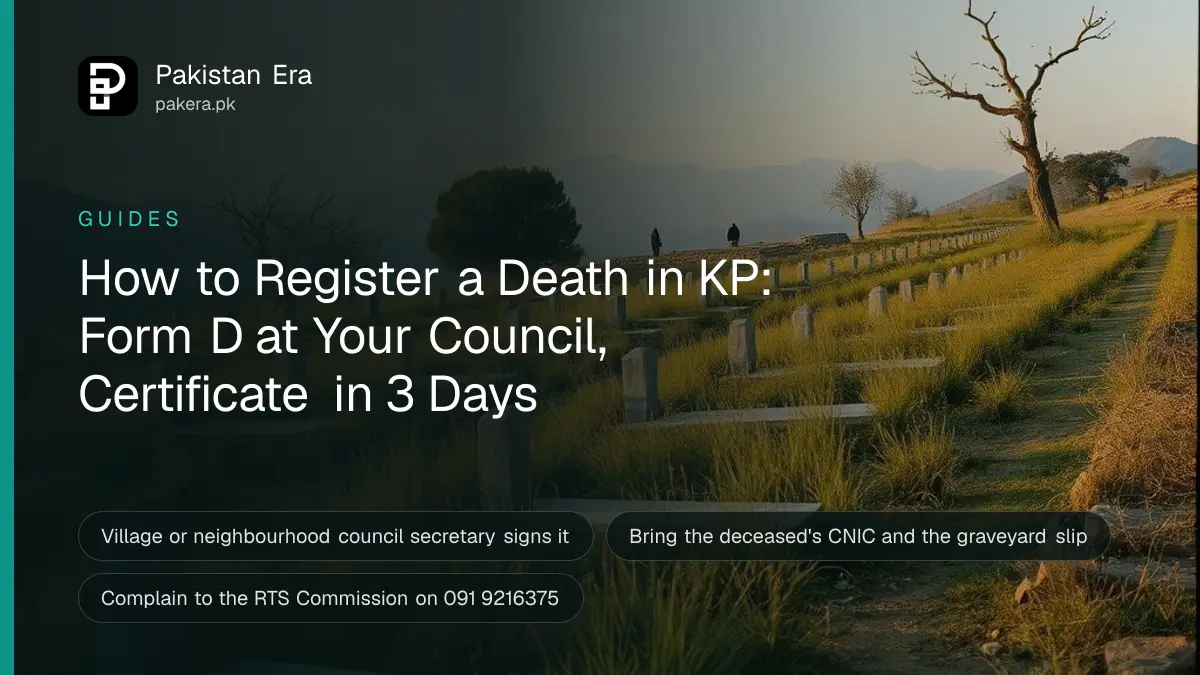
In Khyber Pakhtunkhwa, a death is registered at the village council or neighbourhood council where the family lives. Fill in Form D, attach the CNIC of the person who died and your own, and bring the graveyard slip if you have one. The council secretary must issue the certificate within 3 days for a normal registration.
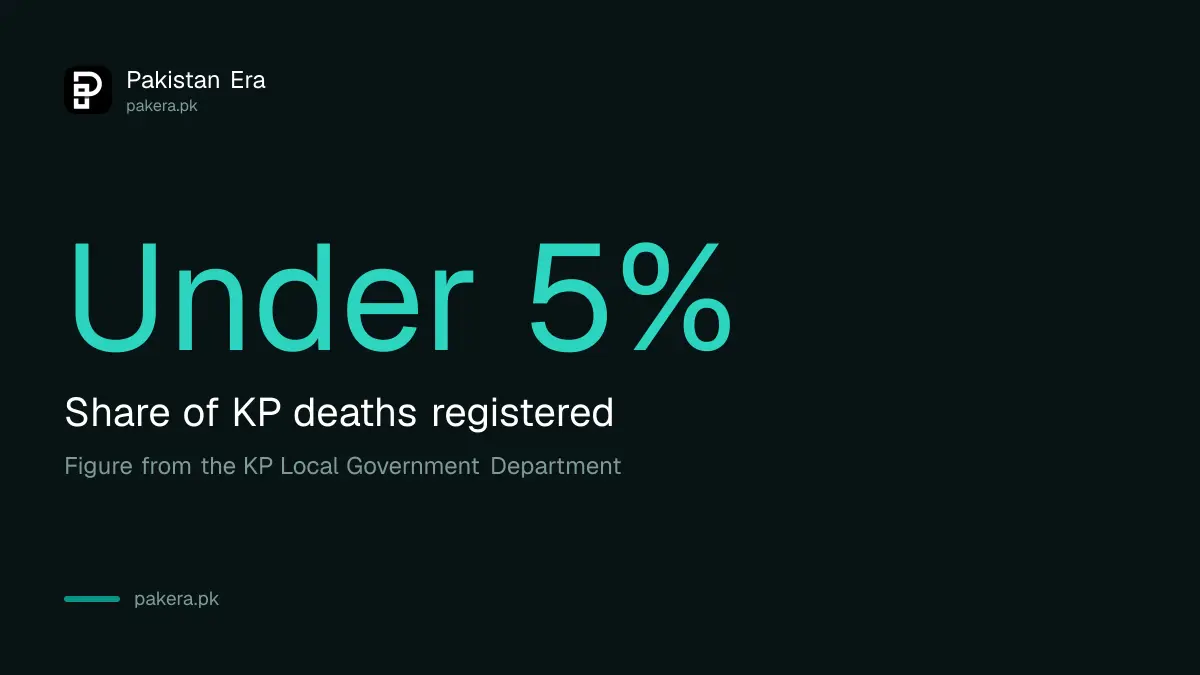
Most families in KP never do this. The Local Government Department's own civil registration page says fewer than 5% of deaths in the province are registered. That gap causes trouble later, because NADRA, banks, insurers and the land record all ask for the council's death certificate. We read the department's pages, the official application form and certificate, and the Right to Public Services Commission's list of notified services on 3 October 2026.
The village or neighbourhood council registers deaths in KP
Death registration in Khyber Pakhtunkhwa is the duty of the village council in rural areas and the neighbourhood council in towns. You go to the council office, not to NADRA and not to the tehsil office. The council secretary signs the certificate.
The duty comes from section 29(1)(c) of the Khyber Pakhtunkhwa Local Government Act 2013, as amended in 2019. It hands births, deaths, marriages and divorces to these councils. The department's registration page tells people to visit the office of the council for it.
The certificate itself is called Form F. It records the applicant, the person who died, the date, place and cause of death, the date of the funeral and the place of burial. It also shows whether the registration was normal or late, so a late case is marked on the certificate for good.
Documents you need to register a death in KP
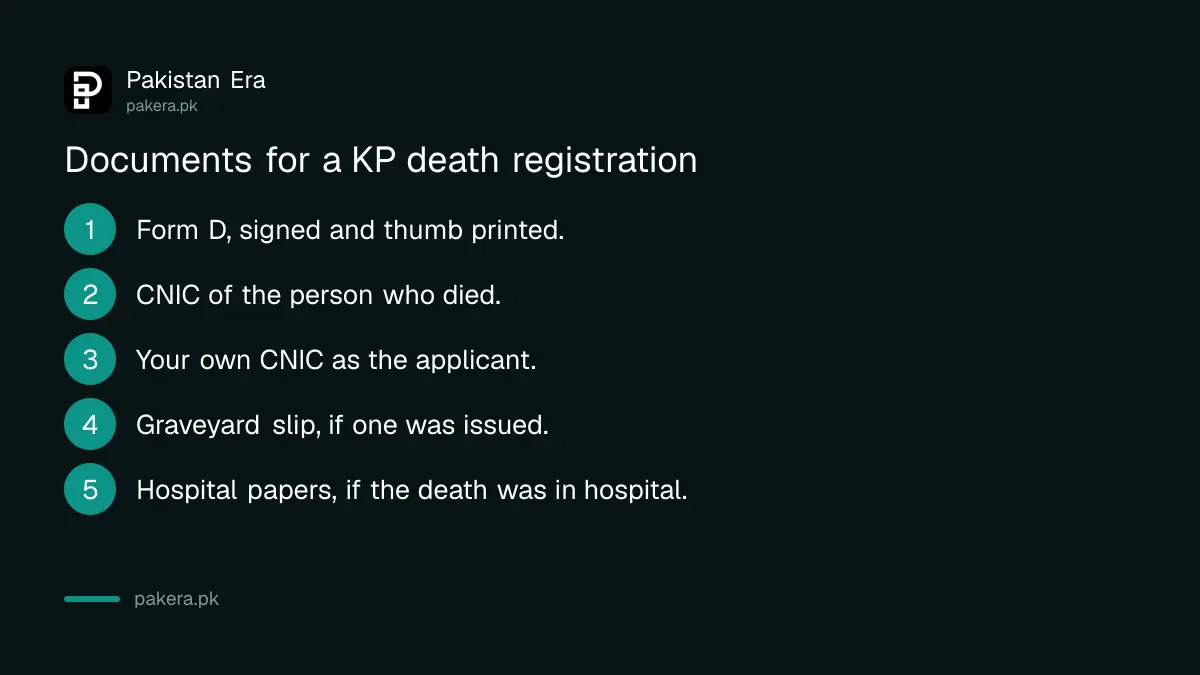
You need a filled Form D with your signature, thumb impression and CNIC number. Bring the CNIC of the person who died, and the slip from the graveyard if you have one. The department says the council may ask for any other evidence.
The graveyard slip matters more than people expect. The department names the certificate or parchi issued by the ghorkan, the gravedigger, or by whoever runs the graveyard where the person was buried. Ask for it on the day of the burial. It is much harder to get months later.
- Form D, filled in, checked, signed and thumb printed by you, with your CNIC number written on it.
- CNIC of the person who died, the original if you still have it, plus a copy.
- Your own CNIC as the applicant, since the form records your relationship to the person who died.
- Graveyard slip from the gravedigger or the graveyard in charge, if one was issued.
- Hospital papers, if the death happened in a hospital. The form asks for the doctor's or midwife's name.
How to fill in the KP death registration form
The form asks for your details, the deceased's name and CNIC, the father's or husband's CNIC, the place of death, the graveyard, and the dates of death and burial. A gazetted officer, or your own elected councillor or numberdar, then verifies it.
The form linked by the department is bilingual, Urdu and English, and carries the NADRA and KP government logos. Its top line says it is for office record only and is not the certificate. Work through it in this order:
- Your details: your name, your CNIC and your relationship to the person who died.
- The deceased: name, CNIC, gender and religion, then the father's name and CNIC. For a married woman, add the husband's name and CNIC too.
- Place and graveyard: where the death happened and the name of the graveyard.
- Dates: date of birth, date of death and date of burial, in the boxes given.
- Nature and reason: tick normal, still birth or dead body found, then natural or unnatural, and write how long the illness lasted.
- Next of kin: the name, CNIC and relationship of the nearest relative or the person who carried out the burial, and the doctor's or midwife's name.
- Address and council: your address with union council, tehsil and district, then sign or thumb print and date it.
- Verification: get the box at the bottom signed and stamped. The form says a gazetted officer can verify any form, while elected representatives and a numberdar can verify only people of their own ward or village.
The council secretary then fills the office section, marks the case as normal or late, and enters a CRMS number. CRMS is the computerised record the council keeps with NADRA. That number is what links the death to NADRA's database later.
KP time limits: 3 days normal, 7 days delayed
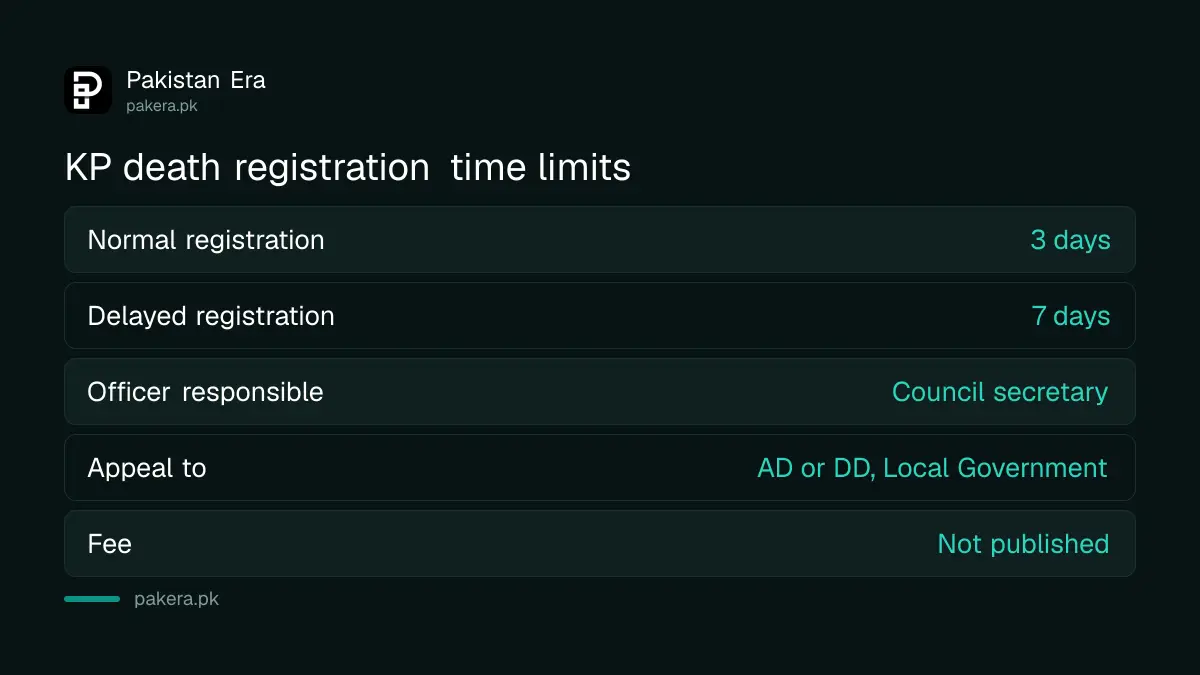
The Right to Public Services Commission lists death registration with two limits: 3 days for a normal registration and 7 days for a delayed one. The council secretary is responsible, and an Assistant or Deputy Director of Local Government hears appeals.
| Item | What the official list says | Source |
|---|---|---|
| Normal registration | 3 days | RTS Commission notified services |
| Delayed registration | 7 days | RTS Commission notified services |
| Officer responsible | Secretary, village or neighbourhood council | RTS Commission and Local Government Department |
| Appeal to | Assistant or Deputy Director, Local Government | RTS Commission |
| Fee | Not published | No KP page we read gives one |
The two official sources do not match exactly. The Local Government Department's own registration table says 2 days for a death certificate, while the commission's list says 3 days for a normal case. We would hold the council to the commission's figure, because that is the notified service you can complain under.
Neither page says how many days after a death count as "normal" or "delayed". Ask the secretary which one applies to you. The certificate has a space for the fee receipt, but no fee is published, so ask for a receipt that names the amount.
A death abroad is registered at the council too
If a family member died outside Pakistan, the KP certificate has a section for it. You give the country, the reference number of the death certificate issued by the Pakistani embassy, consulate or high commission, and the date it was issued.
So the first step happens abroad. Get the death reported to the Pakistani mission in that country and keep its certificate and reference number. Bring that, with the CNIC of the person who died, to your council in KP. The mission's certificate does not replace the council's record, and NADRA will look for the council entry.
Complain if the council refuses or delays
If the council refuses or misses the time limit, appeal first to the Assistant Director, Local Government. You can also complain to the KP Right to Public Services Commission online, on 091 9216375, or by email. The department itself points people there.
The commission sits at 12/A Chinar Road, University Town, Peshawar. Its contact page lists pschief.rts@kp.gov.pk and, for its public information officer, admin.rts@kp.gov.pk and 0337 1120027. Keep a stamped copy of your Form D. The time limit runs from the day you handed it in, and that copy is your proof.
After the certificate, close the deceased's records
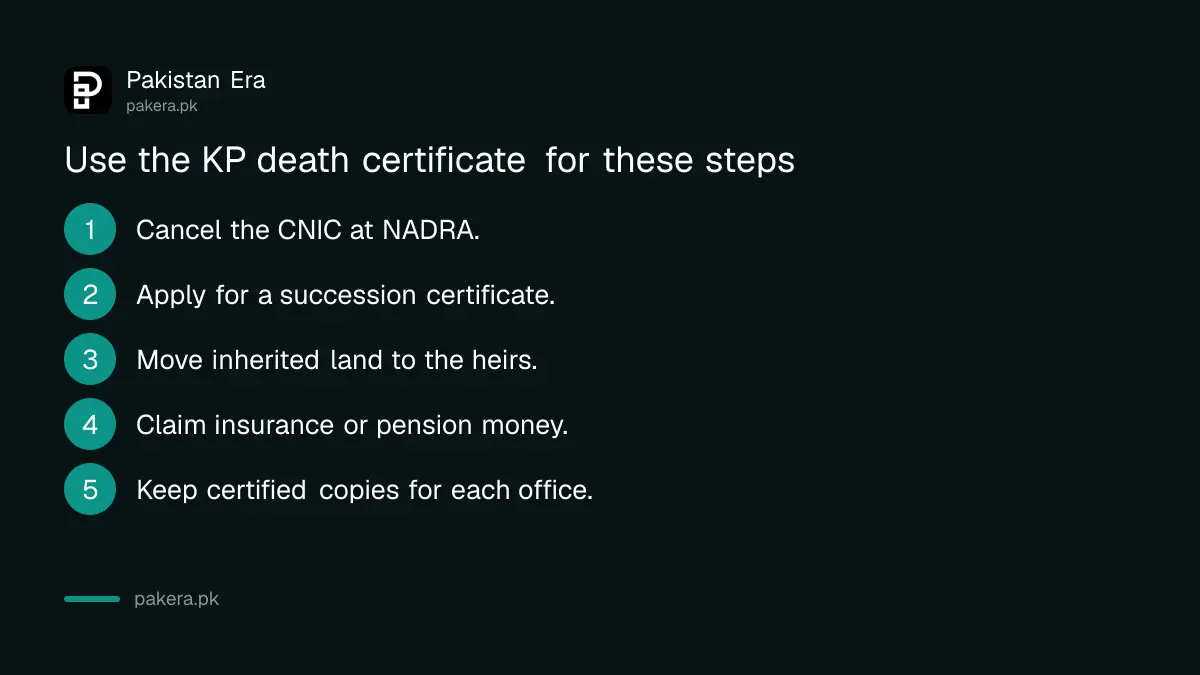
The council certificate opens every later step. With it, a family can cancel the CNIC after a death at NADRA, apply for a succession certificate, and claim insurance or pension money. Each office asks for the council record.
Property comes next for most families. Inherited land in KP has to be moved into the heirs' names, and the KP land record shows where it stands now. For a bank balance or shares, the heirs need a succession certificate from NADRA. A life insurance death claim also asks for the death certificate. Rules in Punjab and the other provinces are compared in the death certificate in Pakistan overview.
Common questions
Where do I register a death in Khyber Pakhtunkhwa?
At the village council or neighbourhood council for the area. The council secretary registers the death and signs the certificate.
What is Form D in KP?
The application form for death registration. You fill it in, check it, sign and thumb print it, and write your CNIC number on it.
How long does a death certificate take in KP?
3 days for a normal registration and 7 days for a delayed one, under the Right to Public Services list. The department's own table says 2 days.
What is the fee for a death certificate in KP?
No KP page we read publishes one. Ask the council secretary and get a receipt that names the amount.
Can I register a death in KP without the graveyard slip?
The department asks for the slip only "if any", so it is not always required. The council may ask for other evidence instead, such as hospital papers.
Who can verify the death registration form?
Any gazetted officer. An elected councillor or a numberdar can verify it only for people of their own ward or village.
How we verified this
What we checked, where we read it, and what we could not confirm.
Last checked on 3 October 2026. We read the Local Government Department's civil registration page and its page on registering births, deaths, marriages and divorces; the death registration application form and the Form F death certificate linked from those pages; and the Right to Public Services Commission's notified services and contact page. The commission's own death certificate detail page returned a server error, so the time limits come from its services table. No fee is published on any of these pages, and none defines when a registration becomes delayed.
About the author

Public Services and Education Journalist
Fajr Riaz is a journalist and content writer at Pakistan Era, based in Lahore. She covers the questions people meet in everyday life in Pakistan: how a public service works, what a change in the rules means, and where to find a reliable answer.