How to Respond to a Section 107 Keep the Peace Notice in Pakistan
A Magistrate can ask you to sign a bond to keep the peace for up to three years under section 107. See your rights: written order, lawyer, inquiry, appeal.
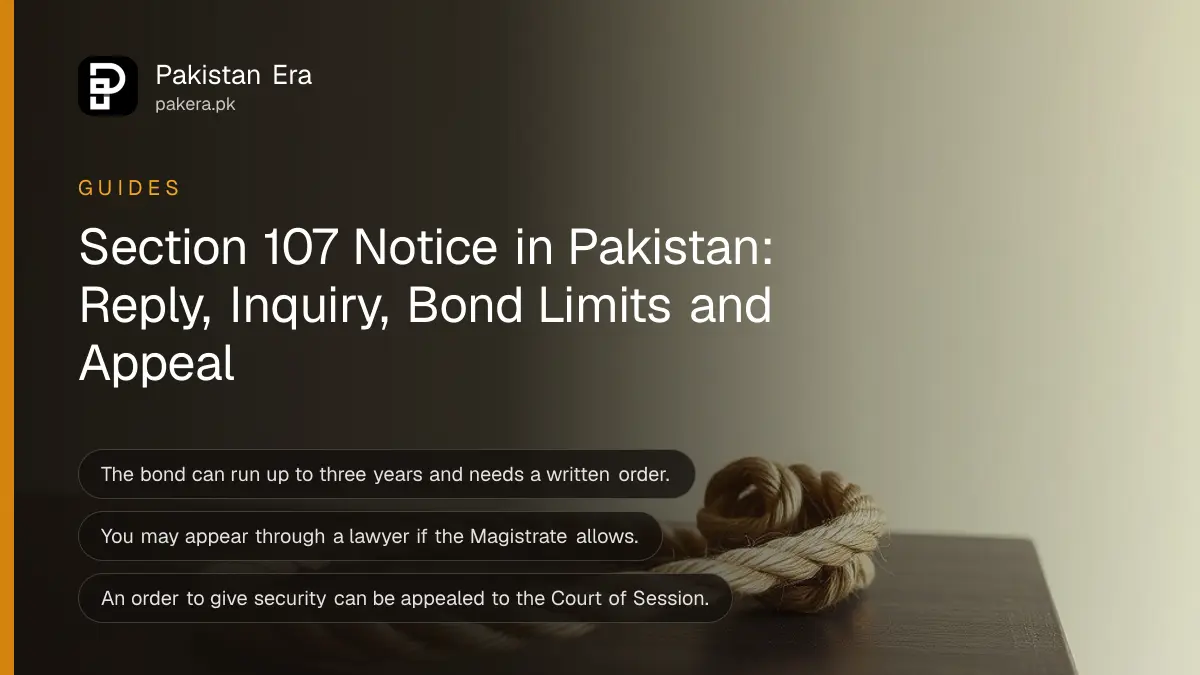
A section 107 notice means a first class Magistrate has been told you may break the peace and asks you to show cause why you should not sign a bond, with or without sureties, to keep the peace for up to three years. You can answer through a lawyer and you can appeal an order.
These notices usually arrive during a land, family or neighbour dispute, and many people think they are a criminal case. They are not a conviction. We read sections 107, 112 to 119, 122, 123, 406 and 406A of the Code of Criminal Procedure, 1898, on 21 October 2026. If the dispute is over land possession, also see the guide to a section 145 Magistrate order.
Section 107 lets a Magistrate ask you to show cause
Under section 107(1), a Magistrate of the first class who is informed that a person is likely to commit a breach of the peace, or do a wrongful act that may probably cause one, may, if he finds sufficient ground, require that person to show cause why he should not execute a bond.
The bond may be with or without sureties and runs for a period the Magistrate fixes, up to three years. Section 107(2) ties the proceeding to his local limits: the person or the place of the feared disturbance must be within them.
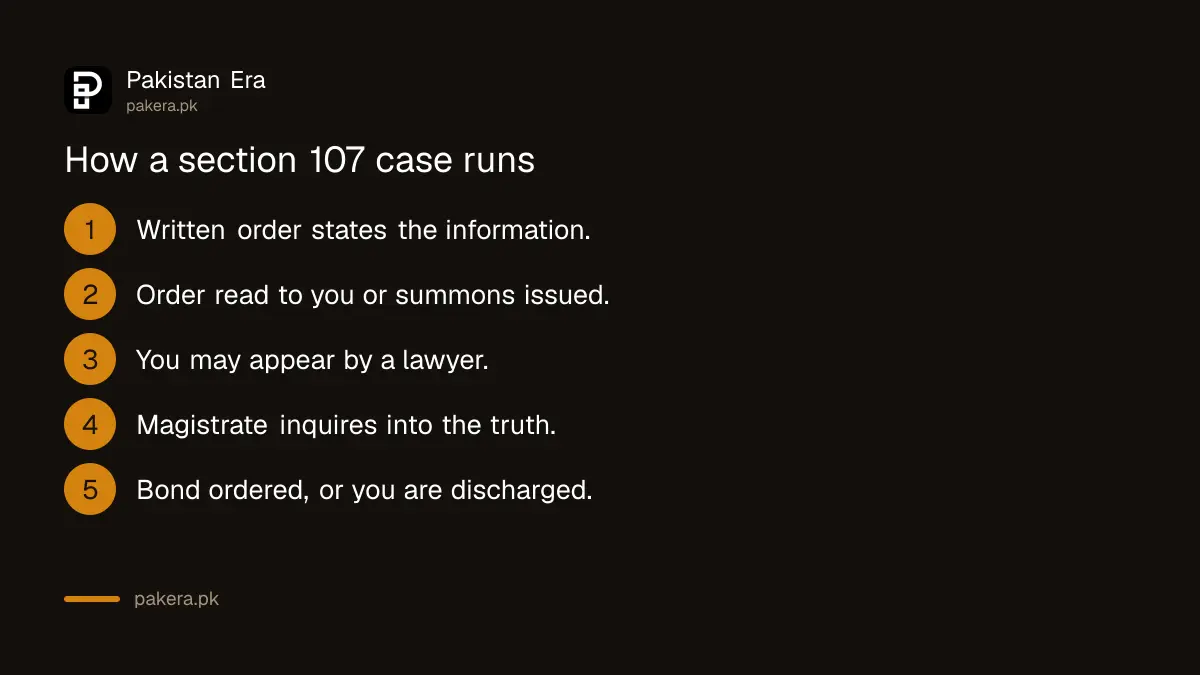
| Step | Section | What happens |
|---|---|---|
| Show cause order | 107, 112 | Written order states the information, bond amount, term, sureties |
| You are called | 113, 114 | Order read to you, or summons, or warrant if arrest is needed |
| Copy of order | 115 | Served with the summons or warrant |
| Your attendance | 116 | May be excused, appear through a pleader |
| Inquiry | 117 | Truth of the information is tested, like a trial without a charge |
| Order or discharge | 118, 119 | Bond ordered, or you are discharged |
The written order must tell you what you are accused of
Section 112 requires an order in writing that sets out the substance of the information received, the amount of the bond, the term, and the number, character and class of sureties. Section 115 says a copy goes with any summons or warrant.
Read it closely. You answer what it says, not what neighbours say in the street. Note the hearing date, the Magistrate's court and the surety requirement. Ask your lawyer for a written reply that denies the information and gives your own account.
You may send a lawyer instead of coming yourself
Section 116 says the Magistrate may, if he sees sufficient cause, dispense with your personal attendance and permit you to appear by a pleader. Do not use this as a reason to ignore the case. Make a written request through your lawyer.
If you are not in Court, section 114 provides for a summons. A warrant issues only if there is reason to fear a breach of the peace that cannot be prevented otherwise than by your immediate arrest, and the Magistrate records the substance of the information. Keep every paper served on you.
The Magistrate must inquire into the truth before ordering a bond
Section 117 says the Magistrate must inquire into the truth of the information and take further evidence as needed, in the way of a trial, but without framing a charge. You can bring witnesses and documents, and challenge those of the other side.
Pending the inquiry, the Magistrate may, for reasons recorded in writing, ask for an interim bond and may hold you in custody until it is executed. The conditions of that interim bond cannot be more onerous than those in the section 112 order.
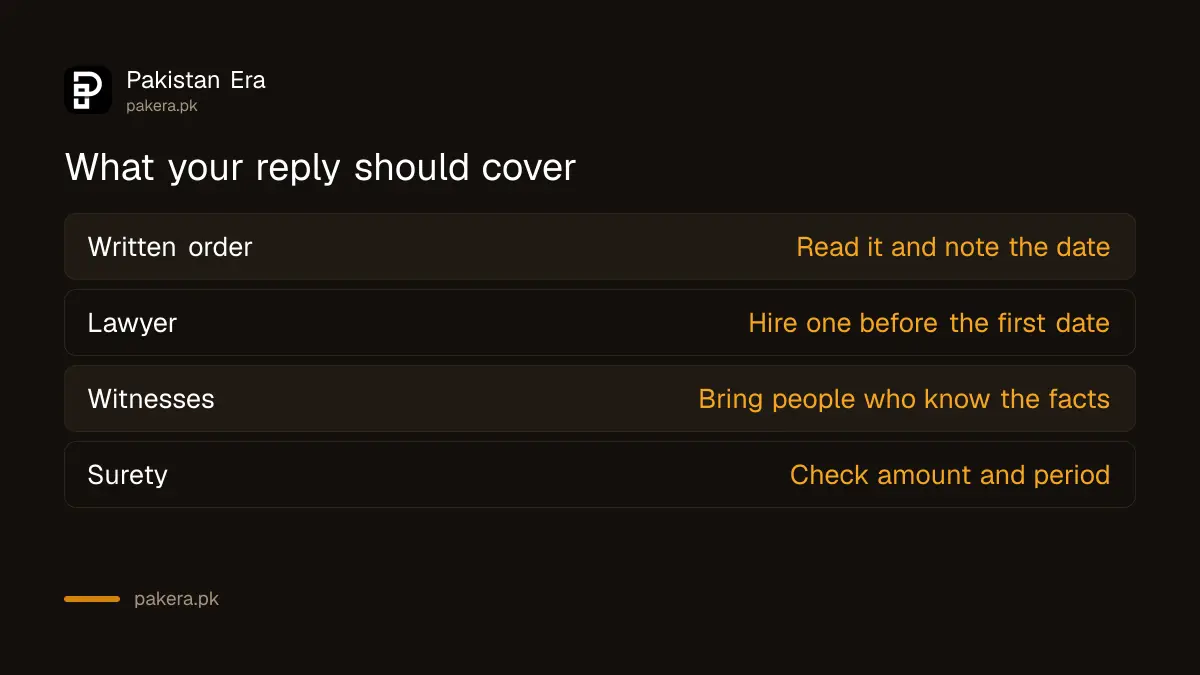
- Read the section 112 order and note the date and court.
- Hire a lawyer, or ask for legal aid, before the first date.
- Prepare witnesses and papers that show you are not a threat.
- Ask the Magistrate to excuse your attendance if you cannot come.
- If a bond is ordered, check the amount, period and sureties.
- Decide on an appeal within the time set by the Limitation Act.
A bond order has limits, and you can appeal it
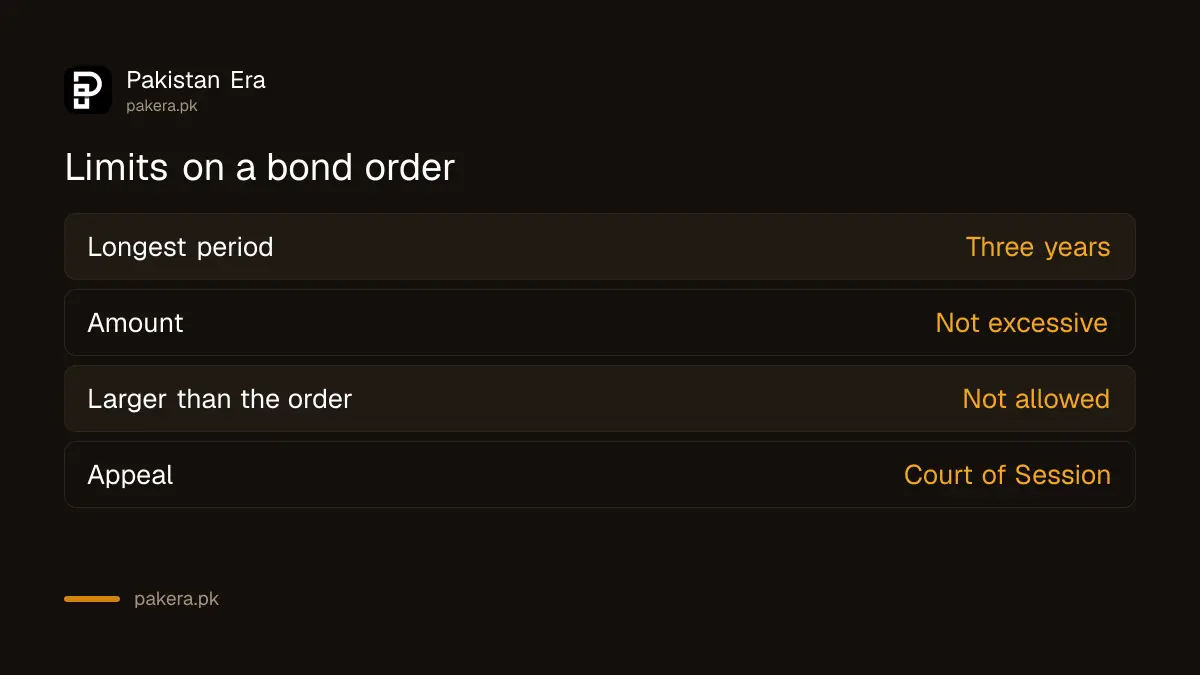
Section 118 says the bond cannot be of a different nature, larger amount or longer period than the section 112 order, must not be excessive, and for a minor is executed by sureties only. Section 119 requires discharge if the need for a bond is not proved.
If you cannot give the security, section 123 says you can be committed to prison until the period ends or you give it. If the period exceeds one year, the proceedings go to the Sessions Judge. Section 406 lets you appeal to the Court of Session, and section 406A covers refusal of a surety. See standing surety for a bond for what a surety must do.
Common questions
Is a section 107 notice a criminal case against me?
It is a proceeding to keep the peace. The Magistrate asks for a bond, not a sentence, though failure to give security can lead to prison under section 123.
How long can the bond run?
Up to three years under section 107(1), and not longer than the period in the section 112 order.
Can I be arrested on a section 107 notice?
Only by a warrant, which section 114 allows if a breach of the peace cannot be prevented otherwise than by immediate arrest.
Who can appeal and where?
Anyone ordered to give security under section 118 can appeal to the Court of Session under section 406.
What about section 110 and habitual offenders?
Section 110 covers habitual offenders and requires sureties. We did not cover it here, and it is a different matter.
How we verified this
What we checked, where we read it, and what we could not confirm.
Last checked 21 October 2026. We read the sections listed above of the Code of Criminal Procedure, 1898, in the Pakistan Code PDF marked as last amended on 16 February 2017, from a copy saved earlier this week. The Pakistan Code portal did not open for us on the day, so later amendments are unchecked. We did not read court rulings or the appeal period in the Limitation Act for these orders.
About the author

Senior Writer, Public Services and Technology
Shahid joined us in 2024 as an author. He is a senior contributor to Pakistan's leading technology websites. He writes detailed articles, mostly covering his expertise in the latest tech, mobiles, apps, gadgets, and step-by-step guides. His ideology is to help people understand the latest trends and explain complex methods through very easy-to-understand guides.