Pakistan's Banks Hold Rs 43,332 Billion in Deposits, and Bad Loans Fall to 5.5%, SBP Says
SBP's mid-year review of January to June 2026: deposits Rs 43,332 billion, bad loans 5.5%, capital ratio 19.6%. What the numbers mean for your savings.
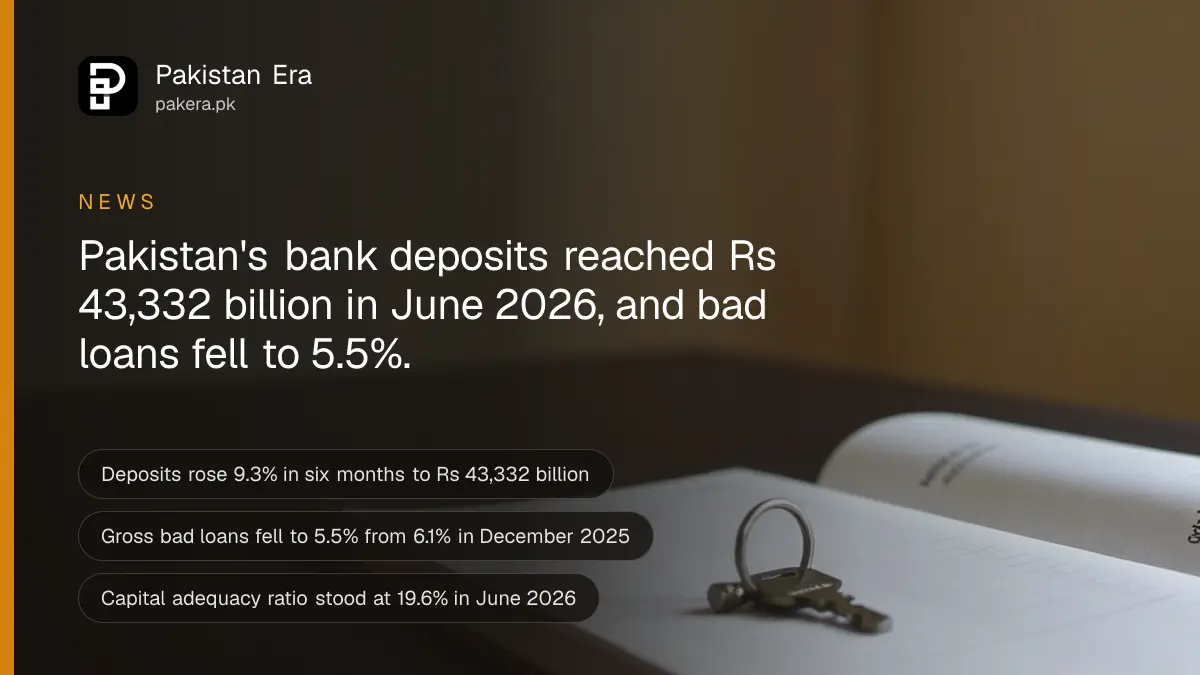
Pakistan's banks held Rs 43,332 billion in deposits at the end of June 2026, up 9.3 per cent in six months, and their gross bad loan ratio fell to 5.5 per cent from 6.1 per cent in December 2025. Those figures come from the State Bank of Pakistan's (SBP) Mid-Year Performance Review of the Banking Sector, released on 14 September 2026.
For a saver the question is simple: is my bank in trouble? The SBP review does not answer for any single bank, but it gives the system-wide numbers that matter, and it says the sector's performance and resilience "remained intact" in the first half of 2026. This guide explains each number in plain words and shows what it means for money in your account.
Read the headline numbers first
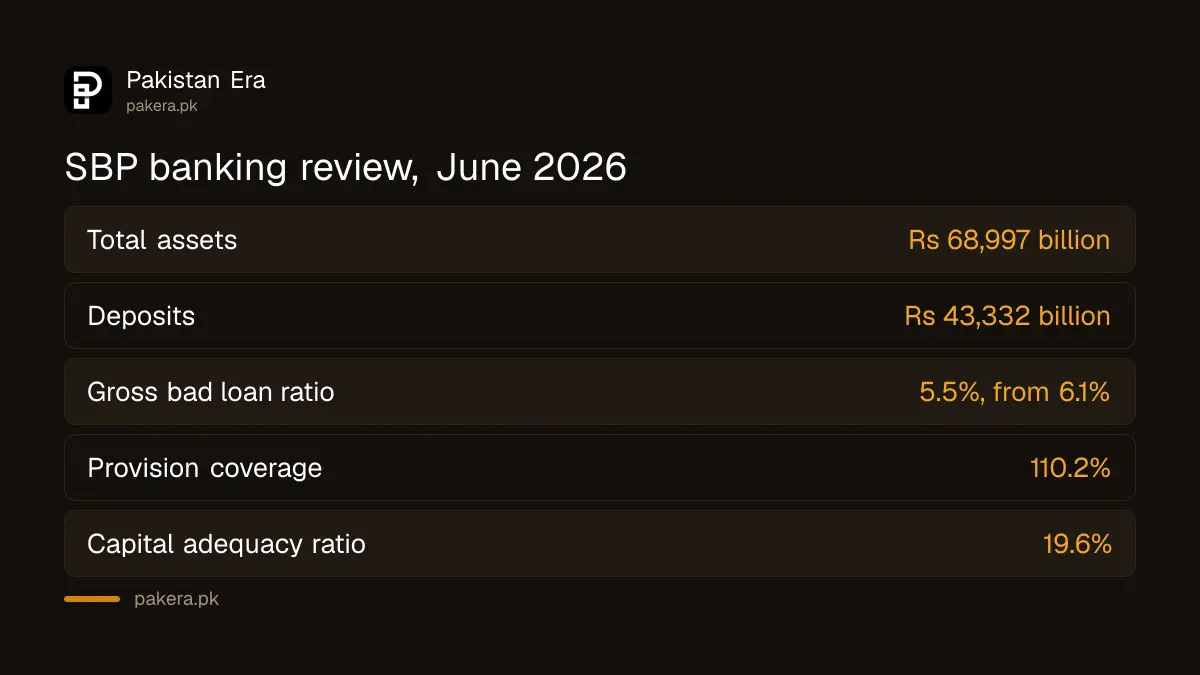
The review covers January to June 2026 (H1CY26). The key figures, as the SBP reports them:
| Measure | June 2026 | Change in six months |
|---|---|---|
| Total bank assets | Rs 68,997 billion | Up 9.1% |
| Deposits | Rs 43,332 billion | Up 9.3% |
| Gross bad loan ratio | 5.5% | From 6.1% |
| Provision coverage | 110.2% | From 107.7% |
| Capital adequacy ratio | 19.6% | Not given in release |
Banks mobilised an extra Rs 3,673 billion in deposits during the half year, says the SBP's press release. Deposits supported about 63 per cent of bank assets, and borrowings about 26 per cent.
Understand what bad loans and provisions mean
A bad loan, called a non-performing loan or NPL, is one the borrower has stopped repaying. The gross NPL ratio is bad loans as a share of all loans. At 5.5 per cent it means about Rs 5.50 of every Rs 100 lent is not being repaid on time. The SBP says the ratio fell because bad loans shrank by Rs 62 billion while total advances grew by Rs 460 billion.
Provision coverage is how much banks have set aside against those bad loans. At 110.2 per cent, banks have put aside more than the full amount of their bad loans. The SBP also reports net NPLs at negative 2.3 per cent of capital, which it reads as a muted risk to solvency.
Solvency is the ability to pay all debts. The capital adequacy ratio, or CAR, measures a bank's capital against its risky assets. At 19.6 per cent, the SBP calls the sector's solvency "strong".
See what the stress tests and liquidity say
The SBP ran macro stress tests, which model severe shocks over two years. It says the sector, and the large systemically important banks in particular, are expected to remain solvent and withstand them.
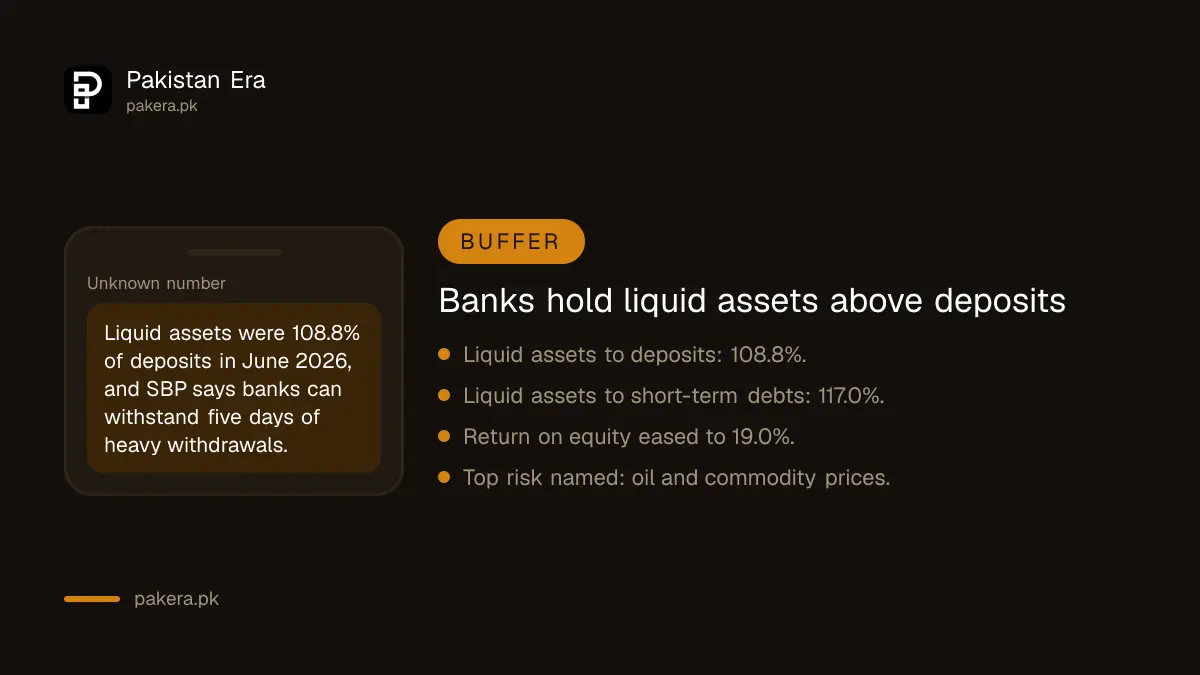
On liquidity, liquid assets were 108.8 per cent of total deposits in June 2026, up from 105.6 per cent in December 2025. The SBP also says its sensitivity analysis shows banks can withstand substantial deposit withdrawals even for five consecutive days. A bank run is rare, but these ratios are the buffer against one.
The review also flags the main risks. The SBP's Systemic Risk Survey ranked volatile commodity prices, including oil, as the top risk, followed by global geopolitical risk. Stress in the equity market rose in the half year, which the SBP links to events in the Middle East.
Note the weaker numbers too
The picture is not all strong. Return on assets fell to 1.1 per cent from 1.3 per cent a year earlier, and return on equity fell to 19.0 per cent from 21.3 per cent. The SBP describes the rise in earnings as "moderate". The capital to asset ratio slipped to 5.9 per cent in June from 6.5 per cent in December, because assets grew faster than capital.
A revaluation deficit of Rs 134 billion, caused by higher yields on government securities, also held net assets in check. The sector is making less profit per rupee of assets than a year ago, but it is still profitable and well capitalised.
Use the figures for your own savings
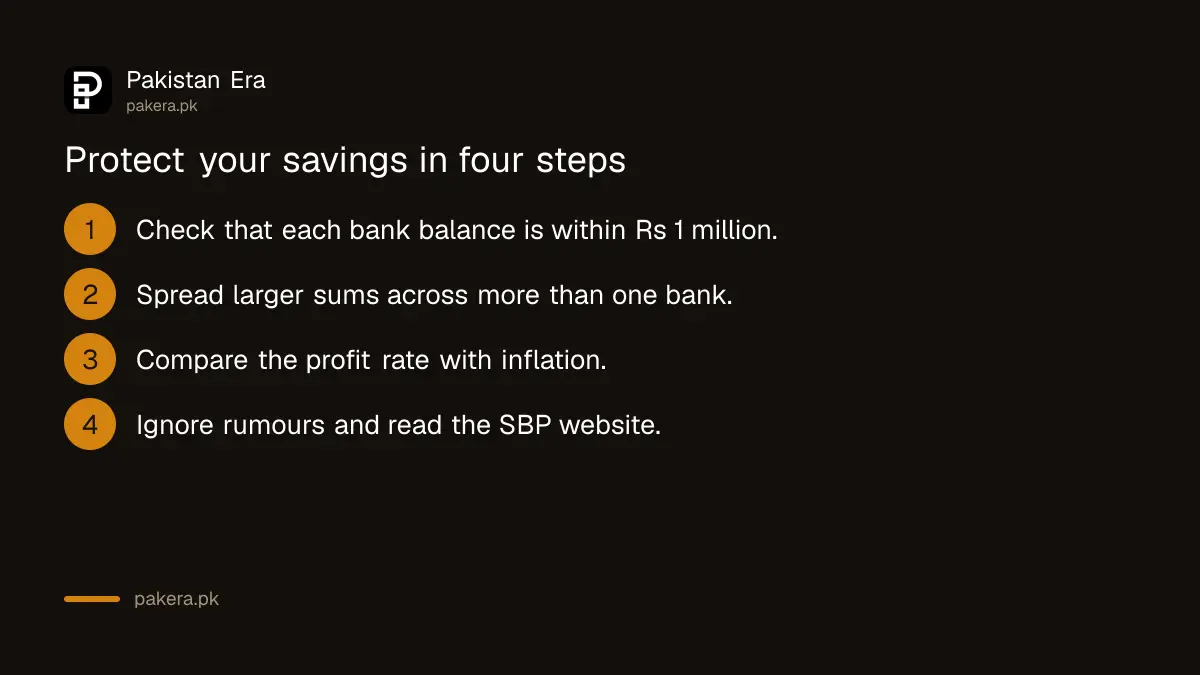
System numbers help, but your protection comes from rules. Under the deposit protection scheme, Rs 1 million per bank is covered, as set out in our guide to checking whether your bank deposit is protected. If your balance in one bank is far above that, think about spreading it.
Also look at what your money earns. The SBP says the weighted average deposit rate on new deposits was 4.6 per cent in the half year, against 4.8 per cent a year earlier. Our table of savings account profit rates in October 2026 shows what banks pay now, and our check on whether your savings beat inflation shows the real return.
Know where to complain if your bank fails you
The review is about the system, not about a branch that holds up your withdrawal. For that, use the banking Ombudsman, as explained in our guide to the Banking Mohtasib complaint process. Keep a record of every request you make.
- Check your balance and statements monthly.
- Keep your contact details current so the bank can reach you.
- Do not move money because of a rumour on social media. Check the SBP website first.
Common questions
Are Pakistani banks safe in 2026?
The SBP says the sector's performance and resilience remained intact in the first half of 2026, with a capital adequacy ratio of 19.6 per cent. It does not rate any single bank in that release.
What is the bad loan ratio of Pakistan's banks?
5.5 per cent at end June 2026, down from 6.1 per cent at end December 2025.
How much do banks hold in deposits?
Rs 43,332 billion at the end of June 2026, up 9.3 per cent in H1CY26, according to the SBP review.
Is my money protected if a bank fails?
The deposit protection scheme covers up to Rs 1 million per bank. See our guide linked above for the rules.
What was the biggest risk the SBP named?
Volatile commodity prices, including oil, followed by global geopolitical risk, in the SBP's Systemic Risk Survey.
How we verified this
What we checked, where we read it, and what we could not confirm.
Last checked 11 October 2026. We read the SBP press release of 14 September 2026 and the Mid-Year Performance Review of the Banking Sector, January to June 2026, on sbp.org.pk. All figures above come from those documents. We did not assess any single bank and the review does not do so either. The Rs 1 million protection limit is as stated in our earlier guide, which cites the deposit protection corporation. This is information, not financial advice.
About the author

Technology Journalist & Multimedia Producer
Ahmad Ali is a technology journalist and multimedia producer at Pakistan Era, joining the team in October 2026. He covers consumer technology and digital life for Pakistani readers, combining research with hands-on product testing.