How to Stop Artificial Jewellery Turning Black in Pakistan: Clean, Wear and Store It in 7 Steps
Stop artificial jewellery turning black in Pakistan: why plating darkens, a 7 step safe clean, 5 home remedies that strip it, and storage that keeps sets new.
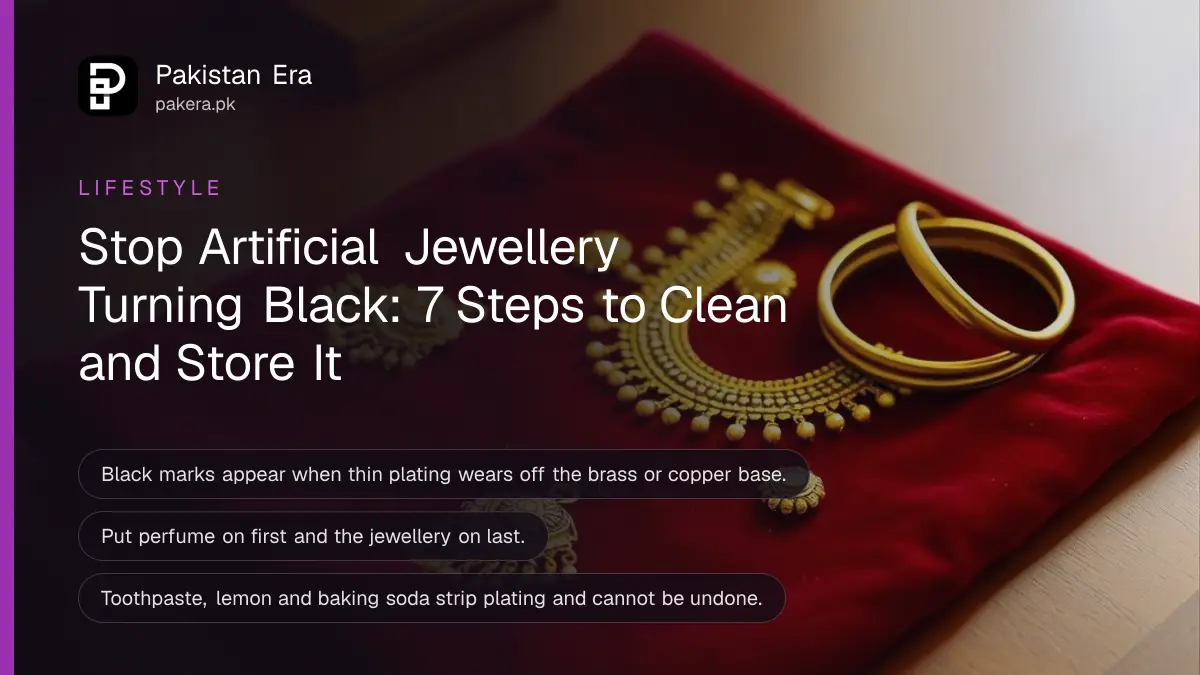
Artificial jewellery turns black because the plating wears thin and the base metal underneath reacts with sweat, perfume and damp air. You can slow it down a lot: put perfume on before the jewellery, wipe each piece after wearing, and store it dry in a closed pouch with silica gel.
Wedding season means the same set comes out for a mehndi, a barat and a walima in one week. By the third function the earrings look dull and the necklace has a dark edge. That is not bad luck. It is chemistry, and most of it can be prevented at home.
This guide covers why imitation jewellery darkens, a safe way to clean each type, what never to use, and a storage routine that keeps a set wedding ready for years.

Plating wears off and the metal below reacts with air
Most artificial jewellery in Pakistan is brass, copper or an alloy, with a thin gold or silver coloured plating on top. When that plating rubs off, the base metal meets oxygen, sweat and chemicals and darkens. Kundan and polki style sets also have glue and foil that hate water.
These five things speed it up the most:
- Perfume, hair spray and body lotion sprayed on after the jewellery is on.
- Sweat at long functions, especially on necklaces and bangles.
- Damp air in a cupboard, common in Karachi and in monsoon months.
- Pieces stored loose in one box, rubbing and scratching each other.
- Washing with water or soap, which lifts plating and loosens glued stones.
Wear it last and take it off first
The simplest rule is wear it last, remove it first. Finish your makeup, perfume and hair spray, wait five minutes, then put the jewellery on. At home, take it off before you wash your face or change. This one habit protects the plating more than any cleaner.
At a long function, avoid touching the necklace often. Fingers carry oil and makeup. If you sweat a lot, a small strip of clear nail polish on the inside of a ring or the back of an earring stops skin contact. Test it on a hidden spot first, and do not put polish on stones or kundan.
Do you have sensitive skin? Itching or a green mark often means the base metal is reacting. Stop wearing that piece against bare skin, and look for nickel free or stainless steel pieces next time.
How to clean artificial jewellery safely at home
Clean gently and keep water away from any glued stone. A dry, soft cotton cloth after every wear does most of the work. For a deeper clean on metal only pieces, use a cloth just damp with mild soapy water, then dry at once.
Use this routine:
- Lay the piece on a soft towel so nothing falls or scratches.
- Wipe it with a dry microfibre or old cotton cloth.
- For dirt in the grooves, use a soft baby toothbrush, dry.
- For metal only pieces, wipe with a cloth barely damp with mild soap water.
- Wipe again with a cloth damp with plain water.
- Dry fully with a hair dryer on cool, or air dry for an hour.
- Store it only when it is completely dry.

Kundan, polki and stone set pieces need extra care. Never dip them. Brush them dry, wipe the metal only, and keep the back of the stones dry. Water behind the foil makes the stones go cloudy.
What never to use on imitation jewellery
Home remedies that work on real gold and silver can strip plating off artificial pieces in one go. Avoid anything acidic, abrasive or strong. Once plating is gone, no cleaning brings the colour back.
| Do not use | Why | Use instead |
|---|---|---|
| Toothpaste | It is abrasive and scratches plating | A soft dry cloth |
| Lemon or vinegar | Acid eats thin plating | Mild soap water, metal only |
| Baking soda paste | It scrubs plating away | A soft baby toothbrush, dry |
| Soaking in water | Loosens glue and clouds stones | A damp cloth, then dry at once |
| Silver dip or jewellers' liquid | Made for solid metal, not plating | Re-plating at a jeweller |
If a piece has already gone black all over, a local jeweller can re-plate it. Ask the price first, because for a cheap set a new one may cost less. For real gold, the rules are different, and our guide to calculating the price of gold jewellery explains tola, karat and making charges.
Store each piece dry and apart
Storage decides how long a set lasts. Keep each piece in its own small zip pouch or a cloth pouch, add one sachet of silica gel to the box, and keep the box in a dry cupboard. Never leave jewellery in a bathroom.

Here is what helps in Pakistani homes:
- Save the silica gel sachets from new shoes and bags. They absorb damp.
- A piece of chalk in the box does the same job if you have no sachets.
- Lay heavy necklaces flat so the chain does not stretch or knot.
- Keep sets in the box they came in if it has a padded insert.
- Check the box once a month in damp weather and change the sachets.
Planning the outfit that goes with the set? Our winter wedding guest outfits on three budgets and the guide to removing mehndi and makeup stains cover the rest of the wedding week.
Common questions
Why does artificial jewellery turn black?
The thin plating wears off and the base metal, often brass or copper, reacts with sweat, perfume and damp air. Storing pieces in a damp place makes it faster.
Can I wash artificial jewellery with water?
Not by soaking. Wipe metal only pieces with a barely damp cloth and dry them at once. Keep water away from kundan, polki and glued stones.
Does toothpaste clean artificial jewellery?
It may look shiny for a day, but toothpaste is abrasive and scratches off the plating. Use a soft dry cloth instead.
How do I stop earrings from turning black?
Put perfume on first, wear them last and remove them first. Wipe them after each use and store them in a closed pouch with silica gel.
Can black artificial jewellery be fixed?
A jeweller can re-plate it. Ask the price before you agree, because re-plating can cost more than a cheap set is worth.
Why does my skin turn green from jewellery?
Copper in the base metal reacts with sweat and leaves a green mark. It washes off. If your skin itches, stop wearing that piece directly on skin.
About the author

Lifestyle & Clothing Writer
Mahnoor Siddiqui is a lifestyle and clothing writer at Pakistan Era, joining the new lifestyle desk in November 2026.