Treat Your Child's Diarrhoea at Home in Pakistan: ORS, Zinc and When to Go to Hospital
Pakistan logged 112,030 diarrhoea cases in one week. See how to give ORS, why WHO advises 10 to 14 days of zinc, and the signs that mean go to hospital now.
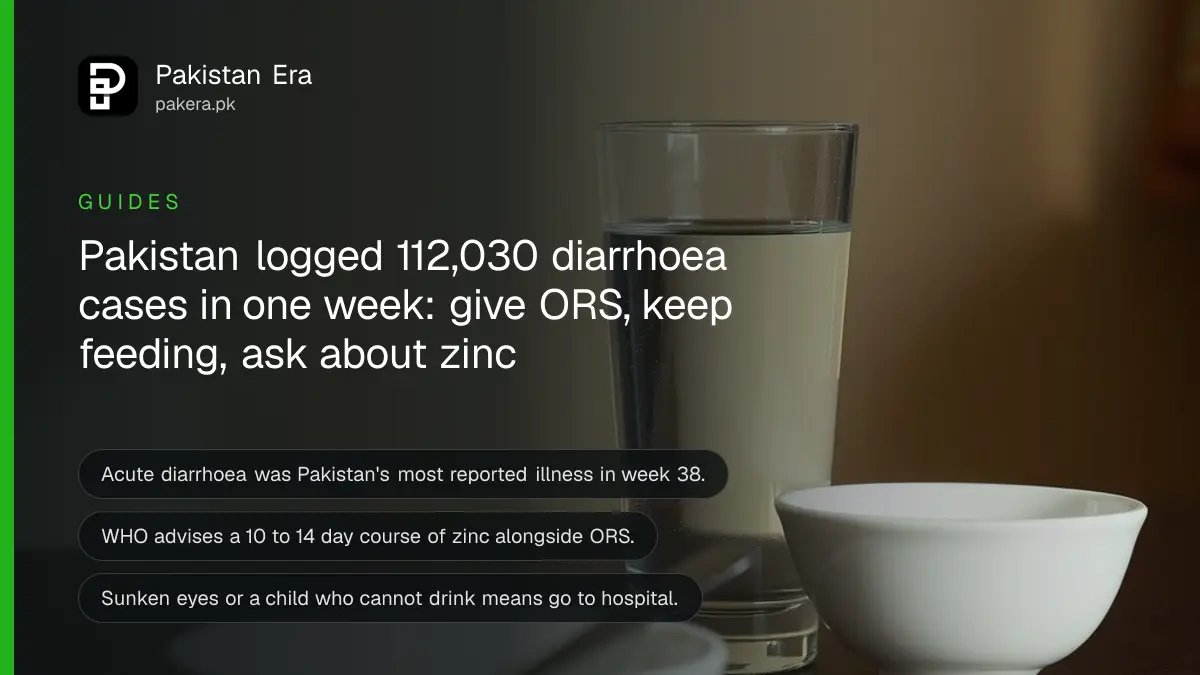
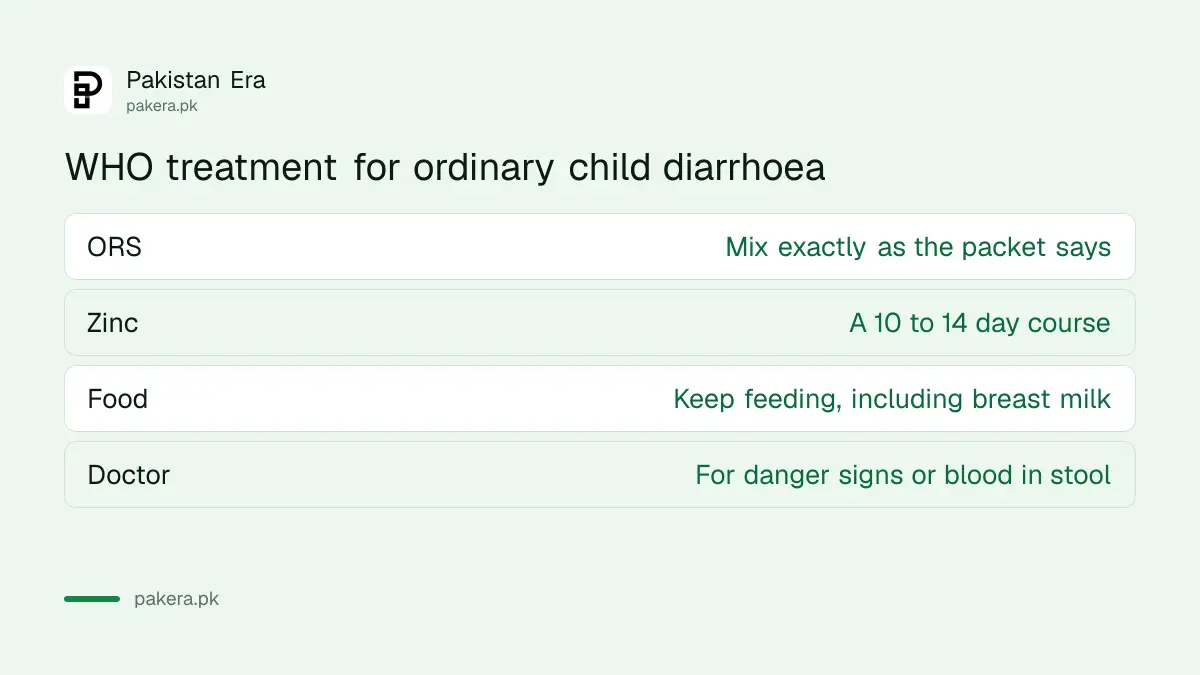
Short answer: Give ORS (oral rehydration salts) mixed exactly as the packet says, keep feeding the child, and ask a doctor about a 10 to 14 day course of zinc tablets. That is the World Health Organization's (WHO) treatment for ordinary diarrhoea. Go to hospital at once if the child is very drowsy, cannot drink, has sunken eyes, or has blood in the stool.
Update, 11 October 2026: NIH's Week 38 bulletin reports cholera cases in Balochistan. See the cholera numbers.
Diarrhoea is the most reported illness in Pakistan right now. The National Institute of Health (NIH) recorded 112,030 suspected cases of acute diarrhoea in a single week, week 38 of 2026, more than any other disease. And that count leaves out Punjab, which sent no report.
Diarrhoea is Pakistan's most reported illness this season
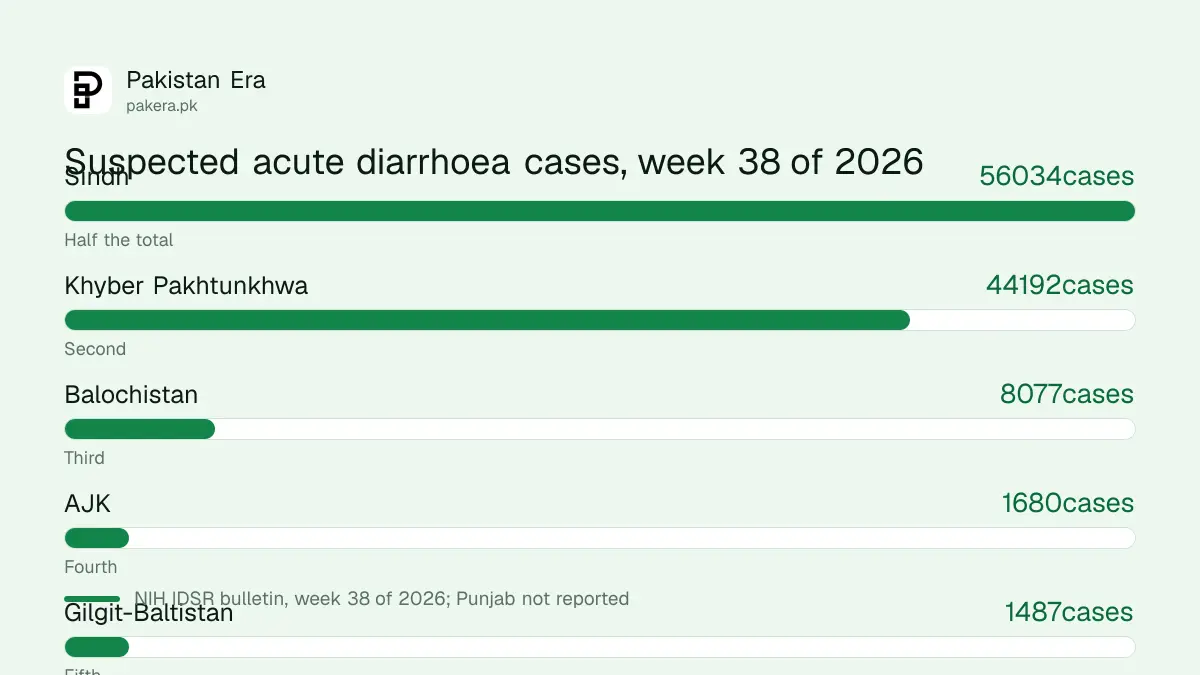
Acute diarrhoea topped the NIH's weekly disease bulletin for week 38 of 2026, with 112,030 suspected cases. Sindh reported 56,034 and Khyber Pakhtunkhwa 44,192. Another 6,704 cases of bloody diarrhoea were reported separately. Punjab is missing from these figures.
| Area | Acute diarrhoea, week 38 | Bloody diarrhoea, week 38 |
|---|---|---|
| Sindh | 56,034 | 3,915 |
| Khyber Pakhtunkhwa | 44,192 | 1,191 |
| Balochistan | 8,077 | 1,487 |
| AJK | 1,680 | 24 |
| Gilgit-Baltistan | 1,487 | 78 |
| Islamabad | 560 | 9 |
| Punjab | Not reported | Not reported |
| Total | 112,030 | 6,704 |
The count did fall a little from 119,045 the week before. But it is still nearly two in five of all the suspected cases in the bulletin's main table. WHO calls diarrhoeal disease the third leading cause of death in children aged 1 month to 5 years worldwide, and a leading cause of malnutrition.
ORS replaces the water and salts a child loses
ORS is a mix of clean water, salt and sugar that replaces the water and body salts lost in loose stools. WHO says it is the main treatment for diarrhoea, and it costs very little. Mix one packet with exactly the amount of clean water printed on it. Too little water makes it too salty.
WHO defines diarrhoea as three or more loose or watery stools in a day. Frequent formed stools are not diarrhoea. Nor are the soft, pasty stools of a breastfed baby. The real danger is dehydration, which means the body has lost more water than it has taken in.
Give ORS in small sips from a cup or spoon, often. Use boiled and cooled water if you are not sure your tap or tank water is safe. Follow the packet on how long mixed ORS can be kept.
Zinc tablets shorten the illness by about a quarter
WHO recommends a 10 to 14 day course of dispersible zinc tablets alongside ORS. Zinc shortens a bout of diarrhoea by about 25 per cent and cuts the amount of stool by about 30 per cent. Ask a doctor or pharmacist for the right dose for your child's age.
Dispersible means the tablet dissolves in a spoon of water or breast milk, so even a small baby can take it. Keep giving it for the full course, even after the diarrhoea stops. That is when it does its longer work.
Be careful with medicines sold for "loose motion" over the counter. WHO's treatment list for ordinary diarrhoea is ORS, zinc, food and a health worker when needed. Do not give a child any other medicine for diarrhoea unless a doctor prescribes it.
Keep feeding the child, including breast milk
Do not stop food or breast milk during diarrhoea. WHO says continuing to give nutritious food, including breast milk, breaks the cycle in which diarrhoea causes malnutrition and malnutrition makes diarrhoea worse. Offer small, frequent meals the child will eat.
Once the child is well, a nutritious diet helps them recover what they lost. Babies under 6 months do best on breast milk alone, WHO says, both during illness and to prevent the next one.
These signs mean go to hospital now
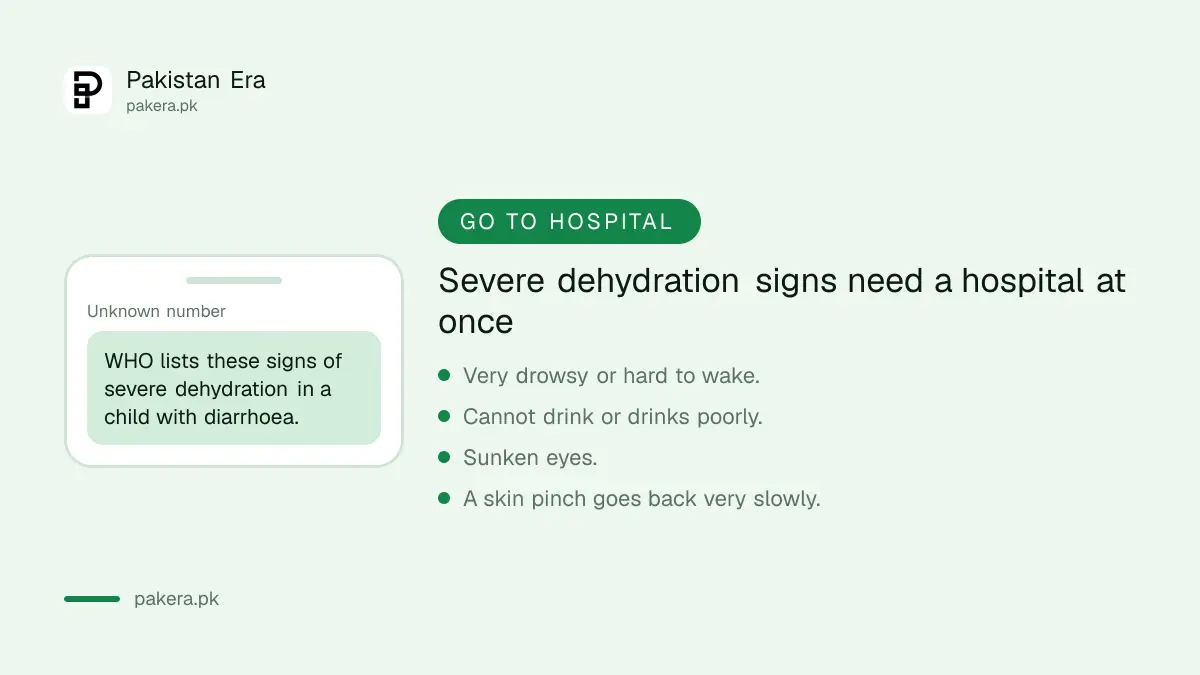
Take the child to a hospital at once if they are very drowsy or hard to wake, cannot drink or drink poorly, have sunken eyes, or if a pinch of skin on the belly goes back very slowly. These are WHO's signs of severe dehydration. Blood in the stool or diarrhoea lasting 14 days or more also needs a doctor.
- Start ORS at home as soon as the loose stools begin.
- Keep breastfeeding and giving food.
- See a doctor or health worker and ask about a zinc course.
- Watch for drowsiness, poor drinking, sunken eyes and a slow skin pinch.
- Go to the nearest hospital emergency at once if any of those signs appear, or if there is blood in the stool.
WHO lists a milder stage too, called some dehydration. Its signs are restlessness or irritability, sunken eyes, and drinking eagerly because the child is thirsty. A child with these signs needs a health worker the same day. Severe dehydration may need fluids through a drip in hospital.
Safe water, soap and the rotavirus drops prevent the next bout
Most diarrhoea spreads through water or food contaminated with faeces. WHO's main prevention steps are safe drinking water, toilets, handwashing with soap, clean food and rotavirus vaccination. WHO names rotavirus and E. coli as the most common germs behind diarrhoea in children.
Pakistan's free government vaccines include rotavirus drops at 6 and 10 weeks, listed in the free EPI baby vaccination schedule. If your child missed them, ask at the vaccination centre. Typhoid, another water-borne illness, also has a free vaccine at 9 months, and older children and adults can get a typhoid vaccine too.
At home, boil drinking water if you are not sure of it, keep stored water covered, and wash hands with soap after the toilet and before cooking or feeding a child. Karachi families who rely on bought water can book through the official tanker service, as set out in booking a Karachi water tanker online, but treat that water before drinking it too.
Common questions
What is the first thing to give a child with diarrhoea?
ORS, mixed exactly as the packet says, in small frequent sips. Keep breastfeeding and giving food alongside it.
How long should a child take zinc for diarrhoea?
WHO recommends 10 to 14 days of dispersible zinc tablets. Ask a doctor or pharmacist for the dose for your child's age, and finish the course even after the diarrhoea stops.
When is diarrhoea an emergency?
When the child is very drowsy, cannot drink, has sunken eyes or a skin pinch that goes back slowly. Blood in the stool or diarrhoea lasting 14 days or more also needs a doctor.
Should I stop feeding my child during diarrhoea?
No. WHO says keep giving food and breast milk. Stopping food makes malnutrition worse and slows recovery.
How many diarrhoea cases is Pakistan seeing?
The NIH recorded 112,030 suspected cases of acute diarrhoea in week 38 of 2026, without Punjab's figures. It was the most reported disease that week.
How we verified this
What we checked, where we read it, and what we could not confirm.
Last checked on Saturday 10 October 2026. Treatment, zinc, feeding, dehydration signs and prevention advice are from the WHO diarrhoeal disease fact sheet. Pakistan's case counts are from Table 1 of the NIH's weekly bulletins for week 37 and week 38 of 2026, on the NIH IDSR weekly reports page; all are suspected cases. This page is general information, not medical advice for your child, so see a doctor if you are worried.
About the author

Public Services and Education Journalist
Fajr Riaz is a journalist and content writer at Pakistan Era, based in Lahore. She covers the questions people meet in everyday life in Pakistan: how a public service works, what a change in the rules means, and where to find a reliable answer.