How to Treat Food Poisoning at Home in Pakistan and When to See a Doctor
Rest and sip fluids for food poisoning. See a doctor the same day for a baby, blood in stool, diarrhoea over 7 days or vomiting over 2 days. Report the food.
Treat food poisoning at home by resting and drinking plenty of fluids in small sips. Symptoms usually pass within a week. See a doctor the same day if a baby is ill, if you cannot keep fluids down, if there is blood in the stool, or if diarrhoea lasts more than 7 days or vomiting more than 2 days. Report the food source to your provincial food authority.
Food poisoning is caused by eating food contaminated with germs. A wedding feast, a street stall or last night's leftovers can all be the source. We read the National Health Service (NHS) of England's food poisoning page on 21 October 2026, last reviewed on 19 December 2024. The steps below follow it, with the Pakistani places to report the food.
Food poisoning shows as sickness, diarrhoea and stomach pain within hours or days
The NHS lists feeling sick or being sick, diarrhoea, tummy pain, a high temperature and feeling generally unwell. Symptoms usually start within a few hours or a few days of eating the food. Sometimes they take a few weeks to show.
That delay matters when you try to name the meal. The NHS says any type of food can cause it. It happens when food is not cooked or reheated thoroughly, not stored correctly, left out too long, handled by someone who is ill or has not washed their hands, or eaten after its use-by date.
Drink small sips often and rest at home
Stay home and rest. Drink lots of fluids such as water, taking small sips if you feel sick. Eat when you feel able to, and try to avoid fatty or spicy food. Take paracetamol if you are uncomfortable, and check the leaflet before giving it to a child.
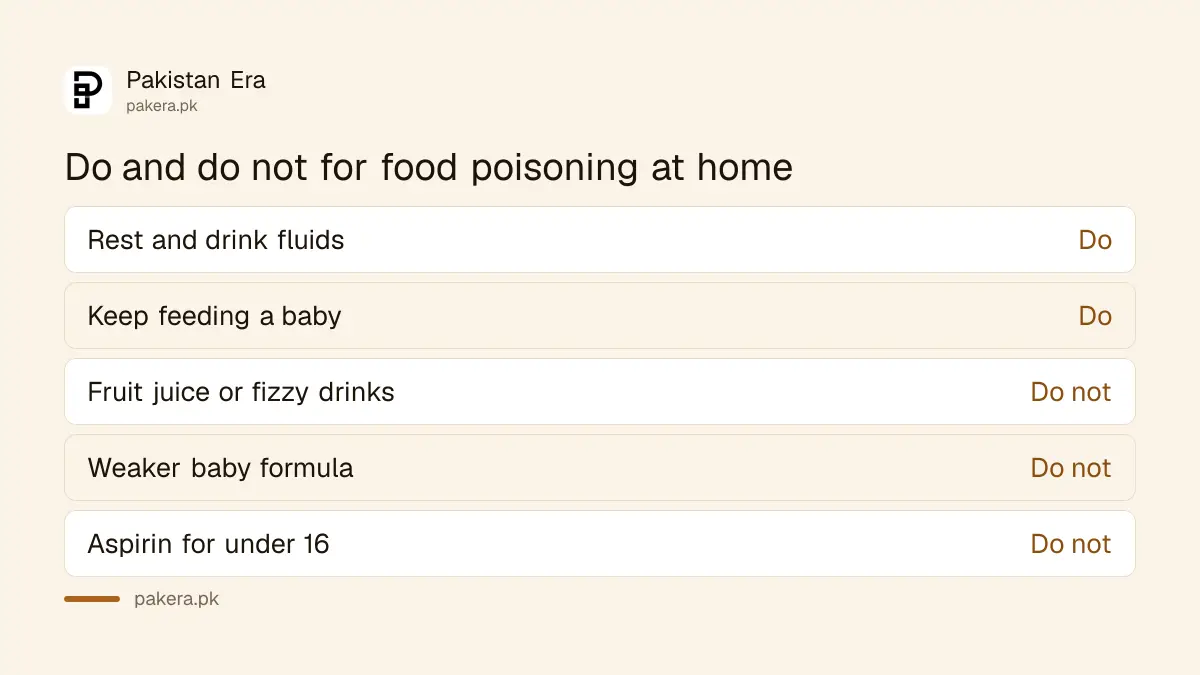
| Do | Do not |
|---|---|
| Rest at home and drink plenty of fluids | Do not give fruit juice or fizzy drinks, which can make diarrhoea worse |
| Keep breast or bottle feeding a baby, with smaller, more frequent feeds | Do not make baby formula weaker |
| Give formula-fed babies small sips of water between feeds | Do not give children under 12 medicine to stop diarrhoea |
| Take paracetamol if in discomfort | Do not give aspirin to children under 16 |
For children, the steps for oral rehydration salts (ORS) and zinc are in our guide to treating child diarrhoea with ORS and zinc. If the diarrhoea is watery and frequent, check it against the signs in how to spot cholera.
A pharmacist can give oral rehydration powder if dehydration starts
The NHS says to speak to a pharmacist if a child over 5 or an adult has dark, smelly urine or passes less urine than usual. Older people, those with weak immunity and those with other conditions should also ask. A pharmacist may suggest oral rehydration powder mixed with water.
A pharmacist may also suggest loperamide to stop diarrhoea for a few hours, but it is not suitable for children under 12. Ask before buying any anti-diarrhoea tablet. Medicines sold without a clear batch number or label are not worth the risk, so use our label check for medicine packs if a pack looks odd.
See a doctor the same day for babies, dehydration, blood or long illness
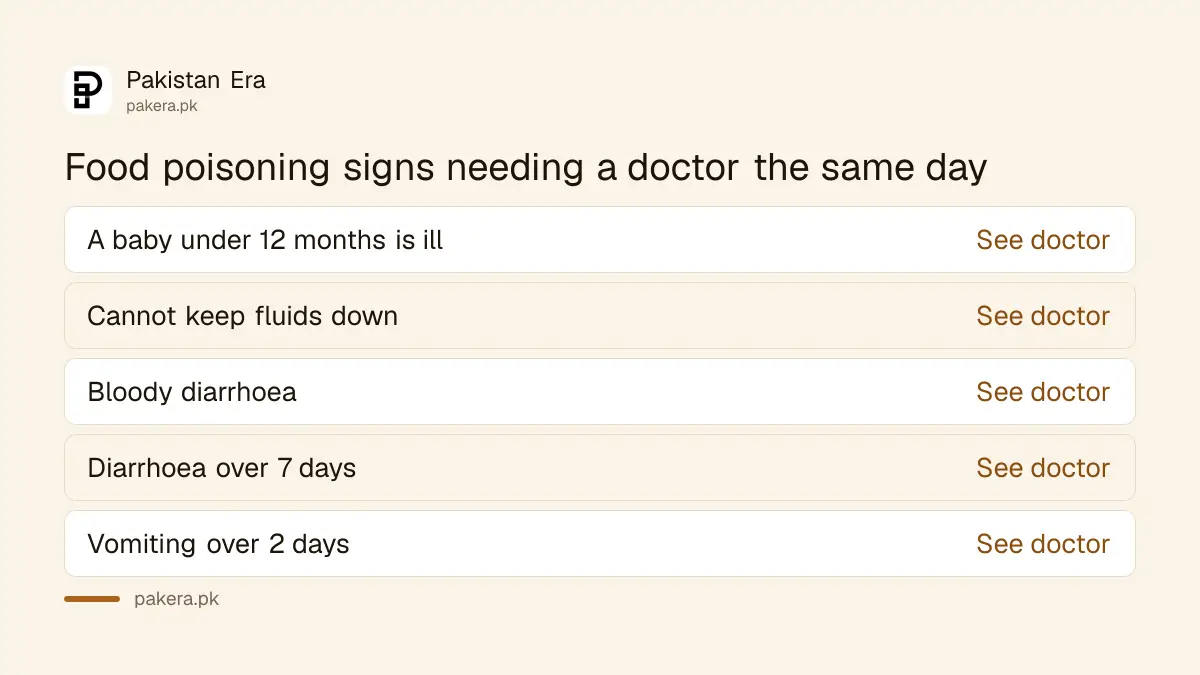
The NHS says to get urgent advice if you are worried about a baby under 12 months, a child stops feeding while ill, a child under 5 shows signs of dehydration such as fewer wet nappies, or signs remain after using oral rehydration sachets. Also if you cannot keep fluids down, there is bloody diarrhoea, diarrhoea lasts over 7 days or vomiting over 2 days.
The NHS says to call its 111 advice line for these. That line is not available here, so we read the advice as: see a doctor or go to a hospital the same day, and do not wait for the next day.
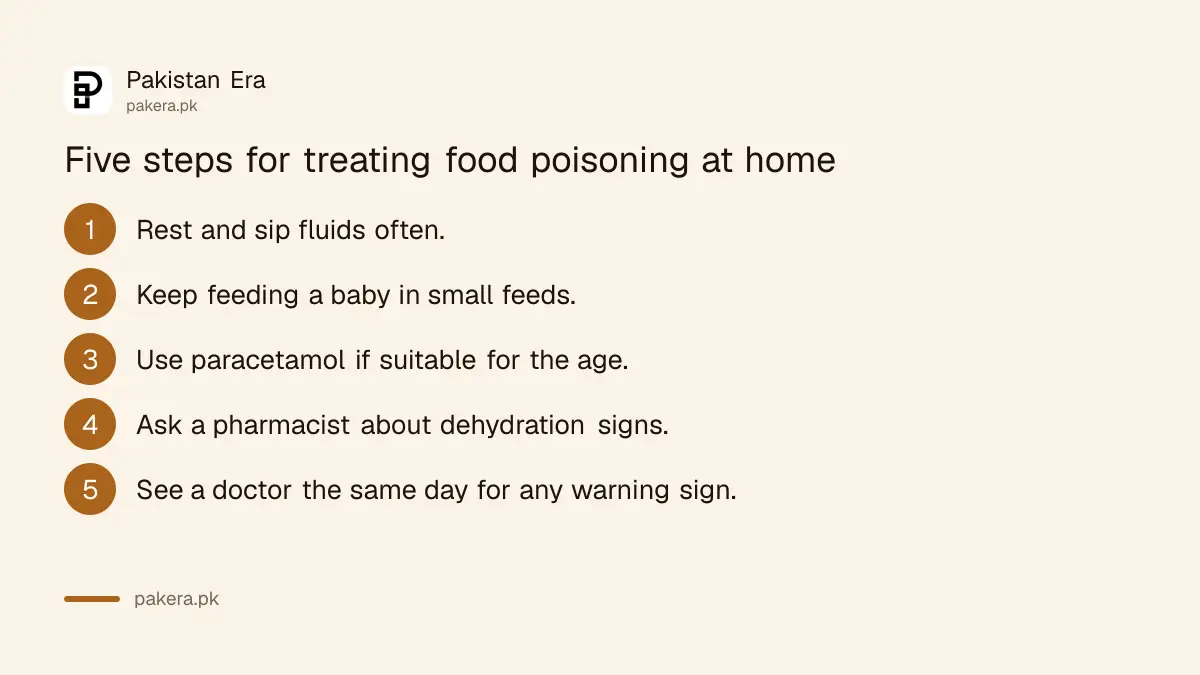
- Rest and drink small sips of fluid often.
- Keep feeding a baby, in smaller and more frequent feeds.
- Take paracetamol for discomfort, if suitable for the age.
- Ask a pharmacist if you see dark urine or less urine than usual.
- See a doctor the same day for any urgent sign above.
Go to emergency care for blood in vomit, poison, stiff neck or breathing trouble
The NHS lists emergency signs: vomiting blood or vomit that looks like ground coffee, green vomit in adults or yellow-green or green in children, possibly swallowing something poisonous, a stiff neck with pain in bright light, a sudden severe headache or tummy ache, blue, grey, pale or blotchy skin, severe breathing difficulty, or confusion.
Call 1122 or 115 for an ambulance where they run, and ask someone to drive you rather than driving yourself. Our emergency numbers list shows where each applies.
Report the food to the provincial food authority and keep the receipt
If you think a restaurant, stall or shop caused the illness, keep the receipt or note the name and place. In Punjab, our guide to the Punjab Food Authority complaint line 1223 explains how to report. In Karachi, see how to report unsafe food to the Sindh Food Authority.
Common questions about food poisoning in Pakistan
How long does food poisoning last?
Usually less than a week, says the NHS.
Can I give my child juice or a fizzy drink?
No. The NHS says fruit juice and fizzy drinks can make diarrhoea worse.
When is vomiting a reason to see a doctor?
If vomiting lasts more than 2 days, or you or your child cannot keep fluids down.
Can children take medicine to stop diarrhoea?
Not under 12. The NHS says do not give children under 12 medicine to stop diarrhoea.
Can I give a baby less formula?
No. Do not make baby formula weaker. Use it at the usual strength and give small, frequent feeds.
What are signs of dehydration?
Dark, smelly urine or passing less urine than usual, and fewer wet nappies in a child under 5.
How we verified this
What we checked, where we read it, and what we could not confirm.
Last checked 21 October 2026. We read the NHS food poisoning page on that date for symptoms, causes, home care, pharmacist advice and the urgent and emergency signs. The Pakistan numbers come from our own earlier guides and are not part of the NHS page. We did not test any step. This is general information, not medical advice, and we could not verify which Pakistani hospitals accept walk-in cases at night.
About the author

Tax, Bills and Technology Writer
Ali Akhtar is a young and curious voice here at Pakistan Era. He is currently pursuing his A-Levels and has a growing interest in Pakistan’s changing industrial landscape and educational trends. Ali likes to write in a way that helps him explain and explore the world around him. His writing reflects the perspective of the new generation navigating the evolving trends of Pakistan where technology, youth innovation, and shifting opportunities are reshaping the country’s future.