How to Wash a Winter School Uniform in Pakistan: Sweater, Blazer, White Shirt and Tracksuit
Wash a school sweater and blazer in Pakistan: sweater inside out on a cold gentle cycle, blazer cool with darks, white shirts alone, and a weekly plan for fog.
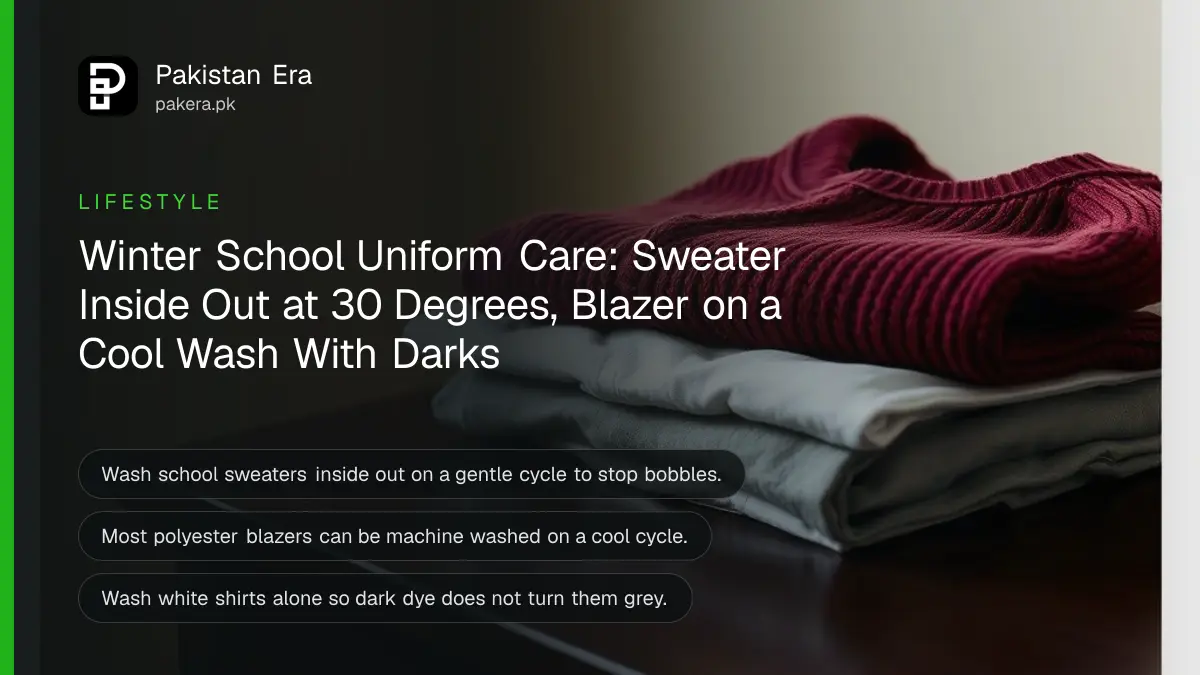
Wash a school sweater inside out on a cold, gentle cycle (30 degrees or less) with other dark colours, and dry it flat. Wash a polyester school blazer on a cool cycle with darks after emptying the pockets, and let it dry naturally. Wash white shirts on their own, and check every care label first.
Winter doubles the school laundry in Pakistan. The maroon or navy sweater, the blazer, the warm trousers, the white shirt underneath and a tracksuit for games day all need washing, and fog means nothing dries quickly. A few rules stop the sweater from pilling, the blazer from shrinking and the shirt from turning grey by February.
Read the care label before the first wash
The care label tells you the highest wash temperature, whether the item can be tumble dried and how hot the iron can be. Most school sweaters are acrylic or acrylic blends, and most blazers are polyester, but labels differ by school supplier, so check.
The tub symbol shows the maximum water temperature. A hand in the tub means hand wash only. A crossed square with a circle means no tumble drying. If the symbols are new to you, the laundry care label symbols are worth five minutes before the first wash of the season.
Write your child's name on the label with a fabric marker while you are there. School sweaters all look the same on a classroom peg.
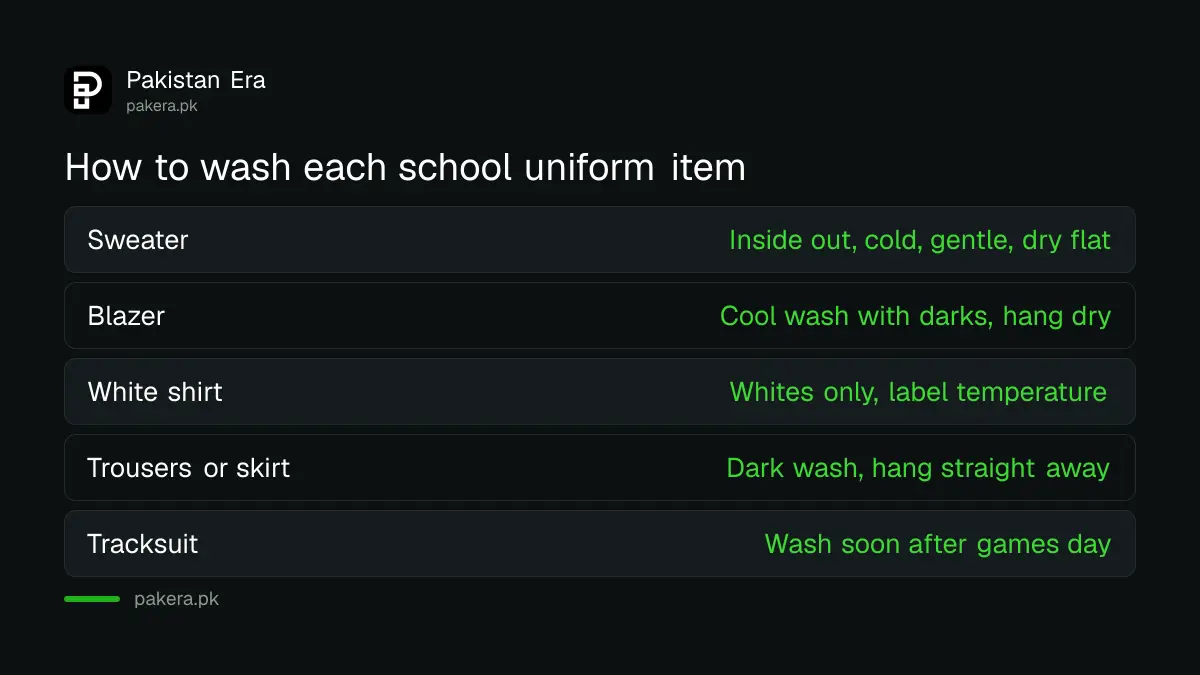
| Uniform item | Usual fabric | How to wash | How to dry |
|---|---|---|---|
| Sweater or cardigan | Acrylic or acrylic blend | Inside out, cold or 30 degrees, gentle cycle | Flat on a towel or a stand |
| Blazer | Polyester | Empty pockets, cool cycle with darks | On a hanger, naturally |
| White shirt | Cotton or poly cotton | Separately from colours, label temperature | On a hanger |
| Trousers or skirt | Polyester or poly viscose | With dark colours | On a hanger, pleats aligned |
| Tracksuit and games kit | Polyester | Soon after use, highest label temperature | On a line or stand |
How to wash a school sweater without pilling or stretching
Turn the sweater inside out, wash it on the gentlest cycle in cold water or at 30 degrees with similar dark colours, and never wring it. Dry it flat, not on a hanger, so the shoulders and neck keep their shape.
- Turn it inside out. This reduces rubbing on the face of the knit, which is what causes bobbles. It also protects the embroidered school badge.
- Wash with similar dark colours. Maroon, navy and dark green sweaters can bleed in the first few washes. Keep them away from white shirts.
- Use cold water or 30 degrees. Acrylic does not shrink like wool, but heat can stretch and flatten it.
- Choose the gentle or wool cycle. A short, slow spin is enough.
- Add fabric softener if you like. It reduces the static that makes acrylic crackle and cling in dry winter air.
- Dry flat. Lay it on a towel on a stand, pull it gently back into shape, and turn it over once.

If the label says wool, the rules are stricter. Wool must be washed cold with a wool detergent and must not be tumble dried, because it can shrink. Pills that do appear can be taken off with a fabric shaver, using the methods to remove pilling from sweaters.
A polyester blazer can usually go in the machine
Most school blazers are polyester and can be machine washed on a cool cycle with other dark clothes. Empty every pocket, close the buttons, and dry it naturally on a hanger. Check the label first, because a wool blend blazer may need dry cleaning.
- Empty the pockets. A forgotten pen in a blazer pocket can ink a whole load.
- Use a cool cycle. Polyester resists shrinking, but heat can leave it shiny and creased.
- Dry naturally. Hang it on a wide hanger straight after the wash so the shoulders hold their shape. Natural drying also prevents shrinking.
- Iron on low. Polyester needs a low iron setting, because high heat can melt it. Use a pressing cloth on the badge.
Between washes, brush the blazer and hang it to air. A blazer worn over a clean shirt does not need a weekly wash.
White shirts, trousers and games kit each need their own load
Wash white school shirts separately from darks, so they stay white. Trousers and skirts can go in a dark wash. Games kit and tracksuits should be washed soon after use, at the highest temperature on the label, to stop sweat smells setting in.
White shirts take the most damage in winter. They sit under a dark sweater all day, and grey dye from a new sweater can creep into the collar and cuffs. A separate white load, washed at the label temperature, keeps them bright.
For skirts with pleats, hang them by the waistband straight after the wash and smooth the pleats by hand. For trousers, fold along the crease before hanging.
Plan the week so the uniform dries in fog
In foggy Lahore and Punjab winters, a sweater can take two days to dry indoors. Wash it on Friday so it is dry by Monday, keep two white shirts in rotation, and dry clothes on a stand near a window rather than on a heater.

- Friday: wash the sweater and trousers, so they have the weekend to dry.
- Midweek: wash white shirts. Two or three shirts make this easy.
- After games day: wash the tracksuit the same evening.
- Every few weeks: wash or dry clean the blazer.
Never dry a uniform on a gas heater or a room heater. It is a fire risk and can scorch acrylic. A plastic stand near a window, with the fan on, works better. The same rules help with drying clothes indoors in winter and stopping the damp smell.
Layers matter more than a thick sweater. A vest and a full sleeve shirt under the sweater keep a child warm and protect the sweater from sweat, which is the basic rule for dressing kids for winter.
Common questions
How often should a school sweater be washed?
Once a week is enough for most children, because a sweater worn over a shirt does not touch much sweat. Wash sooner if it is stained or smells.
Can a school sweater go in the dryer?
An acrylic sweater can usually be tumble dried on a cool setting if the label allows it. A wool sweater should not be tumble dried, because it can shrink. Drying flat is safest for both.
Why has my child's sweater gone hard and bobbly?
Friction from school bags and desks causes pilling, and hot washes and over drying make it worse. Wash inside out on a gentle cycle and remove the bobbles with a fabric shaver.
Can I wash the school blazer in the washing machine?
Most polyester school blazers can go in the machine on a cool cycle with other darks. Check the label first. If it says dry clean only, or the blazer is a wool blend, take it to a dry cleaner.
How do I stop a white school shirt going grey?
Wash white shirts only with other whites, never with a new dark sweater, and use the temperature on the label. Grey usually comes from dye picked up in a mixed load.
How we verified this
What we checked and where we read it.
We checked these steps on 15 November 2026 against the detergent maker Ariel's care pages: how to clean school uniforms (white shirts separately, sweaters inside out on the gentlest cycle with similar colours, trousers on a dark wash, polyester blazers on a cool wash with darks after emptying pockets and dried naturally to prevent shrinking, sports kit washed soon at the highest label temperature), its acrylic page (cold wash no higher than 30 degrees, inside out to reduce pilling, softener to reduce static, moderately warm iron), its polyester page (low iron, high heat can melt polyester) and its wool page (cold wash, no tumble drying). Care symbols follow the international GINETEX system. Fabric types for school uniforms vary by supplier, so the label is the final word. The weekly plan and the heater warning are our own household advice.
About the author

Lifestyle & Clothing Writer
Mahnoor Siddiqui is a lifestyle and clothing writer at Pakistan Era, joining the new lifestyle desk in November 2026.