How to Dress Kids for Winter in Pakistan: 3 Layers and 4 Looks for School, Home, Sleep and Snow
How to dress kids for winter in Pakistan: the 3 layer rule, 4 ready looks for school, home, bedtime and snow trips, and the neck test for too hot or too cold.
Dress children in Pakistan's winter in three thin layers, not one thick one: a cotton vest or thermal next to the skin, a sweater or sweatshirt in the middle, and a jacket on top that comes off indoors. Babies usually need one more layer than you are wearing. Check the back of the neck: warm and dry is right, sweaty means too much.
Every winter morning starts with the same fight. The child says they are hot, the parent says it is cold, and by break time the jacket is lost and the sweater is in the bag. Layering solves most of that. Each layer can come off as the day warms up, and the child stays comfortable instead of sweating and then chilling.
Below are four ready looks for school, home, sleep and a trip to the cold north, with what goes in each layer.
Three thin layers keep children warmer than one thick coat
Air trapped between thin layers holds heat better than a single heavy garment. Thin layers also let you adjust as the day changes. A foggy Lahore morning can feel far colder than a sunny afternoon on the same day, so a child in one heavy coat either shivers early or sweats later.
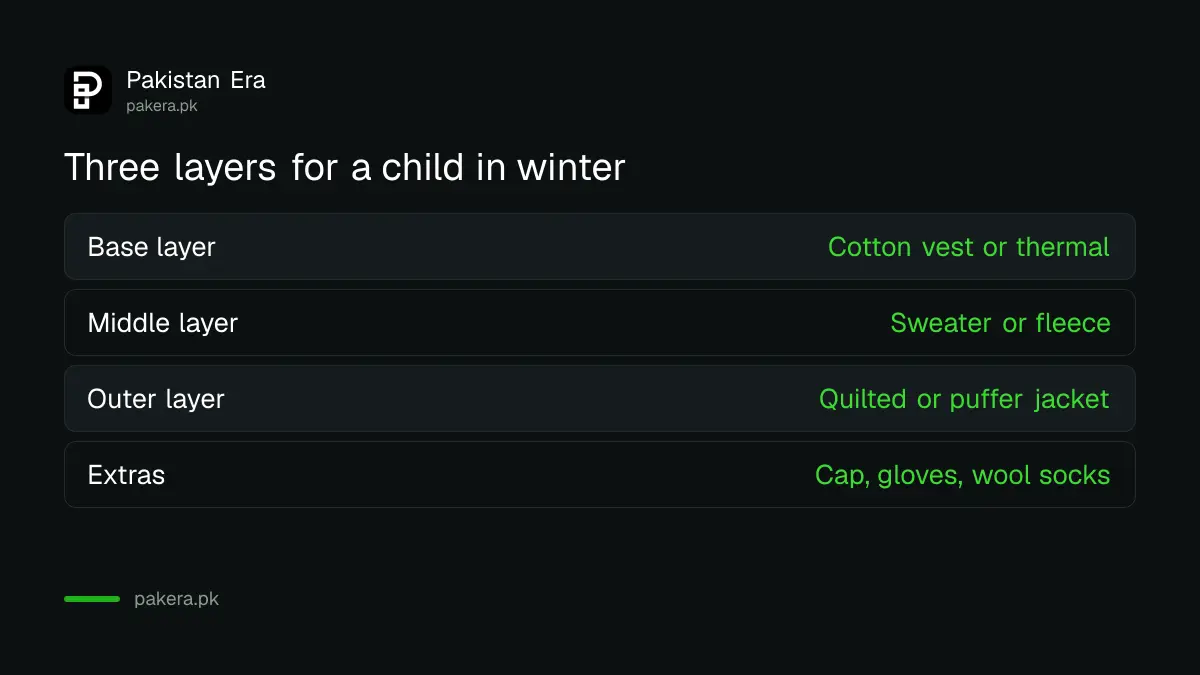
| Layer | Job | Good fabrics |
|---|---|---|
| Base (next to skin) | Keeps skin dry and warm | Cotton vest, thermal, soft wool blend |
| Middle | Holds the heat in | Sweater, fleece, sweatshirt, khaddar kurta |
| Outer | Blocks wind and drizzle | Puffer, quilted jacket, padded hoodie |
| Extras | Covers head, hands and feet | Cap, gloves, wool socks, scarf or snood |
Avoid polyester right against the skin for small children with eczema. It traps sweat. A cotton vest under the sweater fixes that.
Look 1: the school day
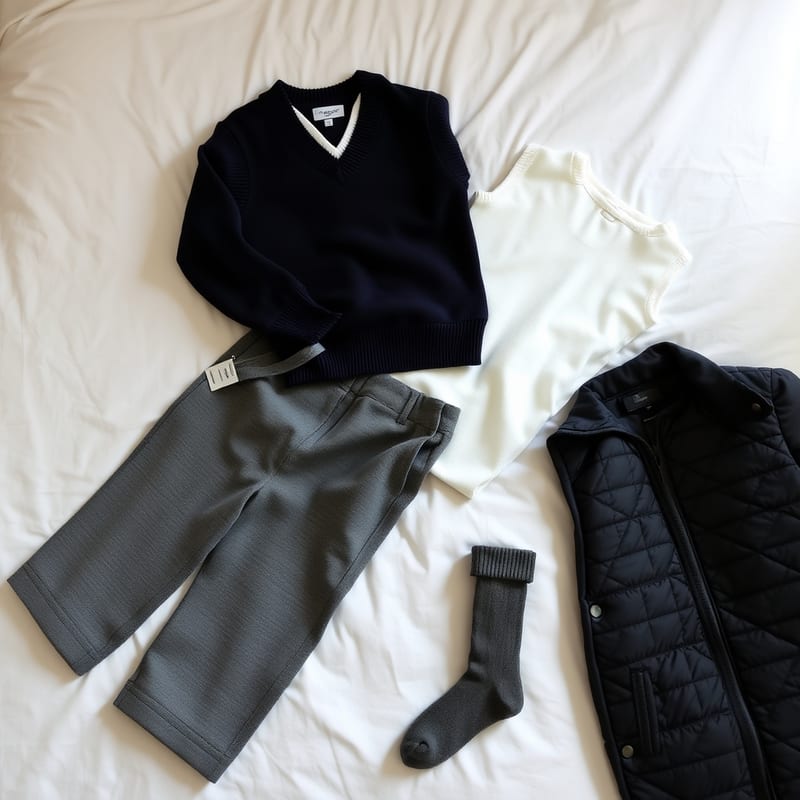
A cotton vest, the school shirt, the uniform sweater and a light quilted jacket on top. Wool socks matter more than people think, because cold feet make the whole body feel cold. Put the child's name on the jacket, since it is the layer most often left behind.
For school buses that leave before sunrise, add a cap and a neck warmer. Both fit in a school bag once the sun is up. If your child is also due new school shoes this winter, our kids' shoe size chart by age helps you buy the right size online.
Look 2: at home in a cold house
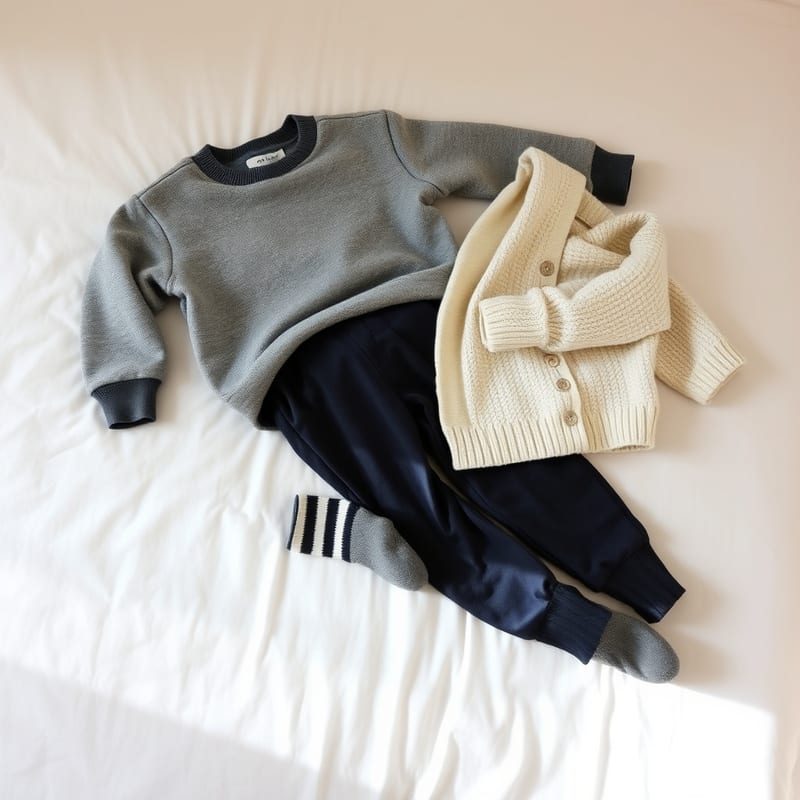
Fleece joggers, a sweatshirt over a cotton tee, and thick socks or soft slippers. Many Pakistani homes have no central heating and stone floors, so the floor is the coldest thing in the house. A rug where children play helps as much as another sweater.
Keep children away from gas heaters and never leave a gas heater on in a closed room overnight. If you heat with electricity, our guide to electric heater cost per hour shows what it adds to the bill.
Look 3: bedtime without overheating
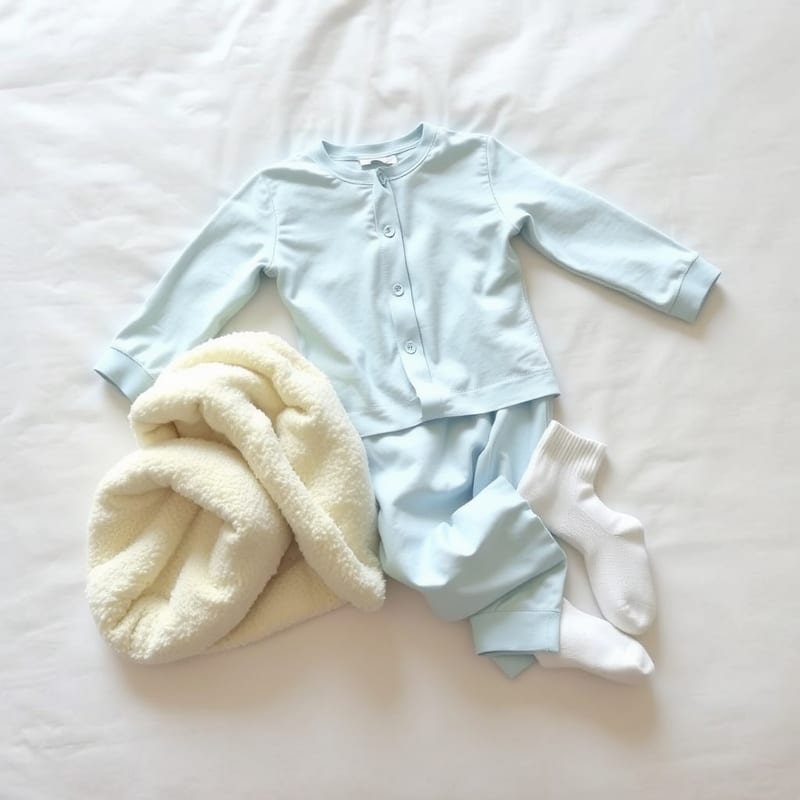
Full sleeve cotton pyjamas and socks under a razai or blanket are enough for most children. Do not put a child to bed in a jacket, cap or several sweaters. Children overheat easily under a heavy razai, and a sweaty child wakes up cold.
For babies, use a sleeping bag or a light blanket tucked at chest level instead of a heavy quilt, and keep the head uncovered. Touch the back of the neck or the tummy. If it is hot or damp, remove a layer.
Look 4: a trip to Murree, Naran or Hunza
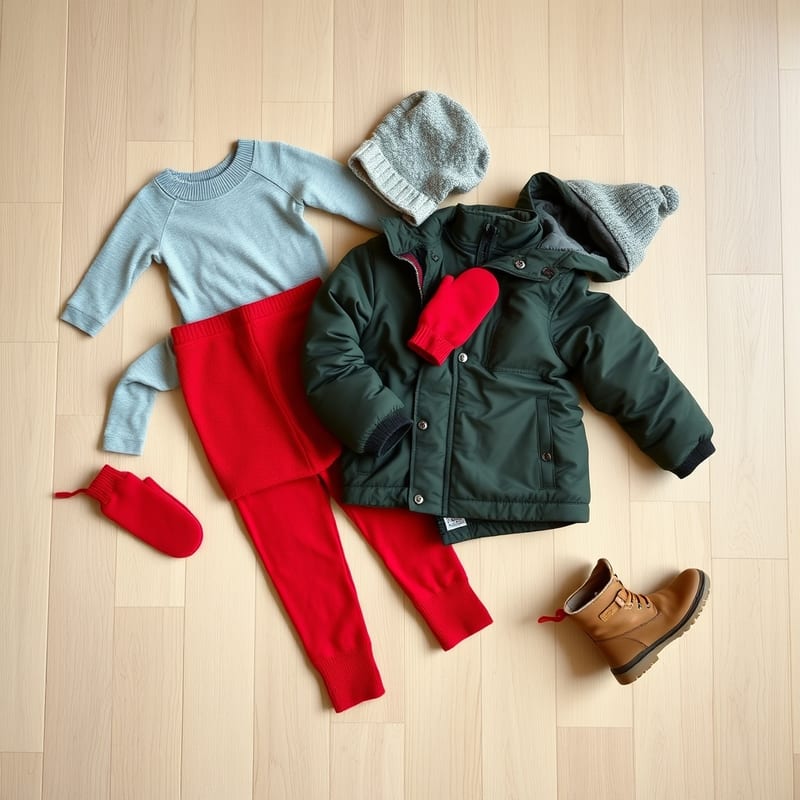
Snow trips need all four layers plus waterproofing: a thermal set, a fleece, a waterproof padded jacket, a cap that covers the ears, mittens and boots with wool socks. Pack two spare pairs of socks and gloves. Wet gloves are the first thing that ends a day in the snow.
The full family list is in our winter packing list for Murree, Naran and Hunza. Learn the early signs of cold injury too: shivering that will not stop, pale or numb fingers, and unusual sleepiness. Our page on spotting hypothermia and frostbite explains the first aid.
How to tell if your child is too hot or too cold
Hands and feet feel cold on most children in winter, so they are not a good test. Feel the back of the neck or the chest instead. Warm and dry is right. Sweaty means remove a layer. Cool to the touch means add one.
- Touch the back of the neck, not the hands.
- Look for red cheeks and a damp hairline, signs of overheating.
- Watch for shivering, pale lips or a quiet, sleepy child, signs of cold.
- Remove or add one layer at a time, then check again after 15 minutes.
- Take the jacket off as soon as you go indoors, car included.
One more rule for babies in car seats: take the puffy jacket off before buckling. A thick jacket squashes in a crash and leaves the straps loose. Buckle the child in normal clothes and put a blanket over the straps.
Common questions
How many layers should a child wear in winter?
Usually three: a base layer, a middle layer and a jacket, plus a cap, gloves and socks outdoors. Babies often need one more layer than an adult.
Should children sleep in sweaters?
No. Full sleeve cotton pyjamas and socks under a blanket are enough. Too many layers at night cause sweating and broken sleep.
Is wool or fleece better for kids?
Both are warm. Fleece is cheaper and easy to wash. Wool breathes better but can itch, so put a cotton layer underneath.
Can a baby wear a jacket in a car seat?
It is safer not to. A puffy jacket leaves the harness loose. Buckle the baby in, then cover them with a blanket.
What should children wear on cold school mornings?
A cotton vest, the uniform with its sweater, a light quilted jacket, wool socks and a cap. Take the cap and jacket off once the sun is up.
How do I know if my child is cold at night?
Feel the back of the neck or the tummy. If it feels cool, add a light blanket. Cold hands alone do not mean the child is cold.
About the author

Lifestyle & Clothing Writer
Mahnoor Siddiqui is a lifestyle and clothing writer at Pakistan Era, joining the new lifestyle desk in November 2026.