How to Spot Hypothermia and Frostbite in Pakistan: NDMA's Winter First Aid
Spot hypothermia and frostbite in Pakistan and give first aid the NDMA way: signs in adults and babies, five warming steps and what never to do near a heater.
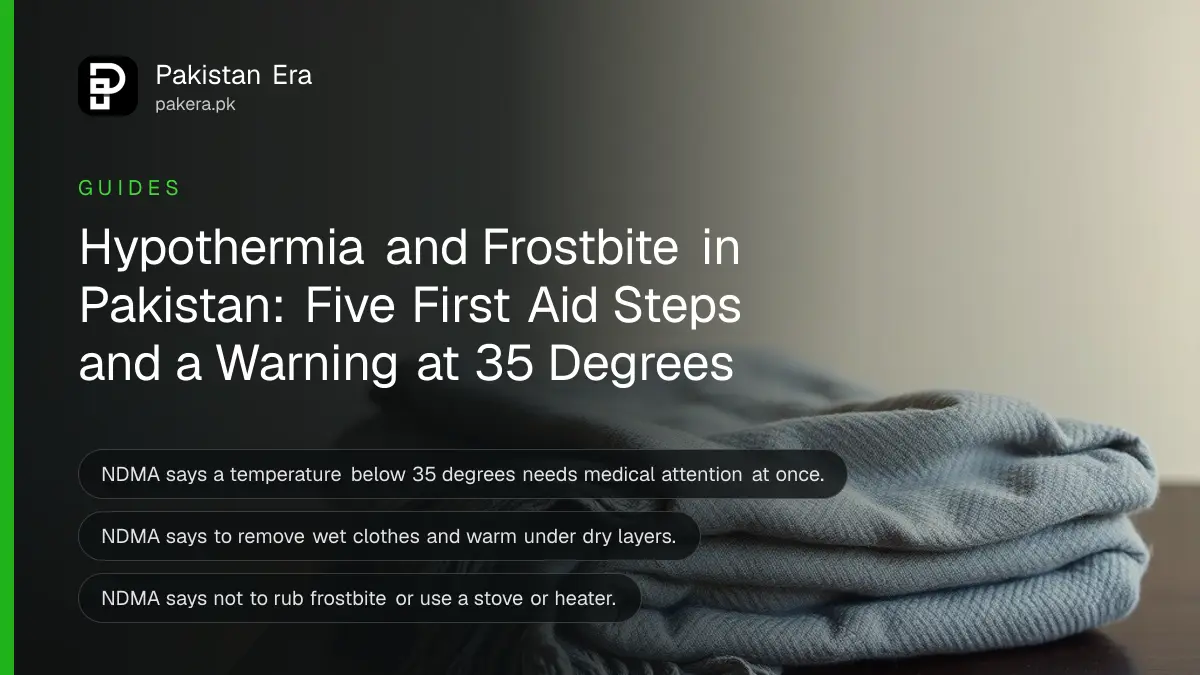
Short answer: NDMA says a body temperature below 35 degrees needs medical attention at once. Get the person to a warm room, remove wet clothes, and warm them under dry layers. Do not rub frostbitten skin and do not use a stove, heater or electric blanket to warm them.
Cold kills quietly. People in the north, travellers on snowy roads, outdoor workers, and babies in cold rooms are all at risk. The signs are easy to miss unless you know them.
We read NDMA's Hypothermia and Frostbite guideline, listed on ndma.gov.pk, on 14 October 2026. This guide puts it in plain steps. We do not add medical advice beyond what the sheet says.
Know who is most at risk
NDMA names older adults, hikers, hunters, homeless people, people working outdoors, and babies sleeping in cold rooms as the groups most at risk. If someone in your home or work fits one of these, watch them more closely when the weather drops.
Babies are the group families miss. A child can lose heat in a cold room even under a thin blanket. Our guide on protecting your home from snow and cold covers the room and the roof.
Signs of hypothermia and frostbite look different
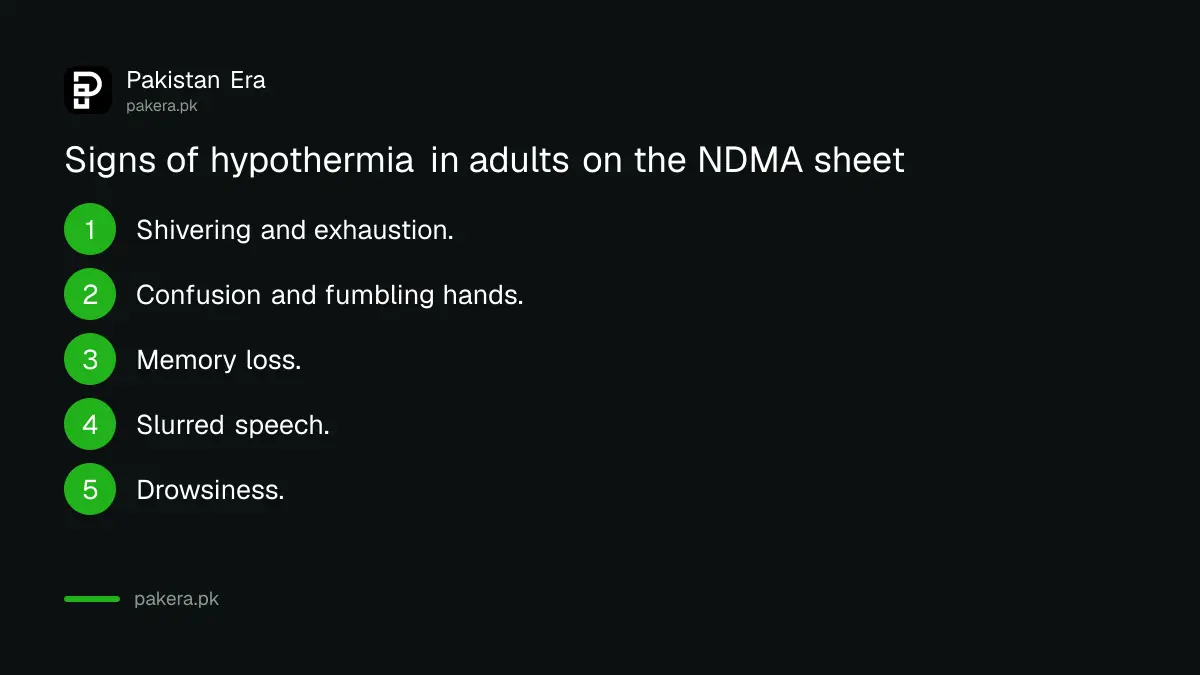
In adults, NDMA lists shivering, exhaustion, confusion, fumbling hands, memory loss, slurred speech and drowsiness. In infants, it lists bright red cold skin and very low energy. Frostbite shows as redness or pain, then white or grey-yellow skin, firm or waxy skin, and numbness.
| Condition | Signs on the NDMA sheet |
|---|---|
| Hypothermia, adults | Shivering, exhaustion, confusion, fumbling hands, memory loss, slurred speech, drowsiness |
| Hypothermia, infants | Bright red cold skin, very low energy |
| Frostbite, early | Redness or pain in any area of skin |
| Frostbite, later | White or grey-yellow skin, firm or waxy skin, numbness |
First aid: five steps in NDMA's order
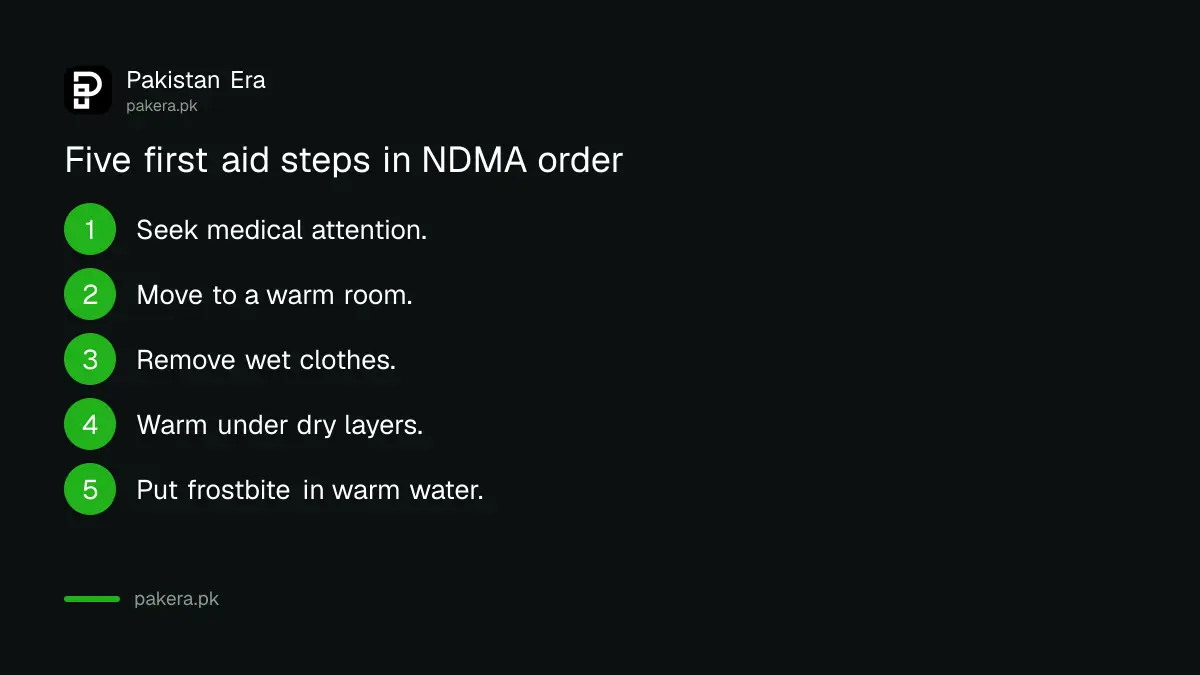
If a person's temperature is below 35 degrees, NDMA says to get medical attention immediately. While help comes, move them to a warm room, take off wet clothes, warm them under dry layers of blankets and clothing, and place frostbitten areas in warm water.
- Seek medical attention.
- Get the person to a warm room.
- Remove wet clothes.
- Warm them under dry layers of blankets and clothing.
- Place areas affected by frostbite in warm water.
The sheet does not give a water temperature. Because frostbitten skin may be numb, a person can be burned without feeling it, so use water that is warm to a healthy hand, and ask a doctor. That last part is our caution, not NDMA's.
What not to do with frostbite
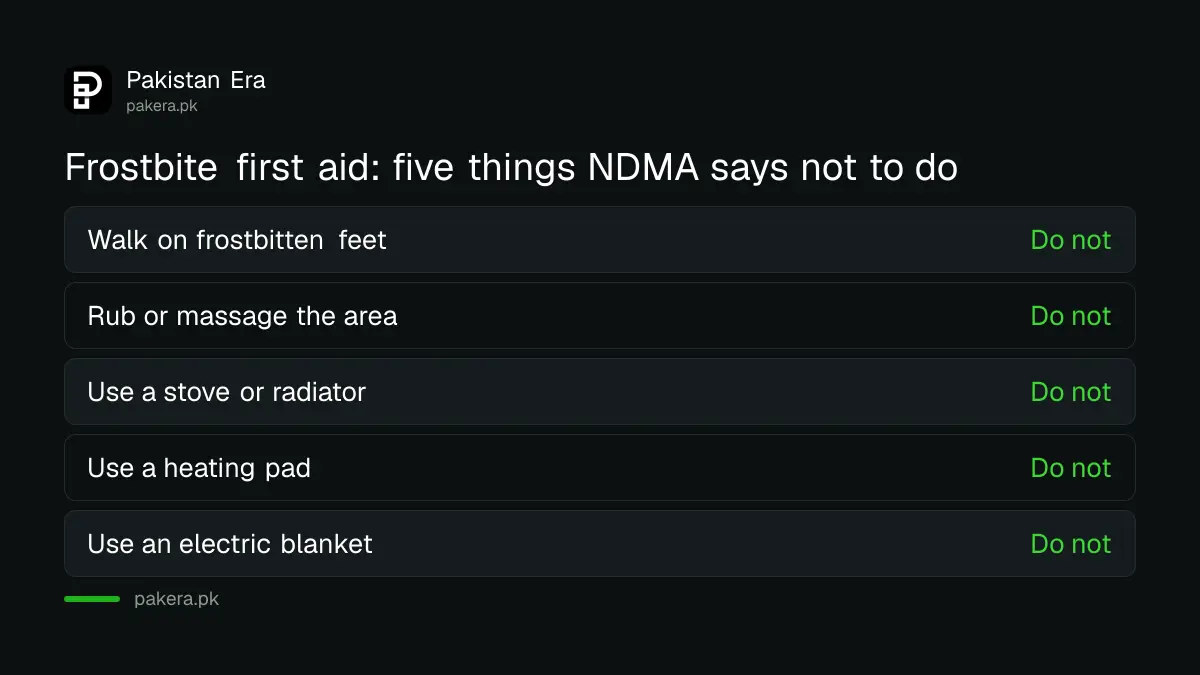
NDMA says do not walk on feet or toes with frostbite, do not rub or massage the area, and do not use a fireplace, heat lamp, radiator, stove, heating pad or electric blanket for warming. Numb skin cannot feel burns, so direct heat can make the injury worse.
This matters in homes where the only warmth is a gas heater or a charcoal stove. Do not hold a frozen hand near it. Safe use of those heaters is in our guide to using a gas heater or geyser safely.
Dress to stay warm outside
NDMA's advice is several layers of clothing, a water-resistant coat, water-resistant boots, gloves or mittens, a hat, and a scarf or knit mask over the face and mouth. Keep the body parts that frostbite hits most often covered in warm, dry clothing.
If you travel in the hills this winter, also read our note on checking road status for Naran, Swat and Chitral before you leave.
Check on neighbours who live alone, especially older people, on the coldest nights. A short visit or a phone call can catch confusion or drowsiness early. Both are listed signs on the NDMA sheet, and a person who is confused may not ask for help. If you find someone cold and drowsy, start the five steps above and call for medical help straight away.
Workers who spend hours outside, such as guards, drivers and farm workers, should take short breaks in a warm place. Wet clothes lose heat fast, so change out of damp socks and gloves as soon as you can. Keep a dry pair in your bag.
Common questions
At what temperature is hypothermia an emergency?
NDMA's sheet says that if a person's temperature is below 35 degrees, get medical attention immediately. Do not wait to see if they warm up alone. Start the first aid steps while you arrange help.
Should I rub frostbitten fingers to warm them?
No. NDMA says not to rub or massage areas with frostbite. Place them in warm water instead, and do not walk on frostbitten feet or toes.
Can I warm someone near a heater?
NDMA says not to use a fireplace, heat lamp, radiator, stove, heating pad or electric blanket. Numb skin may not feel a burn. Use dry blankets and a warm room instead.
What are the signs in a baby?
NDMA lists bright red, cold skin and very low energy. If you see this, treat it as an emergency, move the baby to a warm room under dry layers, and get medical help at once.
Who is most at risk?
NDMA names older adults, hikers, hunters, homeless people, people working outdoors and babies sleeping in cold rooms. Check on these people first in a cold snap.
How we verified this
What we checked, where we read it, and what we could not confirm.
Last checked 14 October 2026. We read the NDMA Guidelines for Hypothermia and Frostbite, a three-page sheet listed on ndma.gov.pk/guidelines. The sheet gives no water temperature, and our note on that is our caution. This is not medical advice, so see a doctor. Source: ndma.gov.pk.
About the author

Senior Writer, Public Services and Technology
Shahid joined us in 2024 as an author. He is a senior contributor to Pakistan's leading technology websites. He writes detailed articles, mostly covering his expertise in the latest tech, mobiles, apps, gadgets, and step-by-step guides. His ideology is to help people understand the latest trends and explain complex methods through very easy-to-understand guides.