The government of Pakistan is planning a major shift in its auto policy, and it could change how people look at imported cars in the country. According to the latest developments, import duties on cars are expected to be reduced as part of a new five-year auto policy. This move is not just about making cars cheaper it’s part of a bigger economic strategy.
Right now, the policy is still being finalized, but the direction is clear. The government wants to relax restrictions, reduce taxes, and open up the automobile sector. If everything goes as planned, the new policy will come into effect from July 1, 2026.
Why Pakistan Is Reducing Tariffs on Imported Cars
One of the main reasons behind this decision is pressure and guidance from the International Monetary Fund (IMF). Pakistan has taken loans from the IMF, and in return, the country is expected to ease certain economic restrictions especially in sectors like imports.
The auto sector is one of those areas where restrictions have been quite tight. High import duties have made foreign cars expensive and limited competition in the market. By reducing tariffs, the government is trying to align with IMF recommendations while also improving the local market conditions.
At the same time, this move is also about increasing economic activity. Lower duties can lead to higher imports, which can generate revenue through volume rather than high taxation.
What the New Auto Policy Will Include
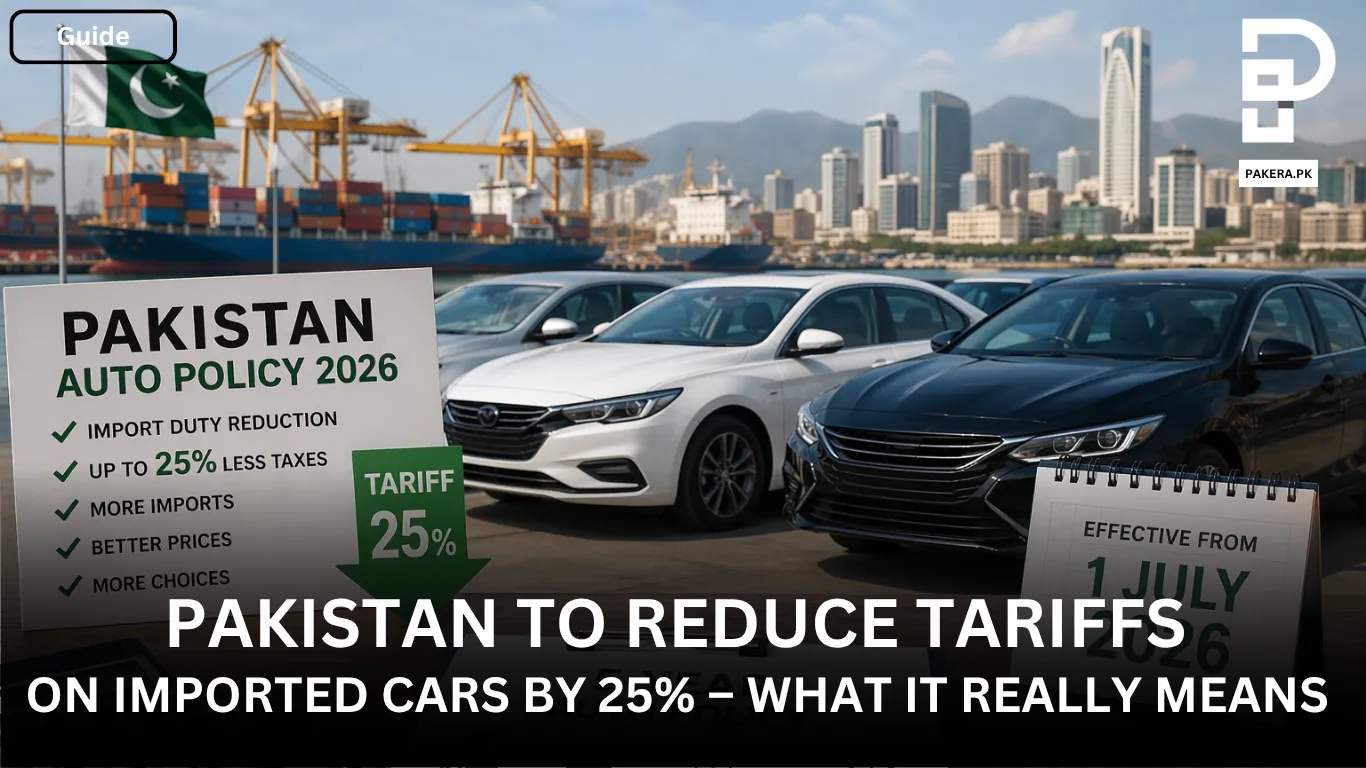
The upcoming five-year auto policy is expected to bring several changes, but the most important one is the reduction in taxes on imported cars potentially up to 25%.
This is a significant drop and could have a direct impact on car prices. While exact details are still being finalized, the intention is to make imported vehicles more accessible and create a more competitive environment in the auto industry.
The policy is currently in its final stages and will be presented to the IMF by the end of this month. Once approved, it will set the direction for Pakistan’s automobile sector for the next five years.
Impact on Car Prices and Buyers
If the tariff reduction actually happens, the biggest impact will be seen in car prices. Imported cars, which are currently considered expensive, may become more affordable for a larger number of buyers.
This could also put pressure on local car manufacturers. With more imported options available at lower prices, local companies might be forced to improve quality, features, and pricing to stay competitive.
For buyers, this means more choices, better value, and possibly access to newer models that were previously too costly to consider.
Growth Opportunities in the Auto Sector
The automobile sector is not the only one expected to benefit. The government is planning broader economic easing, and several key industries could see positive changes.
Sectors like:
- Textiles
- Leather
- Pharmaceuticals
- Automobiles
are likely to benefit from reduced restrictions and lower duties. This could improve exports, increase production, and attract more investment into the country.
For the auto industry specifically, increased imports could lead to better technology transfer, improved standards, and a more dynamic market overall.
When Will This Policy Be Implemented?
The new auto policy is expected to come into effect from July 1, 2026. Until then, discussions and approvals especially with the IMF will play a crucial role in shaping the final version.
Once implemented, the policy will remain in place for five years, making it a long-term shift rather than a temporary change.
Frequently Asked Questions
Yes, if the proposed tariff reduction of up to 25% is implemented, imported cars are expected to become more affordable. However, the final price will also depend on exchange rates and other taxes.
Pakistan has taken loans from the IMF, and part of the agreement includes economic reforms. These reforms often involve reducing trade barriers and encouraging imports to create a more open economy.
The policy is expected to be implemented from July 1, 2026, after approval and finalization.
Apart from automobiles, sectors like textiles, leather, and pharmaceuticals are also expected to benefit from reduced restrictions and lower duties.
Yes, increased competition from imported cars could push local manufacturers to improve quality, reduce prices, or offer better features.
Conclusion
The planned reduction in tariffs on imported cars is a big move for Pakistan’s auto industry. It’s not just about cheaper cars it’s about opening the market, increasing competition, and aligning with broader economic reforms.
If the policy is implemented as expected, it could reshape the automobile sector over the next five years, giving buyers more options and pushing the industry toward better standards.

Ali Akhtar is a young and curious voice here at Pakistan Era. He is currently pursuing his A-Levels and has a growing interest in Pakistan’s changing industrial landscape and educational trends. Ali likes to write in a way that helps him explain and explore the world around him. His writing reflects the perspective of the new generation navigating the evolving trends of Pakistan where technology, youth innovation, and shifting opportunities are reshaping the country’s future.