How to Apply for the ZTBL Khawateen Rozgar Loan: Rural Women Get Up to Rs 500,000
ZTBL's Khawateen Rozgar scheme lends rural women up to Rs 500,000 on security or Rs 25,000 on surety. See the papers, the 10 per cent share and the steps.
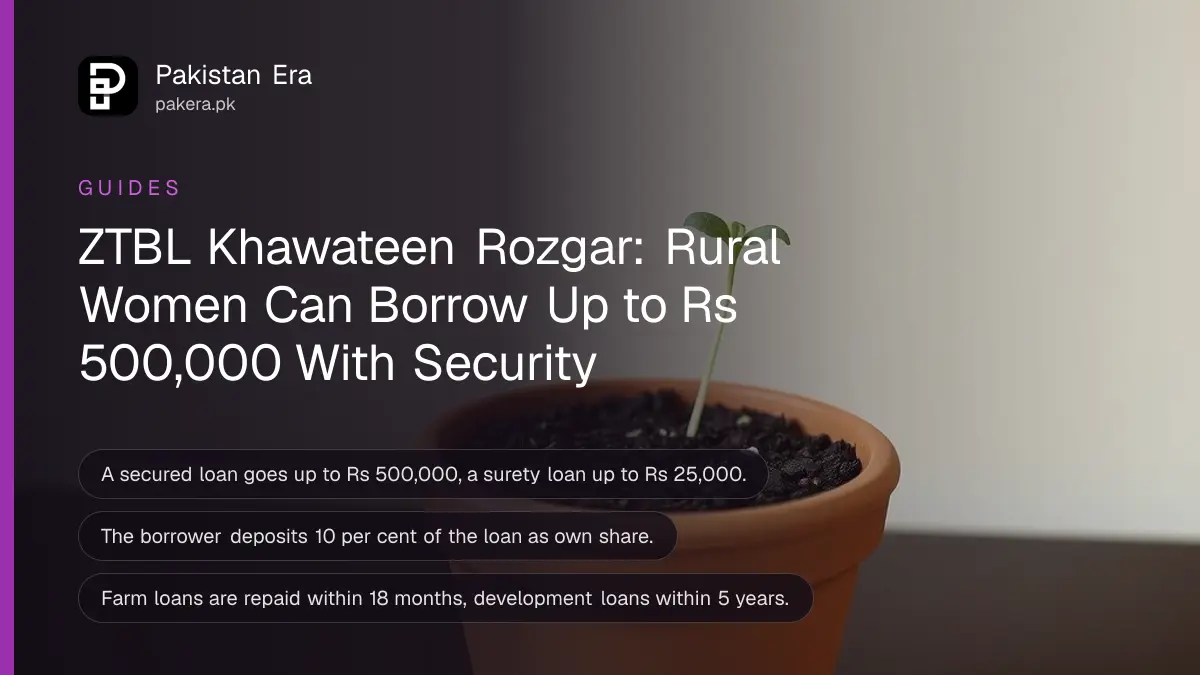
Zarai Taraqiati Bank Limited (ZTBL) offers rural women a loan of up to Rs 500,000 against security, or up to Rs 25,000 on surety, under its Khawateen Rozgar Scheme. You deposit 10 per cent yourself. Farm loans are repaid within 18 months and development loans within 5 years.
Many rural women already run a cow, a poultry shed or a sewing business from home. The money to grow it is the hard part. ZTBL set up Khawateen Rozgar for this case, and every branch can take the application. We opened the Khawateen Rozgar page on ZTBL's website on 15 October 2026. All terms below come from it. The page states no markup rate, so we quote none.
Khawateen Rozgar lends up to Rs 500,000 secured, or Rs 25,000 on surety
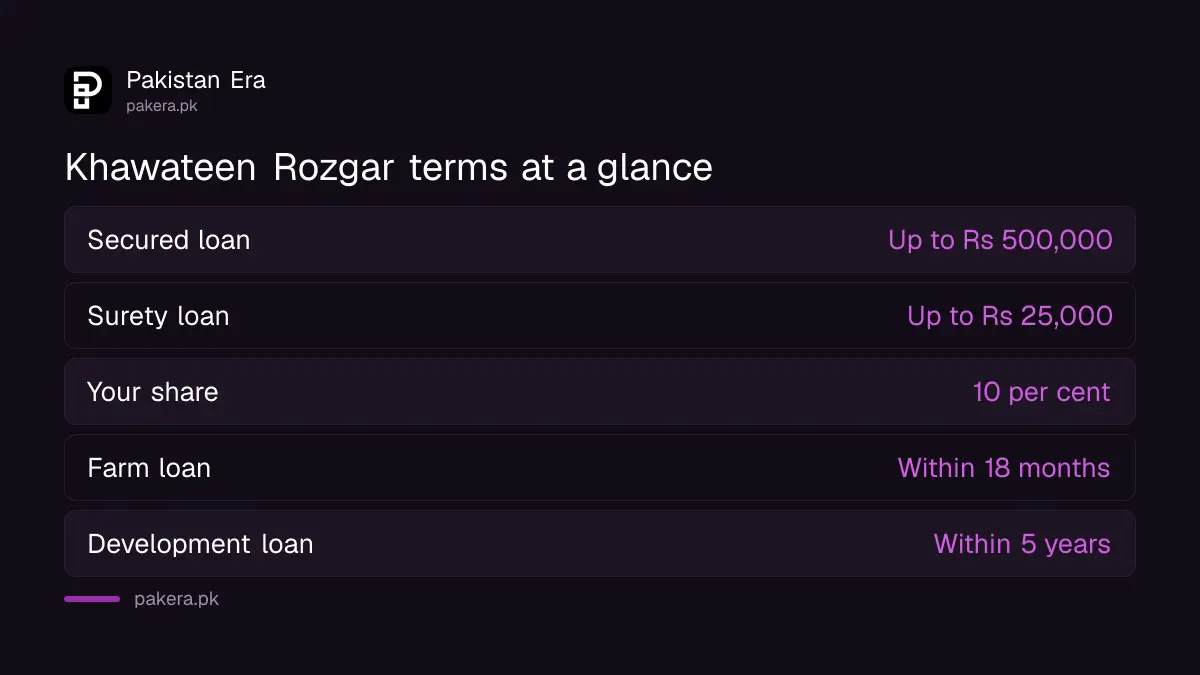
ZTBL sets two limits. A secured loan can go up to Rs 500,000 per borrower or party. A surety loan can go up to Rs 25,000. The bank introduced the scheme in all branches to help rural women add to family income through agriculture.
The page uses the words "secured" and "surety" without explaining them. In plain terms, a secured loan is backed by property. A surety loan rests on a person's guarantee. Ask the branch which type your case falls under, because the limits differ by a factor of twenty.
| Term | What ZTBL's page says |
|---|---|
| Secured loan limit | Rs 500,000 per borrower or party |
| Surety loan limit | Up to Rs 25,000 |
| Your share | 10 per cent of the loan |
| Farm (production) loan | Repaid within 18 months |
| Development loan | Repaid within 5 years |
| Instalments | Half-yearly, based on cash flow |
Any creditworthy rural woman with know-how and repayment capacity can apply
ZTBL says all new and old creditworthy rural women who have technical know-how and the capacity to repay are eligible. The loan can fund farming and non-farming activities. The page does not list an age limit and does not name the activities.
That wide wording helps, but it also leaves the decision to the bank. Bring a clear plan: what you will buy, what it costs and how you will earn. A woman who already keeps animals can also look at the Punjab scheme described in the livestock card guide for a different kind of support.
Four papers are needed: CNIC, application, land record and two photographs
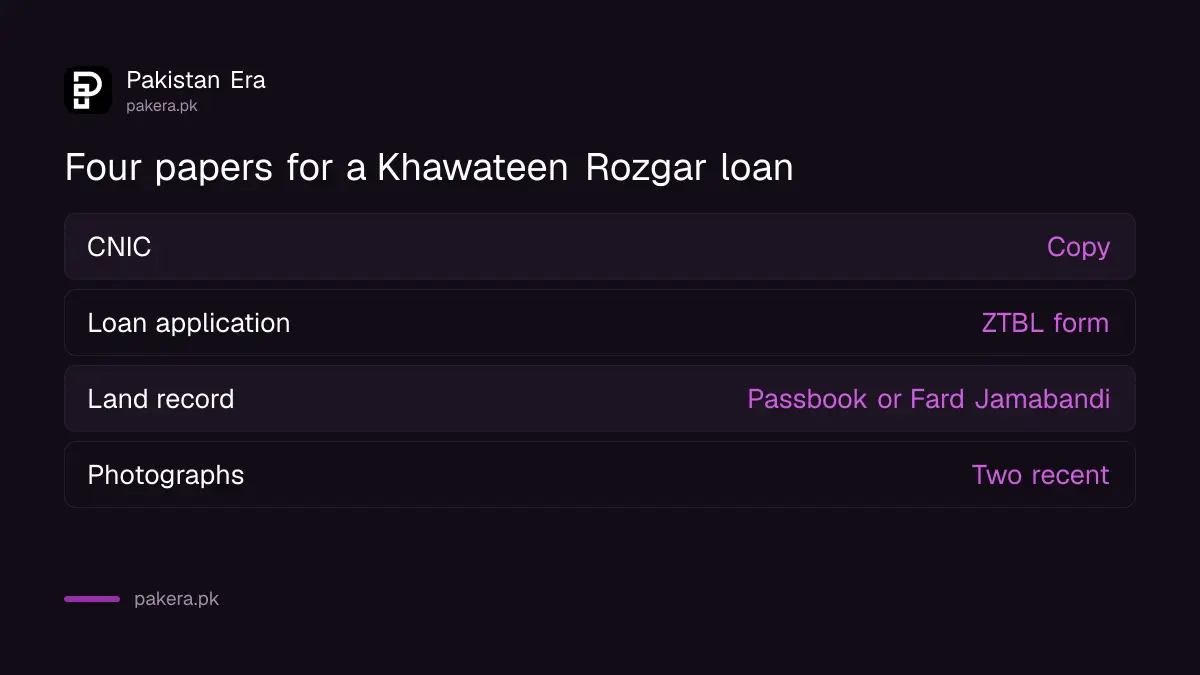
ZTBL asks for a CNIC copy, the loan application, an agricultural passbook or Fard Jamabandi, and two recent photographs. The land record shows what you own or work. If the land is in a husband's or father's name, ask the branch what proof it accepts.
The Fard Jamabandi is the official ownership record. A copy is available online in Punjab, as explained in the steps to get a Fard online. Other provinces use their own revenue offices. The page does not say a woman needs her husband's consent. It does say that a parent's or family member's property can back the loan.
Security can come from your own property or from a family member
ZTBL accepts tangible property owned by the borrower as security. If you have none, the property of a parent or family member can be accepted, with that person as co-applicant. The bank may also accept a personal guarantee under its standing instructions.
This rule opens the loan to women who own no land. It also means a relative shares the risk of the debt. Talk to that person before you apply. On a Rs 500,000 loan, your own 10 per cent share is Rs 50,000. The page does not exempt the small surety loan from the 10 per cent share, so ask the branch.
Plan repayment around your income, because instalments are half-yearly
Farm production loans are recoverable within 18 months and development loans within 5 years, in half-yearly instalments set by the cash flow of your activity. The markup is the prevailing rate on those loans, and the page does not give a number.
Half-yearly means you pay twice a year, so match the dates to when you earn. A dairy keeper earns every week, but a crop grower earns at harvest. Ask the branch for the exact dates, the markup rate and the total repayment in writing before you sign. The Credit Review Department at head office decides the sanction.
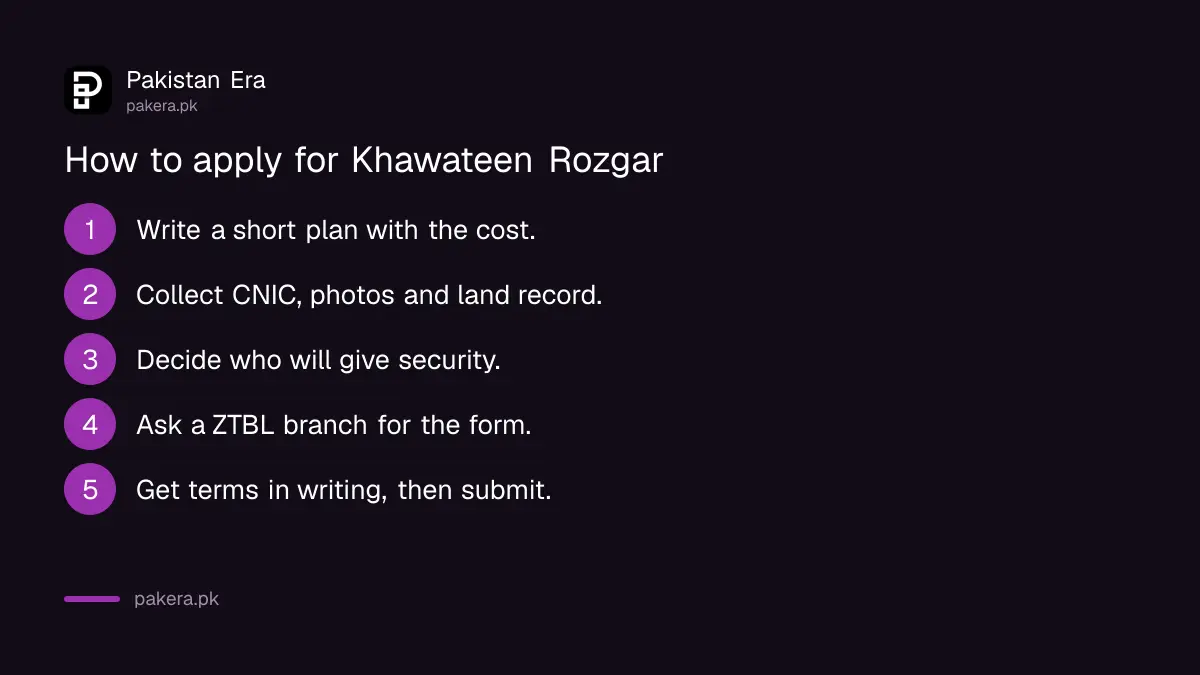
- Write a short plan with the activity, the cost and the expected income.
- Collect your CNIC, two photographs and the land record.
- Decide who will give security, yourself or a family member.
- Visit the nearest ZTBL branch and ask for the Khawateen Rozgar application.
- Ask for the markup, charges and instalment dates in writing, then submit and keep the receipt.
For other finance for women, the State Bank's microfinance guarantee scheme is explained in the guide to the women microfinance credit guarantee facility.
Common questions about the Khawateen Rozgar loan
How much can a woman borrow under Khawateen Rozgar?
Up to Rs 500,000 for a secured loan and up to Rs 25,000 for a surety loan, per borrower or party.
Is the loan only for farming?
No. ZTBL says it can finance farming and non-farming activities for rural women.
Do I need my own land?
You need a passbook or Fard Jamabandi among your papers. If you own no property, a parent's or family member's property can be accepted as security.
What is the markup rate?
The page says the prevailing rate on production and development loans applies. It gives no figure, so ask the branch.
How long do I have to repay?
Production loans within 18 months and development loans within 5 years, in half-yearly instalments.
Where do I apply?
At any ZTBL branch. The page says the scheme operates in all branches across Pakistan.
How we verified this
What we checked, where we read it, and what we could not confirm.
Last checked 15 October 2026. The limits, eligibility wording, documents, 10 per cent share, security rules, repayment terms and sanction authority come from ZTBL's Khawateen Rozgar Scheme page at ztbl.com.pk. The explanation of "secured" and "surety" is ours, because the page does not define them. We did not apply or call a branch. ZTBL can change its terms, so confirm them at the branch.
About the author

Public Services and Education Journalist
Fajr Riaz is a journalist and content writer at Pakistan Era, based in Lahore. She covers the questions people meet in everyday life in Pakistan: how a public service works, what a change in the rules means, and where to find a reliable answer.