Balochistan Cabinet Approves Public Health Act and Telemedicine Act, Assembly Vote Pending
Balochistan's cabinet approved the Public Health Act and Telemedicine Act on 9 October 2026. Neither is law yet. See what was decided and what patients can do.
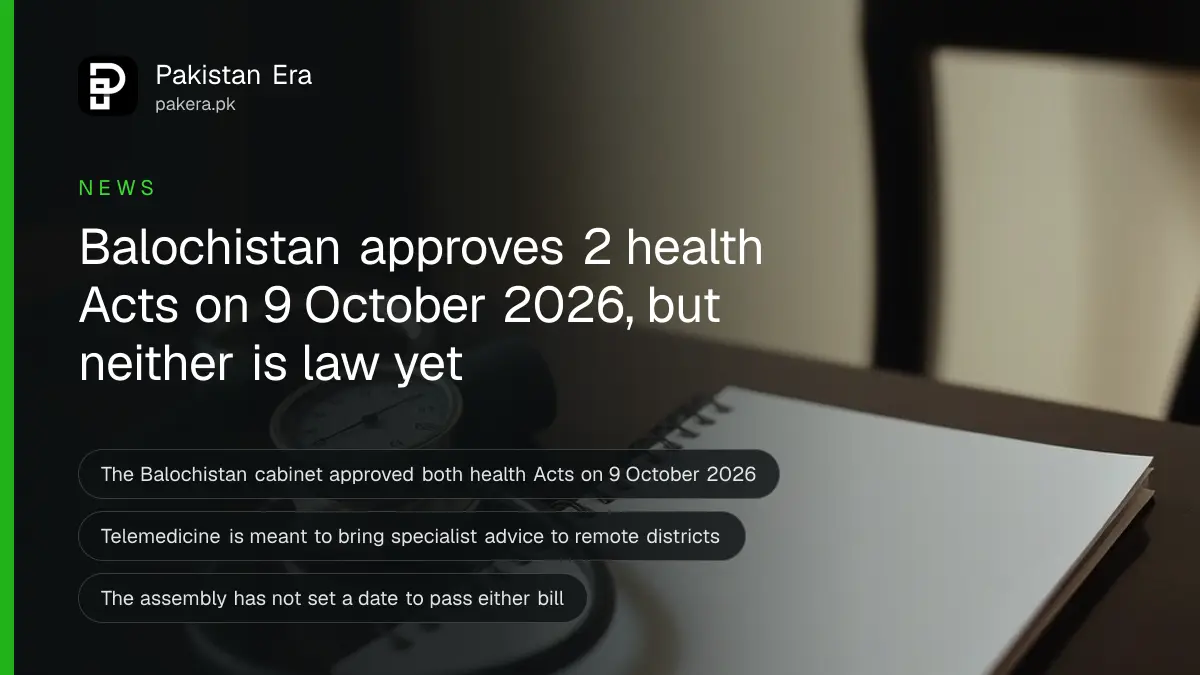
Balochistan's cabinet approved the Public Health Act 2026 and the Telemedicine and Remote Health Services Act 2026 at its meeting on 9 October 2026. Both are cabinet approvals, not laws in force. The provincial assembly still has to pass them, and the text has not been published.
A patient in Kharan or Zhob can wait a full day by road to see a specialist in Quetta. Telemedicine is meant to cut that trip to a phone or video call. The cabinet, chaired by Chief Minister Mir Sarfraz Bugti, approved two health laws in one sitting. Here is what was announced, what it could mean for patients, and what nobody has explained yet.
The cabinet approved two health Acts on 9 October 2026
The cabinet approved the Balochistan Public Health Act 2026 and the Balochistan Telemedicine and Remote Health Services Act 2026. The government said the first strengthens the legal framework for healthcare delivery. The second extends medical expertise to remote areas.
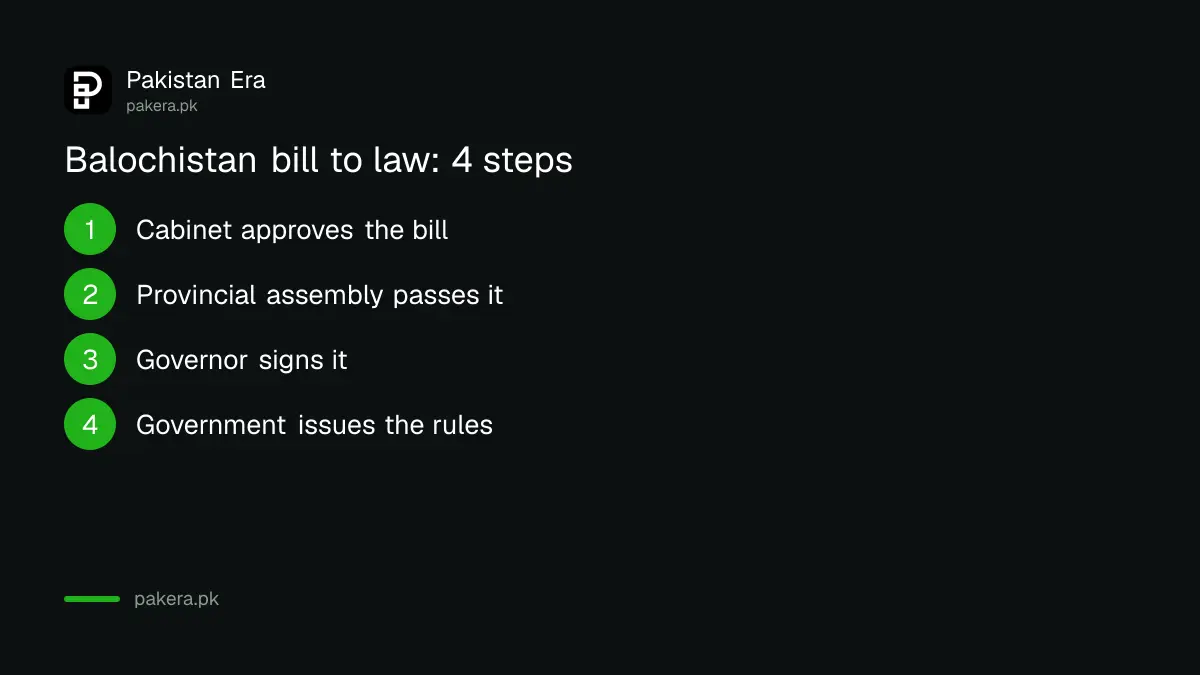
The word "approved" matters here. A provincial cabinet approves a bill. The Balochistan Assembly must then pass it, and the Governor must sign it, before it becomes law. Only then can a hospital or district office act on it.
The same meeting named Professor Abdul Razzaq as interim chief executive of the Balochistan Institute of Kidney Diseases. We covered the education and domicile decisions from the same meeting in our report on the Non-Formal Education Act.
Telemedicine means a doctor sees you through a call, not a visit
Telemedicine is a consultation with a doctor by phone or video, usually with a nurse or health worker beside the patient. It does not replace an operation or a scan. It lets a specialist read a report, ask questions and decide whether the patient must travel.
Balochistan is the largest province by area and the least densely populated. Many districts are a long drive from a teaching hospital. That is the case the cabinet gave for the Act.
The Chief Minister had already pushed telehealth in earlier health reviews. What is new is a law behind it. A law can set who may practise by video, how patient records are kept and who is liable if advice goes wrong. The published announcement does not say which of these the Act covers.
What the Public Health Act could cover is not yet public
A public health law usually deals with disease control, sanitation, food safety, and the powers of district health officers. The government described the Act only as a stronger legal framework for healthcare delivery. We have not seen the bill text, so we cannot say what it requires or what penalties it sets.
Two things readers should not assume. First, nothing in the announcement creates a new fee or a new free service. Second, nothing says when a district health office will start enforcing anything.
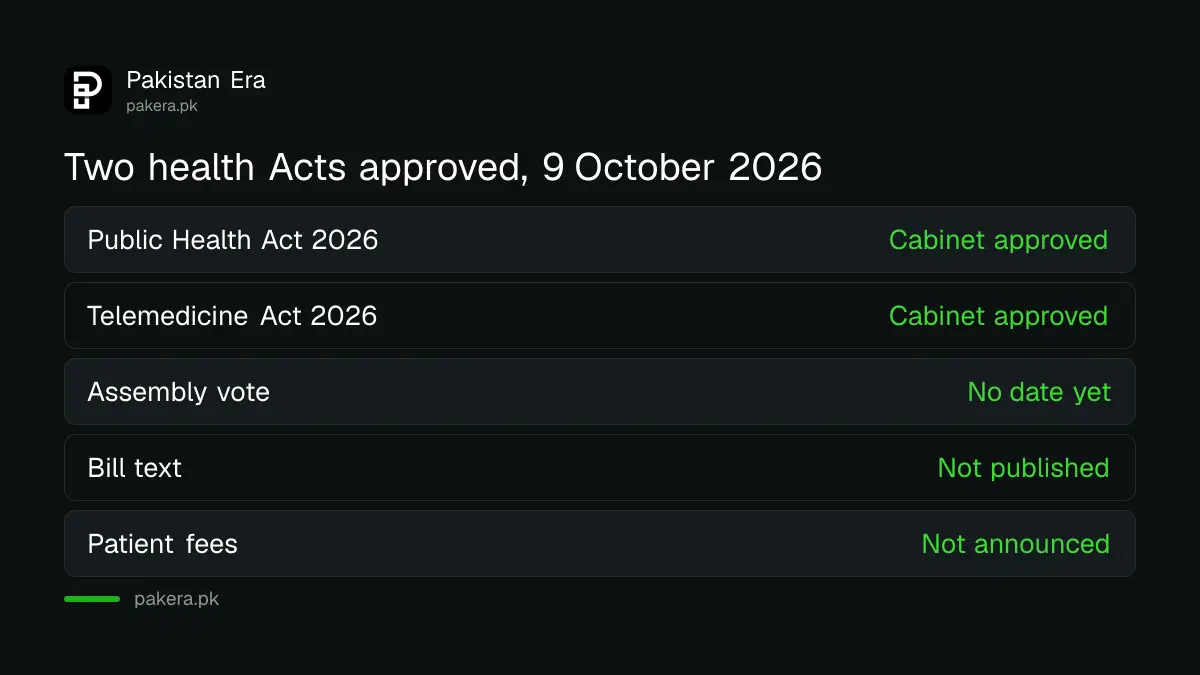
| Item | Status on 11 October 2026 |
|---|---|
| Public Health Act 2026 | Approved by cabinet, text not published |
| Telemedicine and Remote Health Services Act 2026 | Approved by cabinet, text not published |
| Assembly vote | No date announced |
| Start date for services | Not announced |
| Fees for patients | Not announced |
What patients in Balochistan can do today
Nothing under the new Acts is open yet. The routes below are the ones that exist now.
- Go to the nearest district headquarters hospital first. Ask whether it has a telehealth link to a Quetta teaching hospital.
- Before you pay a private clinic, check that it holds a licence. Rules differ by province. The licence check for Khyber Pakhtunkhwa shows the kind of proof to ask for, but Balochistan applies its own rules.
- For an emergency, call Edhi or Chhipa. The Edhi and Chhipa numbers work on any phone.
- If a doctor or hospital treats you badly, file a complaint on the Chief Minister's AWAAZ portal.
- Keep every prescription and report. Any future video consultation will ask for them.
Cabinet approval is only the first step
Pakistani provinces approve bills in cabinet and then send them to the assembly. Some bills pass within weeks. Others wait months or are changed on the floor.
Watch for three things: the bill appearing on the Balochistan Assembly agenda, a Gazette notice after the Governor signs it, and rules issued under the Act. Rules are where the working details such as consultation standards, data privacy and licensing for online doctors sit. The Acts alone will not change a patient's visit until the rules are written.
For a reminder of how to tell an approval from a notified decision, see how to check if a government decision is officially notified.
Common questions
What did the Balochistan cabinet approve on health?
It approved the Public Health Act 2026 and the Telemedicine and Remote Health Services Act 2026 on 9 October 2026, plus an interim chief executive for the Balochistan Institute of Kidney Diseases.
Are the Balochistan health Acts in force?
No. The cabinet approved them, but the Balochistan Assembly must pass them and the Governor must sign them first.
What is telemedicine?
Telemedicine is a medical consultation by phone or video. A specialist in a big city advises a patient or local health worker in a remote district.
Can I book a telemedicine appointment in Balochistan now?
Not under the new Act. Ask your district headquarters hospital whether it already offers a telehealth link to a Quetta hospital.
Will telemedicine cost money?
No fee has been announced. The government has not said whether consultations will be free or charged.
How we verified this
What we checked, where we read it, and what we could not confirm.
Last checked on 11 October 2026. The names of the two Acts and the 9 October meeting date come from the Balochistan government's post-cabinet briefing as released by the state news agency. The Chief Minister chaired the meeting. We opened the Government of Balochistan website on 11 October 2026 and found no notification or bill text on its front page. What each Act requires, any fee and the assembly date are not confirmed.
About the author
Public Services and Education Journalist
Fajr Riaz is a journalist and content writer at Pakistan Era, based in Lahore. She covers the questions people meet in everyday life in Pakistan: how a public service works, what a change in the rules means, and where to find a reliable answer.