Book a Punjab Food Authority Nutrition Clinic Appointment: Steps, Measurements and Follow-Up
How to book a Punjab Food Authority nutrition clinic visit: register on the portal, get six body measurements and a diet plan, then return after 15 days.
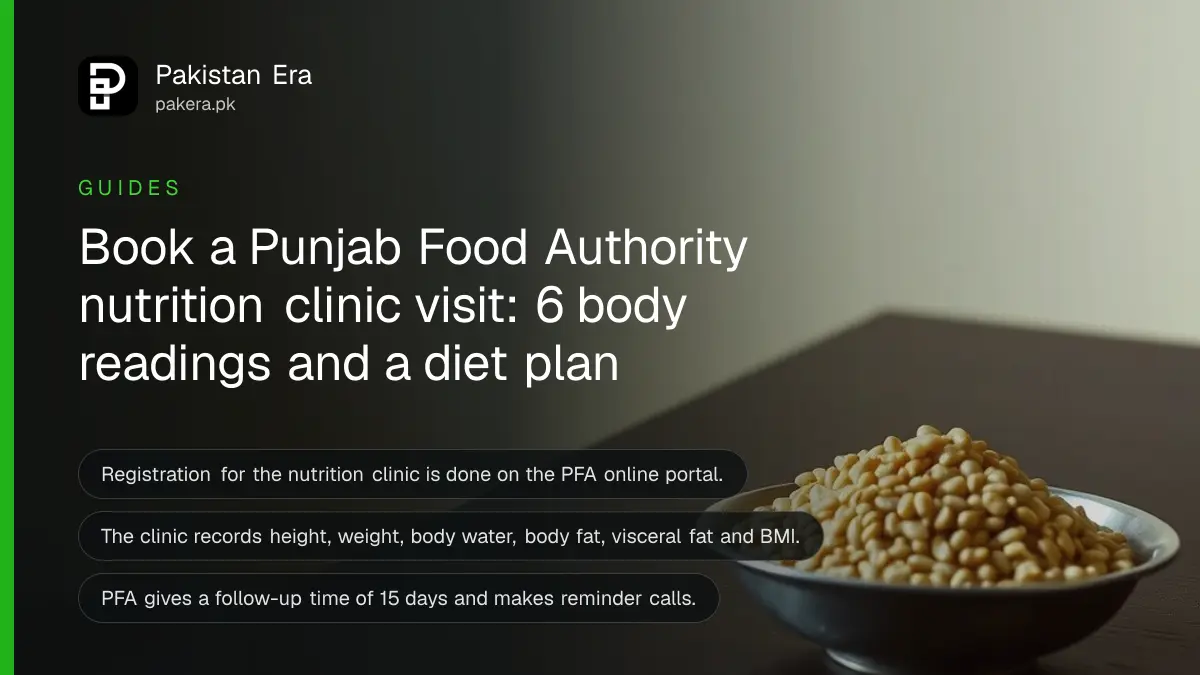
Short answer: You register on the Punjab Food Authority's online portal, then attend the nutrition clinic on the appointment date it gives you. Staff measure your height, weight, body fat and BMI, and an officer prepares a diet plan for you. Follow-up comes after 15 days.
Most people in Punjab know the Punjab Food Authority (PFA) for raids on restaurants and fines on shopkeepers. Fewer know it also runs nutrition clinics. A clinic visit does not need a hospital referral, and the page that describes it is public.
We read the PFA's Nutrition Clinic Services page on 13 October 2026. The steps below follow that page. It does not publish a fee, a list of clinic locations or an eligibility rule, and we say so in each place where it matters.
Registration happens on the PFA online portal
PFA says patient registration for the nutrition clinic is done on its online portal. After registering you are asked to come on a specific appointment date. The page does not say whether walk-in visits are accepted, so do not travel without an appointment.
The page does not name the portal address in the nutrition section, and we could not confirm which button on the PFA site leads to it. Start from the Nutrition Services menu on the PFA home page, or ask through the contact details given there.
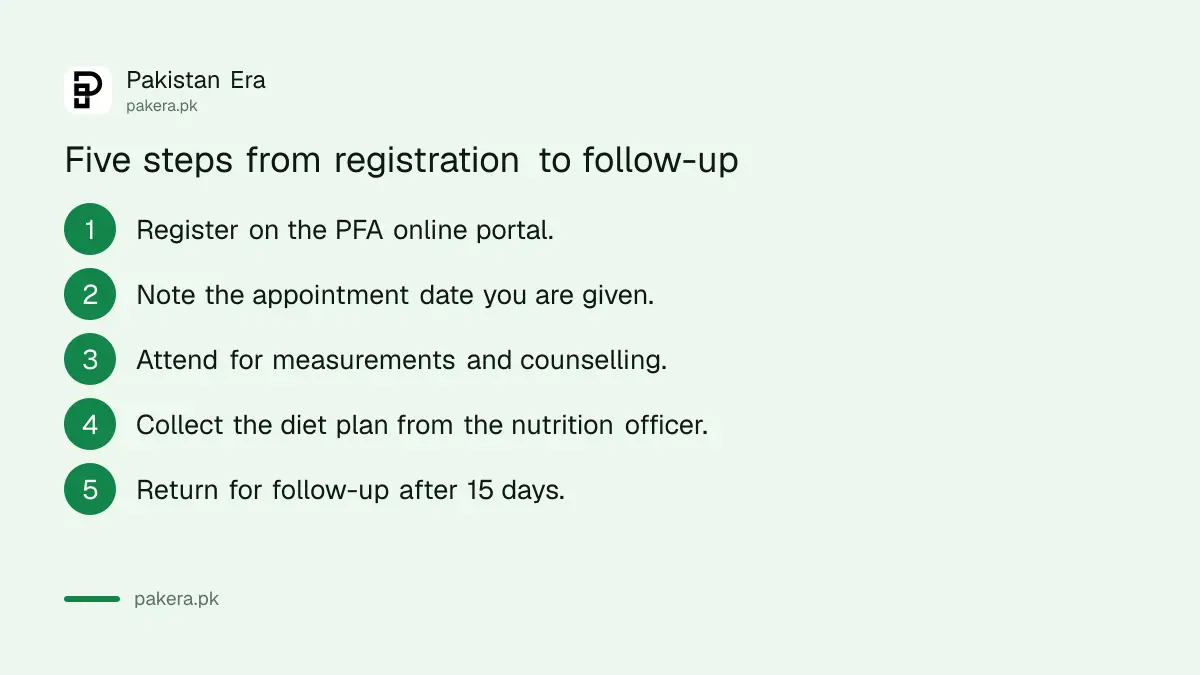
- Register on the PFA online portal for the nutrition clinic.
- Note the appointment date you are given.
- Attend on that date for measurements and counselling.
- Collect your diet plan from the nutrition officer.
- Return for the follow-up session after 15 days.
Six body measurements are taken at the first visit
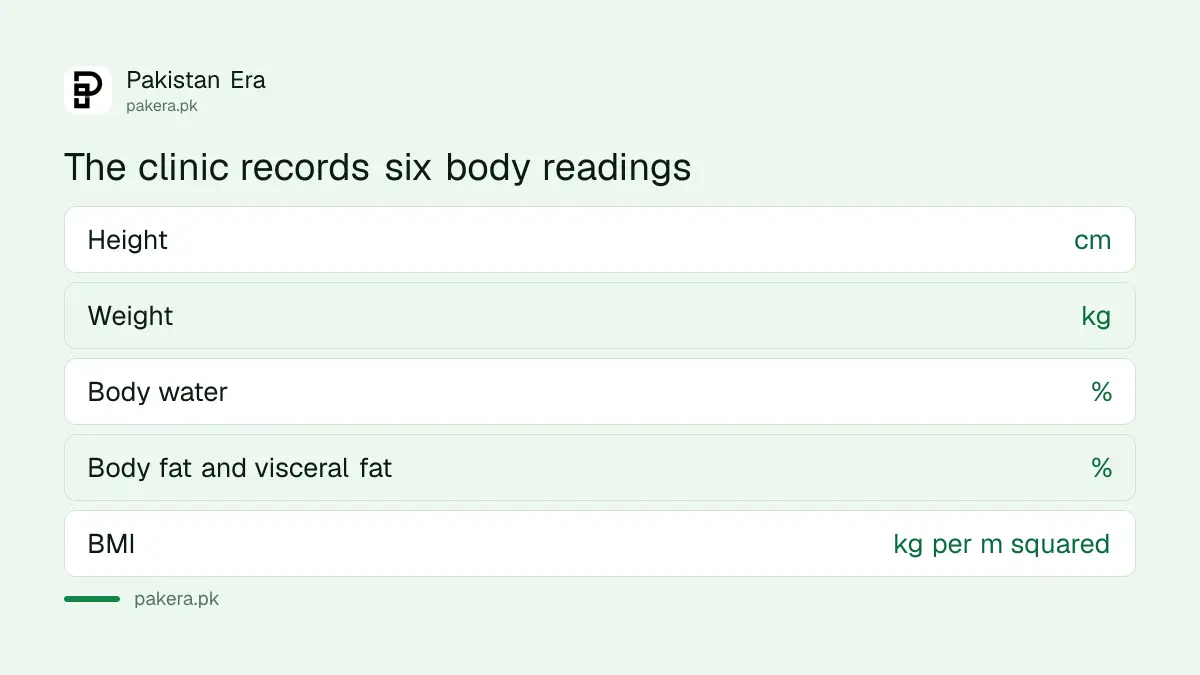
PFA says the clinic measures height, weight, body water, body fat, visceral fat and BMI. It uses weight and height machines and body fat analysers. These readings go onto a client data sheet along with your history, diet and exercise routine.
| Measurement | Unit on the PFA sheet | What it tells you |
|---|---|---|
| Height | cm | Used to work out BMI |
| Weight | kg | Used to work out BMI |
| Body water | % | Share of your body weight that is water |
| Body fat | % | Share of your body weight that is fat |
| Visceral fat | % | Fat stored around the organs in the belly |
| BMI | kg/m squared | Weight in relation to height |
BMI, or body mass index, is weight divided by height squared. It is a rough screening number, not a diagnosis. The right-hand column above is our plain-language explanation, not wording from the PFA page.
Your diet plan is made after a full assessment
After the assessment and counselling, PFA says its Nutrition Trainee Officers prepare a customised diet plan for each patient. The plan is built from your history, your usual meals, your exercise and your measurements, so it is not a generic handout.
Come prepared. Before the visit, write down what you usually eat in a normal day, how much you move, and any medicine you take. This is our suggestion, not a PFA requirement, but the data sheet asks about diet and exercise routine, so the answers will be needed anyway.
A nutrition clinic is not a replacement for a doctor. If you have diabetes, high blood pressure or a kidney problem, check the diet plan with your own physician as well. Punjab also runs free care programmes for some of these conditions, which are listed in the guide to free health programmes in Punjab beyond the Sehat Card.
Follow-up comes after 15 days with a reminder call
PFA gives each patient a 15 day follow-up time and says reminder calls are made for the next consultation. A first plan is a starting point. The second visit lets the officer compare your new readings with the first set.
Keep the first printout. Without it, there is nothing to compare against. If you move to a different city, take it with you.
The same page says PFA also runs nutrition awareness seminars and screening camps. Its site listed three of these on 12 October 2026, at institutions in Gujranwala, Dera Ghazi Khan and Bahawalpur. Those are events at schools and colleges, not the clinic itself.
What the page does not say
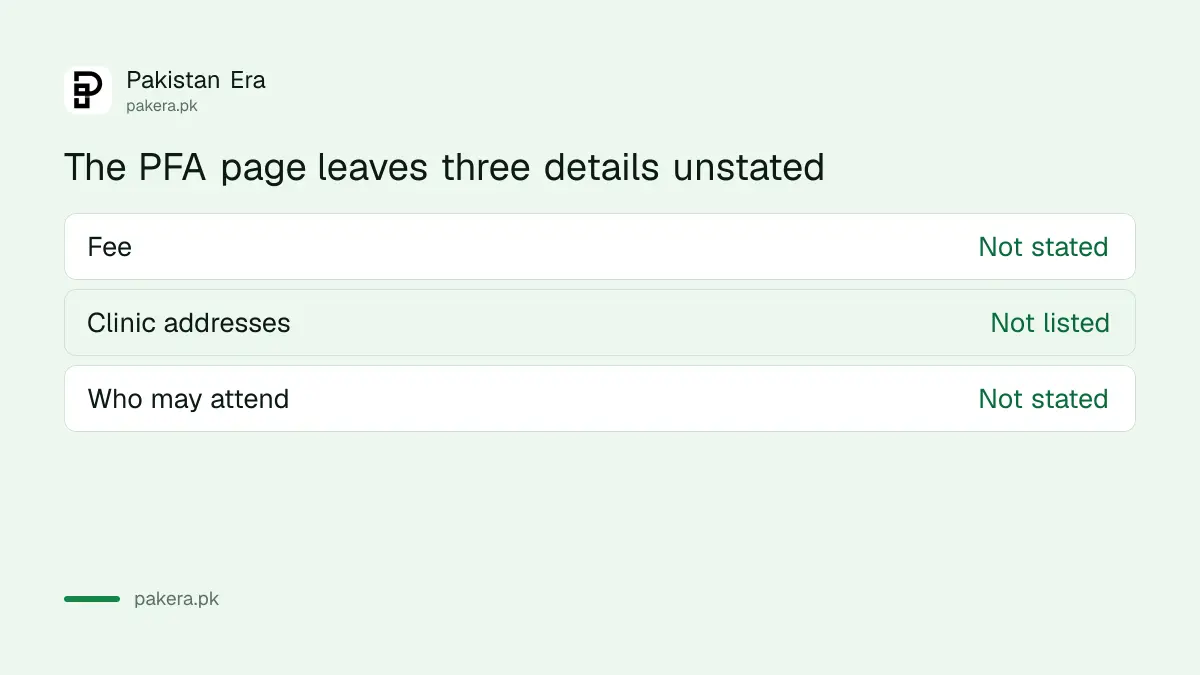
The PFA page is silent on three things readers ask about: the fee, the clinic locations and who may attend. We could not find these on the nutrition page, so we are not guessing. If a figure is quoted to you at a counter, ask for it in writing.
The PFA's main work remains food safety. If your concern is unsafe food rather than diet, the right route is the PFA complaint line 1223. If you doubt a packet of ghee or oil, the guide to quality tests on packaged ghee, oil and milk explains what to look for first.
Common questions
Is the PFA nutrition clinic free?
The page does not say. PFA's nutrition clinic page publishes no fee, so confirm it when you register on the portal.
Do I need an appointment?
Yes, according to the page. Registration is on the PFA online portal and patients are asked to come on the appointment date they are given.
What measurements does the clinic take?
It records height, weight, body water percentage, body fat percentage, visceral fat percentage and BMI. It also asks about your history, diet and exercise routine.
Who prepares the diet plan?
Nutrition Trainee Officers at PFA prepare a customised diet plan after the assessment and counselling.
How soon is the follow-up visit?
PFA gives a follow-up time of 15 days and makes reminder calls for the next session.
Where are the nutrition clinics?
The page does not list clinic addresses. Use the Nutrition Services section on the PFA site or its contact page to ask for the nearest one.
How we verified this
What we checked, where we read it, and what we could not confirm.
Last checked on 13 October 2026, Pakistan time. We read the Punjab Food Authority's Nutrition Clinic Services page. We did not register on the portal or visit a clinic. The page was last edited in April 2024 according to its own data, so its steps may have changed. It gives no fee, clinic addresses or eligibility rules.
About the author

Tax, Bills and Technology Writer
Ali Akhtar is a young and curious voice here at Pakistan Era. He is currently pursuing his A-Levels and has a growing interest in Pakistan’s changing industrial landscape and educational trends. Ali likes to write in a way that helps him explain and explore the world around him. His writing reflects the perspective of the new generation navigating the evolving trends of Pakistan where technology, youth innovation, and shifting opportunities are reshaping the country’s future.