Check the Chlorhexidine Antiseptic Eye Injury Warning in Pakistan: DRAP Alert 56
DRAP Safety Alert 56 warns skin antiseptic chlorhexidine must not touch the eye. See what it says on corneal injury, newborn cord care and what to do.
Short answer: DRAP Safety Alert 56 says chlorhexidine skin antiseptic must never touch the eye. It can cause lasting damage to the front of the eye, and some patients needed a corneal transplant. If it gets in the eye, wash it out promptly and thoroughly with water and ask an eye doctor.
Chlorhexidine is the antiseptic that nurses use on skin before an operation. The alert also says it is used on the umbilical cord stump of some newborns. It looks like water, it has no sting for most people, and it is easy to treat lightly.
The Drug Regulatory Authority of Pakistan (DRAP) did not treat it lightly. We read Safety Alert 56, dated 23 April 2025, on dra.gov.pk on 14 October 2026. This page repeats what the alert says for patients and families, in plain words. It is not medical advice.
DRAP says chlorhexidine for skin use must not touch the eye
The alert says chlorhexidine for skin disinfection can cause serious and persistent corneal injury if it reaches the eye by accident. The cornea is the clear front layer of the eye. Serious cases have needed a corneal transplant, the alert says.
The alert is about the version used on the skin, before surgery and for similar uses. It says the injury was reported even when eye protection was used, because the liquid moved past the area where it was meant to stay. People who are under anaesthesia cannot say if it has reached their eyes, so extra care is needed.
DRAP also notes that cases of severe corneal erosion and lasting loss of vision were reported after accidental eye contact. The alert lists the effect as "not known" in how often it happens. That means DRAP could not give a rate.
The alert includes a warning about newborn cord care
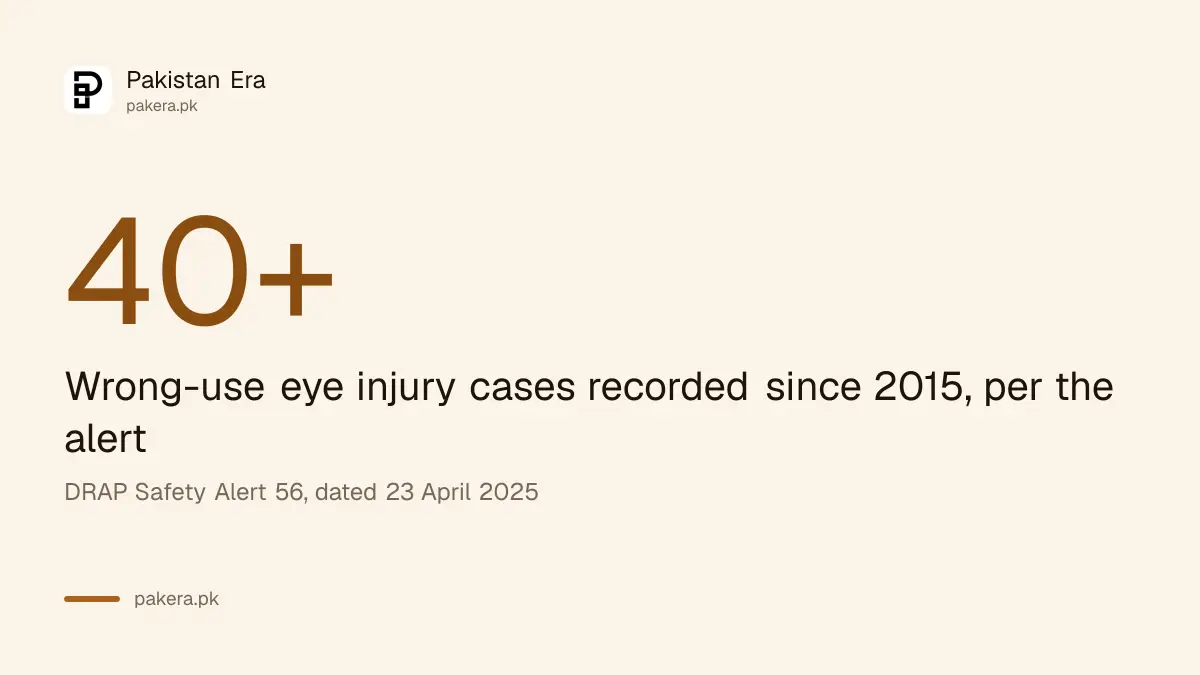
Alert 56 repeats a World Health Organization warning from 2020. Chlorhexidine meant for the umbilical cord stump of a newborn was mistaken for eye drops or eye ointment. The alert says more than forty such mistakes have been recorded since 2015.
The alert says clean, dry cord care is recommended for newborns born in health facilities and, in low-risk settings, at home. It says chlorhexidine on the cord may be considered only to replace a harmful traditional substance such as cow dung. It names liquid and gel forms.
The simple lesson for a family is to keep the tube or bottle away from eye medicines. Store it apart and read the label every time. The alert says CHX causes serious harm if mistakenly applied to the eyes.
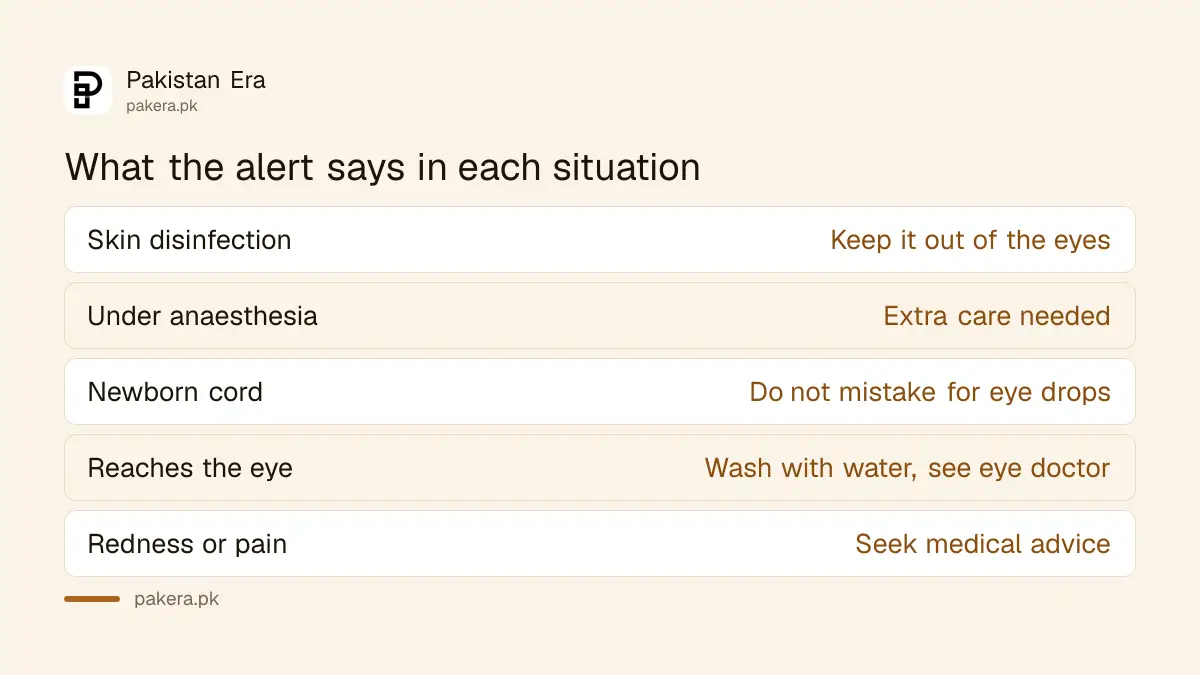
| Situation | What the alert says |
|---|---|
| Skin disinfection before surgery | Take extreme care that the solution does not run into the eyes |
| Patient under anaesthesia | Particular care, because the patient cannot report eye contact |
| Newborn cord stump | Do not mistake it for eye drops or eye ointment |
| Chlorhexidine reaches the eye | Wash out promptly and thoroughly with water, then seek an eye doctor |
| Eye redness, pain or blurred vision | Ask for medical advice promptly |
Wash the eye with water and ask an eye doctor
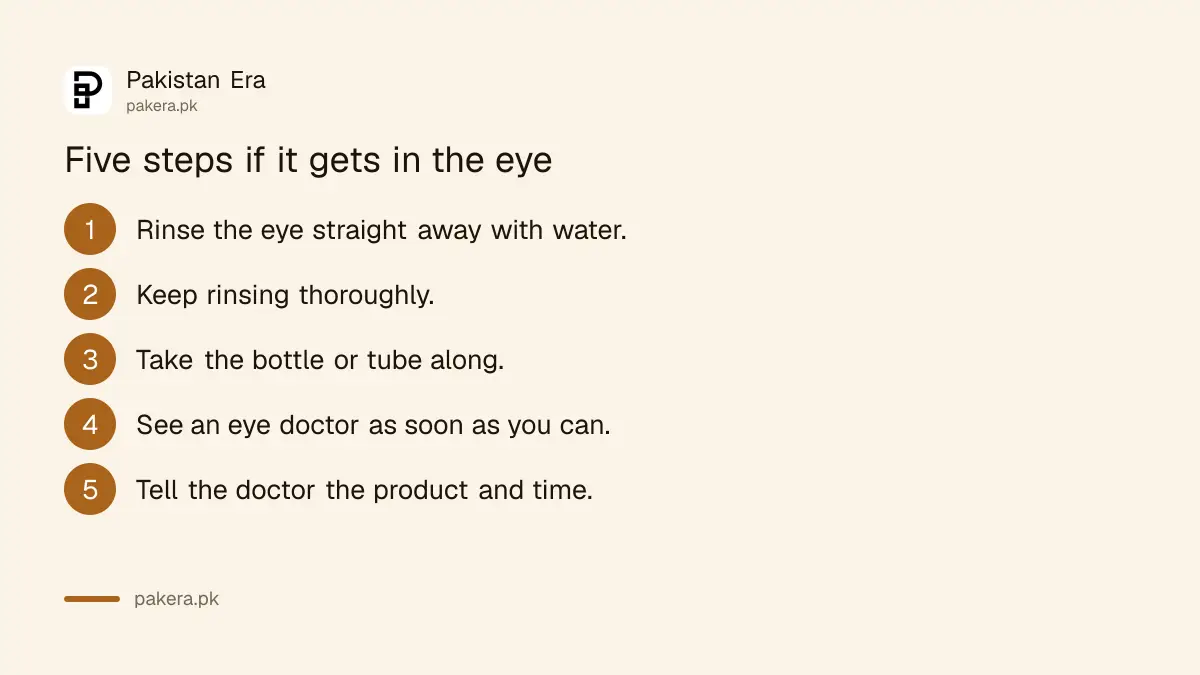
The alert says that if chlorhexidine gets in the eye, wash it out promptly and thoroughly with water, and seek an ophthalmologist's advice. If you have irritation, redness, pain or changes in vision afterward, ask for medical advice promptly.
- Rinse the eye straight away with plenty of water.
- Keep rinsing thoroughly, not for a moment only.
- Take the bottle or tube with you.
- See an eye doctor, an ophthalmologist, as soon as you can.
- Tell the doctor which product it was and when it happened.
The alert gives no other first aid steps and no time limit, so we add none. For an emergency, you can call your nearest emergency service. In Punjab, Rescue 1122 takes emergency calls on 1122.
Ask before surgery how the antiseptic is applied
The alert says patients should talk to a doctor, pharmacist or nurse before using chlorhexidine. Before surgery, you can ask how the eyes are protected. This is a fair question, particularly for face, neck, scalp and head operations.
DRAP also decided that provincial health departments should work with hospitals so that handlers use proper protective equipment. Hospitals should label chlorhexidine as an "irritating agent" and add it to the safety data sheet. These are steps for hospitals, not for patients.
If your eye is hurt after a procedure, tell the hospital in writing. Our page on how to file a medical negligence complaint with the Punjab Healthcare Commission shows the route in Punjab.
Report an eye injury to DRAP
DRAP asks doctors and patients to report suspected reactions to the National Pharmacovigilance Centre. You can use the Med Vigilance e-reporting form on the DRAP website or the VigiMobile app. The centre's email is npc@dra.gov.pk and its phone is +92 51 9255981.
Our guide to how to report a medicine side effect to DRAP walks through the form. Keep the product name, the batch number and the date of the event ready.
Common questions
Is chlorhexidine mouthwash covered by this alert?
No. Alert 56 is about chlorhexidine for cutaneous use, meaning on the skin, for disinfection. Mouthwash is not named in the alert.
Is it safe to use chlorhexidine on my skin at home?
The alert does not ban it. It says the product must not come into contact with the eye and advises care. Read the label and ask your pharmacist.
What should I do if it splashes in my eye?
Wash it out promptly and thoroughly with water, and ask an eye doctor for advice, as the alert says.
Is this a new alert?
No. DRAP issued Alert 56 in April 2025. We checked on 14 October 2026 and it is still listed on the DRAP site.
Why did DRAP issue it?
DRAP followed a review by Europe's medicines agency and its own expert committee, which met on 2 January 2025. The committee asked makers to update their warnings.
Who can report an eye injury?
Doctors and patients can both report to the National Pharmacovigilance Centre at DRAP.
How we verified this
What we checked, where we read it, and what we could not confirm.
Last checked on 14 October 2026, Pakistan time. We read DRAP Safety Alert 56 in full on dra.gov.pk. We did not test any product. The alert gives no number of cases in Pakistan. This page is not medical advice. See a doctor for any eye problem.
About the author

Tax, Bills and Technology Writer
Ali Akhtar is a young and curious voice here at Pakistan Era. He is currently pursuing his A-Levels and has a growing interest in Pakistan’s changing industrial landscape and educational trends. Ali likes to write in a way that helps him explain and explore the world around him. His writing reflects the perspective of the new generation navigating the evolving trends of Pakistan where technology, youth innovation, and shifting opportunities are reshaping the country’s future.