Flour Price in Pakistan Rises to Rs 2,946.72 a Bag, Up Rs 249 in Two Weeks
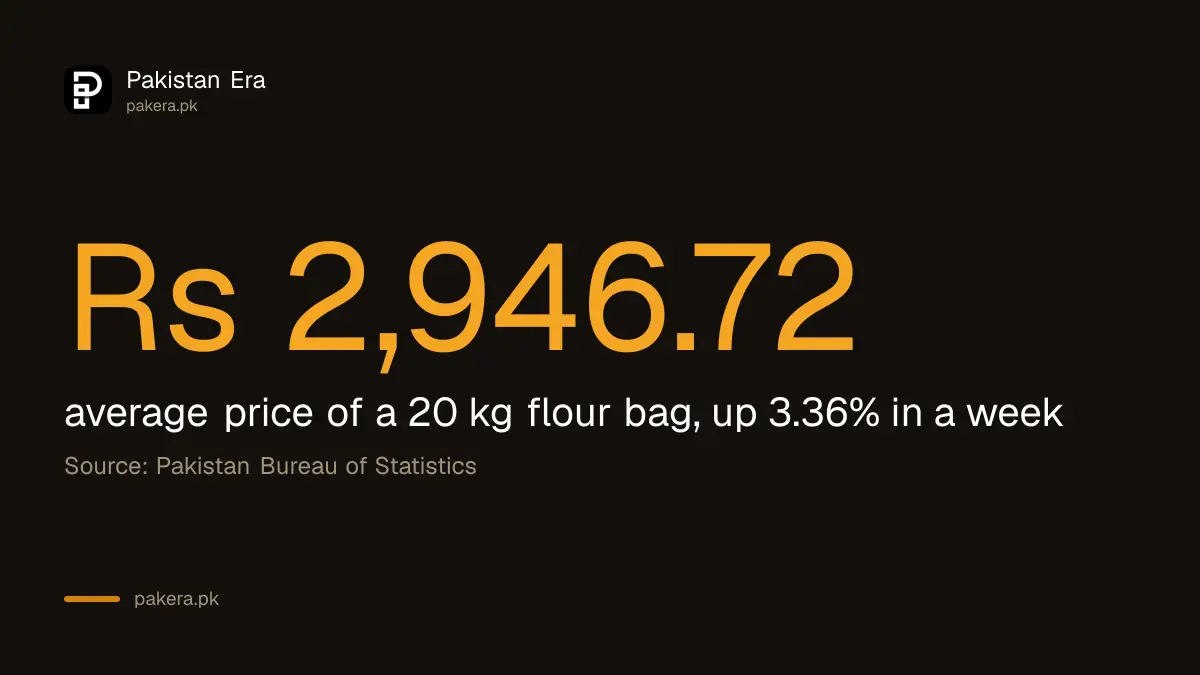
A 20 kg flour bag averaged Rs 2,946.72 in Pakistan in the week ended 15 October 2026, up 3.36% in a week and 35.13% in a year, the Bureau of Statistics says.
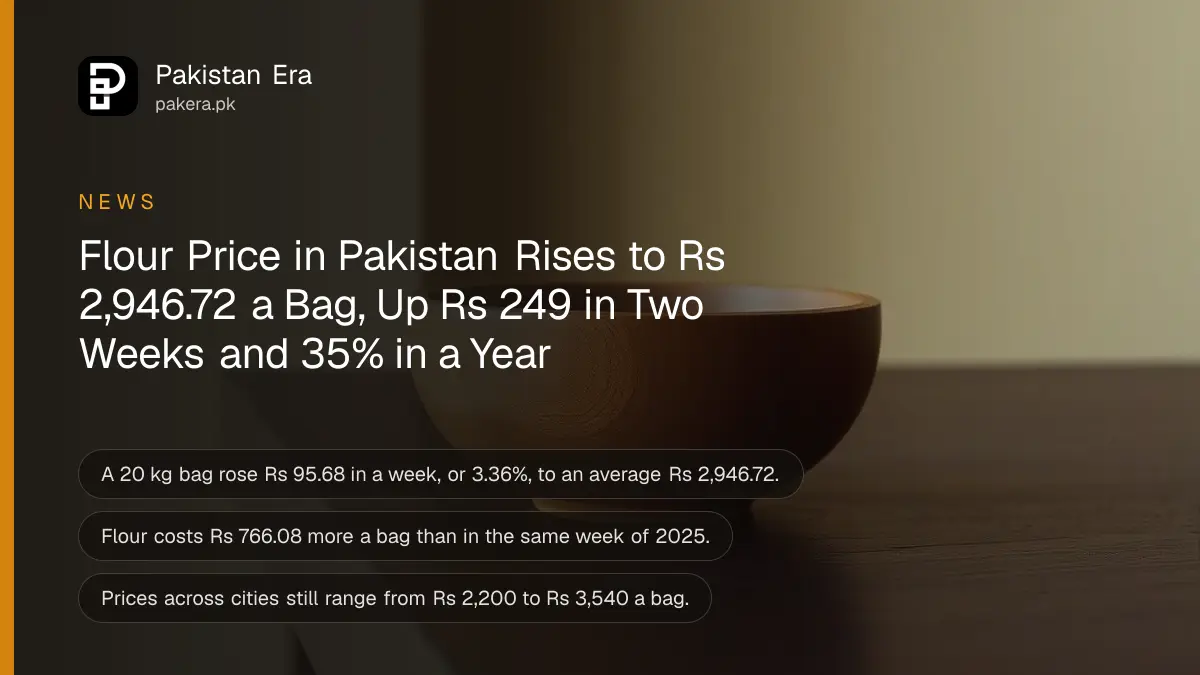
A 20 kg bag of wheat flour (atta) cost an average of Rs 2,946.72 across Pakistan in the week ended 15 October 2026. That is Rs 95.68 more than a week earlier, a rise of 3.36%, according to the Pakistan Bureau of Statistics (PBS). It is Rs 249.27 more than on 1 October.
This is the second big weekly rise in a row. The price is also 35.13% higher than a year ago. We read the PBS release for the week ended 15 October, published on 16 October 2026, and its executive summary. Every price below is a PBS average for the 17 cities it checks, unless we say it is our own arithmetic.
The national flour price rose Rs 95.68 a bag in one week
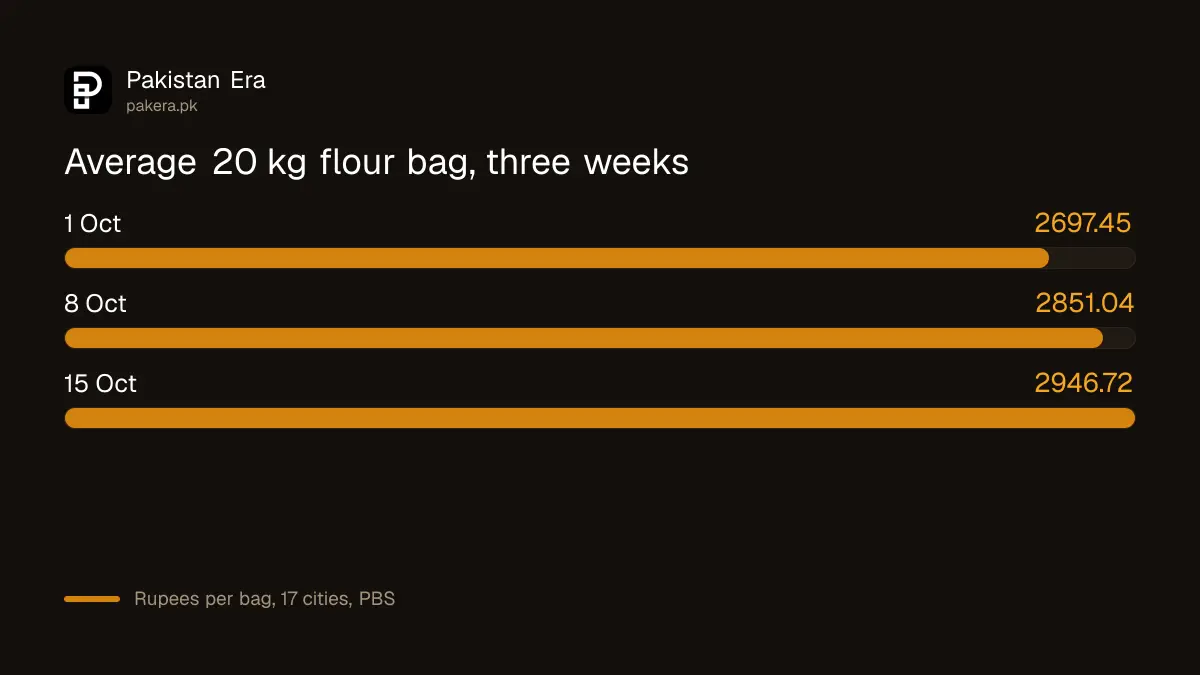
The 17 city average went from Rs 2,851.04 on 8 October to Rs 2,946.72 on 15 October. A week earlier it was Rs 2,697.45. In two weeks, a bag has become Rs 249.27, or 9.24%, dearer.
| Week | 20 kg flour bag, average | Change |
|---|---|---|
| Week ended 16 October 2025 | Rs 2,180.64 | A year ago |
| Week ended 1 October 2026 | Rs 2,697.45 | Two weeks ago |
| Week ended 8 October 2026 | Rs 2,851.04 | Up 5.69% |
| Week ended 15 October 2026 | Rs 2,946.72 | Up 3.36% |
In per kilo terms, the average is now about Rs 147.34, against about Rs 142.55 a week earlier. Those per kilo numbers are our own arithmetic. Last week's report, with every city, is in our piece on the flour price in Pakistan.
Flour costs Rs 766 more a bag than a year ago
A year ago, in the week ended 16 October 2025, the same bag averaged Rs 2,180.64. Today it is Rs 766.08 more, which is 35.13%. A family that buys two bags a month now pays about Rs 5,893 for them, against about Rs 4,361 a year ago. That is Rs 1,532 more every month, on our arithmetic.
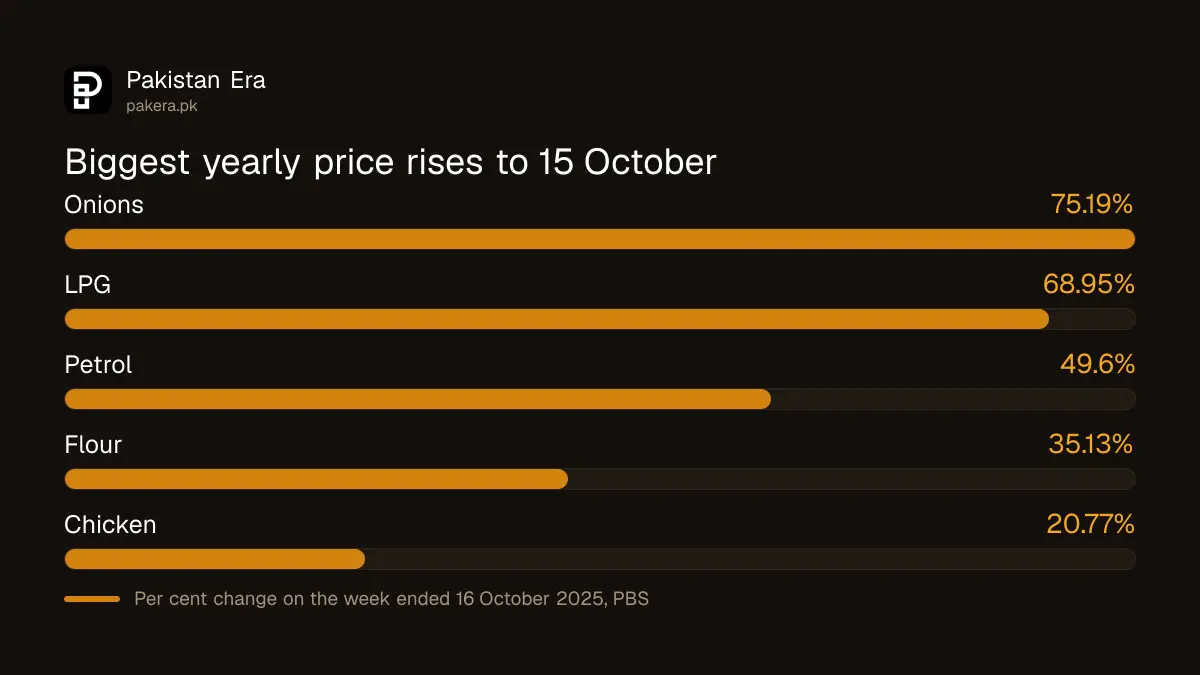
Flour is among the biggest yearly risers in the PBS list. Only onions (75.19%), LPG (68.95%), electricity for the lowest spending group (58.59%), petrol (49.60%) and diesel (43.98%) are up by more. Chicken is up 20.77%. The full list is in our report on weekly inflation for 15 October.
Flour added more to the lowest income group's inflation than any other item
For the lowest spending group, flour makes up 6.14% of the SPI basket. This week the rise in flour added 0.21 points to that group's index, the most of any item. For all groups together, flour added 0.13 points. PBS publishes these weights and impacts in its report.
That is why a small percentage move in flour matters so much to poorer households. The weekly SPI fell 0.04% only because tomatoes fell 23.05%. Without that fall, the index would have risen, with flour as one of the main reasons. The groups are explained in the guide to the SPI by income group.
Prices still differ by Rs 1,340 a bag between cities
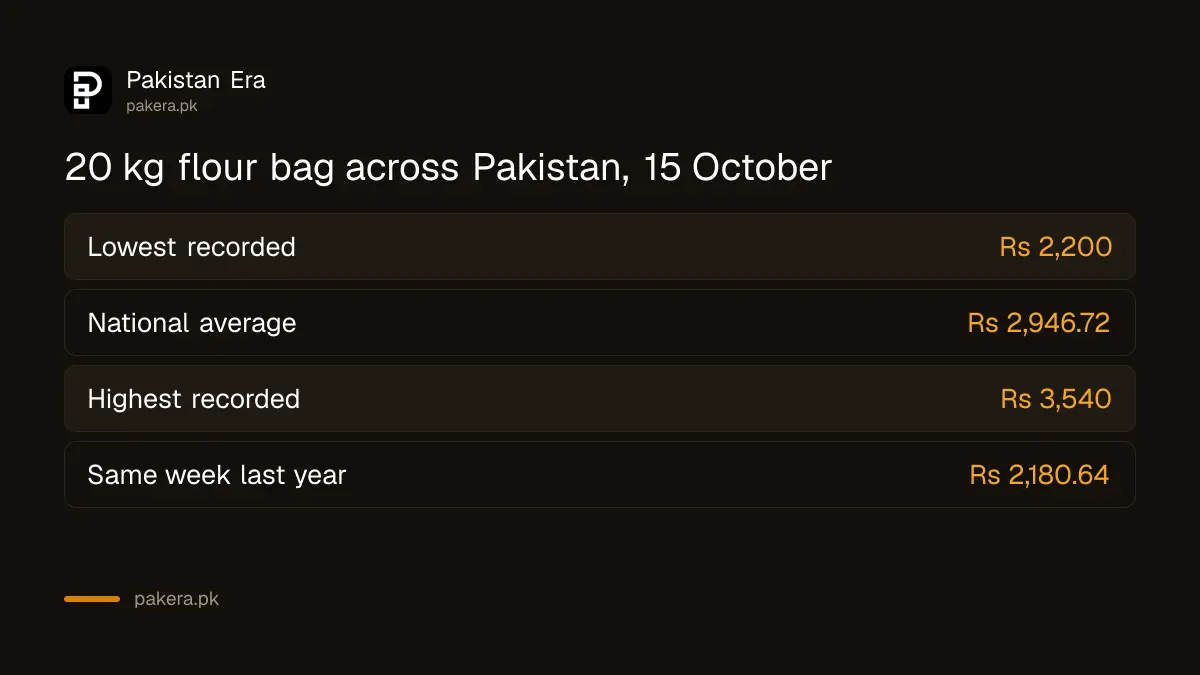
Across the 17 cities PBS checks, the lowest flour price was Rs 2,200 a bag and the highest Rs 3,540. The gap is Rs 1,340, or about 61%. The national average of Rs 2,946.72 sits between the two. Where you live changes the bill more than the week does.
The two cities we can compare directly with last week went different ways. The Islamabad average eased to Rs 3,319.89 from Rs 3,364.33. The Lahore average did not move, at Rs 2,218.86. PBS shows the city detail in its annex for each week, and we have not repeated every city here.
The Punjab subsidy does not show in the 15 October figure yet
On 10 October, Punjab approved a Rs 10 billion flour subsidy, as reported, so that mills get cheaper government wheat. We cover it in Punjab's Rs 10 billion flour subsidy. The PBS average for 15 October, five days later, is higher, not lower.
That does not prove the subsidy has failed. Prices can take time to change, and the PBS figure is a weekly average. PBS also gives no reason for the rise in flour. What it shows is the price in shops across 17 cities. To turn a wheat price into a flour price, use our guide to converting wheat per maund to flour per kg.
Follow these steps to check the flour price yourself:
- Open the Pakistan Bureau of Statistics website and find the weekly Sensitive Price Indicator page.
- Open the executive summary and look for "Wheat Flour Bag" in the price table.
- Read the price for this week, last week and the same week last year.
- Open the city annex to compare your own city with the national average.
Common questions about the flour price
What is the flour price in Pakistan today?
A 20 kg bag averaged Rs 2,946.72 in the week ended 15 October 2026, according to PBS. That is about Rs 147.34 a kilo, on our arithmetic.
How much did flour rise this week?
It rose Rs 95.68 a bag, or 3.36%, from Rs 2,851.04 in the week ended 8 October. Over two weeks it is up Rs 249.27.
How much dearer is flour than a year ago?
It is 35.13% dearer, or Rs 766.08 a bag. The same bag averaged Rs 2,180.64 in the week ended 16 October 2025.
Which city has the cheapest flour?
PBS shows a lowest recorded price of Rs 2,200 a bag in its 15 October tables. Lahore's average was Rs 2,218.86. Check the PBS city annex for your own city.
Why is flour getting dearer?
PBS does not say. It only records prices. We have not found an official statement that explains the rise in the weekly figures.
When does PBS publish the next price?
PBS has released each weekly SPI on the Friday after the week ends on Thursday. The next one covers the week ending 22 October 2026.
How we verified this
What we checked, where we read it, and what we could not confirm.
Last checked 17 October 2026. The flour prices, the changes, the national range and the weights come from the PBS release for the week ended 15 October 2026, published on 16 October 2026, which we opened on the PBS website. Earlier prices come from the PBS tables for 1 and 8 October as used in our earlier reports. The per kilo prices, the monthly costs for two bags and the two week change are our own arithmetic.
About the author

Tax, Bills and Technology Writer
Ali Akhtar is a young and curious voice here at Pakistan Era. He is currently pursuing his A-Levels and has a growing interest in Pakistan’s changing industrial landscape and educational trends. Ali likes to write in a way that helps him explain and explore the world around him. His writing reflects the perspective of the new generation navigating the evolving trends of Pakistan where technology, youth innovation, and shifting opportunities are reshaping the country’s future.