Global UGRAD Pakistan Has Ended: What Pakistani Undergraduates Can Apply for Instead
USEFP says the Global UGRAD exchange for Pakistan has ended and will not be offered again. See what is left for undergraduates and how to avoid fake forms.
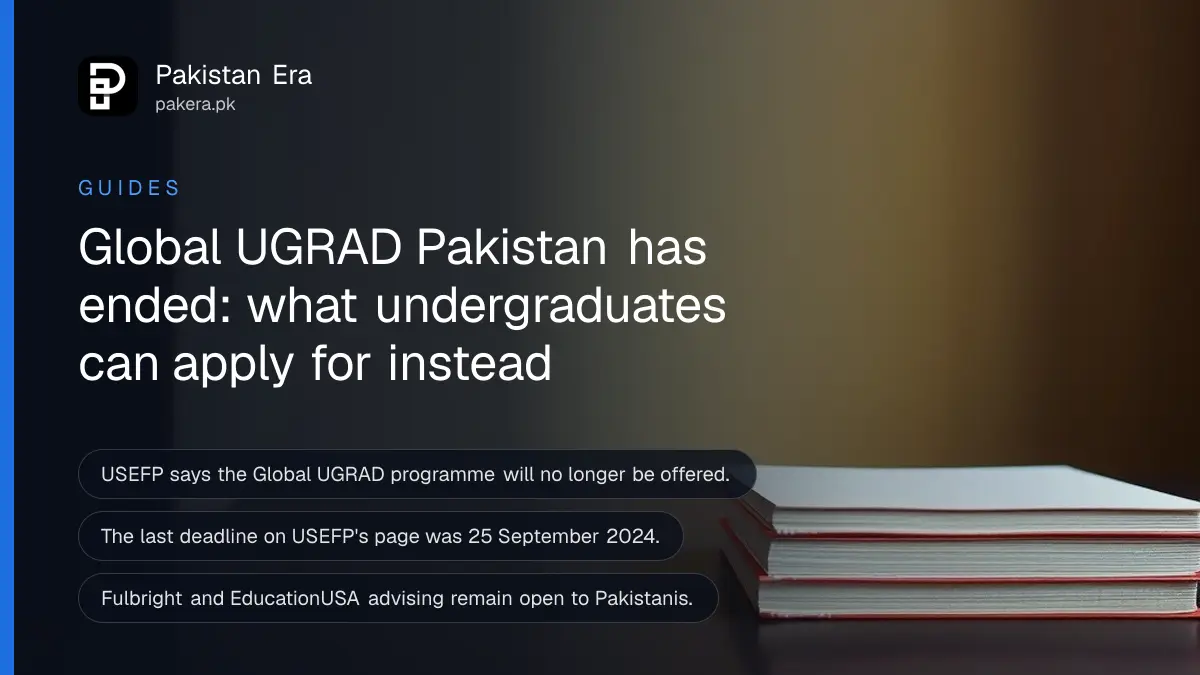
Short answer: The Global UGRAD exchange for Pakistani undergraduates has ended. USEFP, which ran it in Pakistan, says the U.S. Department of State told it the programme will no longer be offered. There is no 2026 or 2027 application. If you want to study in the U.S., apply for Fulbright if you are a graduate, or use EducationUSA advising for a direct admission.
Many websites still list Global UGRAD with a "last date". Those pages are out of date. We opened USEFP's own pages on 12 October 2026 and read the programme page and the notice it posted.
If you were counting on the one-semester exchange in your third year, this article tells you what is gone, what is still open and what to do in the next 30 days.
USEFP says Global UGRAD has come to an end
USEFP posted a notice titled "Global UGRAD-Pakistan Program Concludes" in April 2025. It says that after 15 years the programme has ended, and the U.S. Department of State informed USEFP that it will no longer be offered.
The notice was written for people who applied that year. USEFP said it understood the news would be disappointing and encouraged students to look at other exchange and scholarship opportunities.
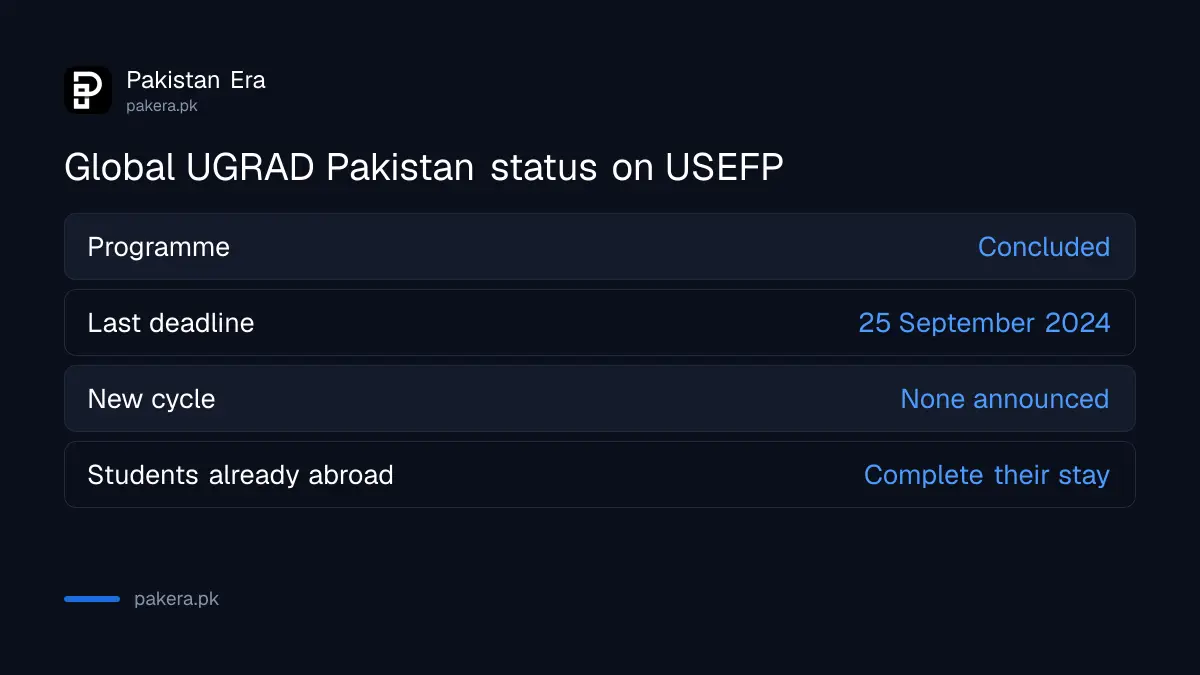
USEFP's programme page for Global UGRAD still shows its status as closed, with a last deadline of 25 September 2024. That is the last cycle that was run. No later date is given.
The students already in the U.S. were not affected
USEFP also answered rumours that followed the news. It said the 54 Pakistani students who were already in the United States on the programme would finish and return as planned, and would keep receiving their stipends and benefits.
It also said that other U.S. government exchange programmes remain open to Pakistanis, including Fulbright, and that claims Fulbright had ended were false. It added that the U.S. Department of State was reviewing exchange programmes worldwide and that it would update the public as it learned more.
Global UGRAD covered one semester, which is why the loss is felt
While it ran, the programme took students aged 18 to 24 who were in their second year of a bachelor's degree at a Pakistani university. It paid for one semester at a U.S. college and was not a degree.
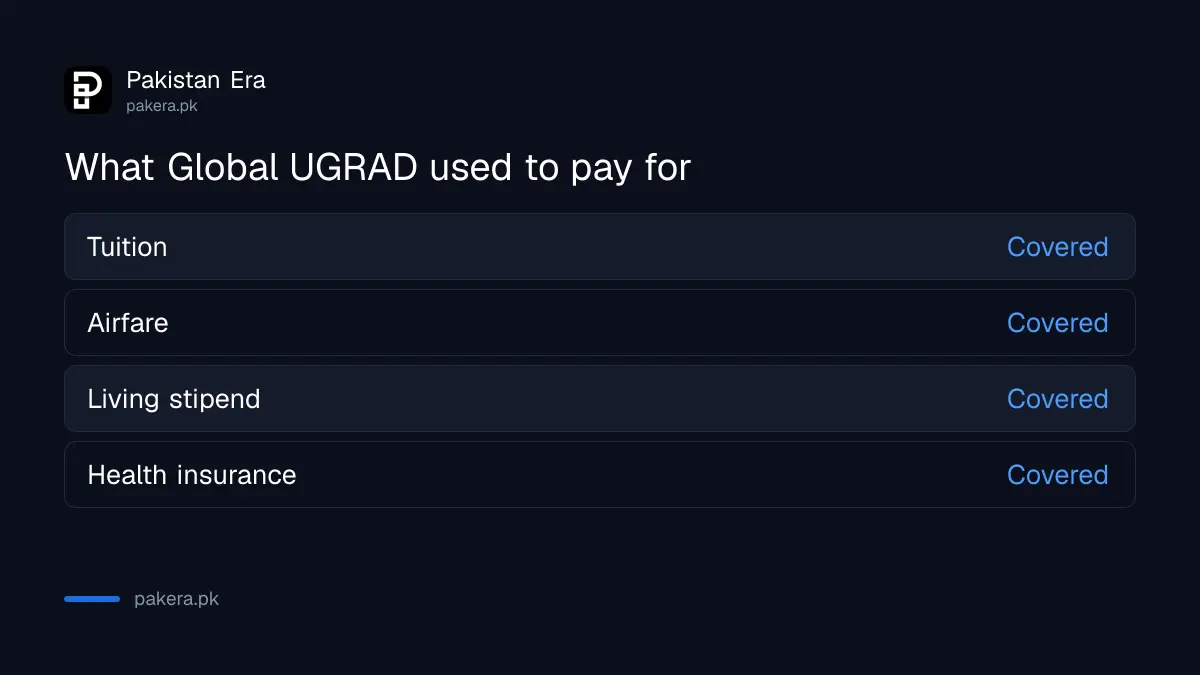
| Feature of Global UGRAD | What USEFP's page said |
|---|---|
| Who could apply | Pakistani undergraduates, aged 18 to 24, in the 14th year of education |
| Length | One semester, fall or spring |
| What it paid | Tuition, airfare, living stipend, health insurance |
| Status now | Closed, programme concluded |
There is no like-for-like replacement. Nothing else on USEFP's list is a one-semester exchange for second-year undergraduates. Be careful of any agent who says otherwise.
What an undergraduate or recent graduate can use instead
The options below are open to different people. Match your stage first.
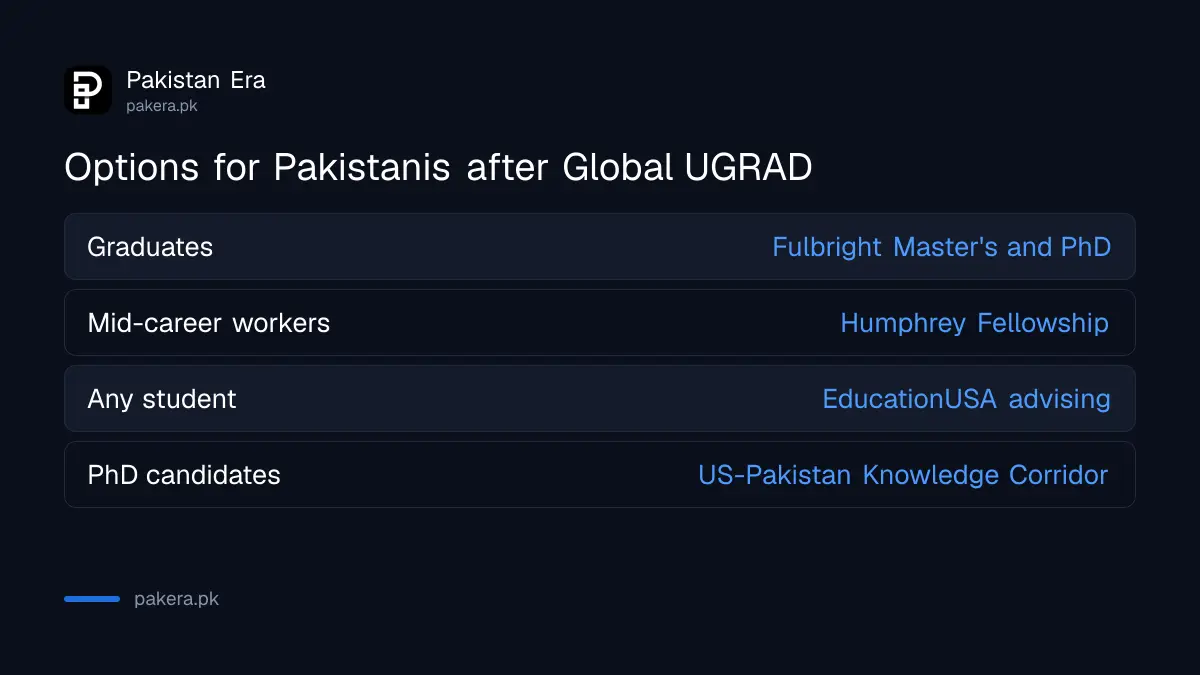
- Finish your bachelor's, then apply for a graduate award through the Fulbright scholarship applied for through USEFP.
- If you are a PhD candidate, look at the US-Pakistan Knowledge Corridor PhD.
- Apply directly to U.S. colleges and use USEFP's EducationUSA advisers, who give free advice on admissions.
- If you are a mid-career professional, read the Hubert H. Humphrey Fellowship page.
What to do in the next 30 days if you planned to apply
Do not drop the idea of studying in the U.S. Change the route. The exchange semester is gone, but the skills it asked for still count in other applications: good grades, a clear story and English you can use.
First, write down your year and your degree. A second-year student has time to finish the bachelor's and then apply for a graduate award. A final-year student should look at graduate awards this cycle. Second, talk to an EducationUSA adviser, because they know which U.S. colleges give aid to international students. Third, keep your transcripts and English test plans ready, so that you can move fast when a call opens.
How to avoid paying for a programme that does not exist
When a programme ends, sellers keep using its name. They sell "Global UGRAD forms", "priority slots" or "guaranteed selection". The programme no longer exists, so nothing can be sold under its name.
Before you pay anyone, open the official page. For a U.S. programme that is usefp.org. For a Pakistani nomination it is the HEC portal. The checklist for spotting a fake education agent is in the guide to checking a study-abroad agent.
Also check the date on any "apply now" post. A post that quotes a closing date from 2024 or earlier is old.
Common questions
Is Global UGRAD Pakistan coming back in 2027?
USEFP has not announced a return. It says the programme concluded and will no longer be offered. Check usefp.org for any new notice.
What was the last Global UGRAD deadline?
USEFP's page shows 25 September 2024 as the last deadline on record.
Is Fulbright also closed?
No. USEFP said in 2025 that Fulbright continues and that reports of its end were false. See its current calls on usefp.org.
Can I apply for Fulbright as an undergraduate?
The Fulbright Master's and PhD awards are for graduates. An undergraduate should finish the degree first or apply directly to a U.S. college.
Does USEFP charge a fee for Global UGRAD?
No fee is stated on its page, and the programme is not running. Treat any payment demand using the name as a scam.
Where can I get free advice on studying in the U.S.?
EducationUSA, run through USEFP, offers free advising on admissions, finance and visas.
How we verified this
What we checked, where we read it, and what we could not confirm.
We read USEFP's Global UGRAD page and its April 2025 latest-news notice on 12 October 2026. The USEFP home page also carries the headline "Global UGRAD-Pakistan Program Concludes". Policies can change, so check usefp.org before you act.
About the author

Global Affairs & Political Economy Writer
Muhammad Hatim is a book lover who started writing because he enjoys it. At Pakistan Era he writes about international relations, geopolitics and the global economy, with a particular interest in South Asia and the forces behind current events.