Pakistan Religious Tourism Visa: Sikh Pilgrim for 2 Weeks, Tabligh for 45 Days, Missionary for a Year
Pakistan religious tourism visa: Sikh pilgrim visa for a fortnight, Tabligh 45 days, missionary one year, the places covered, documents and what is unpublished.
Short answer: Foreign Sikhs who do not hold an Indian passport can get a Pakistan pilgrim visa for a fortnight to visit holy sites in Lahore, Nankana Sahib and Hasan Abdal. Tabligh visitors get 45 days. Missionaries get one year with two re-entries. DGIP lists these under religious tourism.
A Sikh family in Toronto plans a pilgrimage to Nankana Sahib. They ask the mission what they need. The answer depends on the passport they hold, and on which places they plan to visit.
We read the Directorate General of Immigration and Passports (DGIP) visa categories page on 13 October 2026. It shows a last modified date of 14 September 2026. DGIP now groups Tabligh, Missionary and Pilgrim (Sikh, Hindu and others) visas under one Religious Tourism category.
Religious tourism is one category with three parts
DGIP merged 18 visa types into 11. Religious Tourism has three parts: Tabligh, Missionary and Pilgrim, which covers Sikh, Hindu and other pilgrims. The Ministry of Interior is responsible for these visas, and it grants Indian nationals' cases through a separate wing.
So the first question is the passport. Foreign Sikh passport holders other than Indian passports apply through the Pakistan mission. Indian nationals follow a different procedure, which we do not cover here, because DGIP's categories page sends it to its own page.
The pilgrim visa lasts a fortnight for three places
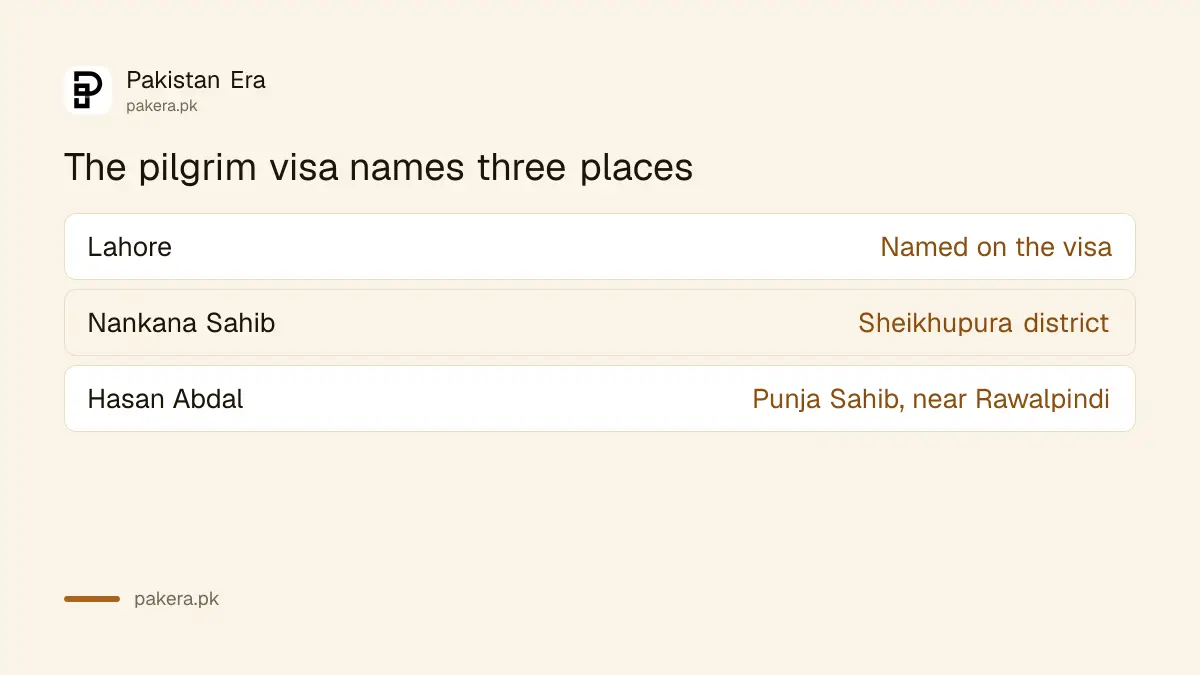
DGIP says Sikhs of foreign passport holders, other than Indian passports, are granted an entry visa by the missions for a fortnight. The places named are Lahore, Sheikhupura (Nankana Sahib) and Rawalpindi or Hasan Abdal (Punja Sahib).
The page also says foreign nationals of Indian origin can use visa on arrival for religious tourism. That is a separate line from the pilgrim visa, so ask the mission which route applies to you before you buy a ticket. The page prints no fee for the pilgrim visa.
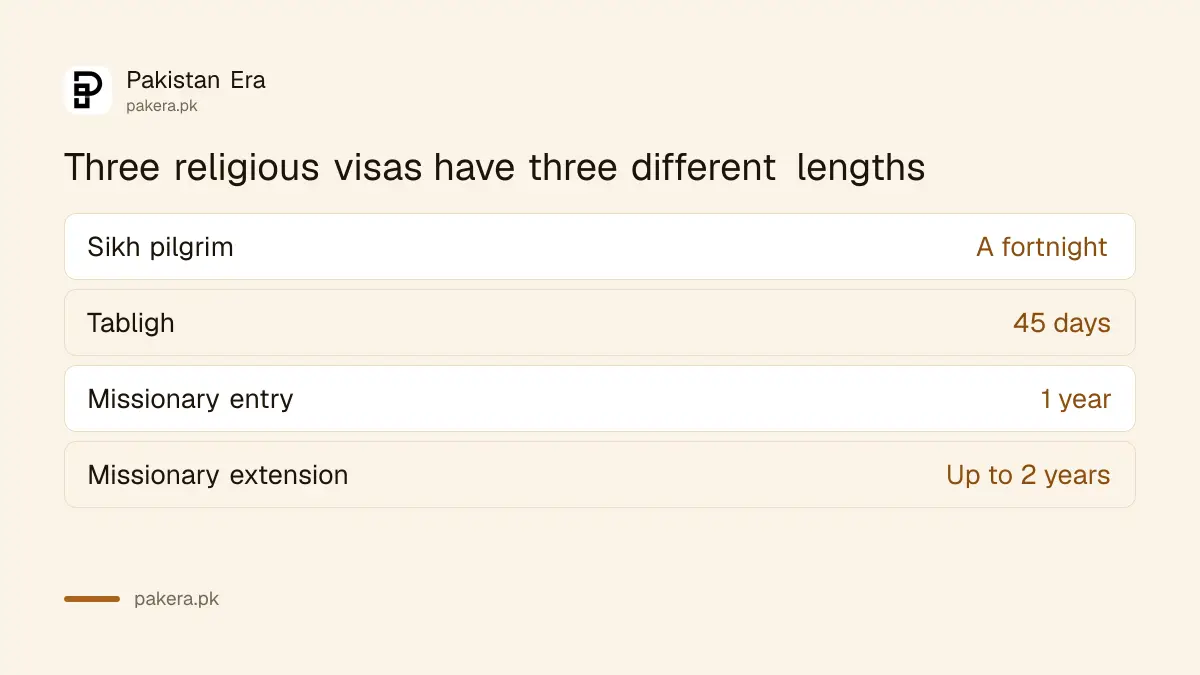
| Visa | Length | Entries | Approval |
|---|---|---|---|
| Sikh pilgrim (non-Indian passport) | A fortnight | As stated on the visa | Pakistan mission |
| Tabligh | 45 days | Not stated | Ministry of Interior |
| Missionary entry | 1 year | Two re-entries (table) or one (text) | Ministry of Interior |
| Missionary extension | 2 years | 2 re-entries a year | Regional Passport Office |
Tabligh visitors get 45 days
DGIP lists the Tabligh visa at 45 days, and it is among the entry visas that need the approval of the Ministry of Interior. The page does not print the documents, fee or number of entries for it.
Because the details are not printed, a group should write to the mission early. Ask for the document list in writing, and confirm whether an invitation from a host in Pakistan is required. Do not rely on a tour agent's word alone, since the policy is set by the Ministry of Interior.
Missionary visas need an organisation and a clean record
For Christian missionaries, DGIP says entry visas are not granted to foreigners who want to open new missions or strengthen existing ones engaged in proselytising. Applications go through the mission to the Ministry of Interior, which also takes the provincial government's views.
The documents listed include a completed form with two photographs, a letter from the missionary organisation taking responsibility for upkeep and return, a declaration to respect Pakistani law and stay out of internal politics, a 10 year biodata, degrees, and an invitation from the organisation in Pakistan. A visa extension is applied for one month before expiry at the nearest Regional Passport Office.
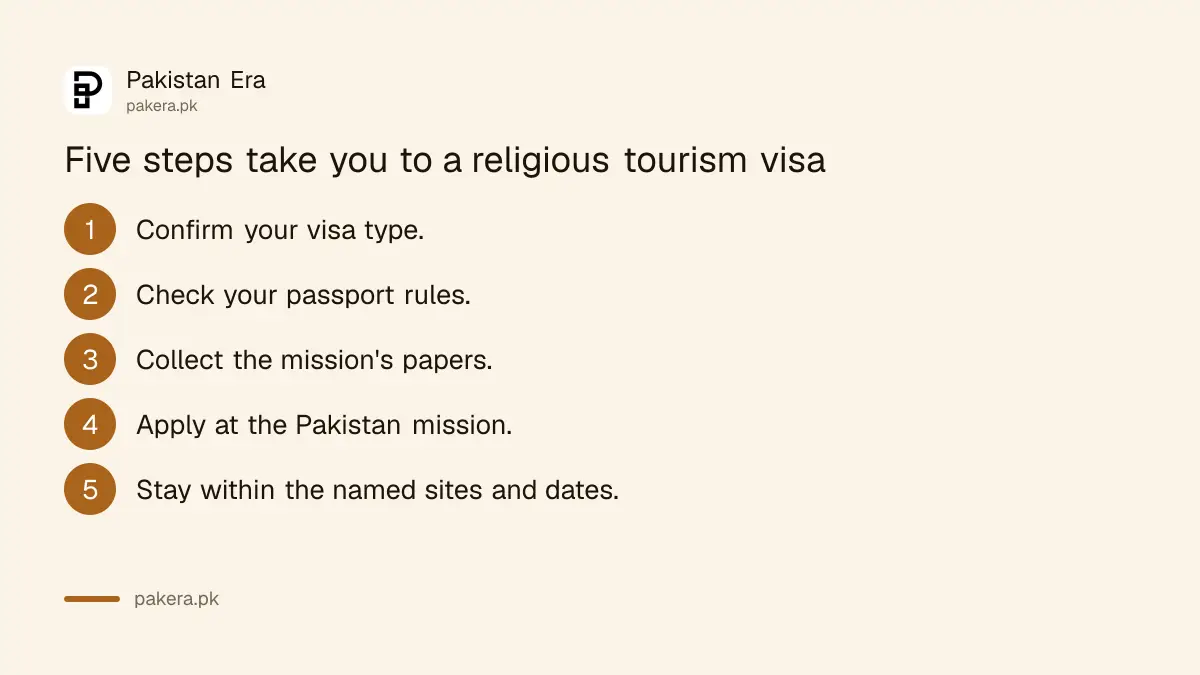
- Confirm your visa type: pilgrim, Tabligh or missionary.
- Check your passport. Indian passport holders follow a separate procedure.
- Collect the papers the mission asks for, and the host's invitation.
- Apply at the Pakistan mission and wait for the decision.
- Stay within the sites and dates named on the visa.
Stay legal once you arrive
Keep the visa dates and the named sites in mind. The pilgrim visa is short at a fortnight. The page does not say how the days are counted, so ask the mission, and plan your travel inside Pakistan so that you reach each site and leave before the visa ends.
A visitor who overstays pays the surcharge listed in the page on the overstay surcharge for foreigners. Pakistan-origin foreigners have lower rates, and they may qualify for the family visit visa instead.
Some visitors must register with the police after landing, and the steps are in how to register a foreigner with Islamabad Police. A group travelling for tourism rather than worship can use the tourist e-visa route.
Common questions
How long is the Sikh pilgrim visa?
A fortnight for foreign Sikh passport holders other than Indian passports, according to DGIP.
Which places does it cover?
Lahore, Nankana Sahib in Sheikhupura, and Hasan Abdal near Rawalpindi.
How long is the Tabligh visa?
45 days, with the approval of the Ministry of Interior.
Can a missionary stay longer?
The extension can reach two years with two re-entries a year, granted by the Regional Passport Office, if the papers are in order.
Is there a fee?
The DGIP categories page prints no fee for these visas. The fee page lists charges by nationality, and it was last modified in October 2023.
How we verified this
What we checked, where we read it, and what we could not confirm.
Last checked on 13 October 2026. We read the DGIP visa categories page. The page gives one re-entry for the missionary visa in one place and two in its table, and prints no fee or document list for the pilgrim and Tabligh visas. We did not apply for a visa or contact a mission.
About the author

Public Services and Education Journalist
Fajr Riaz is a journalist and content writer at Pakistan Era, based in Lahore. She covers the questions people meet in everyday life in Pakistan: how a public service works, what a change in the rules means, and where to find a reliable answer.