How to Read Pakistan's Federal Budget in Brief: Find Interest, Health and Education in 6 Steps
Read Pakistan's 2026-27 federal budget in ten minutes. Download the Finance Division's Budget in Brief and see which table shows interest, health and education.
Short answer: Open the Finance Division website, choose Federal Budget 2026-27 and download the file called "Budget in Brief". Read Table 1 for the whole budget on one page and Table 10 for what each spending line costs. It takes about ten minutes.
The Budget in Brief is the shortest official summary of the federal budget. The 2026-27 edition is dated 12 June 2026. We opened it on 13 October 2026 and read its first thirteen tables. This is how to find the numbers people ask about: interest, defence, pensions, subsidies, health and education.
Get the file from the Finance Division website
The file is public and free. It sits on the Finance Division site, not on a news page, so you can be sure the numbers are the government's own.
- Go to the Finance Division website, finance.gov.pk.
- Open "Federal Budget 2026-27" from the Budget menu.
- Click "Budget in Brief" for English, or the Urdu version beside it.
- Save the PDF. It is a large file, so use Wi-Fi if you can.
The same page also has the Finance Minister's speech, the Annual Budget Statement and the detailed demands for grants. Start with the Budget in Brief. The others are for people who need line-by-line detail.
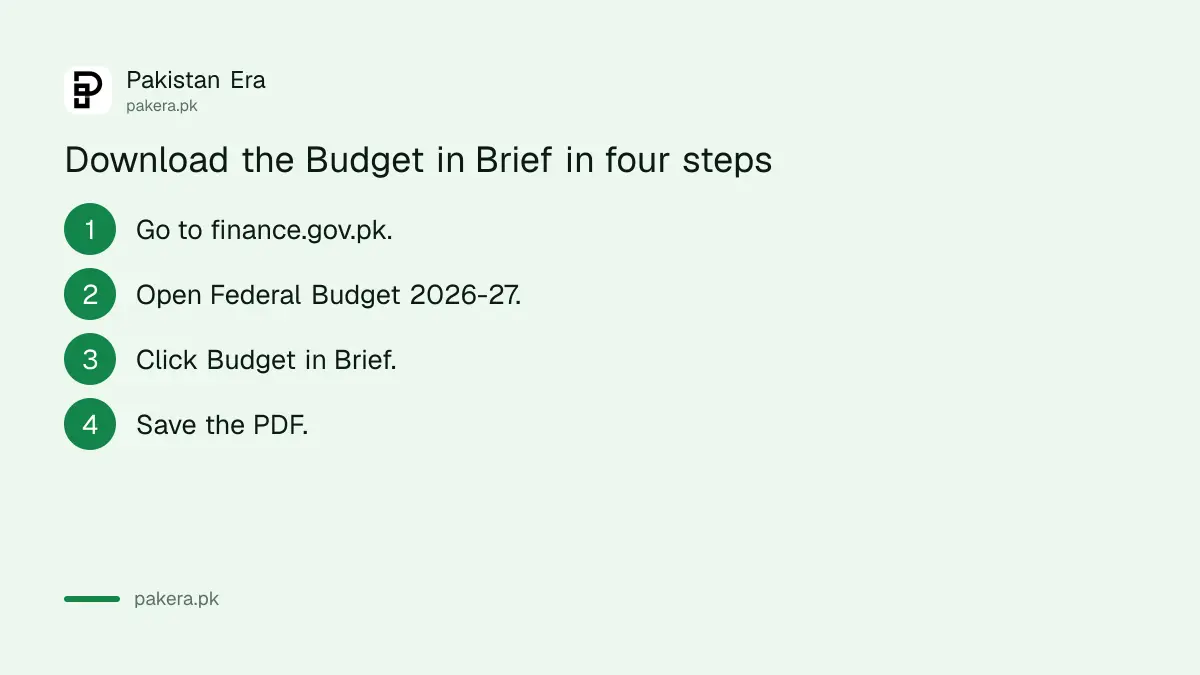
Table 1 shows the whole federal budget on one page
Table 1, "Budget 2026-27 at a Glance", puts resources on the left and spending on the right. Both total Rs 18,771 billion. Spending is split into current spending of Rs 17,495 billion and development of Rs 1,276 billion.
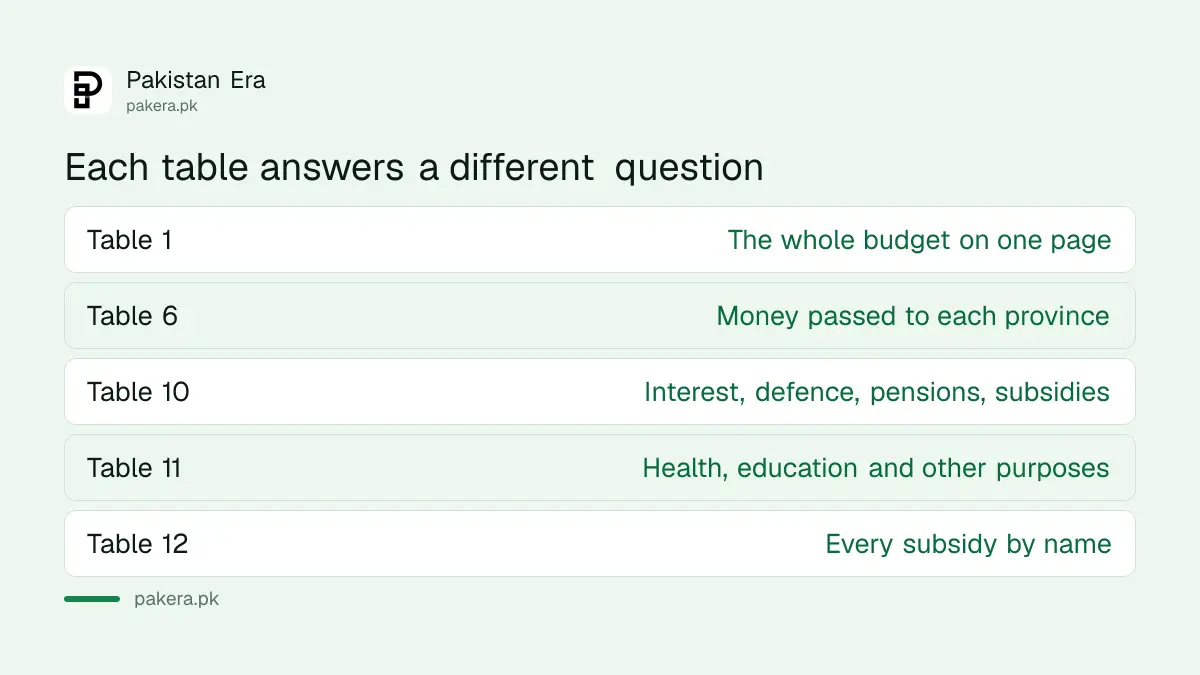
| Table | What it shows |
|---|---|
| Table 1 | The whole budget on one page |
| Table 2 | The federal deficit and how it is financed |
| Table 3 | 2025-26 budget, revised figures and 2026-27 side by side |
| Tables 4 and 5 | Tax and non-tax revenue |
| Table 6 | Money passed to each province |
| Table 10 | Current spending: interest, defence, pensions, subsidies |
| Table 11 | Spending by purpose, such as health and education |
| Table 12 | Every subsidy by name |
The units change from table to table. Tables 1 to 3 are in Rs billion. The detailed tables from Table 4 onward are in Rs million, so divide by 1,000 to compare.
Table 10 lists interest, defence, pensions and subsidies
Table 10, "Current Expenditures", gives the big lines. For 2026-27 it shows interest at Rs 8,054,000 million, defence at Rs 3,000,000 million and pensions at Rs 1,169,000 million. The 2026-27 figure is in the last column on the right.
Always check which column you are reading. There are three: the 2025-26 budget, the 2025-26 revised estimate and the 2026-27 budget. The revised column is a projection as of mid-May, not an audited result. The results by line are discussed in the 2026-27 budget breakdown.
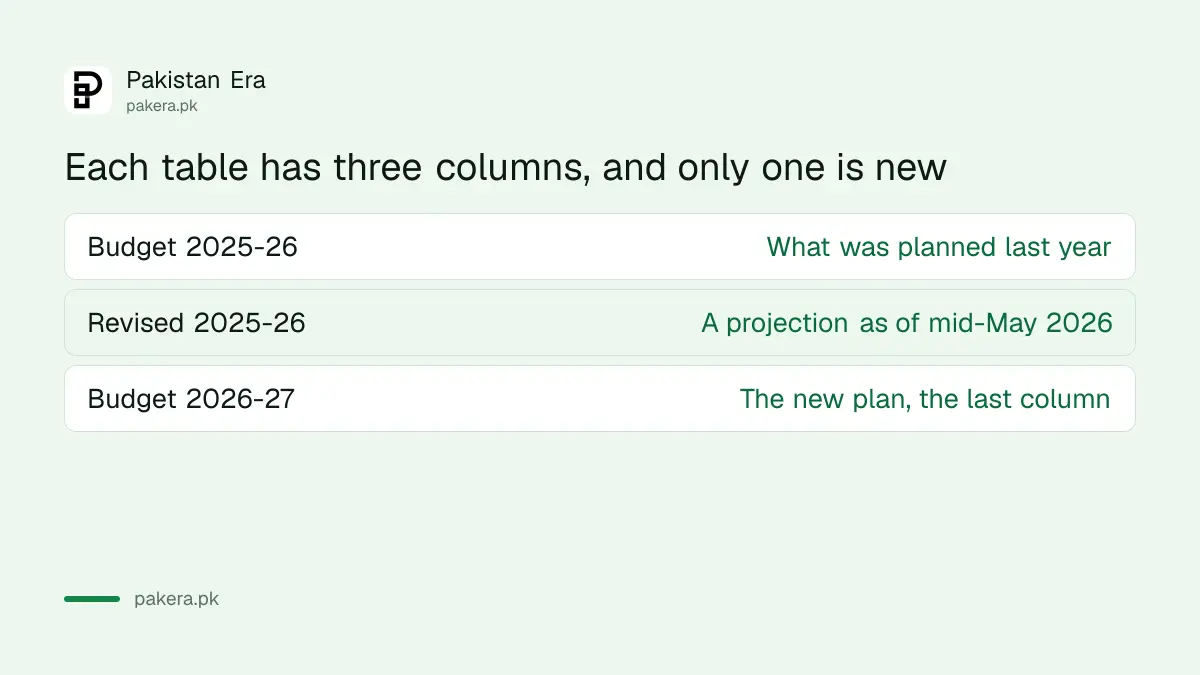
Table 11 shows federal health and education spending
Table 11 groups current spending by purpose. For 2026-27 it shows health at Rs 37,438 million and education at Rs 117,748 million. Together that is Rs 155.2 billion, about 0.9 percent of federal current spending.
These are federal figures only. Health and education are mainly provincial subjects, so most of the real spending sits in provincial budgets. The federal number shows the federal share, not the national total. We did not read the provincial budgets for this article.
Social protection is much larger, at Rs 857,007 million. For one change planned in how electricity subsidies reach poor households, see the plan to move electricity subsidies to BISP.
Use the demands for grants when you need one ministry
The Budget in Brief shows totals by purpose. If you need one ministry or division, use the detailed files on the same page. They are called Details of Demands for Grants and Appropriations, in four volumes, three for current spending and one for development. They are long, so search the PDF for the ministry name.
The Urdu version of the Budget in Brief is on the same page. Use it when you want to share the numbers with someone who reads Urdu more easily.
Check that you have read the right year
Mistakes happen when people copy a number from the wrong column. A quick check helps.
- Read the column heading on the same page as your number.
- Add up the lines. Table 10's seven lines must total Rs 17,495,417 million.
- Compare with Table 1. Current spending is Rs 17,495 billion there.
- If the two totals match, you have the right column.
The actual results for the year just ended are in a different file, the fiscal operations table. Its findings are in the 2025-26 fiscal deficit report.
Common questions
Where can I download the Pakistan federal budget?
From the Finance Division website, finance.gov.pk, under Federal Budget 2026-27. The Budget in Brief is the shortest file.
Is the Budget in Brief in Urdu?
Yes. The Finance Division page lists an Urdu version beside the English one.
Which table shows how much goes to interest?
Table 10 shows mark-up payments, and Table 1 also lists interest payments on the spending side.
Does the Budget in Brief include provincial budgets?
No. It is the federal budget. It does show how much money passes to the provinces in Table 6.
Are the numbers final?
They are the budget as presented on 12 June 2026. Parliament can change them, and we did not check the Finance Act.
Why are some tables in Rs million and others in Rs billion?
The summary tables use Rs billion and the detailed ones use Rs million. Read the unit printed above each table.
How we verified this
What we checked, where we read it, and what we could not confirm.
Last checked on 13 October 2026, Pakistan time. We opened the Finance Division's Federal Budget 2026-27 page and read Tables 1 to 13 of the Budget in Brief. We did not read the Annual Budget Statement or the demands for grants. Table numbers and units are as printed in the document.
About the author

Global Affairs & Political Economy Writer
Muhammad Hatim is a book lover who started writing because he enjoys it. At Pakistan Era he writes about international relations, geopolitics and the global economy, with a particular interest in South Asia and the forces behind current events.