RLNG Price for October 2026 in Pakistan: OGRA Sets $15.94 for SNGPL and $14.53 for SSGC, Up About 14%
OGRA set October 2026 RLNG at $15.9357 for SNGPL and $14.5339 for SSGC, up about 14% on September and backdated to 1 October. See every rate and the reason.
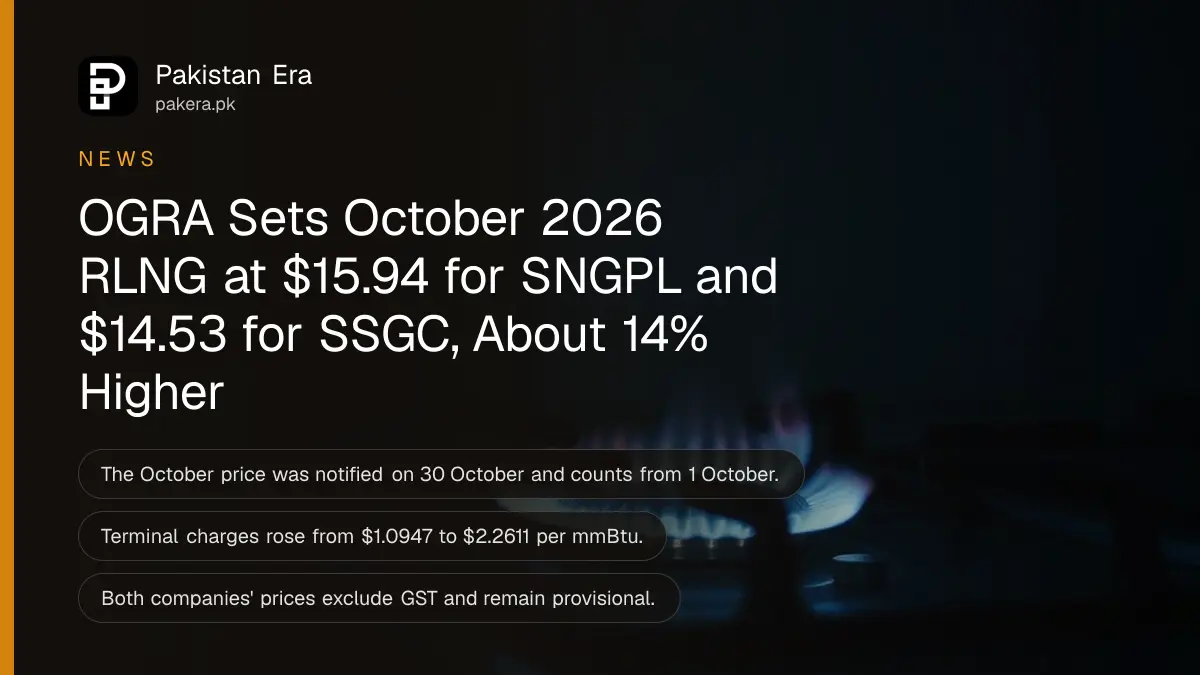
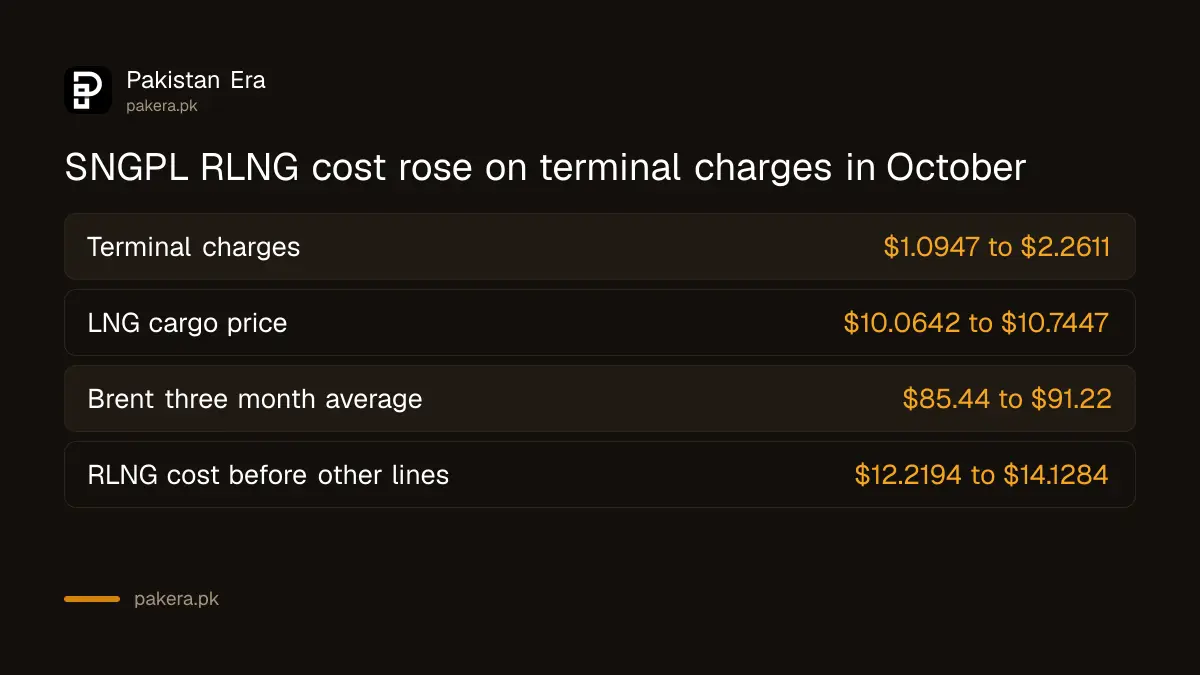
OGRA has set the October 2026 RLNG price at $15.9357 per mmBtu for SNGPL and $14.5339 for SSGC at the transmission level, up about 14 and 15 per cent on September. At the distribution level, which prices gas delivered through the local network, SNGPL's rate is $17.3259 and SSGC's is $16.3959. OGRA signed the notification on 30 October 2026, but it counts from 1 October, so the whole month is billed at the new rate.
RLNG is re-gasified liquefied natural gas: imported gas that arrives as a chilled liquid, is turned back into gas at a terminal, and is sent into the pipelines. Its price moves every month. New domestic RLNG connections, CNG stations, factories and power plants that run on RLNG all feel it. We read OGRA's notification and both annexes on its RLNG Notified Prices page on 31 October 2026. The figures below are OGRA's, and the comparisons are our arithmetic.
OGRA's October RLNG price is $15.9357 for SNGPL and $14.5339 for SSGC
OGRA, the Oil and Gas Regulatory Authority, issued a provisional weighted average sale price for both gas companies under Section 43B of its 2002 Ordinance. SNGPL's transmission price is $15.9357 per mmBtu and SSGC's is $14.5339, both without sales tax.
The notification is dated 30 October 2026 and is stamped "issued" the same day. It says the prices are effective from 1 October 2026. That makes it a backdated price: by the time it was published, October was almost over. So anyone paying for RLNG in October will see the new rate applied to the whole month.
| Gas company and level | September 2026 | October 2026 | Change |
|---|---|---|---|
| SNGPL, transmission | $13.9927 | $15.9357 | +$1.9430 (13.9%) |
| SNGPL, distribution | $15.1963 | $17.3259 | +$2.1296 (14.0%) |
| SSGC, transmission | $12.6112 | $14.5339 | +$1.9227 (15.2%) |
| SSGC, distribution | $14.2233 | $16.3959 | +$2.1726 (15.3%) |
All prices are in US dollars per mmBtu (one million British thermal units) and exclude GST. The September figures come from OGRA's notification of 24 September 2026, which we also re-read on 31 October.
Terminal charges doubled and the cargo price rose
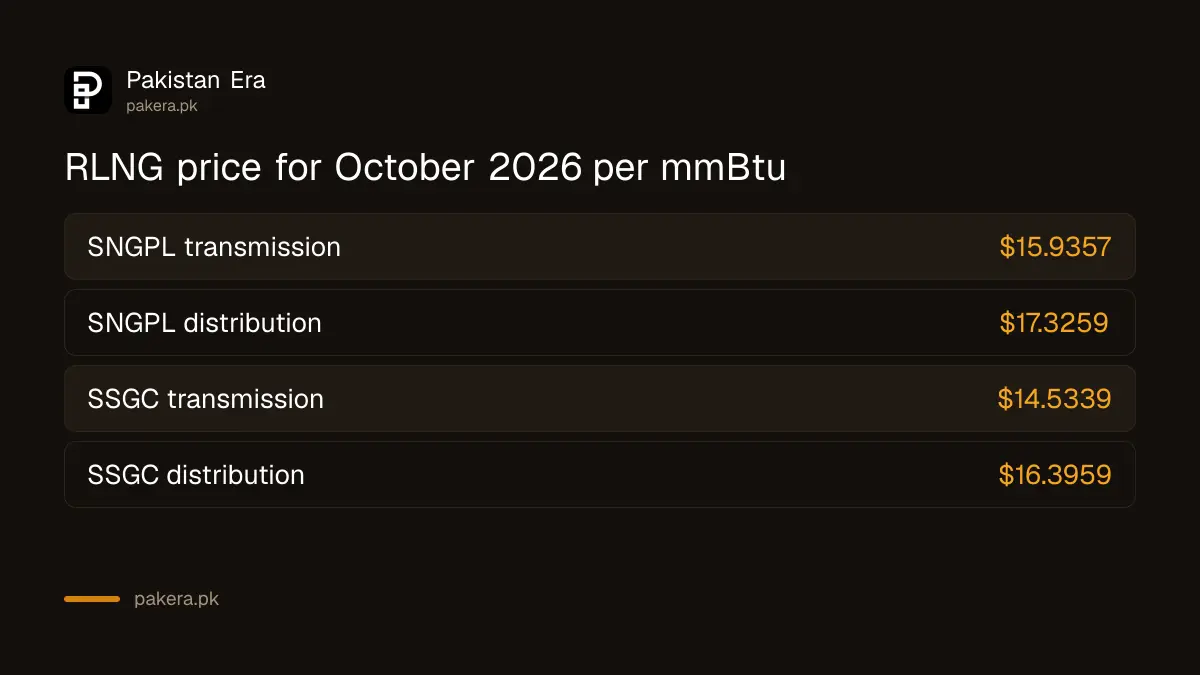
Two lines explain most of the rise. Terminal charges went from $1.0947 to $2.2611 per mmBtu, and the delivered LNG price rose from $10.0642 to $10.7447. Together they add $1.85 of the $1.91 jump in RLNG cost before other charges.
The delivered price, called DES in the annex, follows Brent crude. OGRA's sheet uses a three month Brent average of $91.2214 a barrel for October, against $85.4441 in September. Both months used two cargoes from PSO, a total of 6,297,000 mmBtu, priced at 13.37 and 10.20 per cent of that Brent average.
The terminal charge is spread over the gas that passes through the terminal. With only two cargoes in each month, a fixed terminal bill weighs heavily on every unit. OGRA's annex does not explain why the per unit charge doubled, so we do not guess at a reason.
| Cost line, SNGPL (per mmBtu) | September | October |
|---|---|---|
| LNG price (DES) | $10.0642 | $10.7447 |
| Port charges | $0.0384 | $0.0306 |
| PSO import costs | $0.7705 | $0.8234 |
| PSO margin (2.5%) | $0.2516 | $0.2686 |
| Terminal charges | $1.0947 | $2.2611 |
| RLNG cost | $12.2194 | $14.1284 |
Distribution prices are higher because of losses on the local network
The distribution price adds the gas lost in the city network. OGRA's annex takes SNGPL's distribution loss at 8.95 per cent and SSGC's at 12.09 per cent, against 0.2 and 0.66 per cent on transmission. That gap is why the distribution rate is about $1.39 higher for SNGPL and $1.86 higher for SSGC.
For SNGPL the annex shows total losses, including retainage and gas internally consumed, of 10.90 per cent at distribution level. For SSGC the figure is 12.70 per cent. Losses are a cost the buyer pays, which is why gas taken straight from the transmission line costs less.
SNGPL's price also carries $0.5744 per mmBtu for RLNG diverted to the fertiliser sector, under an ECC decision of 2024. SSGC's does not. That line alone explains part of the gap between the two companies.
Who pays the October RLNG rate
The rate applies to gas sold as RLNG by the two Sui companies. That covers new domestic gas connections given on RLNG tariff since the ban on ordinary connections was relaxed, plus CNG stations, industry and power plants that buy RLNG.
- Check whether your connection or contract is on RLNG tariff. A home connection taken under the RLNG scheme says so on its contract.
- Note that OGRA's figure is in dollars and excludes GST. The rupee amount on a bill depends on the exchange rate and the company's own billing.
- Expect the October bill to use the new rate for the full month, because the notification is backdated to 1 October.
- Keep in mind the price is provisional. OGRA's notes say retainage is taken provisionally and can be adjusted to the actual figure later.
The terms that come with a home RLNG connection, including the security deposit, are set out in SNGPL's RLNG gas contract. In Sindh and Balochistan, the route is an SSGC RLNG domestic connection. Ordinary domestic gas on the slab tariff is a separate price; the sui gas slab rates for winter are not changed by this notification.
October breaks a run of falls since July
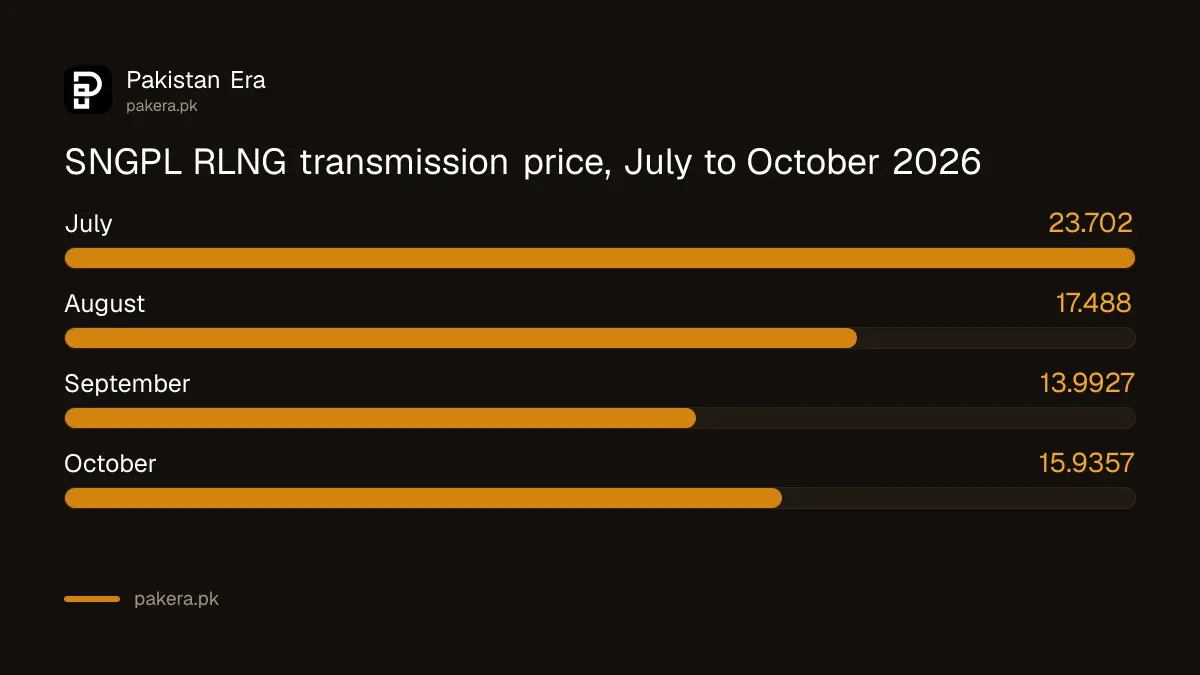
The SNGPL transmission price fell from $23.7020 in July to $17.4880 in August and $13.9927 in September. October is the first rise in three months, but it is still about a third below July.
Against January 2026, when OGRA set SNGPL's transmission price at $10.4136, October is about 53 per cent higher. January used 12 cargoes; October used two. Fewer cargoes mean fixed costs such as terminal charges are spread thinner.
The September figures and how OGRA builds the price are covered in the September 2026 RLNG price explainer. For how the gas companies decide who gets gas first in a cold month, see the winter gas priority order.
Common questions
What is the RLNG price for October 2026 in Pakistan?
OGRA set it at $15.9357 per mmBtu for SNGPL and $14.5339 for SSGC at transmission level. Distribution prices are $17.3259 and $16.3959. All exclude GST.
When was the October RLNG price notified?
OGRA's notification is dated 30 October 2026. It takes effect from 1 October 2026.
How much did RLNG go up from September?
SNGPL's transmission price rose $1.9430, about 13.9 per cent. SSGC's rose $1.9227, about 15.2 per cent. These are our calculations from OGRA's two notifications.
Does this change my normal sui gas bill?
No. Ordinary domestic gas on the slab tariff has its own notified prices. This notification covers gas sold at RLNG rates.
Is the October price final?
No. OGRA calls it provisional. Its notes say retainage and the cost of supply are taken provisionally and can be adjusted.
Why is SNGPL's price higher than SSGC's?
SNGPL's sheet includes $0.5744 for RLNG diverted to fertiliser plants and a higher cost of supply line. The two companies also have different loss rates.
How we verified this
What we checked, where we read it, and what we could not confirm.
We read OGRA's RLNG Notified Prices page and the October 2026 determination dated 30 October 2026, with its office memorandum and Annexes A and B, on 31 October 2026. The PDF is a scanned image, so we read the figures by eye and checked totals against the lines above them. We also re-read the September 2026 determination dated 24 September 2026 for the comparison. The July and August SNGPL figures come from OGRA's July and August determinations. Percentages and differences are our arithmetic. We could not verify the rupee amount any consumer will pay, because that depends on the exchange rate and each company's billing, and OGRA's annex does not give a reason for the higher terminal charge.
About the author

Global Affairs & Political Economy Writer
Muhammad Hatim is a book lover who started writing because he enjoys it. At Pakistan Era he writes about international relations, geopolitics and the global economy, with a particular interest in South Asia and the forces behind current events.