SBP Governor Tells Foreign Investors Reserves Are $21.5 Billion and Pakistan Will Grow 3.5 to 4.5% in FY27
SBP's governor told JP Morgan, Citibank and other investors on 17 October 2026 that reserves hit $21.5 billion and FY27 growth is 3.5 to 4.5%. See what changed.
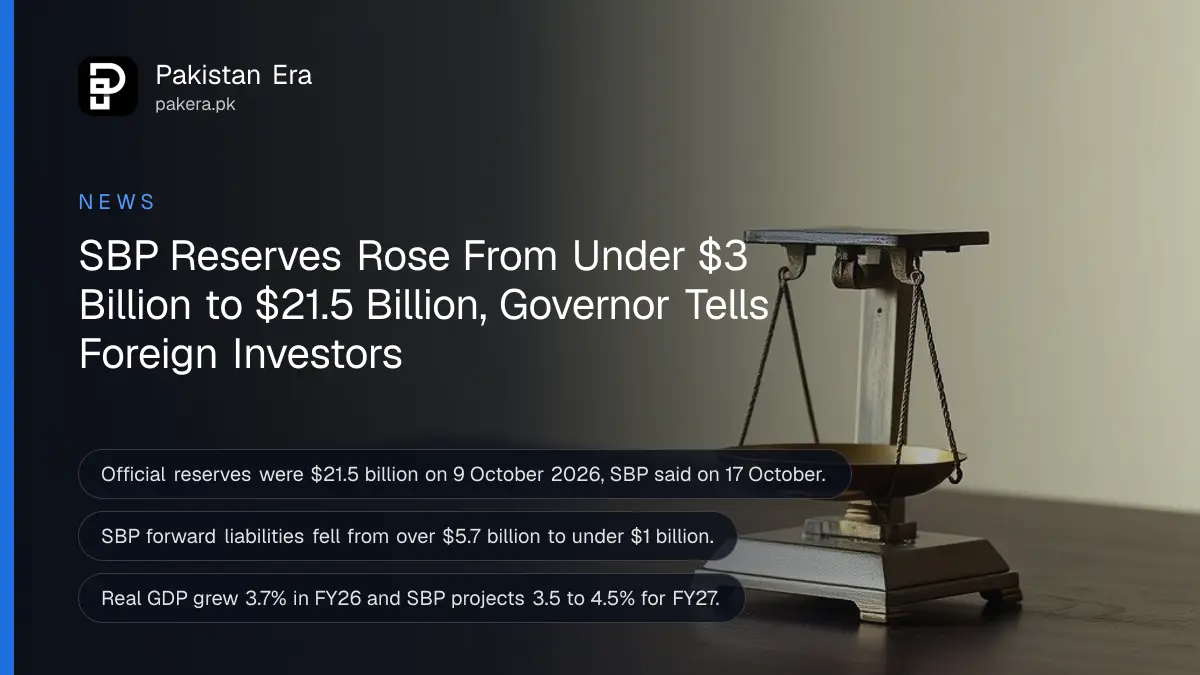
Short answer: The State Bank of Pakistan (SBP) said on 17 October 2026 that its official foreign exchange reserves stood at $21.5 billion on 9 October, up from under $3 billion in February 2023, and that it expects real GDP growth of 3.5 to 4.5 per cent in FY27. Governor Jameel Ahmad gave the figures to foreign investors in Bangkok, and SBP published them in a press release the same day.
We read the SBP press release, numbered ECD/M&PRD/PR/01/2026-77, on 17 October 2026. It records a week of meetings, from 12 to 17 October, on the sidelines of the IMF and World Bank Annual Meetings. The numbers in it matter to anyone watching the rupee, the policy rate decision due on 26 October, or the price of an imported car or phone.
SBP's governor met nine global banks and the rating agencies in Bangkok
The press release names the firms whose senior executives organised and attended the meetings: JP Morgan, Citibank, Jefferies, Deutsche Bank, Barclays, Bank of America, MSCI, Standard Chartered and Mitsubishi UFJ Financial Group. The governor also met bilateral and multilateral partners, other central banks and the global credit rating agencies.
These are the institutions that decide whether Pakistan can sell bonds abroad and at what price. Finance Minister Muhammad Aurangzeb was in the same city for the same week, and his own round of meetings is in our report on the finance minister's Bangkok meetings. The governor's pitch was narrower: reserves, inflation, growth and the current account.
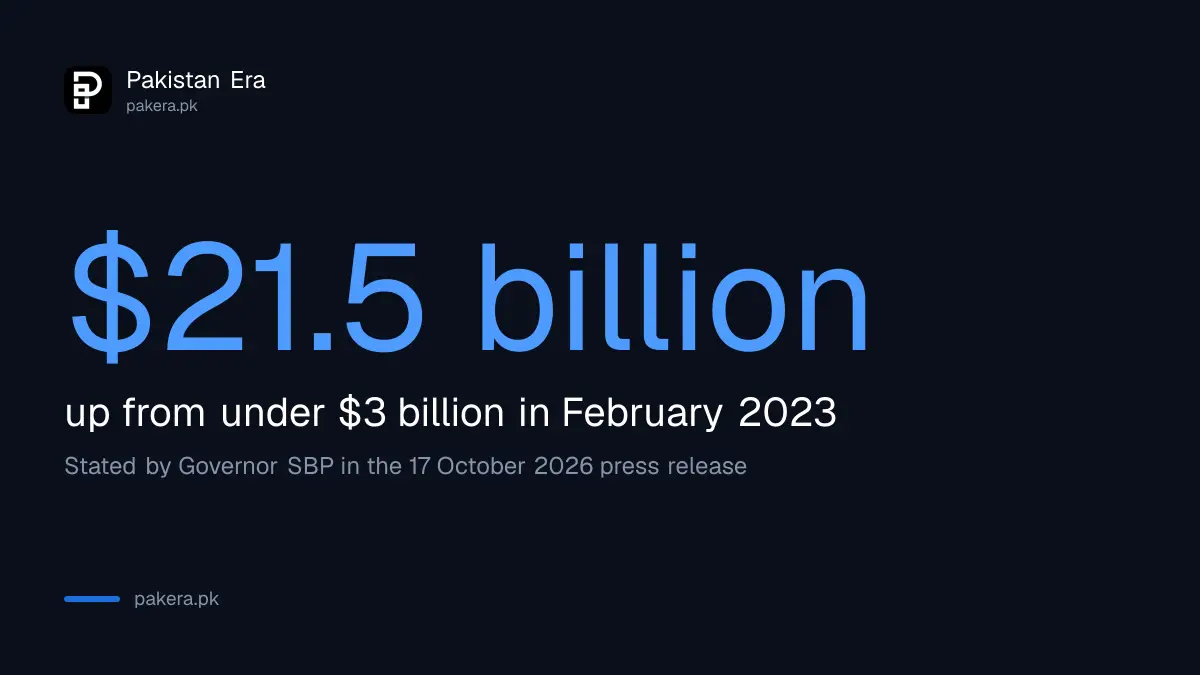
Reserves rose from under $3 billion to $21.5 billion in three and a half years
SBP's official reserves were below $3 billion in February 2023 and reached $21.5 billion by 9 October 2026, the governor said. SBP's forward liabilities, money it owes banks under swap and forward deals, fell from over $5.7 billion to under $1 billion over the same period.
The press release is clear about where the dollars came from. It says the improvement was "largely driven by SBP's FX purchases", and that the external debt stock rose only marginally over the last three years. In other words, SBP bought dollars in the interbank market rather than borrowing them. That is the same story told by the $8.1 billion of net dollar purchases in FY26.
Two things made the purchases possible, according to SBP: an almost balanced current account in FY26, and regulatory reforms for exchange companies that pushed more remittances through banks. The $21.5 billion figure matches the SBP weekly reserves sheet for the week to 9 October, which showed $21.45 billion held by SBP.
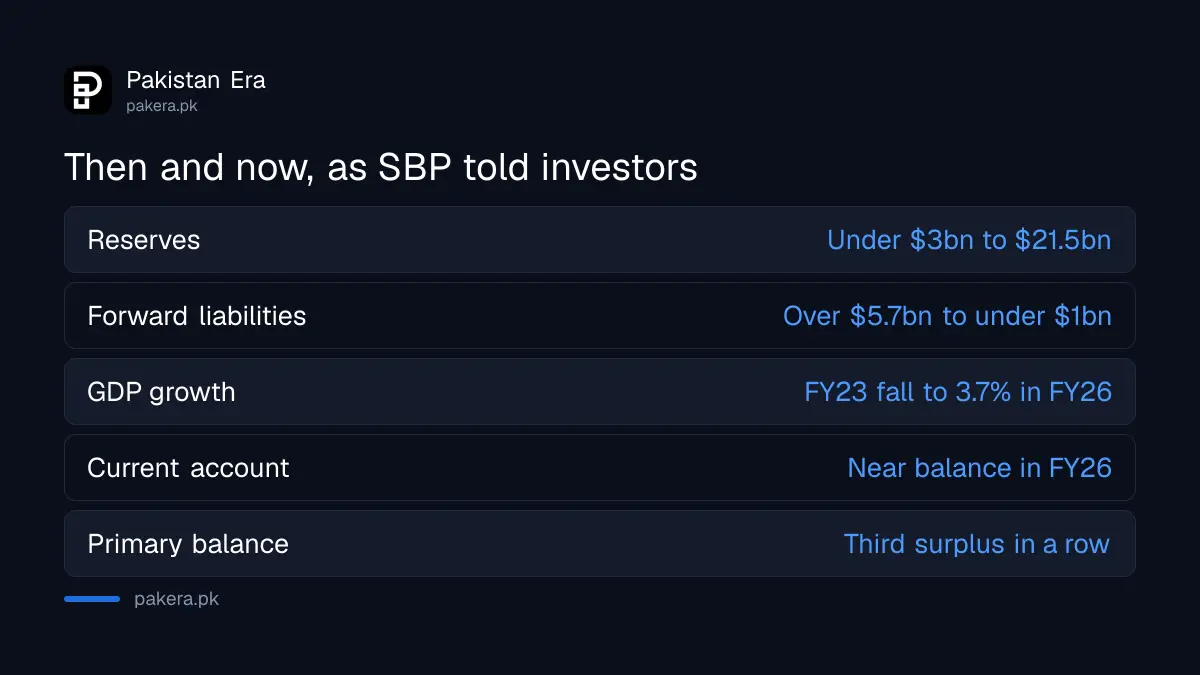
| Measure | Then | Now, per SBP on 17 October 2026 |
|---|---|---|
| SBP official reserves | Under $3 billion, February 2023 | $21.5 billion, 9 October 2026 |
| SBP forward liabilities | Over $5.7 billion | Under $1.0 billion |
| Real GDP growth | Contraction in FY23 | 3.7 per cent in FY26, 3.5 to 4.5 per cent projected for FY27 |
| Current account | Deficit years | Almost balanced in FY26, deficit of 0 to 1 per cent of GDP projected for FY27 |
| Primary fiscal balance | Deficit | Third consecutive annual surplus in FY26 |
Growth is put at 3.5 to 4.5 per cent for FY27 and the current account deficit at 0 to 1 per cent
Real GDP grew 3.7 per cent in FY26 after contracting in FY23, and SBP projects 3.5 to 4.5 per cent for FY27. The current account deficit is projected to stay within 0 to 1 per cent of GDP, which SBP says will let its dollar purchases continue.
The inflation line is worth reading carefully. The release says inflation "declined sharply from elevated levels in FY23 to almost within the target range in FY26, despite the significant oil price shock". It does not give a number for FY27. The last monetary policy statement, when SBP held the policy rate at 11.5 per cent on 14 September, is still the latest official inflation outlook.
On the fiscal side, the primary balance, which is revenue minus spending before interest, posted a third straight annual surplus in FY26, and the public debt to GDP ratio is on a downward path, the governor said.
A staff level agreement with the IMF has been reached for the EFF and RSF reviews
The governor told investors that a Staff Level Agreement has been reached with the IMF for the reviews of the Extended Fund Facility and the Resilience and Sustainability Facility. A staff level agreement is the step before the IMF board approves a review and releases money. The board date is not in the release.
He linked the reform record to three results: better investor confidence, upgrades in Pakistan's sovereign credit ratings, and access to global capital markets "despite a challenging global environment". The rating moves are listed in our page on Pakistan's credit ratings in 2026.
He also addressed the current geopolitical situation directly. The release says the ongoing developments "pose challenges", but that the economy is "in a significantly better position to withstand this shock than it was during previous periods of external stress". That is a guarded line, and it is the only place the release mentions risk.
What the numbers mean for the rupee, the rate decision and your imports
Higher reserves and continued dollar buying point to a steady rupee rather than a stronger one, because SBP is absorbing inflows instead of letting the rate fall. The rate decision on 26 October will weigh this against inflation, and nothing in the release pre-empts it.
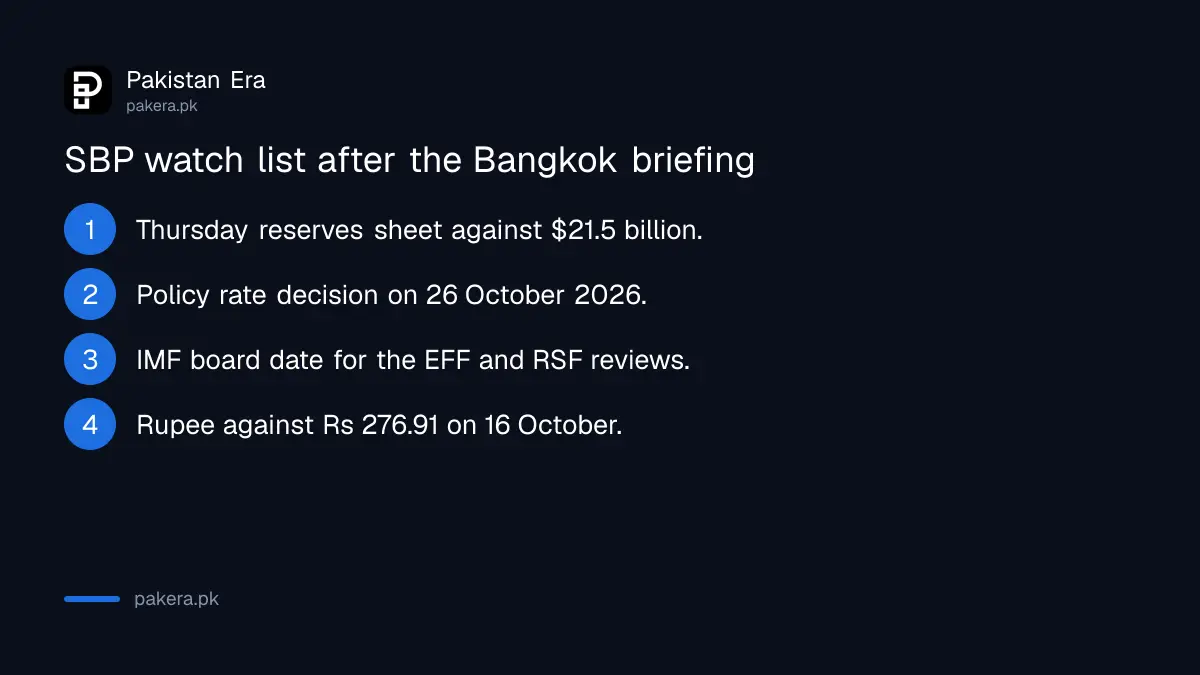
- Reserves: SBP publishes the weekly sheet every Thursday for the previous Friday. Compare the next one with the $21.5 billion here.
- Policy rate: the Monetary Policy Committee meets on 26 October. The 26 October monetary policy meeting page lists the inputs it will have.
- IMF: watch for the board date for the EFF and RSF reviews. Money arrives only after board approval.
- Rupee: SBP's mark to market rate was Rs 276.91 to the dollar on 16 October 2026, the last trading day before the release.
For importers and anyone paying a dollar bill, the practical reading is that SBP is not short of dollars and does not plan to be. For savers, the release changes nothing until the rate decision. For the government, it is a pitch to bond buyers, and it was made to the people who matter for that.
Common questions about the SBP governor's 17 October statement
What did the SBP governor say on 17 October 2026?
He told foreign investors in Bangkok that official reserves were $21.5 billion on 9 October 2026, growth was 3.7 per cent in FY26, and FY27 growth is projected at 3.5 to 4.5 per cent. SBP published the remarks as a press release.
Which investors did the governor meet?
The release names JP Morgan, Citibank, Jefferies, Deutsche Bank, Barclays, Bank of America, MSCI, Standard Chartered and Mitsubishi UFJ Financial Group, plus bilateral and multilateral partners, other central banks and credit rating agencies.
Where did the reserves come from?
SBP says the rise was largely driven by its own purchases of dollars in the market, helped by an almost balanced current account in FY26 and reforms that pushed remittances into banks. External debt rose only marginally.
Has the IMF review been completed?
No. A staff level agreement has been reached for the EFF and RSF reviews. The IMF Executive Board still has to approve it before any disbursement.
Does this affect the 26 October rate decision?
Not directly. The release gives no guidance on the policy rate. The Monetary Policy Committee decides on 26 October 2026 and will have inflation data that this release does not discuss.
What is a forward liability?
It is a dollar amount SBP has agreed to pay banks later under swap or forward contracts. SBP says these fell from over $5.7 billion to under $1 billion, so the headline reserves are less encumbered than before.
How we verified this
What we checked, where we read it, and what we could not confirm.
Last checked 17 October 2026. Every figure and quotation comes from the SBP press release "Governor SBP updates foreign investors on Pakistan's economic resilience and macroeconomic outlook", dated 17 October 2026, which we read as a PDF from SBP's press release page. The 16 October mark to market rate is from the daily exchange rate sheet on SBP's economic data page. We could not verify the IMF board date, the FY27 inflation outlook or the list of rating agencies met, because the release does not give them.
About the author

Public Services and Education Journalist
Fajr Riaz is a journalist and content writer at Pakistan Era, based in Lahore. She covers the questions people meet in everyday life in Pakistan: how a public service works, what a change in the rules means, and where to find a reliable answer.