Sindh Reports 64,318 Suspected Malaria Cases in a Week, Down From 68,684
NIH's week 38 bulletin shows 64,318 suspected malaria cases in Sindh, down from 68,684. See the worst districts, lab results and what to do if you get a fever.
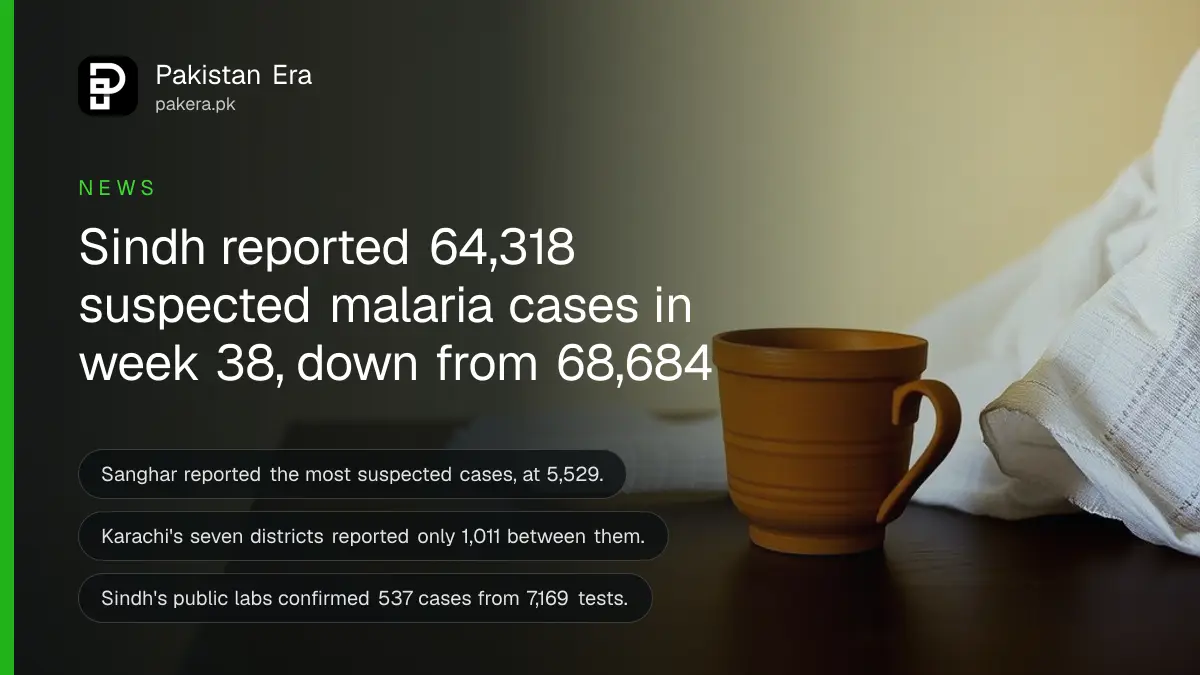
Short answer: Sindh reported 64,318 suspected malaria cases in a single week, week 38 of 2026, in the National Institute of Health's (NIH) latest disease bulletin. That is down from 68,684 the week before, a fall of about 6 per cent. Sanghar, Badin and Umerkot reported the most. Karachi's seven districts reported just 1,011 between them.
The NIH uploaded the week 38 bulletin to its site on Friday 9 October 2026. We downloaded both the week 37 and week 38 reports and read every table. The bulletin does not print the dates of each week. On the standard week calendar, week 38 runs from 14 to 20 September.
Sindh reported 64,318 suspected malaria cases in week 38
Sindh reported 64,318 suspected malaria cases in week 38 of 2026, the highest count of any disease in the province that week. Pakistan's total was 76,459, so Sindh alone carried 84 per cent of the country's reported malaria. Punjab did not report at all.
The NIH runs the Integrated Disease Surveillance and Response system, known as IDSR. Hospitals and clinics in 158 districts send in weekly counts of priority diseases, and the NIH puts them in one bulletin. Every figure in it is a suspected case. A doctor thought it looked like malaria; a lab did not always confirm it.
Here is how the provinces compare. "NR" means the province sent no report.
| Area | Week 37 | Week 38 |
|---|---|---|
| Sindh | 68,684 | 64,318 |
| Khyber Pakhtunkhwa | 9,176 | 9,455 |
| Balochistan | 2,572 | 2,661 |
| AJK | 10 | 17 |
| Islamabad | 5 | 8 |
| Gilgit-Baltistan | 0 | 0 |
| Punjab | NR | NR |
| Pakistan | 80,447 | 76,459 |
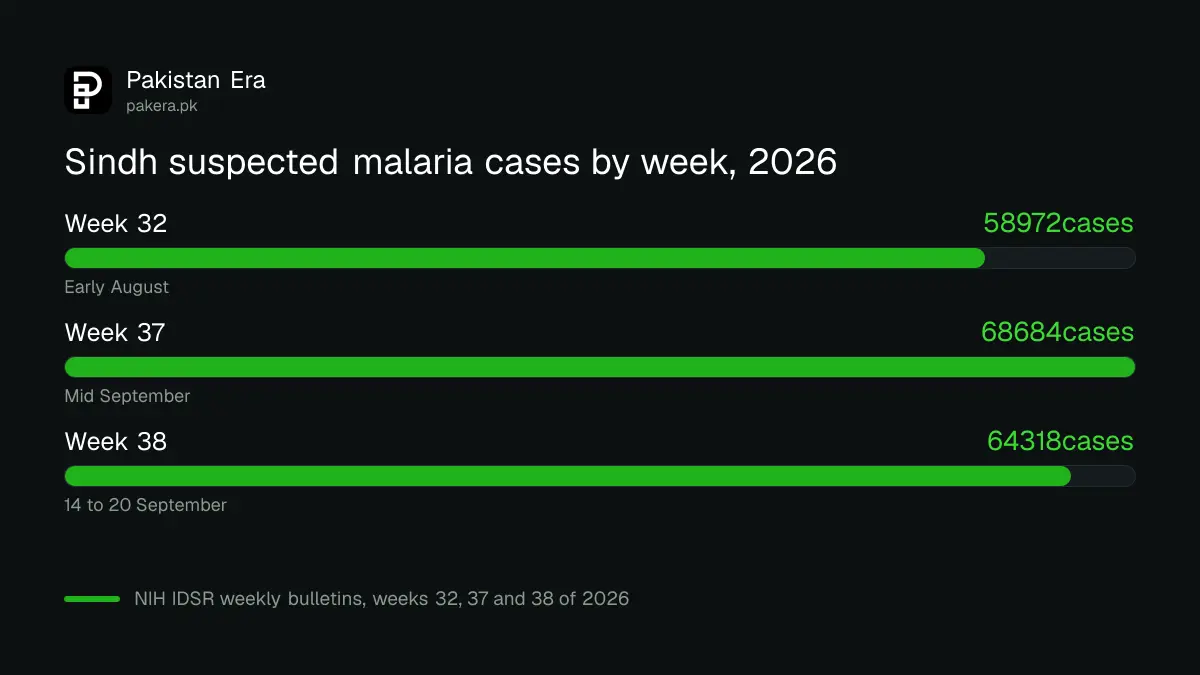
Cases fell in week 38 but stay above August's level
Sindh's weekly malaria count dropped by 4,366 between week 37 and week 38. The bulletin itself notes a decrease in malaria this week. But the figure is still higher than in week 32, in early August, when Sindh reported 58,972.
One falling week is not a trend. Malaria in Sindh usually builds after the monsoon, because rainwater left standing in fields and ponds lets the mosquito breed. Khyber Pakhtunkhwa moved the other way, rising from 9,176 to 9,455, and the bulletin lists malaria among the diseases increasing there.
We will know more when the week 39 and week 40 reports appear. The NIH posts them on its weekly bulletin page. Week 38 appeared about three weeks after it ended.
Sanghar, Badin and Umerkot carry the most cases
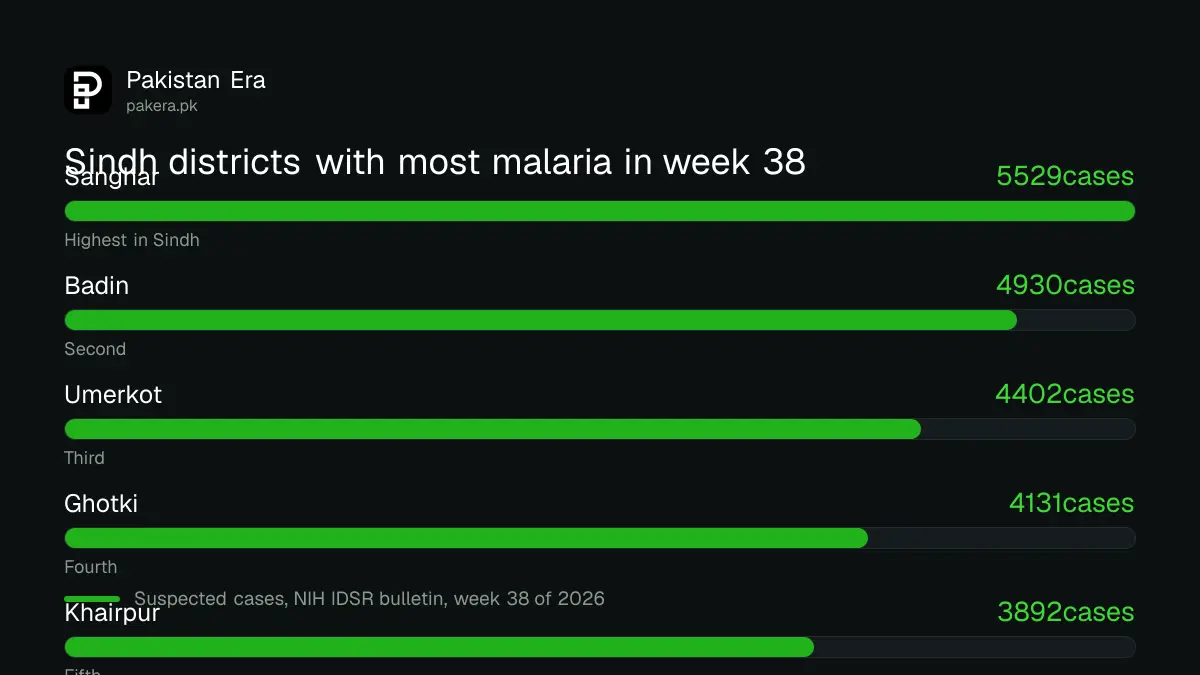
Sanghar reported 5,529 suspected cases, the most of any district in Sindh. Badin had 4,930 and Umerkot 4,402. The bulletin itself names those three as the main sources. Together, the top eight districts made up more than half of the province's total.
We added up all 30 district figures in the NIH's Sindh table. They come to exactly 64,318, the same as the province total, which gives us confidence the numbers below are read correctly.
| District | Suspected cases, week 38 |
|---|---|
| Sanghar | 5,529 |
| Badin | 4,930 |
| Umerkot | 4,402 |
| Ghotki | 4,131 |
| Khairpur | 3,892 |
| Larkana | 3,732 |
| Kamber | 3,472 |
| Mirpurkhas | 3,320 |
| All seven Karachi districts | 1,011 |
Karachi is a small part of this. Its seven districts reported 1,011 cases, about 1.6 per cent of Sindh's total. Karachi West had 283 and Karachi Malir 270. This is a rural, southern and eastern Sindh problem.
Lab tests confirm far fewer cases than the suspected count
Sindh's public health laboratories tested 7,169 samples for malaria in week 38 and found 537 positive, about 7.5 per cent. That gap matters. Many fevers that look like malaria turn out to be something else, such as dengue, typhoid or a viral fever.
The lab figure is not the full picture either. It covers only the province's public health labs. Many patients are tested at a clinic with a quick finger prick test, and those results are not in this table.
The same labs tested 2,239 samples for dengue and found 178 positive. Malaria and dengue both start with high fever, so a blood test is the only reliable way to tell them apart. Dengue has its own warning signs, set out in the dengue signs that mean go to hospital.
What to do if someone in your home has a fever
Get a blood test before taking any malaria medicine. A fever with chills and sweating in Sindh this season can be malaria, but it can also be dengue, and the two are treated differently. Go to a government hospital or rural health centre, and do not self medicate.
- Note when the fever started and whether it comes with chills, shivering or sweating.
- Go to the nearest government hospital, rural health centre or basic health unit for a blood test.
- Ask for a malaria test and, if the doctor agrees, a dengue NS1 test as well.
- Take the full course of any medicine the doctor prescribes, even if the fever goes.
- Go back at once if the patient becomes confused, very drowsy, cannot drink, or has trouble breathing.
The World Health Organization (WHO) lists confusion, seizures and difficulty breathing as signs of severe malaria. Children under five and pregnant women are at higher risk. Use a mosquito net at night, and empty any water standing around the house. In early August, Sindh's malaria count for week 32 showed the same rural pattern.
Common questions
How many malaria cases are there in Sindh this week?
The latest NIH bulletin, for week 38 of 2026, shows 64,318 suspected cases in Sindh. These are suspected, not lab confirmed. Sindh's public health labs confirmed 537 positives from 7,169 tests that week.
Is malaria in Sindh going up or down?
It fell in week 38, from 68,684 to 64,318. But it is still above the 58,972 reported in week 32. One week's fall is not enough to say the season has peaked.
Which districts of Sindh have the most malaria?
Sanghar (5,529), Badin (4,930) and Umerkot (4,402) in week 38. Ghotki, Khairpur, Larkana, Kamber and Mirpurkhas each reported more than 3,000.
Why is Punjab missing from the malaria figures?
Punjab is marked "NR", not reported, for every disease in the bulletin. So the national total of 76,459 leaves out Pakistan's largest province and is an undercount.
Is Karachi badly affected by malaria?
Less than the rest of Sindh. Karachi's seven districts reported 1,011 suspected cases in week 38, about 1.6 per cent of the provincial total.
How we verified this
What we checked, where we read it, and what we could not confirm.
Last checked at about 6:30 am PKT on Saturday 10 October 2026. We read the NIH's Public Health Bulletin, Pakistan, Week 38, 2026, and the Week 37 bulletin, both linked from the NIH's IDSR weekly reports page. Province figures are from Table 1, district figures from Table 2 and lab figures from Table 5 of the week 38 report. The week 32 figure is from the week 32 bulletin. Severe malaria signs are from the WHO malaria fact sheet. The week dates are our own, from the standard week calendar.
About the author

Public Services and Education Journalist
Fajr Riaz is a journalist and content writer at Pakistan Era, based in Lahore. She covers the questions people meet in everyday life in Pakistan: how a public service works, what a change in the rules means, and where to find a reliable answer.