How to Calculate the Levy and Customs You Pay on Petrol and Diesel in Pakistan
Petrol carries Rs 110.64 a litre in levies and customs and diesel Rs 100.68 on OGRA's 15 October 2026 sheet. Use four steps to find what you pay each month.
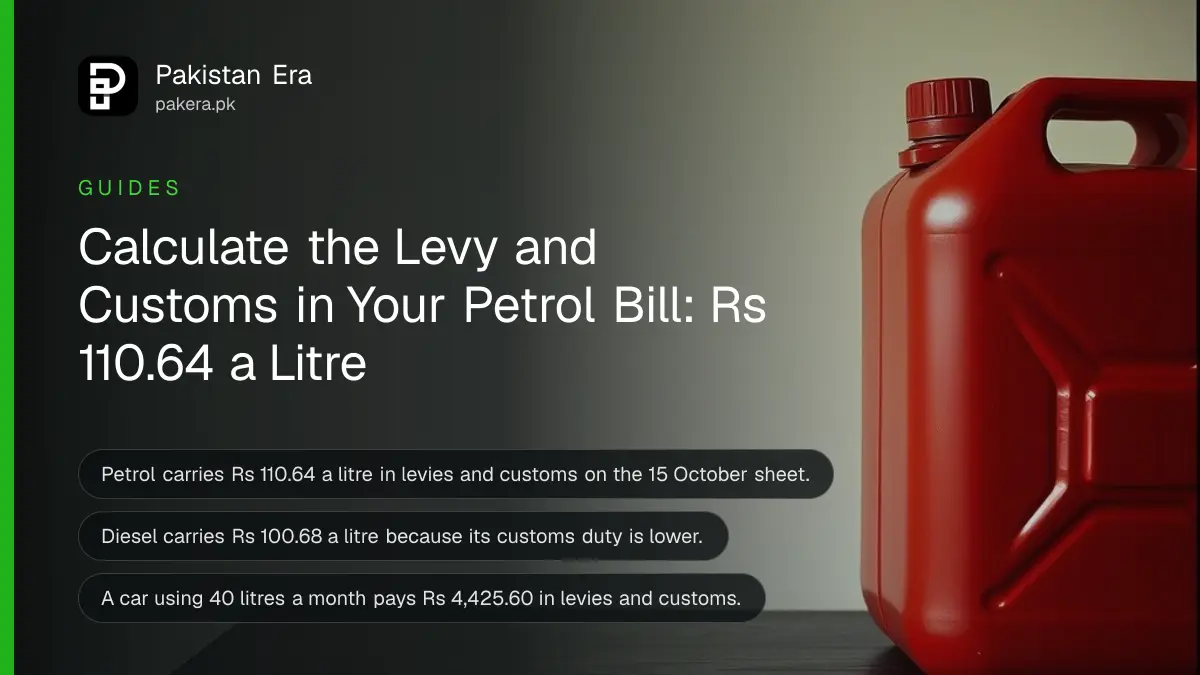
Short answer: Multiply the litres you buy by Rs 110.64 for petrol or Rs 100.68 for diesel. That is the levy and customs duty in each litre on the Oil and Gas Regulatory Authority (OGRA) price sheet of 15 October 2026. A driver who buys 40 litres of petrol a month pays Rs 4,425.60 of it.
Most of us read the petrol price as one number. It is really a stack: the cost of the fuel, three margins, and then government charges on top. We opened OGRA's price sheet effective 15 October 2026 and added up the government part. The steps below let you do the same for your own tank.
Petrol carries Rs 110.64 a litre in levies and customs
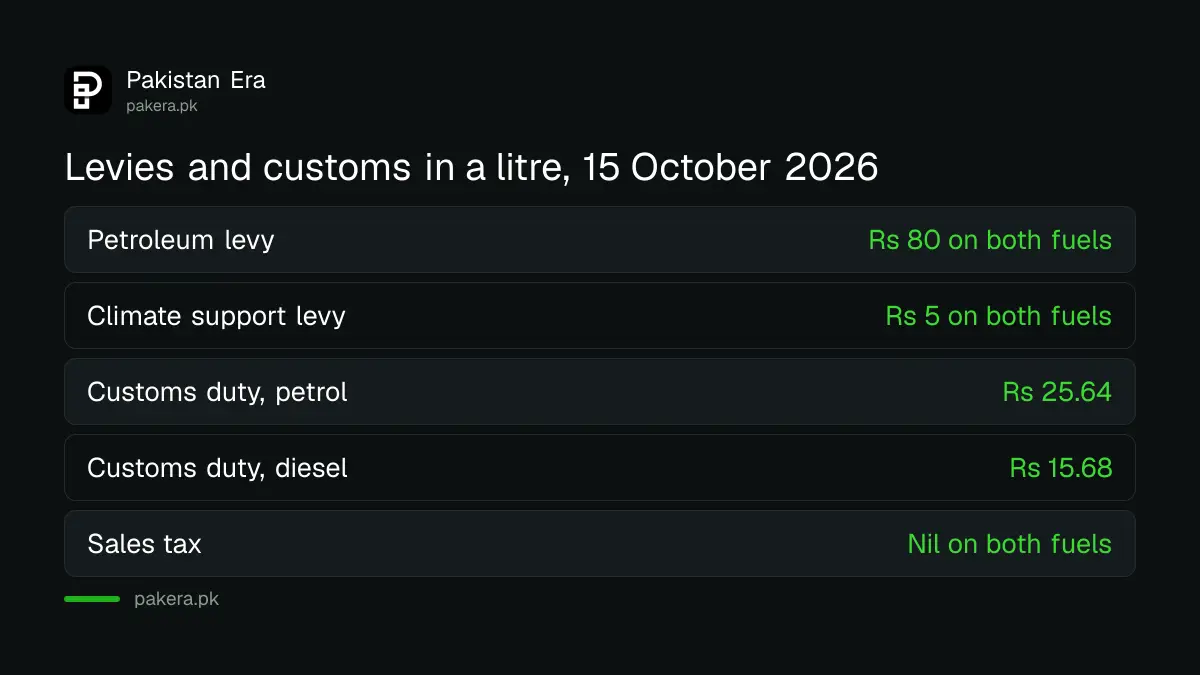
On the 15 October sheet, petrol at Rs 393.86 a litre includes a petroleum levy of Rs 80, a climate support levy of Rs 5 and customs duty of Rs 25.64. Together that is Rs 110.64, or 28 per cent of the price. Sales tax on petrol is shown as zero.
| Line on the OGRA sheet | Petrol (Rs a litre) | Diesel (Rs a litre) |
|---|---|---|
| Petroleum levy | 80.00 | 80.00 |
| Climate support levy | 5.00 | 5.00 |
| Customs duty | 25.64 | 15.68 |
| Sales tax | 0.00 | 0.00 |
| Government charges in total | 110.64 | 100.68 |
| Price shown on the sheet | 393.86 | 396.65 |
For diesel the same two levies apply, but customs duty is lower at Rs 15.68. So the government part is Rs 100.68 of Rs 396.65, or 25 per cent. The sheet lists diesel as exempt from sales tax too.
Your monthly tax is litres bought times the Rs 110.64
The sum is simple. Take the litres you buy in a month and multiply them by the government charge for your fuel. This gives the rupees of levy and customs inside your fuel bill, not a separate bill. You never pay it at a counter. It is already in the pump price.
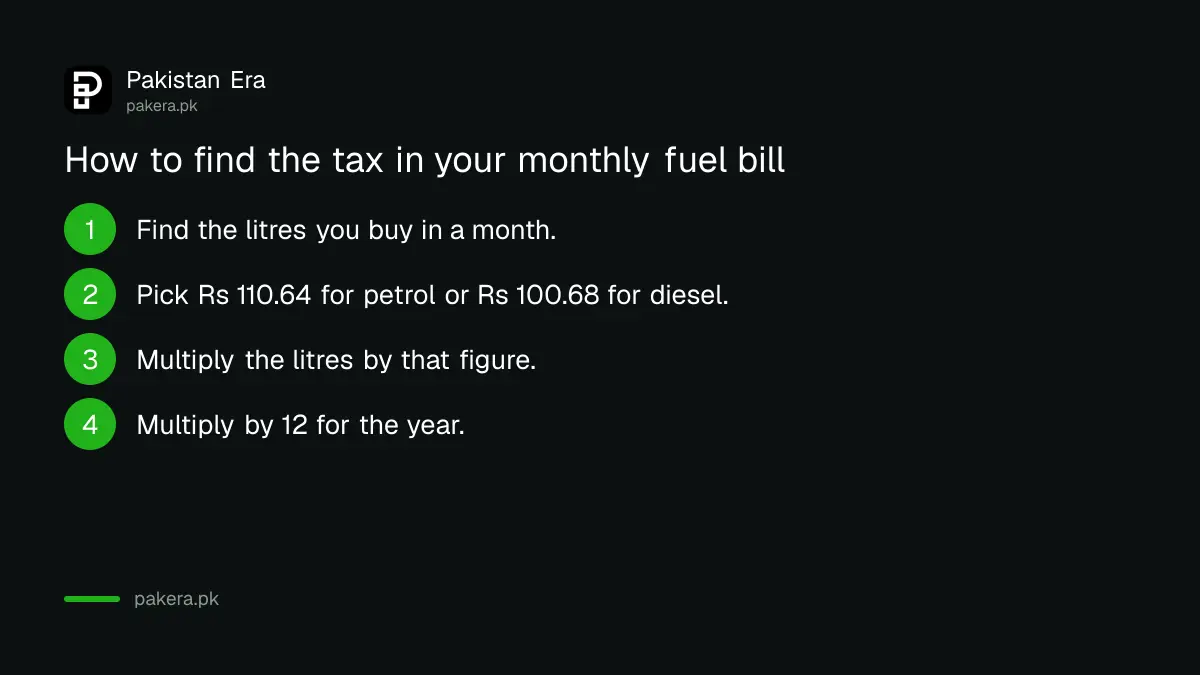
- Find how many litres you buy in a month. Use your pump receipts or divide your monthly spend by the price.
- Pick the fuel: Rs 110.64 for petrol or Rs 100.68 for diesel.
- Multiply the litres by that figure.
- Multiply the result by 12 for a year.
A bike, a car and a van pay very different amounts
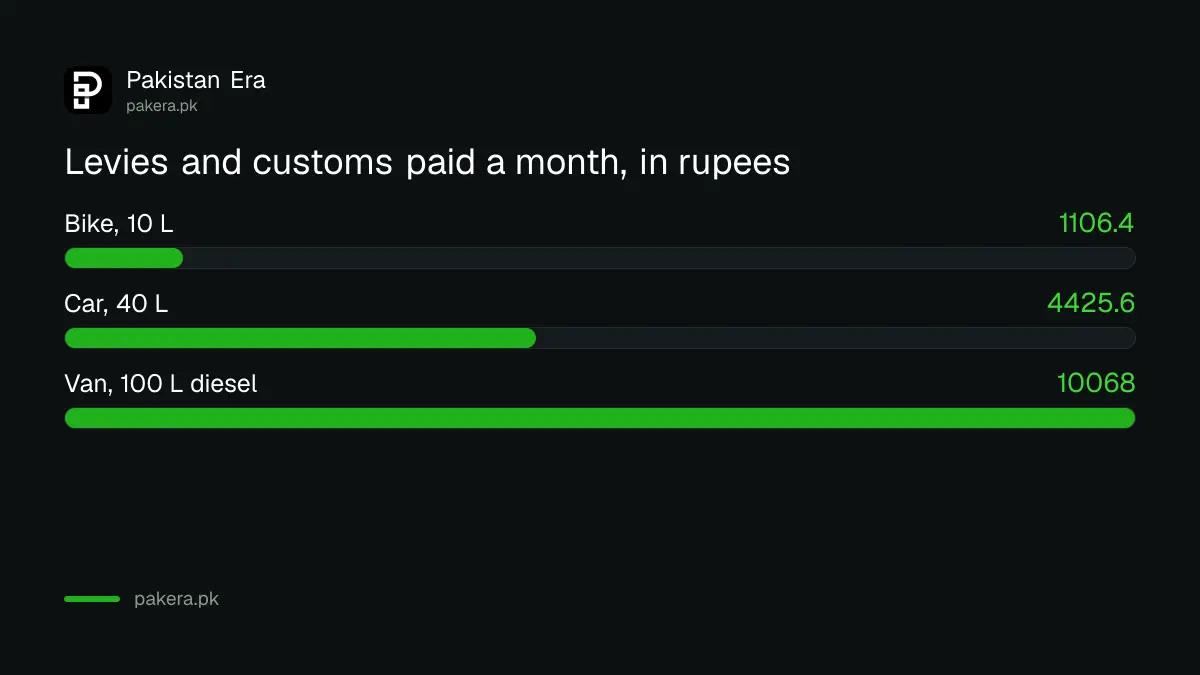
Here are three examples at the 15 October price. They are only examples; swap in your own litres. A rider using 10 litres pays Rs 1,106.40 in levies and customs each month. A car driver using 40 litres pays Rs 4,425.60. A diesel van using 100 litres pays Rs 10,068.
| Example | Litres a month | Fuel bill | Levies and customs inside it |
|---|---|---|---|
| Motorbike, petrol | 10 | Rs 3,938.60 | Rs 1,106.40 |
| Car, petrol | 40 | Rs 15,754.40 | Rs 4,425.60 |
| Van, diesel | 100 | Rs 39,665.00 | Rs 10,068.00 |
Over a year, the car driver pays Rs 53,107.20 in levies and customs. The figures are our arithmetic from the sheet, and they assume the 15 October rates stay the same. The levy rate is set by the federal government, and the daily price moves with the world price and the rupee, so check the sheet before you plan a budget. Our report on the record petroleum levy shows how much the government has collected from it.
The rest of the price is fuel cost and fixed margins
The other Rs 283.22 of the petrol price covers the fuel landed at Karachi (Rs 256.83), a small exchange rate adjustment (Rs 0.62) and three margins that add to Rs 25.78. The sheet says the government fixes the company and dealer margins. The landed cost and the adjustment follow the market day to day.
That is why the levy figure matters for planning. When the world price moves, the Rs 80 levy does not move with it. A cheaper barrel helps your wallet, but the same Rs 85 in levies stays in every litre. How the daily number is built is set out in the petrol price formula, and the same steps for diesel are in the diesel price formula.
What OGRA's figure leaves out
OGRA's total excludes secondary freight, the cost of moving fuel from the depot to the pump. Your pump's price may therefore be a little higher than the sheet. This gap is not tax, so do not count it in your levy sum. If a pump charges well above the sheet, you can compare it with the OGRA pump price list.
Common questions about tax in the petrol price
How much tax is in a litre of petrol in Pakistan?
On the 15 October 2026 OGRA sheet, Rs 110.64 of a litre of petrol is levies and customs. That is Rs 80 petroleum levy, Rs 5 climate support levy and Rs 25.64 customs duty.
Do I pay sales tax on petrol?
The OGRA sheet shows sales tax on petrol as zero and says petrol is currently exempt. The price includes levies and customs duty instead.
Is diesel taxed less than petrol?
On the same sheet, diesel carries Rs 100.68 in levies and customs against Rs 110.64 for petrol. The difference is customs duty, Rs 15.68 against Rs 25.64.
Does the levy change when the petrol price changes?
Not day to day. The sheet shows Rs 80 petroleum levy and Rs 5 climate support levy on both fuels. The federal government can change them. Customs duty moves a little each day.
Where do I find the latest figures?
Open OGRA's price publications page and choose the newest sheet. The levy and customs lines are in the build-up table on page 1 for petrol and page 2 for diesel.
Does my pump receipt show the levy?
No. The receipt shows only the price per litre. The levy is inside that price, so you work it out with the steps above.
How we verified this
What we checked, where we read it, and what we could not confirm.
Last checked 15 October 2026. The levy, climate support levy, customs duty, sales tax lines and prices come from the OGRA price sheet effective 15 October 2026, which we opened on OGRA's price publications page on 15 October 2026. The monthly and yearly sums, the percentage shares and the Rs 283.22 remainder are our own arithmetic. We did not check the rates against the Finance Act or a notification, so confirm them before using the numbers for a budget or a claim.
About the author

Global Affairs & Political Economy Writer
Muhammad Hatim is a book lover who started writing because he enjoys it. At Pakistan Era he writes about international relations, geopolitics and the global economy, with a particular interest in South Asia and the forces behind current events.