Pakistan Collected Rs 1.567 Trillion in Fuel Levy Last Year
Petroleum levy collection rose 29 per cent in FY26 and beat both targets. The same week, dealers are striking over Rs 1.34 a litre.
Pakistan collected Rs 1.567 trillion in petroleum levy during the last financial year. That is 29 per cent more than the year before, and more than the government had budgeted for.
The figure comes from the Finance Ministry's own annual report on fiscal operations for FY26.
The numbers, year on year
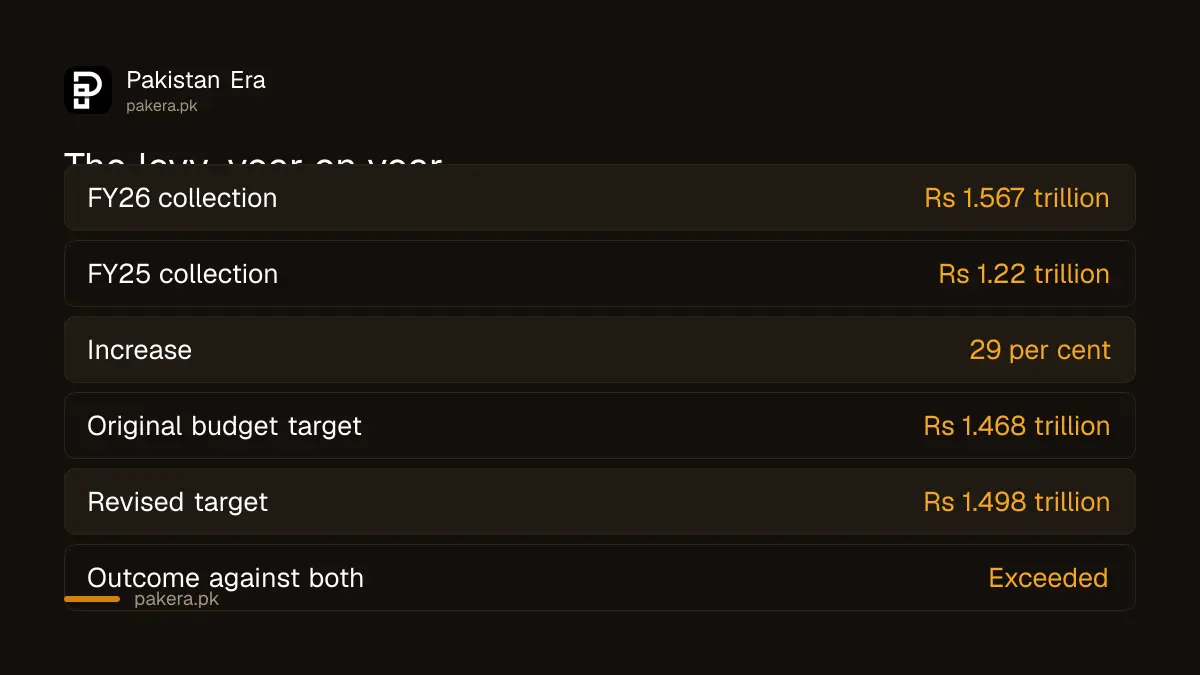
| Item | Amount |
|---|---|
| FY26 collection | Rs 1.567 trillion |
| FY25 collection | Rs 1.22 trillion |
| Increase | 29 per cent |
| Original budget target | Rs 1.468 trillion |
| Revised target | Rs 1.498 trillion |
Note the last two lines. The target was set at Rs 1.468 trillion, then revised upward during the year to Rs 1.498 trillion. Collection came in above both.
Two other figures from the same report are worth having. The cost of running civil government reached Rs 1.033 trillion, up 16 per cent and above a trillion for the first time. The fiscal deficit came in at 2.6 per cent of GDP, described as the lowest since FY03 on comparable data.
One thing we are not saying
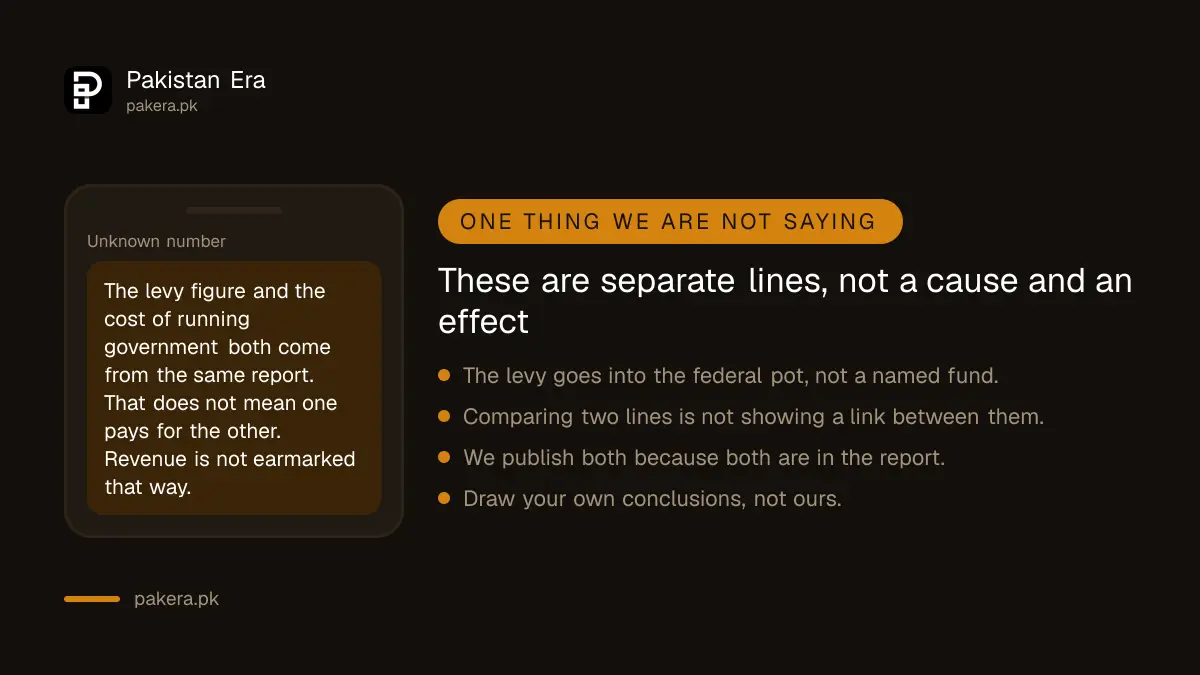
You have just read two large numbers next to each other, and there is an obvious conclusion sitting there. We are not drawing it, and you should know why.
The levy does not pay for the cost of civil government. Revenue of this kind goes into the federal pot. It is not earmarked to a named line, and no part of that report says one funds the other.
We publish both because both are in the same report and both are facts about the same year. Putting them in one article is not the same as claiming a link between them. If you want to draw a conclusion, draw your own, but do not take it from us as arithmetic, because it is not.
We are being this explicit because the easiest way to mislead a reader is to place two true numbers side by side and let the layout do the arguing.
The other number in the news this week
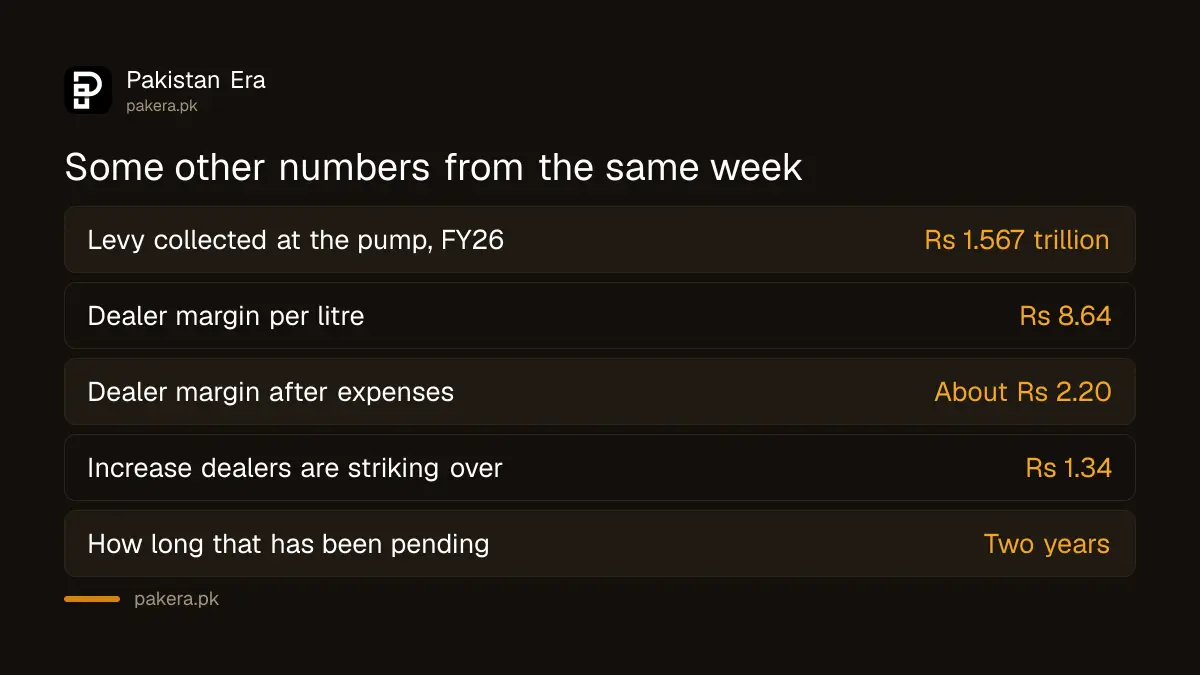
Petrol pumps are due to shut tomorrow morning, or may not, depending on a committee meeting. Here is what that dispute is about, from the same week's reporting.
- A dealer keeps Rs 8.64 a litre, according to PPDA chairman Malik Khuda Bakhsh.
- After expenses that falls to about Rs 2.20, on the same account.
- Dealers want that raised, and have asked for an 8 per cent margin.
- The government has offered Rs 1.34 more.
- That offer has been pending two years, and now sits with the Economic Coordination Committee awaiting federal cabinet approval.
So at the same pumps, in the same year, the levy brought in Rs 1.567 trillion while an increase of Rs 1.34 a litre has spent two years moving between committees.
We are stating both figures and leaving it there. Our explainer on why the strike is not about the price you pay is in the margin piece, and the strike itself is covered in our live article.
Why the pump is where the state collects
This is worth understanding, because it explains a lot about Pakistani prices generally.
Fuel is close to an ideal thing to tax. Almost everybody buys it, they buy it repeatedly, and they cannot easily stop. Freight, farming and public transport keep buying whatever the price does. That makes the collection dependable in a way income tax in Pakistan has never been.
It also means the pump price carries far more than the cost of fuel. That is why the number on the board does not fall when international oil does, which we explained in why petrol prices do not follow the oil price.
The pressure to keep this line predictable is also the background to the pricing arrangement now in dispute, which we covered in the flexible petroleum levy.
What we are not publishing
We are not giving you a per litre levy rate. The report as reported does not carry one, and we did not read the rate at source.
That also means we are not calculating what you personally paid last year. You will see that sum done elsewhere. It requires a rate we do not have, so anyone showing you a precise figure for your own driving is working from an assumption they have not shown you.
We are not describing the increase as a burden, a squeeze or an achievement. It is a 29 per cent rise against a target that was raised and still exceeded. Those are the facts, and they are more useful to you than our opinion of them.
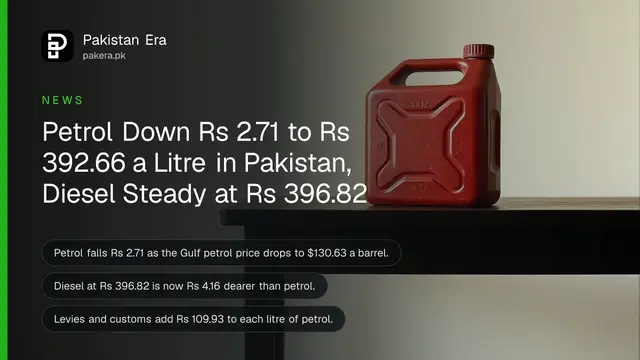
For today's actual pump prices and where the official rate is published, see our daily petrol price page.
Questions readers are asking
How much petroleum levy did Pakistan collect in FY26?
Rs 1.567 trillion, according to the Finance Ministry's annual report on fiscal operations.
How does that compare with the year before?
FY25 collection was Rs 1.22 trillion, so FY26 was about 29 per cent higher.
Did it beat the target?
Yes, both of them. The original target was Rs 1.468 trillion and the revised target Rs 1.498 trillion.
How much levy do I pay per litre?
We are not quoting a rate, because we did not read one at source. Anyone giving you a precise personal total is working from an assumption.
Does the levy pay for government salaries?
Not in any direct sense. Revenue of this kind is not earmarked to a named spending line, and nothing in the report says one funds the other.
What was the fiscal deficit?
2.6 per cent of GDP in FY26, described as the lowest since FY03 on comparable data.
What are petrol dealers striking about?
Their own margin, which their chairman puts at Rs 8.64 a litre before expenses and about Rs 2.20 after. That is a separate number from the price you pay.
About the author

Tax, Bills and Technology Writer
Ali Akhtar is a young and curious voice here at Pakistan Era. He is currently pursuing his A-Levels and has a growing interest in Pakistan’s changing industrial landscape and educational trends. Ali likes to write in a way that helps him explain and explore the world around him. His writing reflects the perspective of the new generation navigating the evolving trends of Pakistan where technology, youth innovation, and shifting opportunities are reshaping the country’s future.