Check If Your Pregnancy Injection Is 17-OHPC: DRAP Suspended It in Pakistan
DRAP suspended 17-OHPC (hydroxyprogesterone caproate) in Pakistan. See why, what to do if you were prescribed it and why progesterone is not affected.
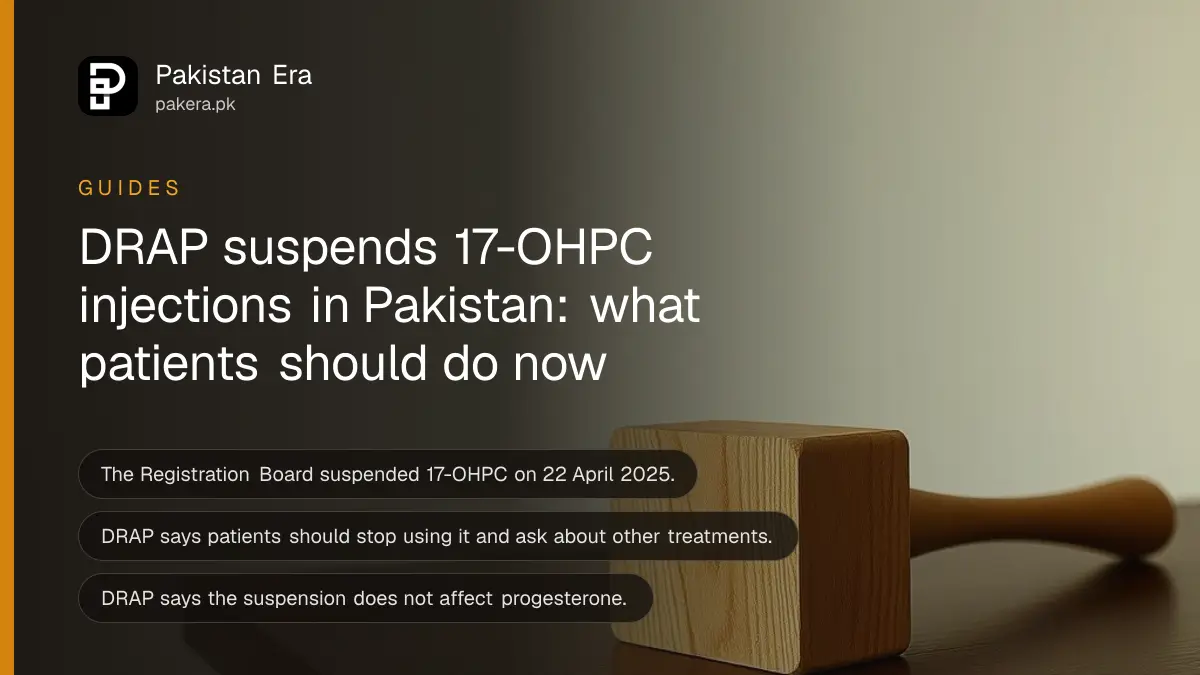
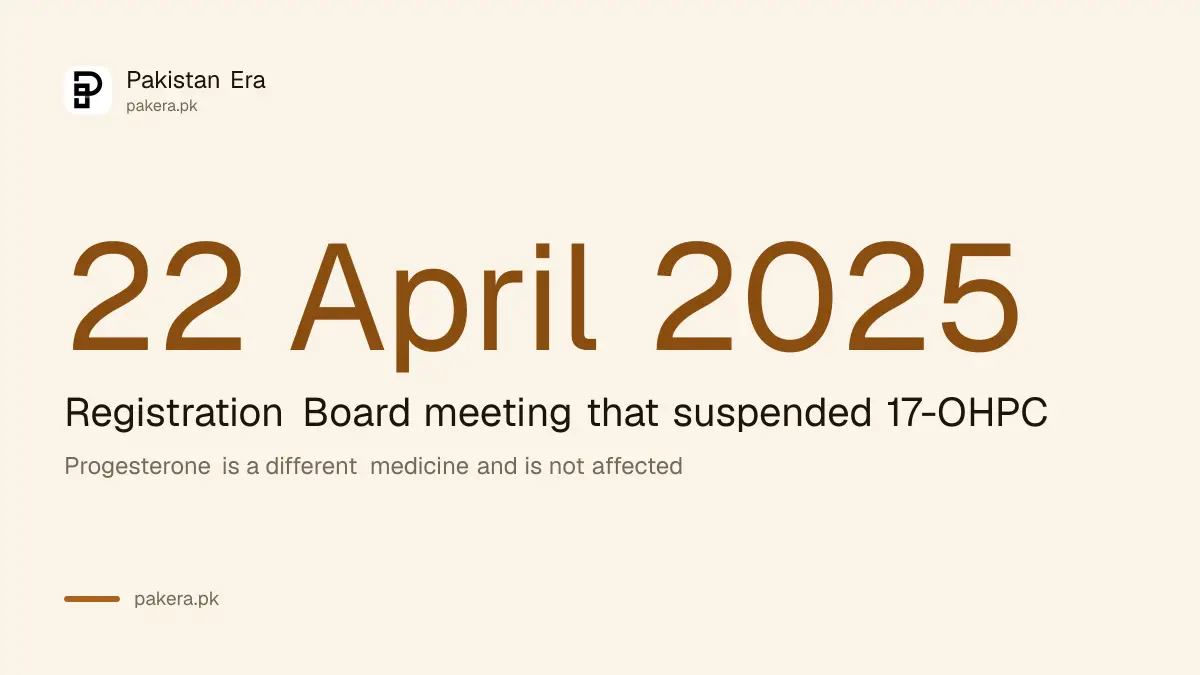
Short answer: DRAP's Registration Board suspended the registration of 17-hydroxyprogesterone caproate, called 17-OHPC, in Pakistan on 22 April 2025. Patients should stop using it and ask their doctor for another treatment. Do not confuse it with plain progesterone, which DRAP says is not affected.
17-OHPC is a synthetic hormone given as an injection. In some countries it was used to try to prevent premature birth and to treat some gynaecological and fertility problems. A pregnant woman who was told to take it should read this carefully and then speak to her doctor.
We read DRAP Safety Alert No. 58 on its safety page on 13 October 2026. The alert is dated 1 July 2025.
DRAP suspended 17-OHPC medicines in Pakistan
The alert says the Registration Board, in its 346th meeting on 22 April 2025, suspended the registration of medicines that contain 17-OHPC. Doctors should no longer prescribe or dispense them, and should consider alternatives for any use.
This is a suspension of registration, so it is stronger than a label warning. It follows a recommendation of the Pakistani expert committee on 2 January 2025.
Why DRAP suspended it
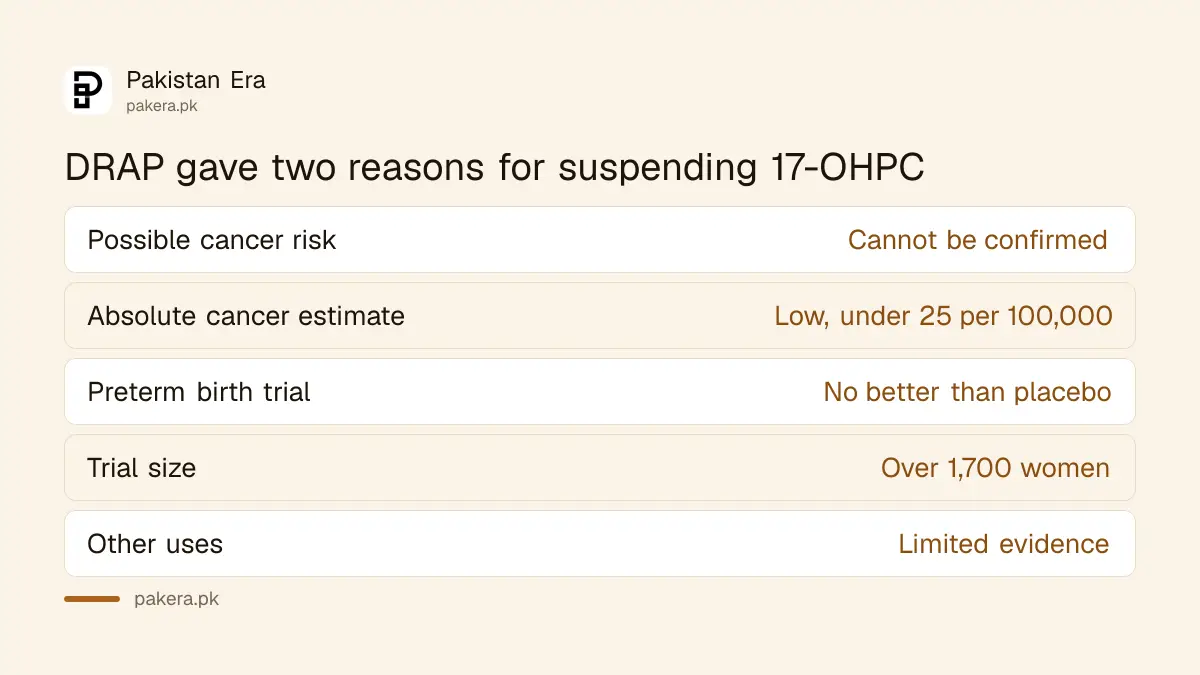
The alert gives two reasons, both taken from reviews by the European and United States regulators. First, a large study suggested that people exposed to 17-OHPC in the womb might have a higher risk of cancer. Second, a trial of more than 1,700 pregnant women found it was no more effective than a dummy treatment at preventing repeat premature birth.
| Reason | What the alert says |
|---|---|
| Possible cancer risk | Possible, but cannot be confirmed because of study limits |
| Absolute cancer estimate | Low, less than 25 per 100,000 person-years |
| Preventing premature birth | No better than placebo in a trial of over 1,700 women |
| Other uses | Limited evidence it works |
The alert says the committee concluded that the benefits do not outweigh the risks in any authorised use. It also notes that the United States regulator withdrew approval of Makena, a brand of this medicine, in April 2023.
What patients should do
DRAP's advice to patients is to stop using these products and discuss other treatment options with their doctors. If you were given this injection during pregnancy, do not panic. Your doctor will guide the plan.
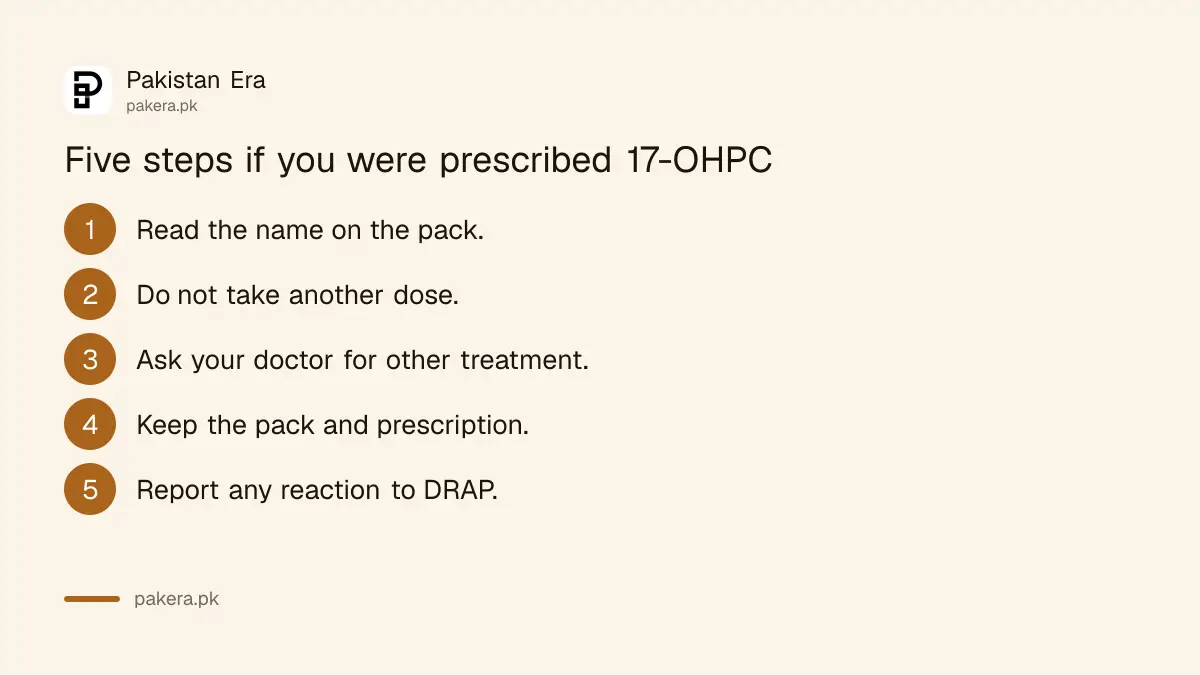
- Look at the injection pack or your prescription for the name hydroxyprogesterone caproate or 17-OHPC.
- Do not take another dose. Call your doctor.
- Ask what other treatment is available for your condition.
- Keep the pack and the prescription for your records.
- Report any reaction to DRAP.
Progesterone is a different medicine
The alert states plainly that the outcome of the review does not affect the use of progesterone, which works in a different way. Patients are asked not to confuse 17-OHPC with progesterone. Check the exact name before you stop any medicine.
If you are unsure which one you have, ask the pharmacist to read the generic name on the box. You can also look it up in the DRAP registration check, where a suspended product should not be treated as approved. We did not search for particular brands, so we cannot say which ones were sold in Pakistan.
Questions to take to your next antenatal visit
The suspension is more than a year old, but some women may still hold an old prescription or a leftover pack. If that is you, a short talk with your doctor settles the matter.
- Is the injection I was given 17-OHPC, or is it progesterone?
- What treatment do you suggest now for my condition?
- Does the earlier exposure need any follow-up for my baby?
- Where should I report the old stock, if I still have it?
The alert does not tell parents to take any special action for children exposed in the womb. It says the cancer risk is possible but could not be confirmed. If you are worried, ask the paediatrician and keep the records of the pregnancy. Do not rely on messages shared in phone groups.
Report a reaction or a pack still on sale
Reactions can be reported through the Med Vigilance e-reporting system or the VigiMobile app, or to the National Pharmacovigilance Centre on 051 9255981 or npc@dra.gov.pk. The page on reporting a medicine side effect shows the steps.
If a shop still sells a suspended product, you can raise it through DRAP's reporting route for bad medicines.
Common questions
Is 17-OHPC banned in Pakistan?
Its registration is suspended by the Registration Board. Doctors should no longer prescribe or dispense it.
Is progesterone also suspended?
No. DRAP says the review does not affect progesterone.
Why was it suspended?
Because of a possible cancer risk for people exposed in the womb and because it did not prevent premature birth better than a placebo.
Is the cancer risk proven?
No. The alert says the risk is possible but cannot be confirmed due to study limits.
When did the suspension happen?
The Registration Board suspended it on 22 April 2025, and DRAP published the alert dated 1 July 2025.
What the alert does not say
The alert names no brand and gives no list of shops. It does not give a Pakistan figure for how many women received the injection. It does not say what to do about stock already sold. We looked for these details on DRAP's page on 13 October 2026 and did not find them, so we have not guessed.
How we verified this
What we checked, where we read it, and what we could not confirm.
We read DRAP Safety Alert No. 58 on 13 October 2026. This is a summary of the alert and not medical advice.
About the author

Public Services and Education Journalist
Fajr Riaz is a journalist and content writer at Pakistan Era, based in Lahore. She covers the questions people meet in everyday life in Pakistan: how a public service works, what a change in the rules means, and where to find a reliable answer.