Check Severe Itching After Stopping Cetirizine in Pakistan: DRAP Alert
DRAP Safety Alert 66 warns of rare severe itching after long daily use of cetirizine or levocetirizine ends. See who is at risk, what to do and how to report.
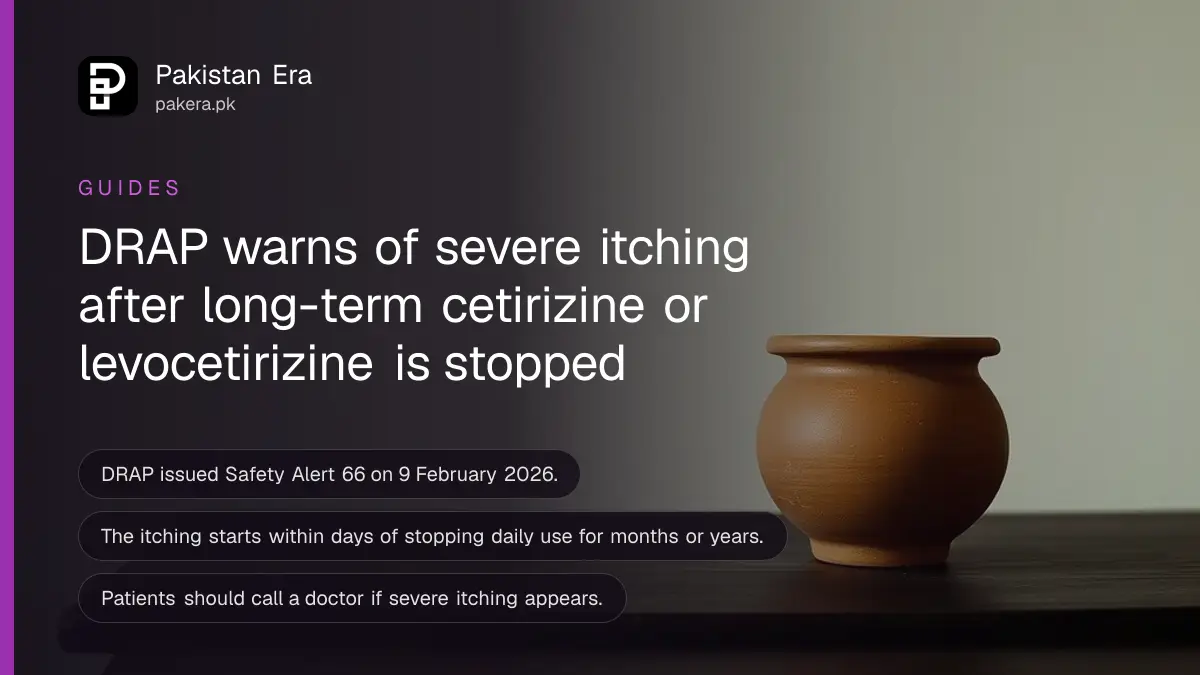
Short answer: DRAP's Safety Alert No. 66 of 9 February 2026 warns that people who take cetirizine or levocetirizine every day for months or years can get rare but severe itching after they stop. Do not panic and do not restart on your own. If the itching is severe, call your doctor.
A man in Faisalabad takes one allergy tablet every night during the dusty season. He feels fine for two years. Then he stops, and three days later his whole body itches so badly that he cannot sleep. He had no itching before he started the tablet. DRAP now warns doctors and patients about exactly this case.
We read the alert on DRAP's own safety page on 12 October 2026. This article tells you what it says, who it affects and what to do. It is not medical advice for your own case. Your doctor decides that.
DRAP warns of severe itching after stopping long-term cetirizine or levocetirizine
DRAP's National Pharmacovigilance Centre issued the alert on 9 February 2026. Pharmacovigilance means watching medicines for safety after they reach the market. The alert says severe itching, called pruritus, can follow the end of long daily use of these two allergy medicines.
DRAP based the alert on a May 2025 warning from the United States drug regulator, the FDA. Pakistan's expert committee discussed the case on 31 December 2025 and decided that the National Pharmacovigilance Centre should warn doctors and patients in line with the FDA.
The alert calls the problem rare. It also says some reported cases were serious. Patients had widespread, severe itching that needed medical help.
Who is at risk: daily users for months or years
The alert describes patients who used the medicine daily, typically for at least a few months and often for years. These patients had no itching before they started. The itching usually began within a few days of stopping.
| Your situation | What the DRAP alert says |
|---|---|
| You take the tablet for a few days during a cold or flare-up | The warning is about long daily use, so this is not the case it describes |
| You take it every day for more than a few months | Talk to your doctor about benefits and risks before using it long term |
| You have used it daily for years | This matches the cases reported, so ask before you stop |
| You buy it over the counter without a prescription | The alert says doctors should also discuss the risk with people using the OTC version |
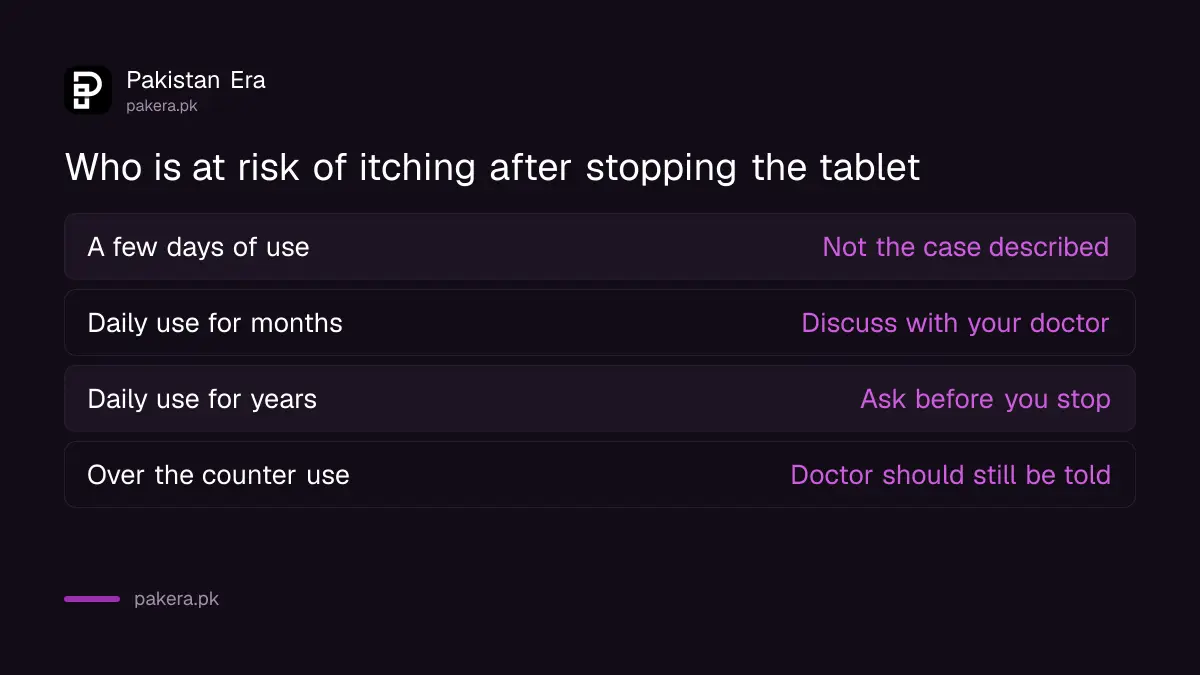
These are our plain readings of the alert, not a table from DRAP.
These are the two medicines the alert covers
Cetirizine and levocetirizine are antihistamines. They block histamine, a chemical the body releases during an allergic reaction. DRAP's alert says both are approved for seasonal allergies and year-round allergies, and for long-lasting hives, in adults and children.
They come as prescription and as over-the-counter medicines. That matters in Pakistan, where many people buy allergy tablets at a pharmacy without a doctor's note. The pack will carry the generic name, cetirizine or levocetirizine, next to the brand name. Look for the generic name on the strip.
If you are not sure what your tablet contains, a pharmacist can read the label with you. You can also confirm a product is registered through DRAP's medicine registration check.
What to do if you want to stop, or the itching has started
DRAP's advice to patients is short. Contact your health professional if severe itching appears after you stop. If you plan to use these medicines long term, more than a few months, talk to your doctor first about benefits and risks.
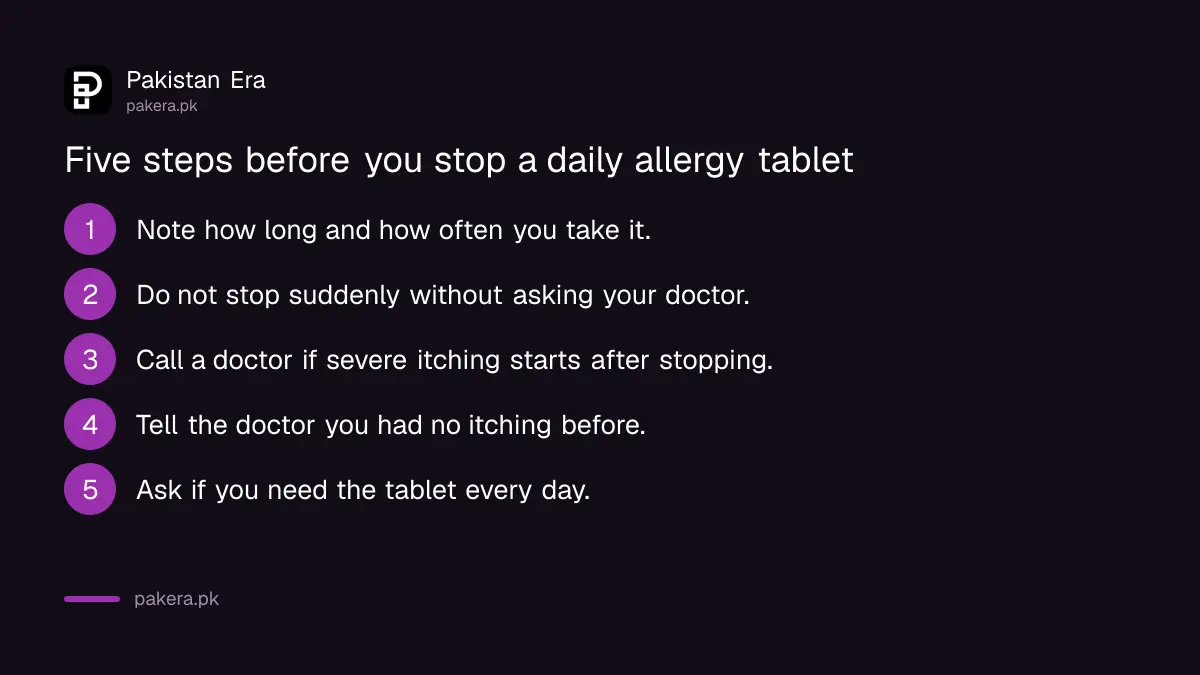
- Note how long you have taken the tablet and how often, for example one tablet every night for eight months.
- Do not stop a long-term medicine suddenly without asking, and do not restart it on your own after severe itching begins.
- If itching starts within a few days of stopping, call your doctor or visit a clinic and say you stopped cetirizine or levocetirizine.
- Tell the doctor you had no itching before you began the tablet. The alert lists this as part of the pattern.
- Ask whether you need the tablet every day or only in the allergy season.
The alert does not give a tapering plan or a dose. We do not either. A rash that comes with swollen lips, trouble breathing or a swollen face is a different emergency and needs a hospital at once.
Report the reaction to DRAP so the warning can be checked
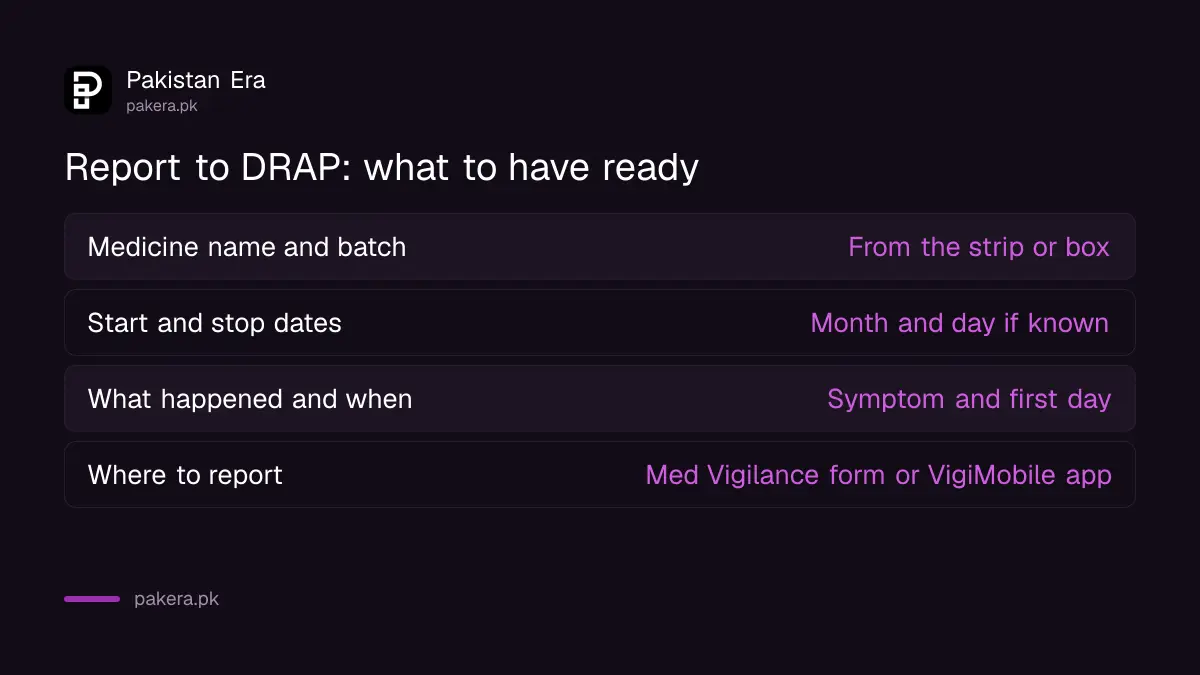
DRAP asks both patients and professionals to report any reaction to these medicines. The National Pharmacovigilance Centre takes reports through its Med Vigilance e-reporting form or the VigiMobile app. Reports from Pakistan help DRAP see whether the pattern shows up here.
The step by step method, the phone number and the form are set out in how to report a medicine side effect to DRAP. You can report even if you are not sure the tablet caused it. You do not need a doctor's permission.
Keep the strip or the box. The brand, batch number and expiry date help the centre. If a product looks fake, use the route for counterfeit medicine instead, described in reporting counterfeit medicine to DRAP.
Common questions
Is DRAP banning cetirizine or levocetirizine?
No. The alert is a safety warning. It does not withdraw the medicines. They remain approved for allergies and hives.
How common is the itching after stopping?
DRAP, quoting the FDA, calls it rare. It does not give a number for Pakistan. We could not find a Pakistani figure on DRAP's page.
How long does the itching take to start?
The alert says it typically began within a few days of stopping the medicine after daily use for a few months to years.
Can I take the tablet only on bad days?
The alert does not rule on that. It asks you to discuss long-term use with your doctor. Ask your doctor how often you really need it.
Does this apply to children?
The alert names adults and children aged 2 years and over as users of these medicines. It does not give separate advice for children, so a parent should ask the child's doctor.
Where do I read the alert myself?
It is DRAP Safety Alert No. 66, listed under Safety Communication on the DRAP website. The link is in the sources below.
How we verified this
What we checked, where we read it, and what we could not confirm.
We read DRAP Safety Alert No. 66 dated 9 February 2026 on 12 October 2026, and DRAP's safety updates page. This article explains the alert and is not a substitute for a doctor's advice.
About the author

Public Services and Education Journalist
Fajr Riaz is a journalist and content writer at Pakistan Era, based in Lahore. She covers the questions people meet in everyday life in Pakistan: how a public service works, what a change in the rules means, and where to find a reliable answer.