What to Do When a Cheque Bounces in Pakistan
A dishonoured cheque can be criminal under Section 489-F. The three elements required, the defence, and the route to the money.
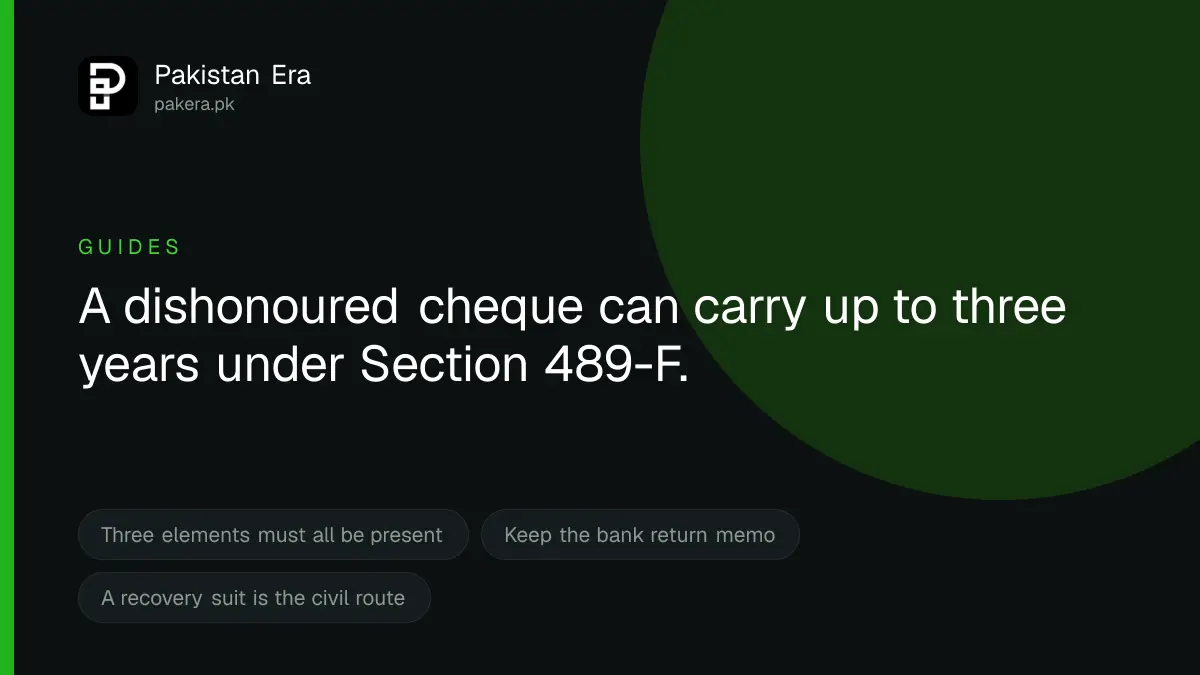
A bounced cheque in Pakistan can be a criminal matter, not only a private dispute. Section 489-F of the Pakistan Penal Code covers dishonestly issuing a cheque towards repayment of a loan or fulfilment of an obligation which is then dishonoured. The punishment can extend to three years imprisonment, or a fine, or both.
That is the headline, and it is why people reach for it. The detail matters more, because not every bounced cheque falls inside the section, and the criminal route is not always the one that gets you paid.
What the section actually requires
Three elements have to be present together. Missing one is the usual reason a complaint goes nowhere.
| Element | What it means |
|---|---|
| Dishonest issuance | The cheque was issued dishonestly, not merely returned |
| Towards a loan or liability | Given for repayment of a loan or fulfilment of an obligation |
| Dishonoured on presentation | The bank refused it when it was presented |
The section also provides a defence, and the burden of proving it sits on the person who issued the cheque. If they can establish that they had made arrangements with the bank for the cheque to be honoured and that the bank was at fault in not honouring it, the offence does not stand.
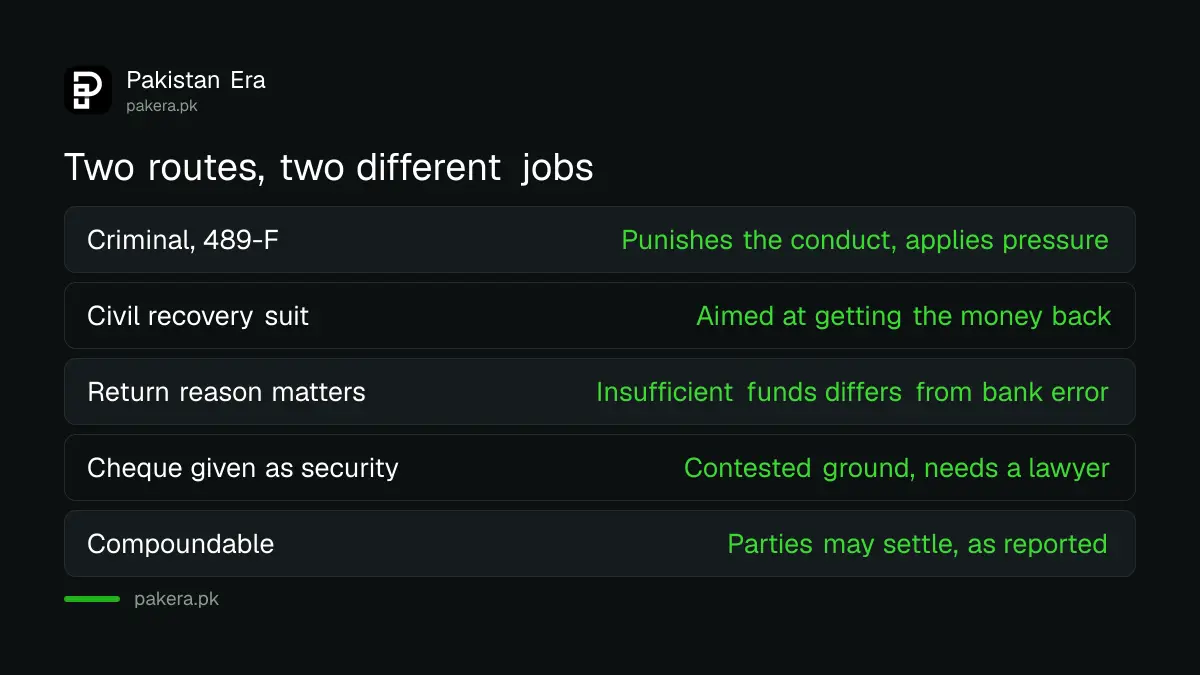
A cheque handed over purely as security, rather than for repayment of an existing liability, is contested ground and courts have treated such cases differently. That is a question for a lawyer on the facts, not something a web page can settle for you.
The first thing to secure is the bank's own memo
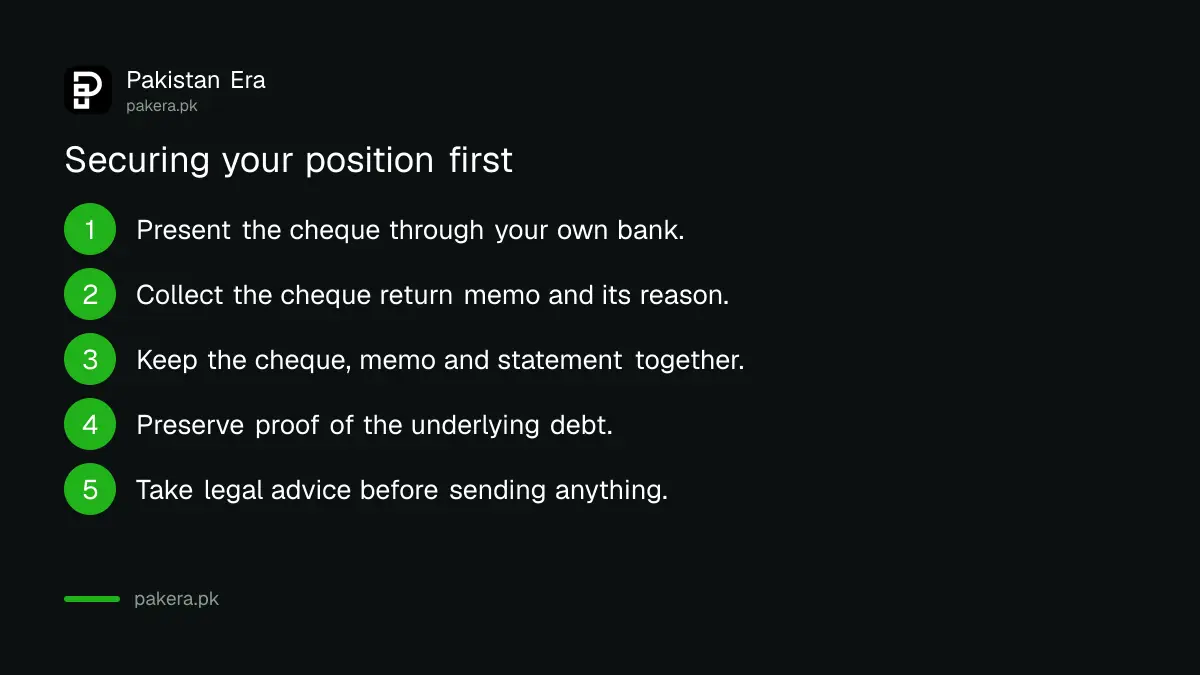
Everything downstream rests on documentary proof that the cheque was presented and refused. Get it before anything else.
- Present the cheque properly through your own bank rather than informally.
- Collect the cheque return memo, which states the reason for dishonour.
- Keep the original cheque, the memo and your account statement together.
- Preserve the evidence of the underlying debt, such as an agreement, invoices or messages.
- Take legal advice before sending anything, so the first letter is the right one.
The reason for dishonour on the memo matters. Insufficient funds is a different picture from a signature mismatch or a stopped payment, and a technical return caused by a bank error is precisely what the statutory defence is built around.
Two separate routes, and they do different jobs
People often assume the criminal complaint is the way to recover money. It is pressure, not payment.
The criminal route under 489-F is aimed at punishing the conduct. The offence is reported as triable by a magistrate of the first class, bailable, and compoundable, which means the parties can settle it. The civil route, a suit for recovery, is the one whose purpose is actually getting the amount back.
Many disputes run both. Which combination fits your situation depends on the sum, the paperwork and the other side, and that is a decision to take with a lawyer rather than from a general guide.
If you are the one whose cheque bounced
Ignoring it is the worst available option, because the section carries a custodial possibility and the matter does not lapse because you stopped answering the phone.
Establish first why the cheque was returned. If your bank made the error, get that in writing from the bank immediately, since the defence in the section turns on exactly that and the evidence is easiest to obtain while it is recent. Bank helpline numbers are collected in our list of bank contacts.
If the money simply was not there, the practical route is usually a settlement, and the offence being compoundable is what makes that possible. Take advice early rather than after a case is registered.
Prevention is mostly documentation
Most of these disputes are made worse by thin paperwork. If money is lent or an obligation is created, record it, and record what any cheque is actually for, because the difference between security and repayment is the difference between two outcomes.
Put the agreement on proper e-stamp paper rather than a plain sheet, keep transfers traceable through a bank rather than in cash, and hold on to the messages. If a case is later registered, you can check its status, and our guide to checking an FIR shows how that lookup works.
Common questions about a bounced cheque
Is a bounced cheque always a crime?
No. The section requires dishonest issuance towards a loan or obligation and dishonour on presentation. A cheque returned for other reasons, or outside those circumstances, does not automatically fall inside it.
What punishment does Section 489-F carry?
Imprisonment which may extend to three years, or a fine, or both, subject to the defence that arrangements had been made with the bank and the bank was at fault.
Can the matter be settled?
The offence is reported to be compoundable, which means a settlement between the parties is possible. The terms are a matter for the parties and their lawyers.
Will filing a criminal complaint get my money back?
Not by itself. A recovery suit is the civil route aimed at the money. Many people pursue both, and which fits your case is a question for a lawyer.
How long do I have to act?
Do not treat delay as safe. Evidence gets harder to obtain and limitation questions can arise, so take advice promptly rather than waiting to see if payment arrives.
How we verified this
What we checked, where we read it, and what we could not confirm.
Last checked 26 August 2026. The wording and effect of Section 489-F of the Pakistan Penal Code, including the three year maximum, the fine, and the defence placing the burden on the issuer to show the bank was at fault, are consistent across the legal sources we compared. We did not read the section on an official government text repository, so it is presented as the settled description of the provision rather than quoted from a page we opened at source, and the procedural points about it being bailable, compoundable and triable by a magistrate of the first class are reported. This is general information about the law and not legal advice. Cheque disputes turn on their own facts, particularly where a cheque was given as security, and anyone facing one should consult a lawyer.
About the author

Public Services and Education Journalist
Fajr Riaz is a journalist and content writer at Pakistan Era, based in Lahore. She covers the questions people meet in everyday life in Pakistan: how a public service works, what a change in the rules means, and where to find a reliable answer.