15,850 Highly Educated Pakistanis Went Abroad for Jobs in 2026 So Far, Down From 28,726 in 2025
About 15,850 highly educated Pakistanis went abroad for work in 2026 so far, against 28,726 in 2025 and 45,830 in 2024, in reported National Assembly figures.
Short answer: About 15,850 highly educated Pakistanis went abroad for work in 2026 so far, according to figures reported from papers given to the National Assembly. The same papers give 28,726 for 2025 and 45,830 for 2024. Managers, engineers and doctors are the biggest groups.
The numbers were reported on 16 October 2026 and came out of Question Hour in the National Assembly. We could not open the Bureau of Emigration and Overseas Employment statistics page on 17 October 2026, because the site returned an access block. So every figure below is marked "reported", and we have not matched it to a Bureau table.
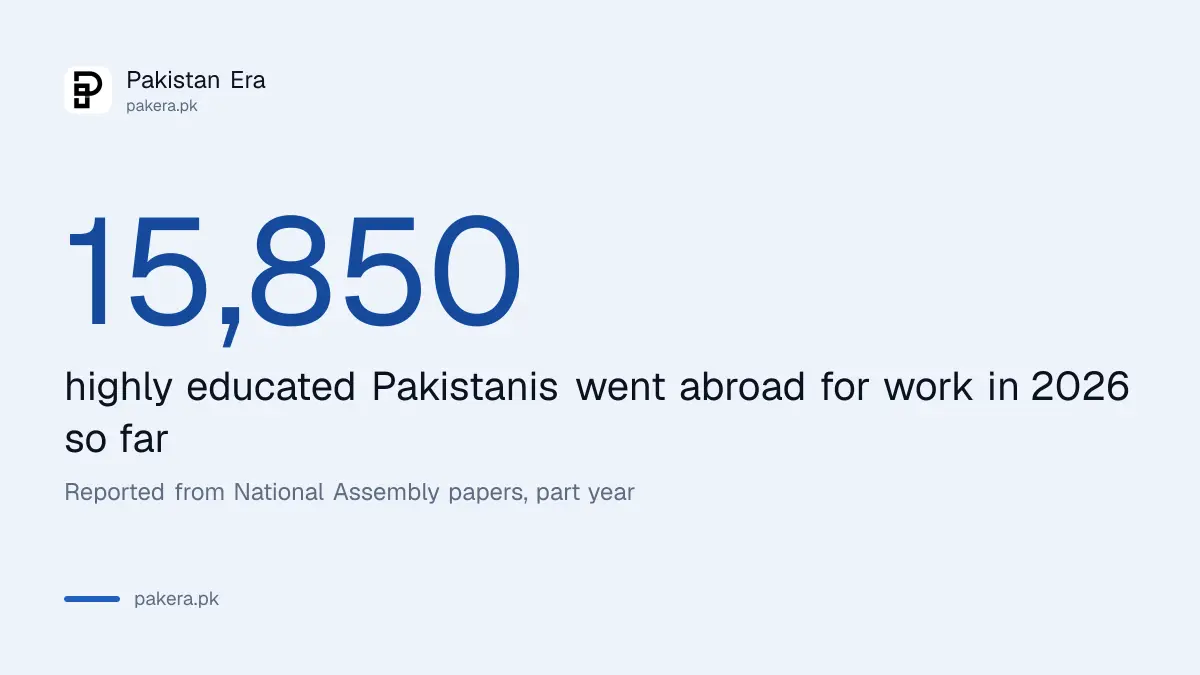
15,850 highly educated Pakistanis have gone abroad for work in 2026 so far
The reported 2026 count is 15,850 highly educated Pakistanis. Some reports round it to "over 15,800". It is a count for part of the year, not the full year, and the papers do not say which month it runs to.
Highly educated here is the label used in the papers. It covers professions such as managers, engineers, doctors, accountants and teachers. The papers also list a separate line for "highly skilled" people, which we explain below.
For scale, our report on the Bureau's January to September data counts 427,435 Pakistanis registered for jobs abroad in 2026 in all. Read it in Pakistani workers abroad, January to September 2026. The highly educated count and that total come from different documents, so we do not divide one by the other.
The yearly count has fallen from 45,830 in 2024 to 28,726 in 2025
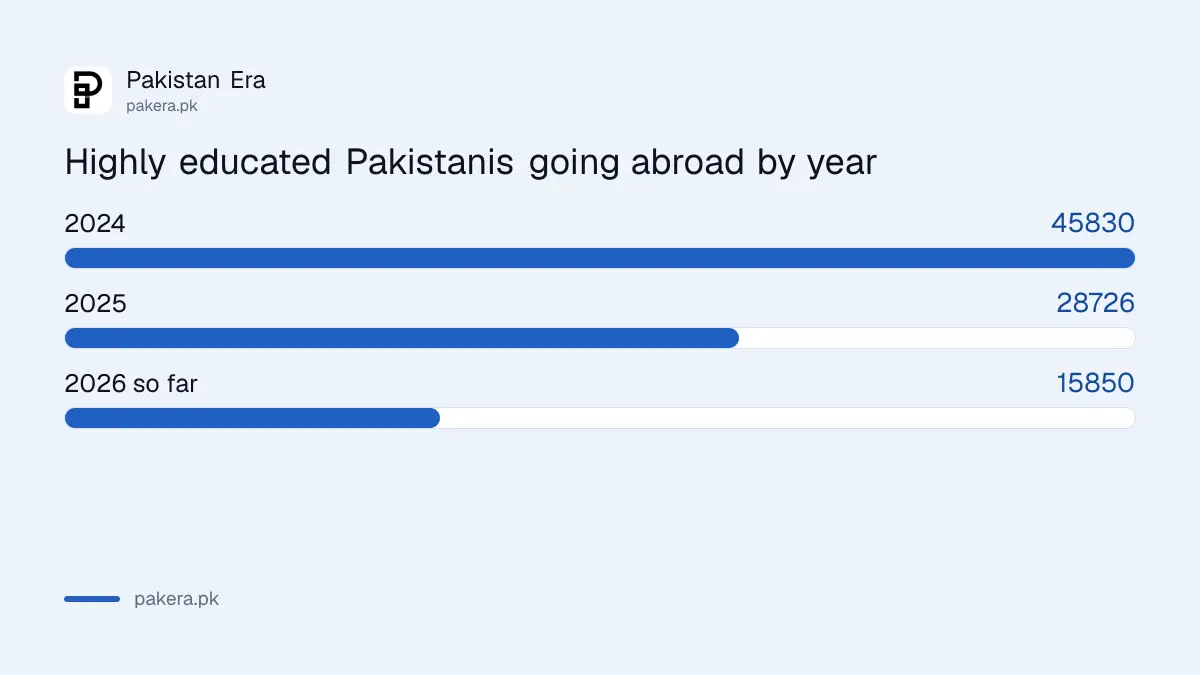
The reported yearly figures for highly educated Pakistanis going abroad are 45,830 in 2024, 28,726 in 2025 and 15,850 so far in 2026. Each year is lower than the one before. The 2025 figure is 37 per cent below 2024.
| Year | Highly educated Pakistanis who went abroad for work (reported) | Change on the year before |
|---|---|---|
| 2024 | 45,830 | Not given |
| 2025 | 28,726 | Down 17,104 |
| 2026 so far | 15,850 | Not a full year |
The fall from 2024 to 2025 is our arithmetic on the reported figures. The 2026 line cannot be compared with a full year. We do not guess where the year will end.
Managers, engineers and doctors lead the 2026 list
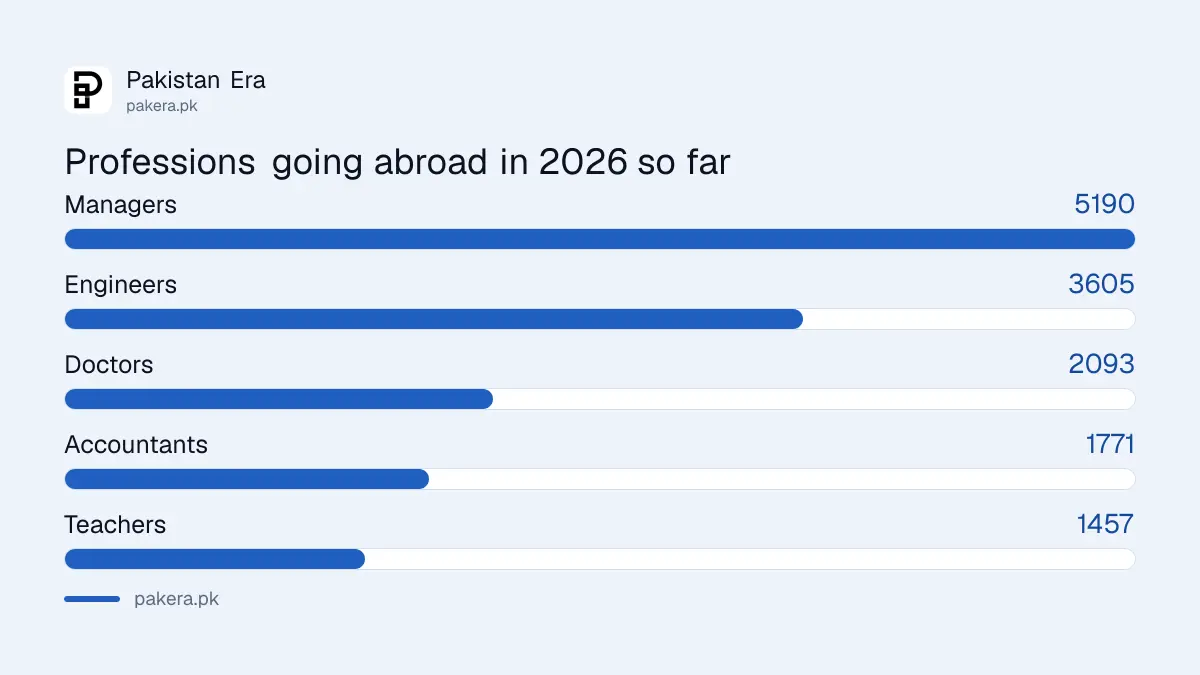
Managers are the largest group in 2026 at a reported 5,190. Engineers follow with 3,605 and doctors with 2,093. Every one of these professions is lower in 2026 than in 2025, but 2026 is a part year.
| Profession | 2024 | 2025 | 2026 so far |
|---|---|---|---|
| Managers | 23,674 | 9,562 | 5,190 |
| Engineers | 8,015 | 5,945 | 3,605 |
| Doctors | 3,625 | 3,795 | 2,093 |
| Accountants | about 4,800 | 4,305 | 1,771 |
| Teachers | 1,729 | 1,725 | 1,457 |
Two reports print the 2024 accountants figure slightly differently, 4,779 and 4,799. That is why the table says "about 4,800". The same lists show smaller counts for nurses (626 in 2026), computer programmers (664) and pharmacists (156).
Doctors are the one group that rose between 2024 and 2025, from 3,625 to 3,795. Teachers were almost level, at 1,729 and 1,725. Every other group in the table fell.
The papers do not say why people left or how the categories overlap
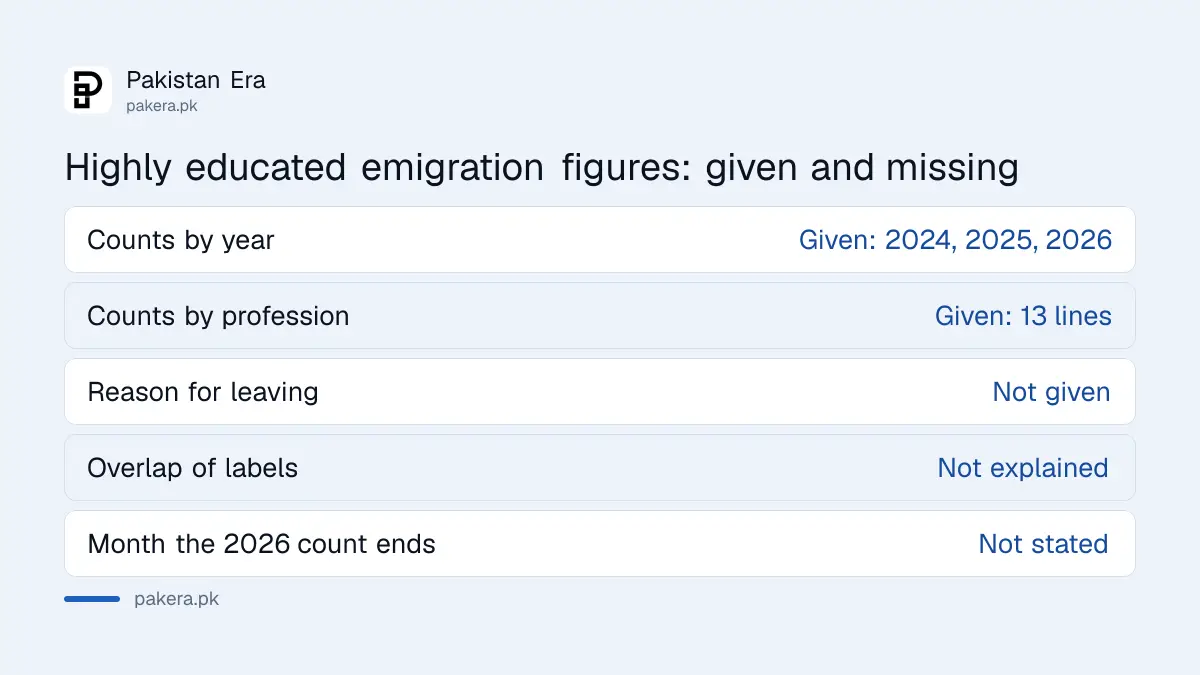
The figures count departures. They do not give reasons. The reports say the papers do not fully explain how the labels highly educated, highly qualified and highly skilled overlap, so the lines should not be added together.
The 2026 line shows why. When we add the lines from managers down to dental surgeons in the reported list, we get exactly 15,850. The list also shows 681 highly skilled people, 424 financial analysts and 11 pilots, which are not in that sum. One report says the 15,850 includes the 681. Our sum says it does not. The same report says the 2025 total includes 1,510 highly skilled people, so the papers are not clear on this line.
- The number of people who left is known. The reason each person left is not.
- It is not stated whether the people have since returned.
- The papers do not give the destination country for this group.
- The two-year total of 1.871 million for 2024 to 2026 is a count of all workers, and it is not the sum of the highly educated lines.
The government has a national policy on workers who go abroad
Pakistan approved a National Emigration and Welfare Policy in 2026. Its plans include higher life insurance for emigrant workers, a complaints call centre and one mobile app for the steps of going abroad. Most are plans with a one to three year roll-out, not rules yet.
We read the approved policy in full on 9 October 2026 and explain it in our guide to the National Emigration and Welfare Policy 2026. The policy covers workers of all skill levels. The reported National Assembly figures do not say how the policy relates to the departure of professionals.
If you plan to work abroad, check the job and the agent first
Whatever your profession, check the employer and the recruiter before you pay anything. A work visa is not enough on its own. Emigration rules ask for a stamp from the Protector of Emigrants, and unlicensed agents are an offence.
- Ask the agent for the licence number and check it with the Bureau of Emigration and Overseas Employment.
- Get the job offer and contract in writing before you pay any fee.
- Read about the Protector of Emigrants and book the stamp yourself if you can.
- Keep every receipt. If an unlicensed agent takes your money, follow our steps to report an unlicensed job agent.
Common questions about highly educated Pakistanis going abroad
How many highly educated Pakistanis have gone abroad for work in 2026?
About 15,850 so far in 2026, as reported from papers given to the National Assembly. Some reports round it to over 15,800. It is a part-year figure.
How many went abroad in 2025 and 2024?
The reported figures are 28,726 for 2025 and 45,830 for 2024. Those are the full-year counts in the same papers.
Which profession sends the most people abroad?
Managers, at a reported 5,190 in 2026 so far. Engineers are next at 3,605, then doctors at 2,093, accountants at 1,771 and teachers at 1,457.
Does the number show a brain drain?
It counts people who left for work. It does not show why they left, how long they stay or whether they return. We do not draw a conclusion beyond the count.
Why do the totals not match the profession lines?
The papers use overlapping labels such as highly educated, highly qualified and highly skilled. The reports say the overlap is not fully explained, so the lines should not be added up.
Where can I check official emigration figures?
The Bureau of Emigration and Overseas Employment publishes its statistics on its website. When we tried on 17 October 2026, the site blocked our access, so we could not match these numbers to a Bureau table.
How we verified this
What we checked, where we read it, and what we could not confirm.
Last checked 17 October 2026. The yearly counts and the profession lists are reported from papers presented to the National Assembly during Question Hour, as published on 16 October 2026. We did not find the papers on the Assembly's own website, and we could not open the Bureau of Emigration and Overseas Employment statistics page, so the figures are reported and not confirmed. The fall from 2024 to 2025 is our arithmetic. Policy details come from the approved National Emigration and Welfare Policy 2026 on the Ministry of Overseas Pakistanis and Human Resource Development website, which we read on 9 October 2026.
About the author

Public Services and Education Journalist
Fajr Riaz is a journalist and content writer at Pakistan Era, based in Lahore. She covers the questions people meet in everyday life in Pakistan: how a public service works, what a change in the rules means, and where to find a reliable answer.