How Much Is the BISP Kafalat Payment
BISP Kafalat is reported at Rs 14,500 a quarter, rising to Rs 18,000 in January 2027. Its own site still shows Rs 8,500. Every figure explained.
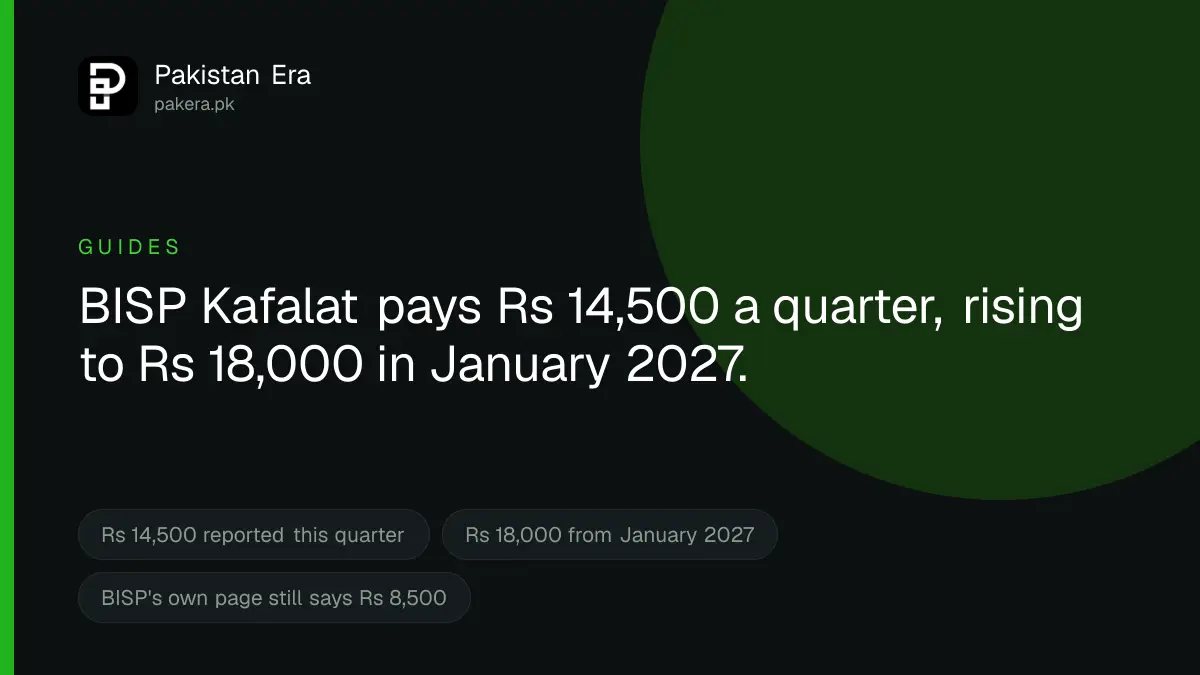
The figure being paid this quarter is reported as Rs 14,500 per family. We could not find that number published anywhere on BISP's own website, which is why this page says reported. What BISP does publish is older, and that is the whole reason searching this question returns five different answers.
If you are trying to work out what should arrive, read the table below before you trust any number you have been sent on WhatsApp.
Every figure in circulation, and where it actually comes from
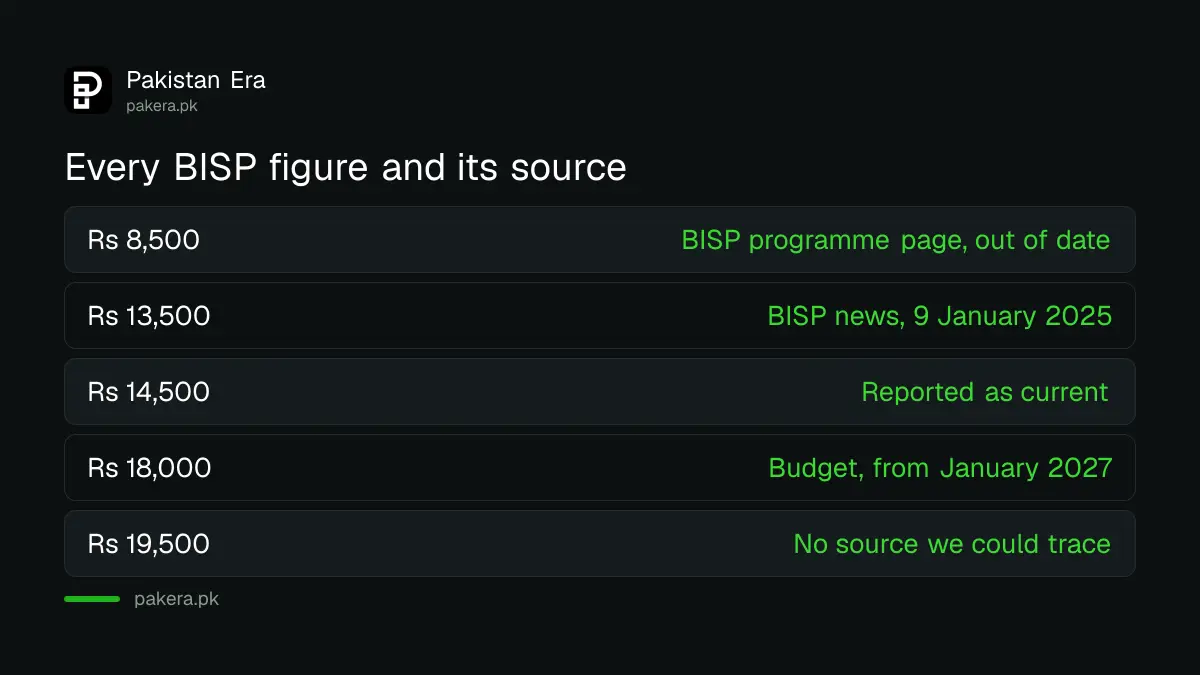
We opened BISP's own pages on 26 August 2026 and compared them with what is being reported. These are the numbers people are seeing, and the source of each one.
| Figure | Where it comes from | Status |
|---|---|---|
| Rs 8,500 | BISP's own Benazir Kafaalat programme page | Published by BISP, but out of date |
| Rs 13,500 | BISP news release dated 9 January 2025 | Published by BISP, superseded |
| Rs 14,500 | News reporting and budget coverage | Reported as current, not on BISP's site |
| Rs 18,000 | FY 2026-27 budget coverage, from January 2027 | Reported as planned, not yet paid |
| Rs 19,500 | Some websites, no source given | We could not trace it to any source |
The Rs 8,500 line is not a misprint by anybody else. BISP's Benazir Kafaalat page says, in its own words, that starting from Rs 3,000 per beneficiary per quarter, the present stipend is Rs 8,500 per beneficiary per quarter. That page has simply not been updated as the amount rose, and a reader who lands on it reasonably assumes it is current.
The amount has risen several times, which is why old numbers survive
Kafalat began at Rs 3,000 a quarter. BISP's own announcement of 9 January 2025 raised it from Rs 10,500 to Rs 13,500. Reporting through 2026 gives Rs 14,500 as the amount now being paid to roughly nine to twelve million families, depending on which count you read.
Each increase leaves the previous figure alive on some page somewhere, and those pages keep ranking. That is why a search throws up Rs 8,500, Rs 13,500 and Rs 14,500 at the same time, all of them looking official.
Rs 18,000 is planned for January 2027, not being paid now
Budget coverage for the 2026-27 financial year describes the quarterly Kafalat payment rising from Rs 14,500 to Rs 18,000 from January 2027, within a total BISP allocation reported in the range of Rs 838 billion to Rs 844 billion.
That is a plan in a budget, not money in an account. Treat it as something to expect rather than something you can claim, and do not let anyone use it to ask you for a fee now. We have not seen Rs 19,500 in any budget document or official statement, so treat that number as unsupported until it appears in one.
Check your own payment rather than a headline number
The national figure tells you what a full quarterly instalment is. It does not tell you what is sitting against your CNIC, whether your household is still eligible, or whether an instalment has been released to you.
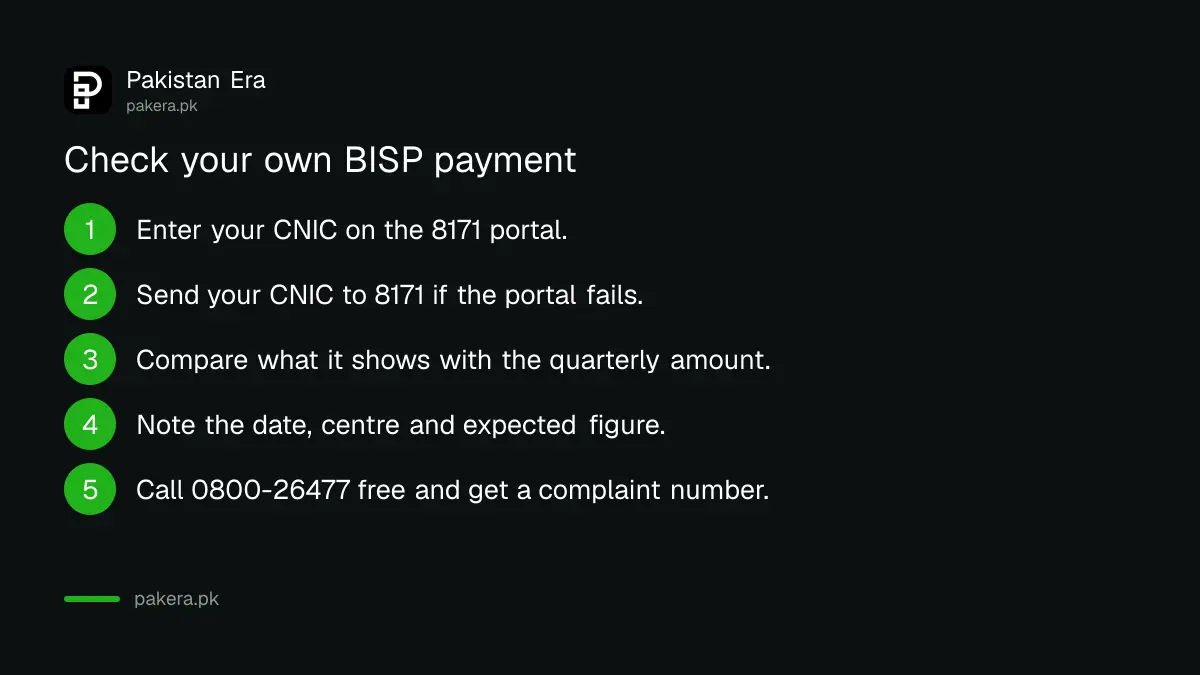
- Open the 8171 web portal and enter your CNIC or form number.
- Send your CNIC number to 8171 by SMS if the portal is not loading.
- Compare what the portal shows with the amount above before assuming a shortfall.
- If an amount is missing, note the date, the centre and the figure you expected.
- Call the BISP helpline on 0800-26477, which is free, and ask for a complaint number.
We walked through the portal screen by screen in our guide to checking BISP eligibility and payment on 8171, including what each of the two portal functions actually does.
One practical thing trips families up before any of this. Collection runs on biometric verification against your CNIC, so an expired card can stop a payment that is otherwise perfectly in order. If yours has lapsed, renewing it comes first, because no helpline call will release the money while the card is out of date.
A deduction is not the same as a lower payment
Families often conclude the amount has been cut when the real problem is that something was taken at the point of collection. Those are different problems with different answers, and the second one is recoverable.
Payment is made after biometric verification through partner banks, HBL in Punjab, Sindh and Balochistan, and Bank Alfalah in Khyber Pakhtunkhwa, Gilgit-Baltistan and Azad Jammu and Kashmir, according to BISP's own programme page. Nobody in that chain is entitled to a cut. We set out how deductions by agents are supposed to be reported in our piece on illegal deductions.
Nobody can raise your payment for a fee
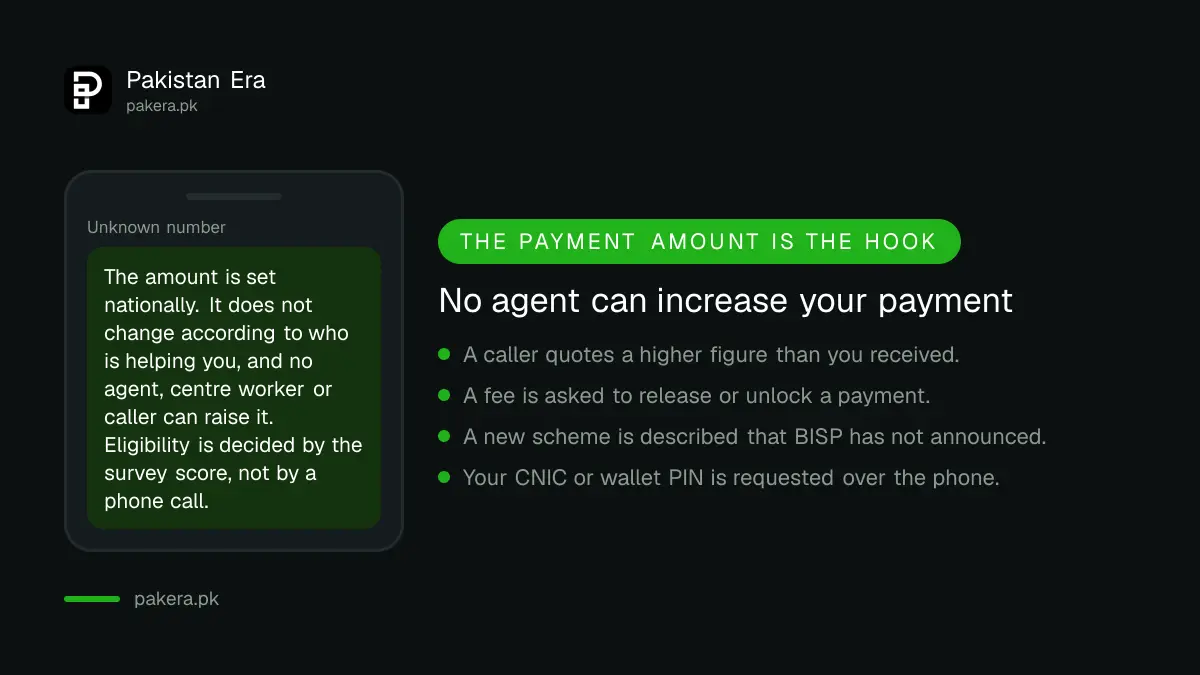
BISP is the most heavily targeted programme in Pakistan for fraud, and the payment amount is the hook. The pattern is simple: someone quotes a higher figure than you received, says a new instalment or a new scheme has been approved, and asks for a small processing payment or your details to release it.
The amount is set nationally. It does not vary by who is helping you, and it cannot be increased by any agent, centre worker or number that contacts you. Eligibility is decided by the survey score, not by a phone call. If someone asks for money to unlock a payment, that alone tells you what it is.
Common questions about the BISP payment amount
How much is the BISP payment right now?
Reported as Rs 14,500 per family for the quarter. BISP does not publish that figure on its own site where we could find it, so we mark it reported rather than confirmed.
Why does the BISP website say Rs 8,500?
Its Benazir Kafaalat programme page still carries an older amount and has not been updated as the stipend rose. The figure is genuine, it is simply not current.
Is the payment going up to Rs 18,000?
That is what budget coverage for 2026-27 describes, from January 2027. It is a plan rather than a payment, and nothing is due on it before then.
Is Rs 19,500 correct?
We could not trace it to any budget document, BISP release or official statement. Until it appears in one, treat it as unsupported.
Who do I call if my payment is short?
The BISP helpline is 0800-26477 and it is free. Have your CNIC, the date, the collection point and the amount you expected, and ask for a complaint number.
How we verified this
What we checked, where we read it, and what we could not confirm.
Last checked 26 August 2026. The Rs 8,500 figure and the payment mechanism were read directly on BISP's Benazir Kafaalat programme page at bisp.gov.pk, and the Rs 13,500 increase on BISP's own news listing, dated 9 January 2025. The Rs 14,500 current amount and the Rs 18,000 figure for January 2027 come from budget and news reporting including Business Recorder and TechJuice, not from a BISP page, which is why the body marks them reported throughout. The helpline number is the one published on BISP's own site. We hold no BISP account and checked no individual record, so nothing here describes what any particular household will receive.
About the author

Tax, Bills and Technology Writer
Ali Akhtar is a young and curious voice here at Pakistan Era. He is currently pursuing his A-Levels and has a growing interest in Pakistan’s changing industrial landscape and educational trends. Ali likes to write in a way that helps him explain and explore the world around him. His writing reflects the perspective of the new generation navigating the evolving trends of Pakistan where technology, youth innovation, and shifting opportunities are reshaping the country’s future.