NCCIA Arrests 61 at Illegal Call Centre in Rawalpindi, Seizes 155 Laptops
NCCIA raided an illegal call centre in Satellite Town, Rawalpindi, arresting 61 over alleged loan recovery fraud and extortion. How to report a scam call.
The National Cyber Crime Investigation Agency (NCCIA) raided an illegal call centre in Satellite Town, Rawalpindi, on Monday 28 September 2026 and arrested 61 people. According to an NCCIA spokesperson, officers also seized 71 mobile phones and 155 laptops during the operation.
The NCCIA says the people held were involved in international fraud through a "foreign loan recovery scheme", and in taking money from citizens by threatening them. A case has been registered and the investigation is continuing. These are the agency's allegations. The 61 people are suspects, and no court has ruled on the case.
Everything about the raid below comes from the government's account released on 28 September. We could not read an NCCIA press release, because nccia.gov.pk refused our requests with a bot check on the same day.
NCCIA arrested 61 suspects and seized 155 laptops
The NCCIA says it arrested 61 people at one call centre in Satellite Town, Rawalpindi, and seized 71 mobile phones and 155 laptops. A case is registered and the investigation is still going on. No names or nationalities were given.
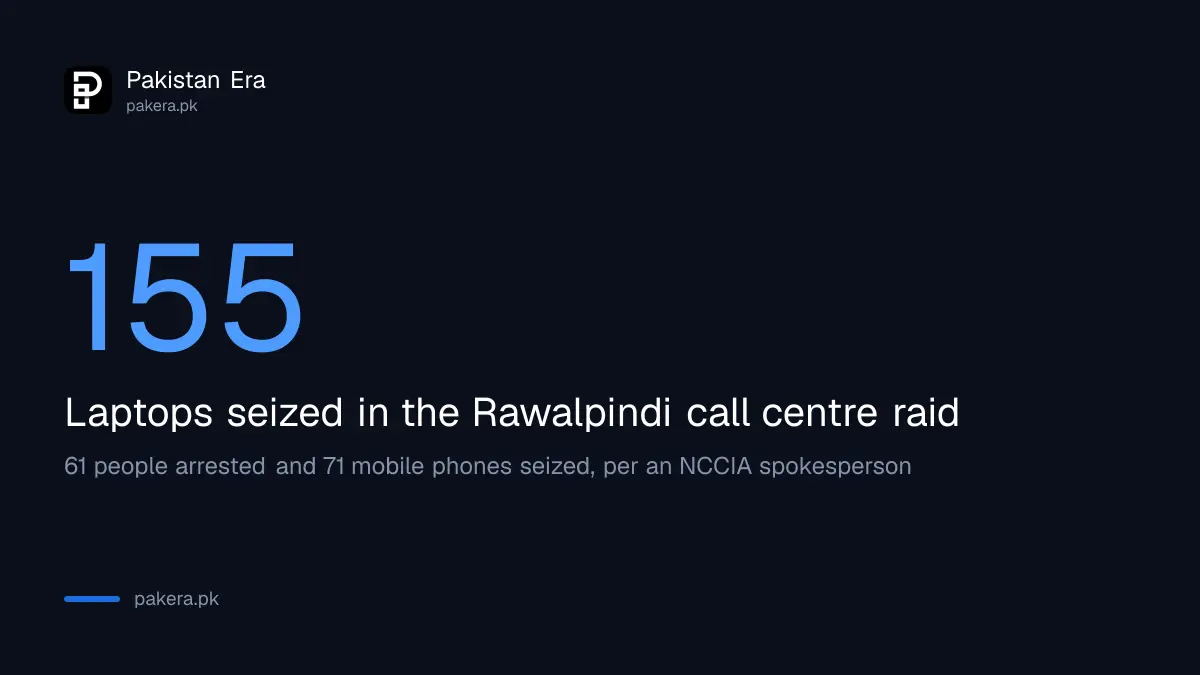
That is more than two laptops for every person arrested. The number suggests a large, organised setup rather than a small group. But the official account gives no more detail than the figures below.
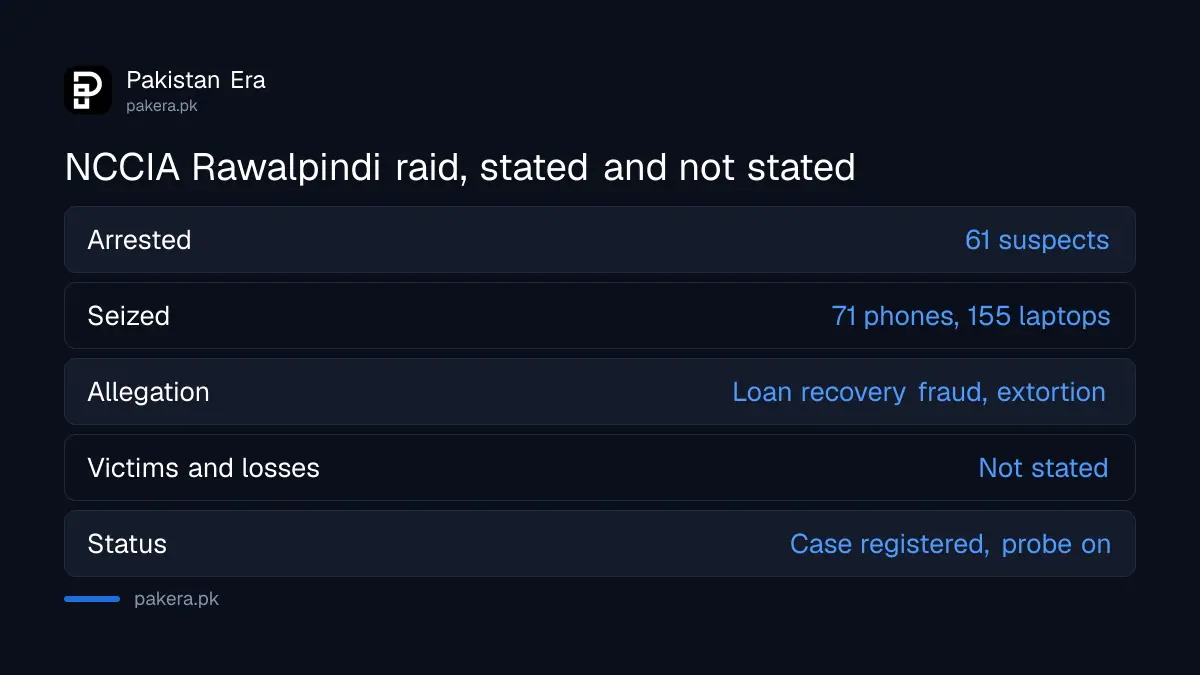
| What the NCCIA stated | Detail |
|---|---|
| Date | Monday 28 September 2026 |
| Place | Satellite Town, Rawalpindi |
| People arrested | 61 |
| Mobile phones seized | 71 |
| Laptops seized | 155 |
| Alleged offences | International fraud through a foreign loan recovery scheme, and extortion by threats |
| Legal status | Case registered, investigation under way |
The official account leaves several questions open
The NCCIA has not said who the victims were, how much money was taken, or whether the targets were in Pakistan or abroad. It also has not named the suspects or said who ran the call centre. We will not guess at any of it.
The word "international" and the phrase "foreign loan recovery" suggest that at least some calls went to people outside Pakistan. The official account does not say so directly, though.
The raid comes a day after Interior Minister Mohsin Naqvi told the agency to step up action against online financial fraud and digital blackmail. The government has not linked the two events, so we do not either.
Loan recovery threats and fake officials are common scam calls
The Pakistan Telecommunication Authority (PTA) lists the scam calls it sees most. They include callers pretending to be a bank, BISP or a government body, threats and extortion, fake prize messages, and requests to send back a "code" after a fake money transfer.
A fake loan recovery call usually mixes two of these. The caller claims you owe money. Then the caller threatens you, your family or your reputation unless you pay at once. The NCCIA's own description of this case, fraud plus "extortion by threatening the citizens", fits that pattern.
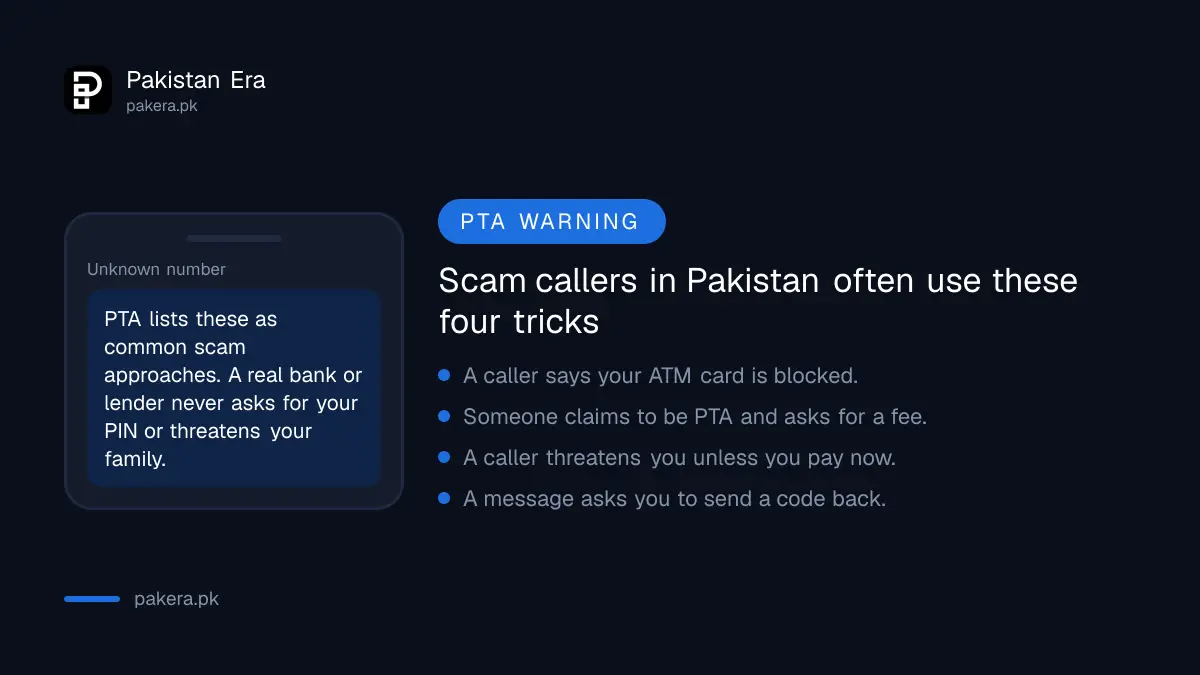
PTA's scam page names these approaches:
- Calls or messages saying your ATM card is blocked, with a number to call.
- Callers claiming to be from PTA, asking for money to register your phone.
- Threats, including callers pretending to be from the Pakistan Army.
- A message saying money reached your Easypaisa account by mistake, asking you to send a code back.
- Prize or lottery calls, often using the name of a TV game show.
One honest caveat. PTA's page does not mention loan recovery calls by name. We are matching the NCCIA's wording to the threat and impersonation patterns PTA does describe.
A caller who threatens you for money should get nothing
PTA's advice is plain: never send money, ATM or PIN details, online account details or copies of your documents to anyone you do not know or trust. If you are unsure, stop paying. Scammers keep asking until you stop.
A real lender or bank does not need your PIN. It does not threaten your family. And it does not ask you to pay into a personal mobile wallet during a phone call. If a caller does any of these, hang up. Do not argue, because every extra minute gives them more to work with.
Keep the number, the time of the call and any messages. Screenshots matter more than your memory later on.
How to report a scam call in Pakistan
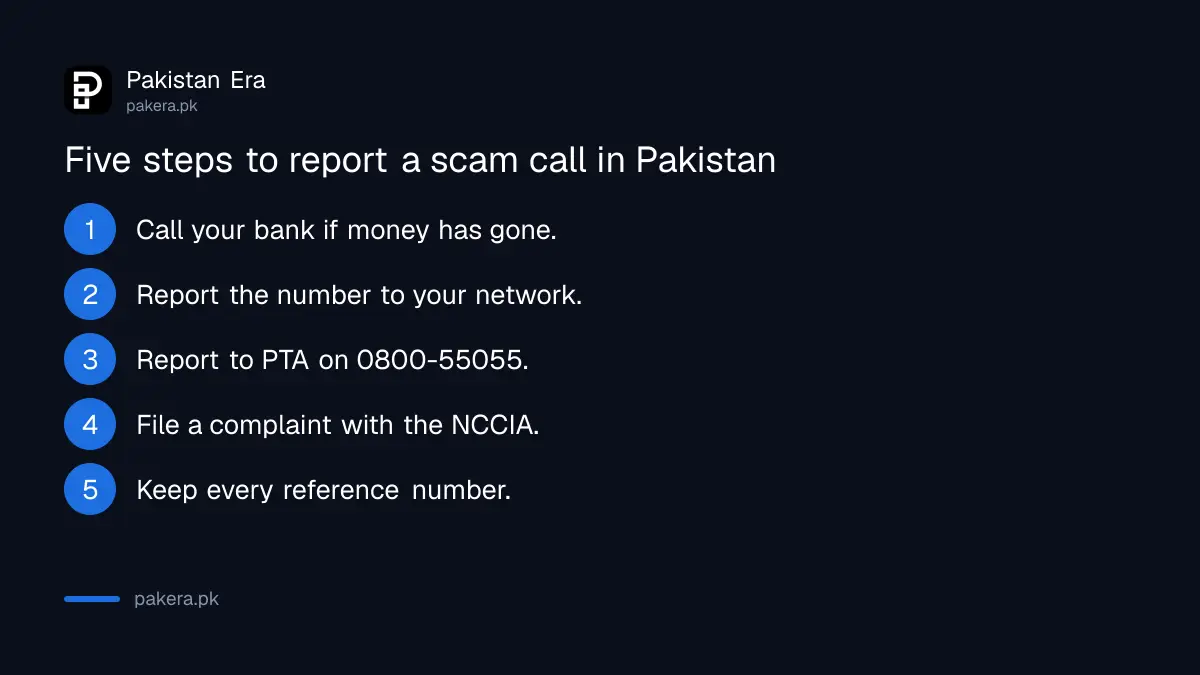
Report the number to your mobile network first, then to PTA if nothing happens. If you have lost money, call your bank straight away and file a cybercrime complaint with the NCCIA. PTA's helpline is 0800-55055.
Here is the order PTA and the NCCIA's own channels point to:
- If money has left your account, call your bank at once. PTA says the bank may be able to stop the transaction or close the account.
- Report the scam number to your network: Jazz, Zong, Telenor, Ufone or PTCL.
- If the network does not act, report the number to PTA on 0800-55055 or through the PTA complaint portal. The PTA CMS app now has a module for reporting fraud numbers too.
- File a cybercrime complaint with the NCCIA. The FIA website links to its complaint portal at complaint.nccia.gov.pk.
- Keep every reference number you are given.
PTA says it blocks the reported number and the phone's IMEI. It adds that repeat offenders using new numbers can have their CNIC blacklisted from getting new SIMs.
The complete steps for reporting a cybercrime to the NCCIA, including what evidence to collect, are worth reading before you file. If money went through a bank, the bank fraud complaint deadlines set by the State Bank also apply.
For marketing calls rather than threats, texting "reg" to 3627 puts you on the Do Not Call Register, as set out in PTA's rules to stop spam SMS and calls. That service does not stop a criminal calling you, though. For those, report the number.
Common questions
How many people did the NCCIA arrest in Rawalpindi?
The NCCIA says it arrested 61 people at the call centre in Satellite Town on 28 September 2026. They are suspects. No one has been convicted.
What did the NCCIA seize in the raid?
According to its spokesperson, 71 mobile phones and 155 laptops.
What were the suspects accused of?
The NCCIA says they were involved in international fraud through a foreign loan recovery scheme, and in extortion by threatening citizens. A case is registered and the investigation continues.
What is the NCCIA helpline number?
1799 is widely reported as the NCCIA helpline. We could not confirm it on the agency's own site, which blocked our requests. PTA's scam page still lists an FIA number, 051 9106384.
Can PTA block a scam number?
Yes. PTA says it blocks reported scam numbers and the phone's IMEI, and can blacklist the CNIC of repeat offenders.
I paid a scam caller. What should I do first?
Call your bank or wallet provider immediately, then report to your network, PTA and the NCCIA. Speed matters most with the bank.
How we verified this
What we checked, where we read it, and what we could not confirm.
Last checked 28 September 2026. The raid details come from the government's account of the operation published on 28 September, attributed to an NCCIA spokesperson. nccia.gov.pk and complaint.nccia.gov.pk refused our requests with a bot check that day, so we could not read an NCCIA release. The scam types and reporting steps are from PTA's own pages, Protect Yourself from Scams and Recognise Scams, which we read on 28 September. The NCCIA complaint portal link is from the FIA website's overseas page. The 1799 helpline is reported, not read at source.
About the author

Tax, Bills and Technology Writer
Ali Akhtar is a young and curious voice here at Pakistan Era. He is currently pursuing his A-Levels and has a growing interest in Pakistan’s changing industrial landscape and educational trends. Ali likes to write in a way that helps him explain and explore the world around him. His writing reflects the perspective of the new generation navigating the evolving trends of Pakistan where technology, youth innovation, and shifting opportunities are reshaping the country’s future.