How to Pack a Flood Emergency Kit in Pakistan: NDMA's 5 Essentials
Pack a flood emergency kit in Pakistan the NDMA way: food and water, medicines, documents, first aid and shelter. Includes evacuation steps and the helpline.
Short answer: NDMA's 2026 flood guideline says an emergency kit should hold food and water, medicines, important documents, first aid supplies and emergency shelter materials. Pack it before the rains, know your route to higher ground, and call NDMA on 051-111-157-157 if you need help.
Floods give little time. When a warning comes, families often leave with only what they can grab. A kit that is already packed saves minutes and keeps your papers dry.
We read the English pictorial flood guideline on ndma.gov.pk, dated 24 June 2026, and the NDMA home page on 14 October 2026. This guide turns that sheet into a short packing plan. Where we add a suggestion of our own, we say so.
NDMA names five things for the flood kit
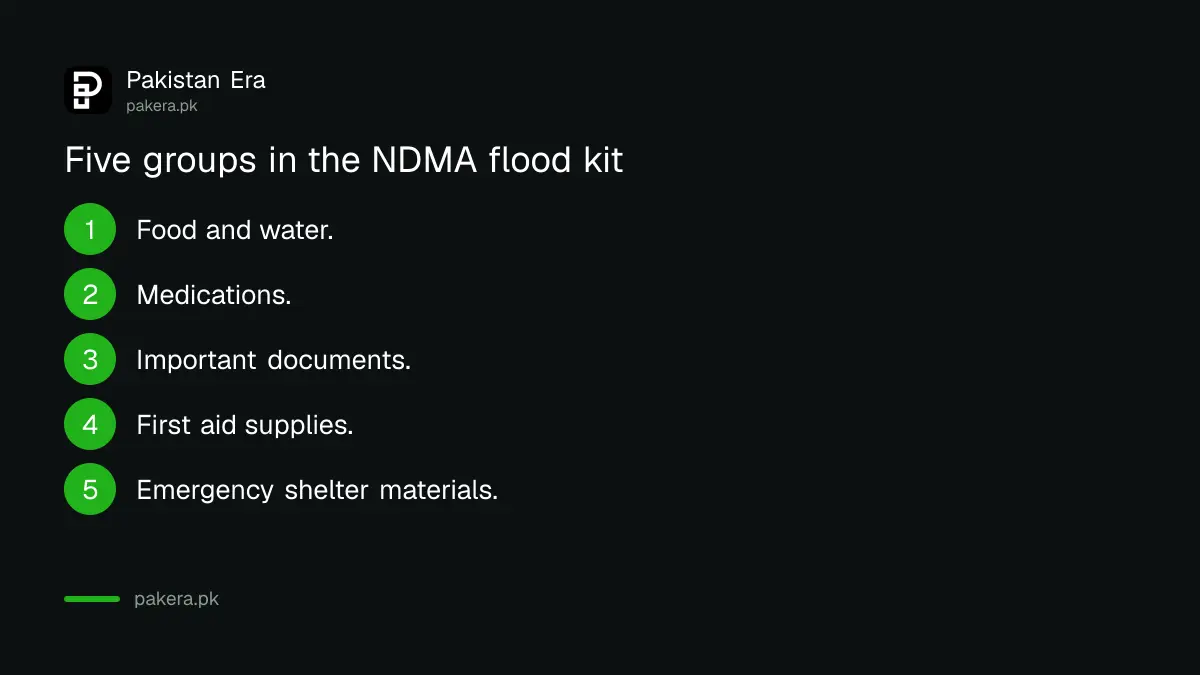
The guideline lists food and water, medications, important documents, first aid supplies and emergency shelter materials. These five groups are the base of the kit. NDMA does not give quantities, so you decide how much from your family size.
The same sheet says to prepare the kit before floods, not during them. That matters because roads and shops may be cut off once water rises.
Pack documents and medicines first because they are hard to replace
Documents and medicines are the items you cannot buy again in a day. Put CNICs, B-Forms, property papers and school records in a sealed bag, and pack at least a few days of regular medicine for everyone who takes it.
The sealed bag is our suggestion, not an NDMA step. Water destroys paper quickly, so a strong plastic bag inside a bag you can carry is a cheap safeguard. If a CNIC is lost, see our guide on NADRA services at home for one route to a replacement.
| Kit group (NDMA) | What to put in |
|---|---|
| Food and water | Dry food that needs no cooking, and drinking water for each person |
| Medications | Regular medicines, with the doctor's prescription |
| Important documents | CNIC, B-Form, property and school papers in a sealed bag |
| First aid supplies | Bandages, antiseptic, pain relief |
| Emergency shelter materials | Plastic sheet, rope, blanket |
The right column adds our own examples. NDMA lists only the group names.
Learn your route to higher ground before the water comes
NDMA says to know the evacuation routes and have an evacuation plan, and to practise the plan with drills. Agree on one meeting place, one route to high ground, and who carries the kit and who helps older people.
- Pack the kit now and keep it near the main door.
- Check weather forecasts and flood alerts every day in the rainy season.
- Walk your route to higher ground once with the whole family.
- Agree a meeting place if you get separated.
- Save the NDMA helpline and your local rescue number in every adult's phone.
Our guide on how to get NDMA alerts shows where the advisories appear. To see which warning sites are updated, read our test of flood warning sites.
When water rises, leave on official advice and stay out of floodwater
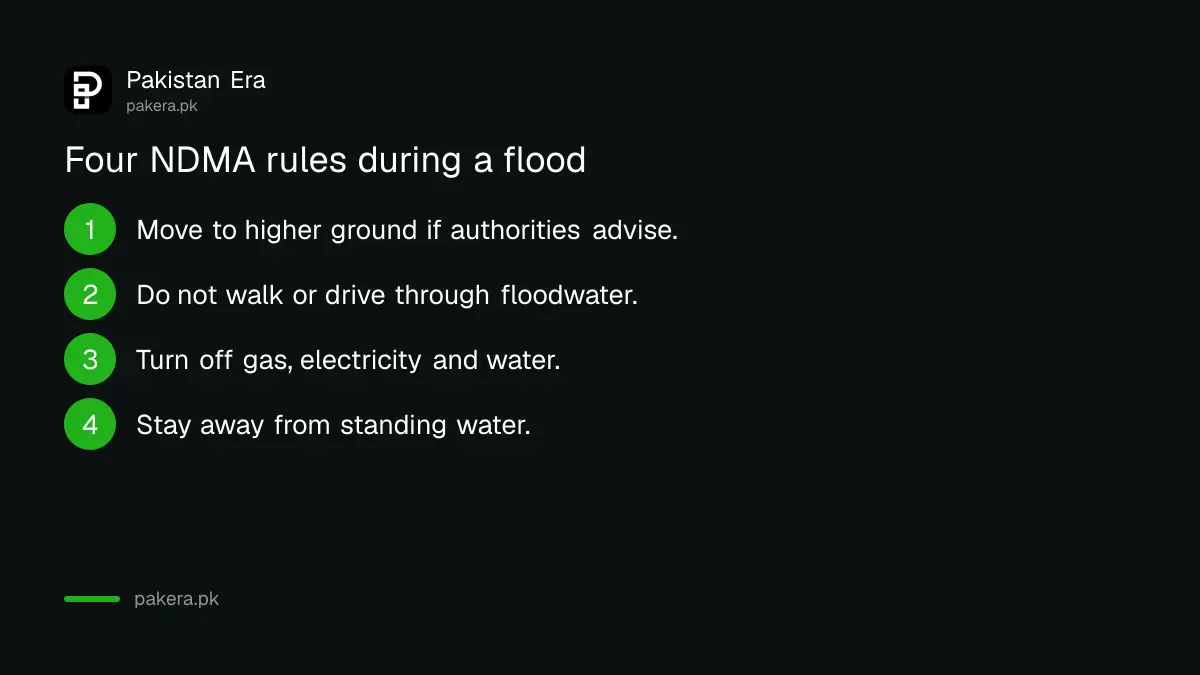
The guideline says to move to higher ground at once if authorities advise it, follow instructions from emergency services, and avoid walking or driving through floodwater, which may be deeper or faster than it looks. Turn off gas, electricity and water before you leave.
It also warns to stay away from standing water, which can be contaminated or electrically charged. After a flood, wading in dirty water can also cause illness. See our note on checking for leptospirosis after flood water.
After the flood, return only when authorities say it is safe
NDMA says to return home only when authorities declare it safe, open doors and windows to dry the house, clean and dry thoroughly to stop mould, and get medical help for any injury or illness. Assess damage with safety first.
If your house or crops were damaged in Punjab, our guide on claiming flood damage compensation in Punjab explains the next step. Photograph the damage before you clean, which is our advice, not NDMA's.
Check the kit every few months. Food and medicine expire, and batteries run down. Put a note in your phone for the start of each rainy season so the kit is ready before the first alert, not after it.
If you live in a low area near a drain, river or canal, tell your neighbours where the kit is kept and agree to leave together. Families that move together lose fewer people and fewer papers.
Common questions
What does NDMA say should be in a flood emergency kit?
Food and water, medications, important documents, first aid supplies and emergency shelter materials. These come from the NDMA pictorial flood guideline dated 24 June 2026. NDMA gives no quantities.
What is the NDMA helpline?
The NDMA home page lists 051-111-157-157, open 24 hours, and a WhatsApp number, 0300-0881641. For fire, medical or rescue calls, Rescue 1122 is the usual number in most districts.
Should I wait for an official order to leave?
NDMA says to evacuate to higher ground immediately if authorities advise it and to follow emergency services. If water is already entering your street, do not wait to finish packing. Take the kit and go.
Can I drive through shallow floodwater?
NDMA says to avoid walking or driving through floodwater because it may be deeper or faster than it looks. Standing water can also be electrically charged. Take another route instead.
When can we go back home?
Only when authorities declare the area safe. Then ventilate and dry the house fully to prevent mould, and see a doctor for any injury or illness linked to the flood.
How we verified this
What we checked, where we read it, and what we could not confirm.
Last checked 14 October 2026. We read the NDMA Pictorial Flood Guideline (English), dated 24 June 2026, listed on ndma.gov.pk/guidelines, and the helpline numbers on the NDMA home page. NDMA gives no quantities for the kit, and the sealed bag and photo advice are ours. Sources: ndma.gov.pk and ndma.gov.pk/guidelines.
About the author

Public Services and Education Journalist
Fajr Riaz is a journalist and content writer at Pakistan Era, based in Lahore. She covers the questions people meet in everyday life in Pakistan: how a public service works, what a change in the rules means, and where to find a reliable answer.