Register With BISP From a Remote Area in Pakistan: 25 Mobile Vans and 647 Centres
BISP has 25 Mobile Registration Vans for remote households and 647 tehsil centres. See what to bring, how to find a van and how to check your 8171 result.
If you live far from a BISP Tehsil Office, ask about a BISP Mobile Registration Van. BISP has 25 vans that register households for its National Socio-Economic Registry, called NSER, in remote areas, with a special focus on Balochistan. Call the toll free helpline 0800-26477 or your tehsil office to ask where a van is working near you.
The NSER is the survey that decides who can get Benazir Kafaalat. A household that is missing from it cannot be found by 8171. We read BISP's NSER Report 2024, its registration leaflet and its July 2026 press releases on 14 October 2026 to set out how the vans work and what to bring.
BISP has 25 vans for areas without a nearby centre
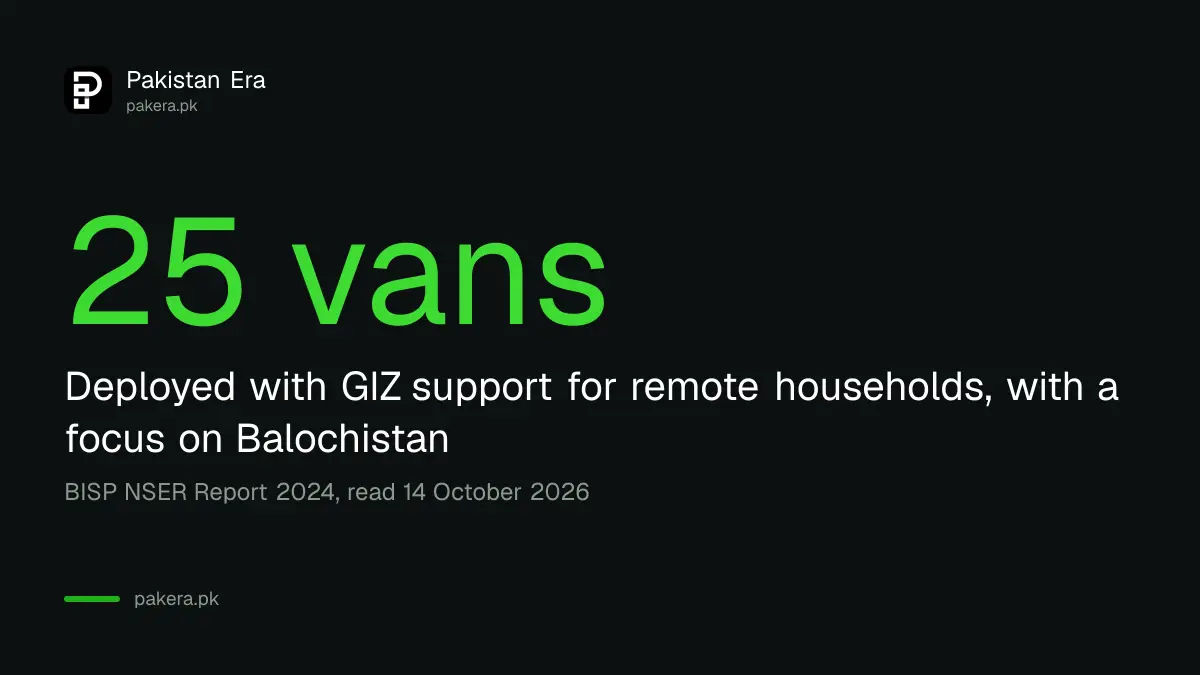
BISP says it runs 647 dynamic registration centres, one in every tehsil, but families in remote parts of Balochistan, Sindh and Khyber Pakhtunkhwa cannot reach them easily. With support from GIZ, it deployed 25 mobile vans to register those households.
| Item | Figure in BISP's report |
|---|---|
| Dynamic registration centres | 647, in every tehsil |
| Mobile Registration Vans | 25, funded through GIZ |
| Households in the NSER | Over 35 million |
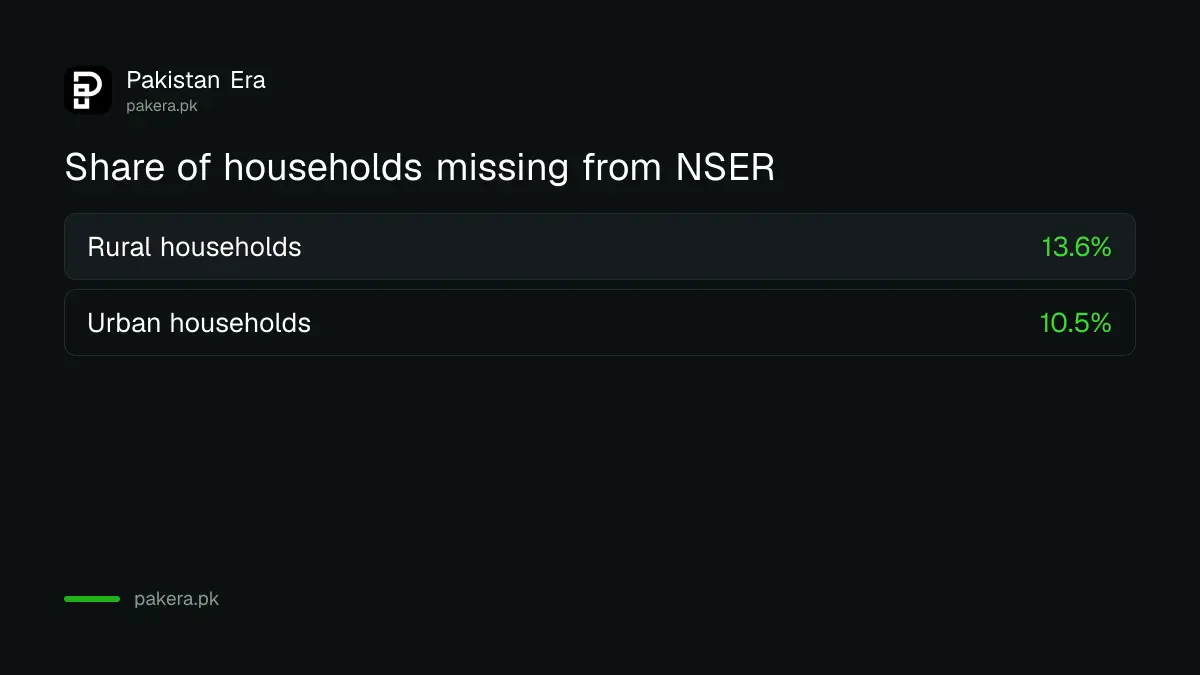
| Rural households missing from NSER | 13.6 percent |
| Urban households missing from NSER | 10.5 percent |
The gap matters. BISP's own analysis found rural households more likely to be left out of the registry than urban ones. The vans exist to close that gap. The report says the gap is largest in Balochistan.
Vans have also reached Mansehra and disaster districts
BISP's chairperson inaugurated a Mobile Registration Van at the Mansehra office on 19 July 2026, according to BISP Press Release No. 62. The release says the van brings registration to people in remote areas where BISP offices are hard to reach.
The report also says vans surveyed 77,247 households in calamity-hit districts of Balochistan and Sindh. These re-surveys check how disaster changed a household's situation, so aid can reach the right families.
BISP does not publish a van timetable on the pages we read. The report says zonal offices decide where vans go, based on demand and need. District officers plan the routes. That means the best way to find a van is to ask the district or tehsil office directly.
Bring the same papers you would take to a tehsil desk
The survey asks about every person in the home, so the officer needs the CNICs of all adults and the B-Forms of all children. BISP's leaflet says the CNICs should match NADRA records, including marital status, widow status and disability.
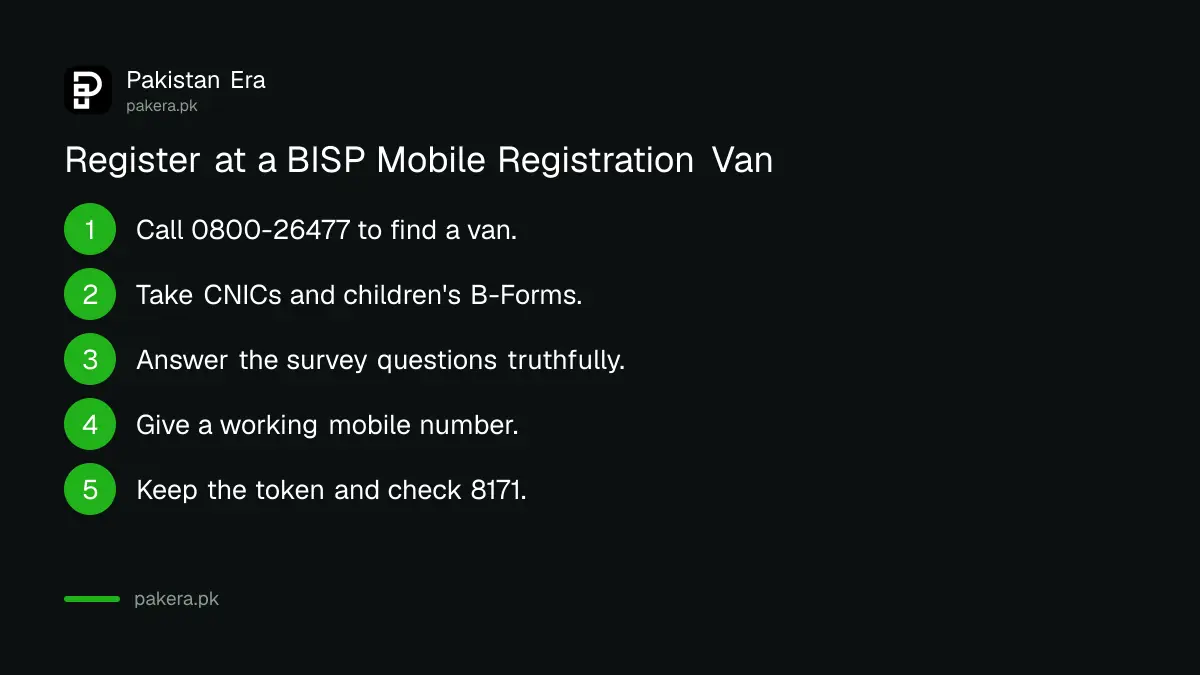
- Call 0800-26477 or your tehsil office and ask where a van is working in your area.
- Check the date and place, and whether the van takes new surveys or updates.
- Take your CNIC, the CNICs of other adults and the B-Forms of children.
- Give true answers about household members, education, health, assets and income.
- Give a mobile number that works, because the confirmation SMS comes from 8171.
- Keep the token receipt and check your result on 8171 later.
BISP's leaflet says priority is given to disabled persons, pregnant women and senior citizens at its centres. We do not know if vans follow the same queue rule, so ask on the day.
After the survey, check your result and keep your receipt
After the survey you should get a confirmation SMS from 8171. If your household is found eligible, you may also get a letter about Benazir Kafaalat. You can check your status by sending your CNIC to 8171 or by visiting the tehsil office.
The 8171 check is explained in how to check your BISP payment and eligibility on 8171. If the answer is "not eligible", the steps in updating an NSER survey at a tehsil desk apply, and the score rules are in the Kafaalat cut-off score guide.
NADRA also runs vans for CNICs. A van for BISP and a van for NADRA are different services. The NADRA service is explained in how to get a CNIC done at a NADRA Mobile Registration Van.
Common questions about BISP Mobile Registration Vans
What is a BISP Mobile Registration Van?
It is a van that carries registration staff and equipment to remote places, so households can complete the NSER survey without going to a tehsil office. BISP has 25 such vans.
How do I find a van near me?
BISP publishes no timetable on the pages we read. Call the helpline 0800-26477 or visit your BISP Tehsil Office, which plans van routes with the zonal office.
Is the van survey free?
BISP's pages we read do not mention a fee for the survey. Do not pay anyone who offers to register you or to speed up the result.
Can the van update an old survey?
BISP's report says vans extend NSER coverage and support re-surveys in disaster areas. It does not say they handle every update. Ask the staff when you call.
Which areas do the vans cover?
The report shows vans working in Balochistan, parts of Sindh, Khyber Pakhtunkhwa and Islamabad, with a focus on Balochistan. The Mansehra van was inaugurated in July 2026.
Will registering guarantee a BISP payment?
No. The survey gives you a score and a result. Only households under the cut-off qualify, and the payee must be an ever-married woman with a valid CNIC.
How we verified this
What we checked, where we read it, and what we could not confirm.
Last checked 14 October 2026. The van count, the 647 centres, the 35 million households, the 13.6 and 10.5 percent figures and the 77,247 households come from BISP's NSER Report 2024. The Mansehra inauguration comes from BISP Press Release No. 62 of 19 July 2026. The papers and steps come from BISP's NSER registration leaflet. We have not visited a van and found no schedule.
About the author

Tax, Bills and Technology Writer
Ali Akhtar is a young and curious voice here at Pakistan Era. He is currently pursuing his A-Levels and has a growing interest in Pakistan’s changing industrial landscape and educational trends. Ali likes to write in a way that helps him explain and explore the world around him. His writing reflects the perspective of the new generation navigating the evolving trends of Pakistan where technology, youth innovation, and shifting opportunities are reshaping the country’s future.