How to Stay Safe From an Avalanche in Northern Pakistan: NDMA's Rules
Avalanche safety for northern Pakistan from the NDMA brochure: warning signs, what to do if caught, travel rules and the GBDMA, SDMA, PDMA KP and 1122 numbers.
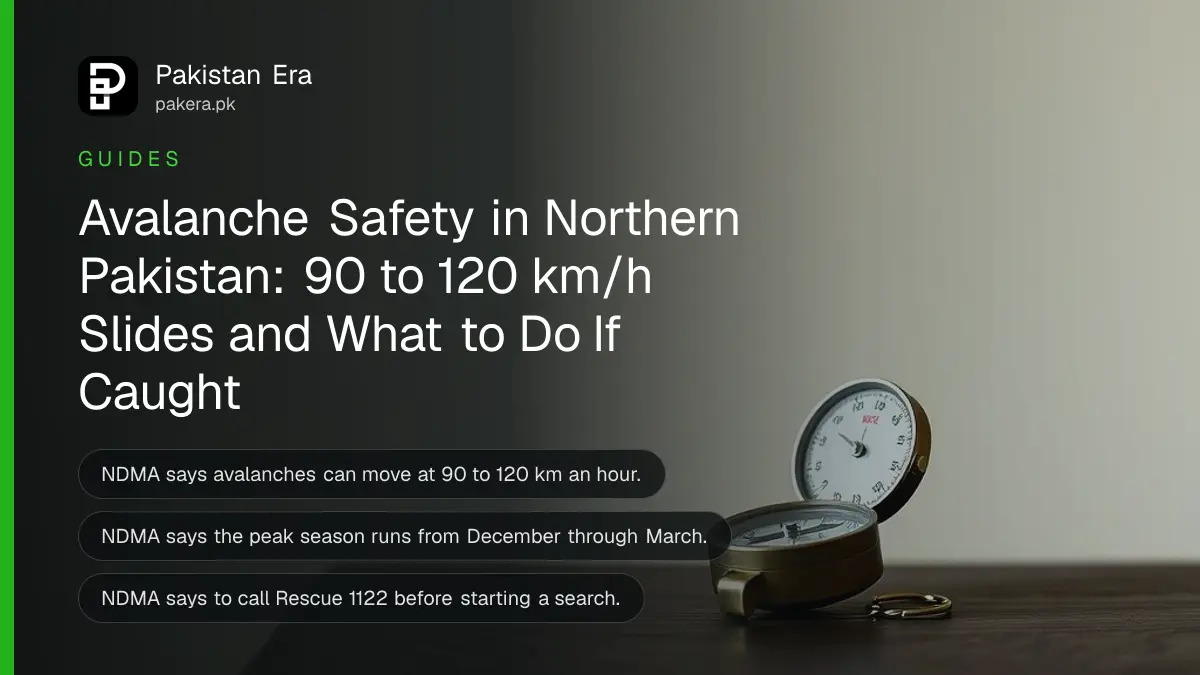
Short answer: NDMA says an avalanche can move at 90 to 120 km an hour and the peak season is December to March. If you are caught, move diagonally to the side, not straight down, cup your hands over your mouth to make an air pocket, and call Rescue 1122 before you start a search.
Avalanches are a real risk in the mountains of Gilgit-Baltistan, Khyber Pakhtunkhwa and Azad Kashmir. Tourists and local drivers are caught most often in winter. The advice below can help you avoid one, and survive one.
We read the NDMA Avalanche Brochure, listed on ndma.gov.pk with the date 7 February 2025, on 14 October 2026. We did not add our own safety claims. Where we explain, we say so.
An avalanche is a fast slide of snow, and the peak is December to March
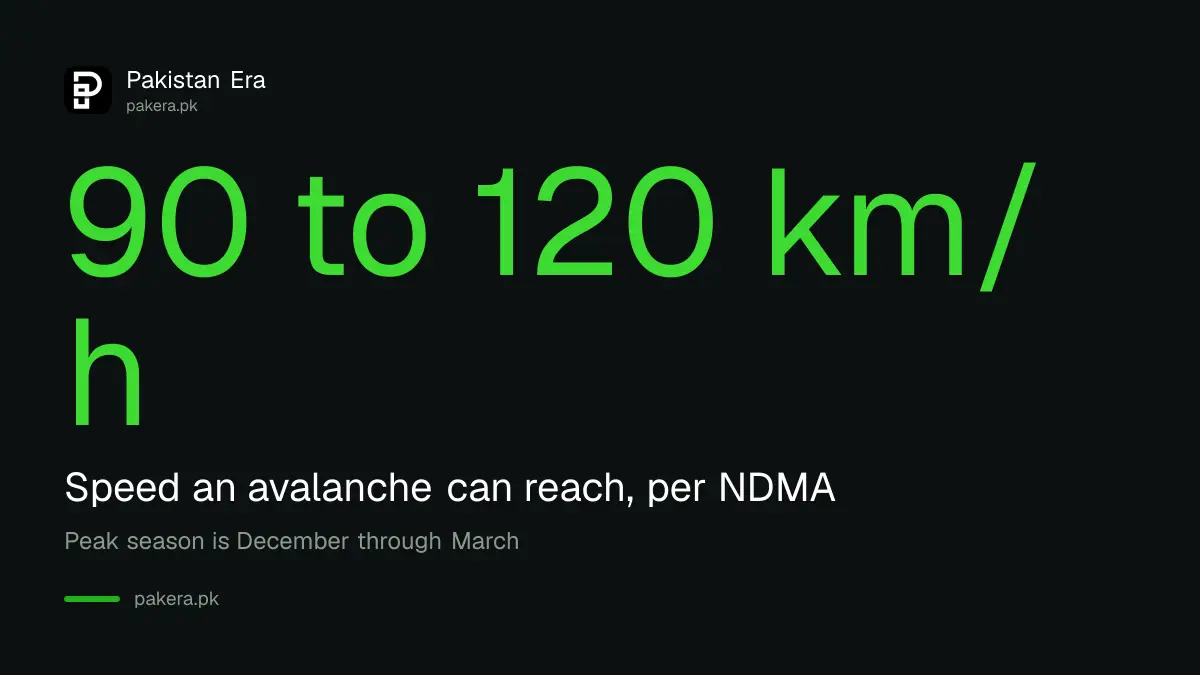
NDMA defines an avalanche as a large movement of snow and debris moving quickly down a slope. It says avalanches can reach 90 to 120 km an hour and that the peak season is December through March. People, fresh snow and wind can set them off.
Northern Pakistan lies in the Hindukush, Karakoram and Himalaya ranges, which NDMA describes as highly glaciated terrain where avalanches are common. NDMA lists the injuries as hypothermia, trauma, suffocation, cardiac arrest, internal injuries and frostbite.
Warning signs to look for before you cross a slope
NDMA lists cracks in the snow cover, unstable snow texture, a sudden change in the weather, rapidly rising temperatures, and even slight snow movement. It also lists snow on rocks on big open slopes. If you see these signs, do not cross the slope.
| Warning sign (NDMA) | What to do |
|---|---|
| Cracks in snow cover | Stay off the slope |
| Unstable snow texture | Turn back or find another route |
| Dramatic change in weather | Check the forecast again before moving on |
| Rapidly rising temperature | Expect snow to loosen, and avoid steep ground |
| Slight snow movement | Treat it as a warning and leave |
The right column is our plain reading of each sign, not text from the sheet.
Prepare before the trip
NDMA's preparation advice is to check the weather forecast, ask local people which areas are prone to avalanches, learn how to use safety and rescue equipment, take first aid training for hypothermia, travel with a guide, always travel in pairs, and follow warnings on paths and roads.
- Check the weather forecast for the whole route.
- Ask local people about slopes that slide.
- Travel with a guide and never alone.
- Wear a helmet and carry a torch.
- Learn to use rescue equipment, and consider an avalanche airbag, which NDMA lists.
Roads in the north can also close. Before you travel, read our guide to checking road status for Naran, Swat and Chitral. For the landslide side of the same weather, see the PMD landslide warning for Chitral, Swat and Abbottabad.
If you are caught, move sideways and make an air pocket
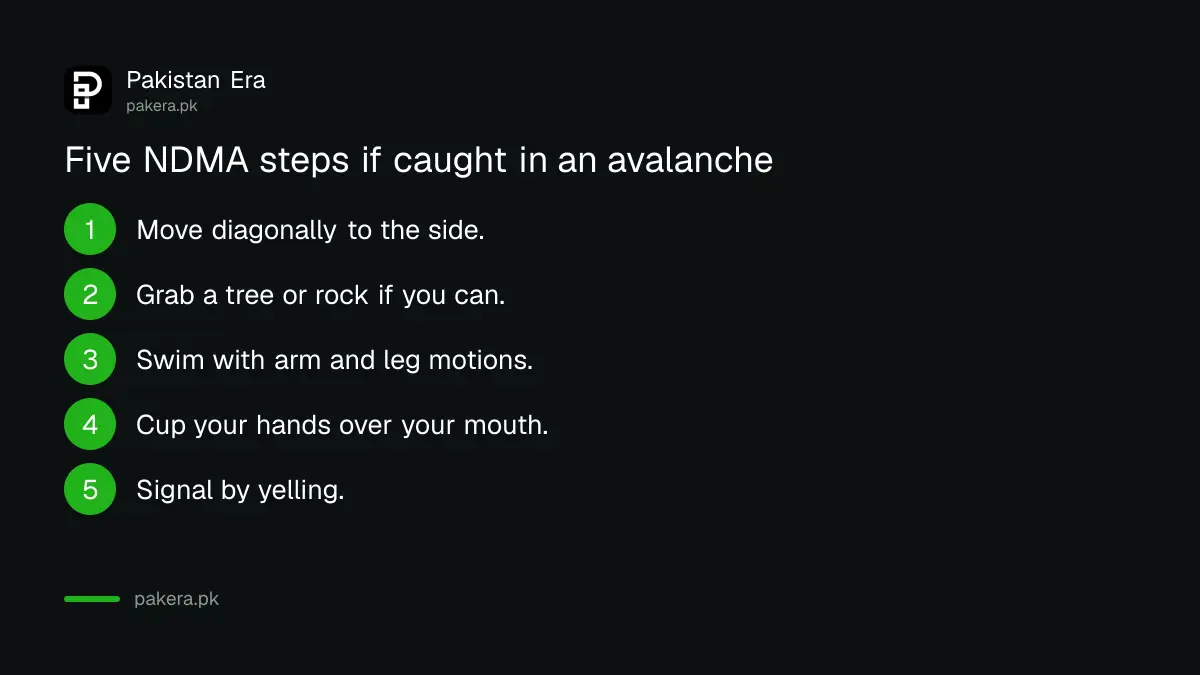
NDMA says to move diagonally to the side, not straight down the slope. Grab a tree or rock if you can, swim with arm and leg motions to stay on top, and cup your hands over your mouth to create an air pocket if you are buried. Shout or make noise to signal.
If you are a rescuer, NDMA says to call Rescue 1122 before you start the search, and then treat others for suffocation, hypothermia, injury or shock. Calling first brings trained teams and equipment.
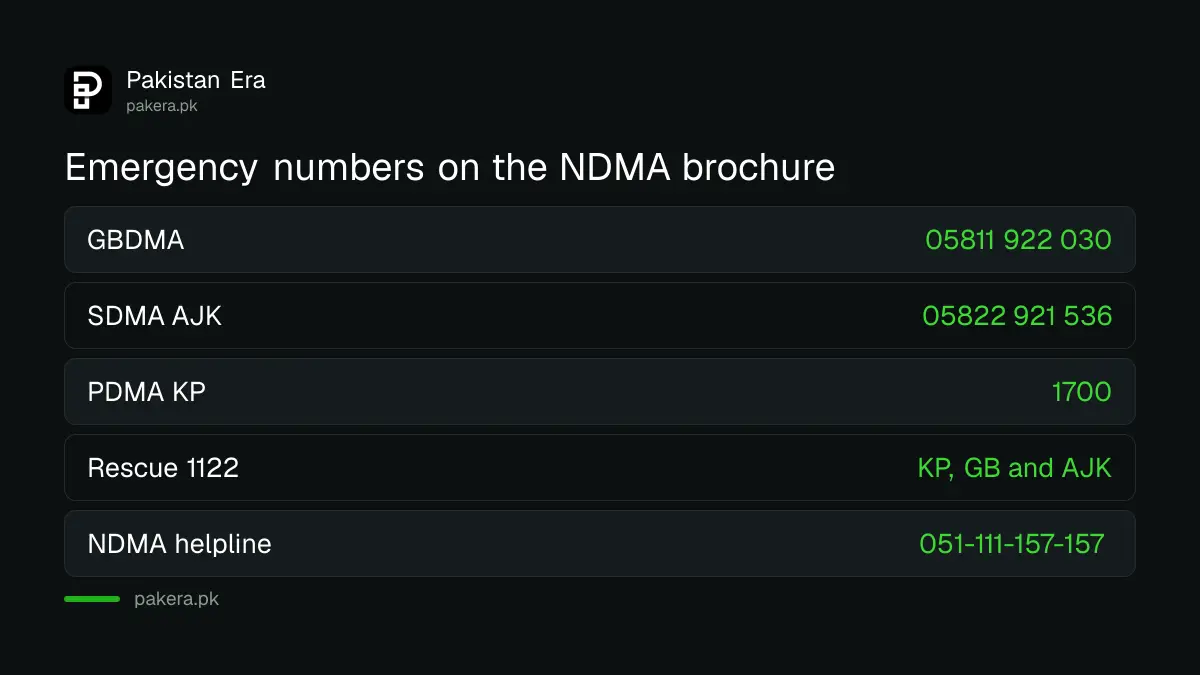
Emergency numbers on the NDMA brochure
The brochure lists GBDMA on 05811 922 030, SDMA on 05822 921 536, PDMA Khyber Pakhtunkhwa on 1700, and Rescue 1122 for KP, Gilgit-Baltistan and AJK. Save the one for the region you will visit. NDMA's own helpline is 051-111-157-157.
The brochure dates from 2025, so numbers may change. Check the current number on the NDMA, PDMA or GBDMA site before you go. For alerts, see our guide to getting NDMA alerts. For hypothermia after exposure, see NDMA's first aid steps.
NDMA also lists what authorities should do, such as building avalanche dams and fences, putting up warning signs, watching snow cover by satellite, and limiting permits for activities in risky zones. As a visitor, treat a closed road or a warning board as final. Do not look for a way around it, because the people who put it there know the slope.
If you run a hotel or guesthouse in the hills, share the warning signs and the emergency numbers with every guest at check-in.
Common questions
When is avalanche season in Pakistan?
NDMA's brochure says the peak season is December through March. Risk also follows fresh snowfall, wind and sudden warming, so check the weather even outside those months.
Which way should I move if caught?
Diagonally to the side, not straight down the slope, says NDMA. Try to hold a tree or rock, and swim with your arms and legs to stay near the top of the moving snow.
What if I am buried?
NDMA says to cup your hands over your mouth to make an air pocket, and to signal by yelling or making noise. A helmet and a torch also help rescuers find you.
Who do I call for help?
Rescue 1122, which NDMA lists for KP, Gilgit-Baltistan and AJK. The brochure also lists GBDMA, SDMA and PDMA KP numbers. Call before you begin a search.
Should tourists travel alone in snow areas?
NDMA says to travel with a guide and always in pairs. It also says to ask local people about avalanche-prone areas and to follow warnings on paths and roads.
How we verified this
What we checked, where we read it, and what we could not confirm.
Last checked 14 October 2026. We read the NDMA Avalanche Brochure, a five-page sheet listed with the date 7 February 2025 on ndma.gov.pk/guidelines, and the NDMA home page for its helpline. The right-hand column in the table is our reading. We did not verify the regional numbers by calling them. Source: ndma.gov.pk.
About the author

Senior Writer, Public Services and Technology
Shahid joined us in 2024 as an author. He is a senior contributor to Pakistan's leading technology websites. He writes detailed articles, mostly covering his expertise in the latest tech, mobiles, apps, gadgets, and step-by-step guides. His ideology is to help people understand the latest trends and explain complex methods through very easy-to-understand guides.